Hyundai Crater Concept Reveals a Bold Space-Inspired Mobility Future
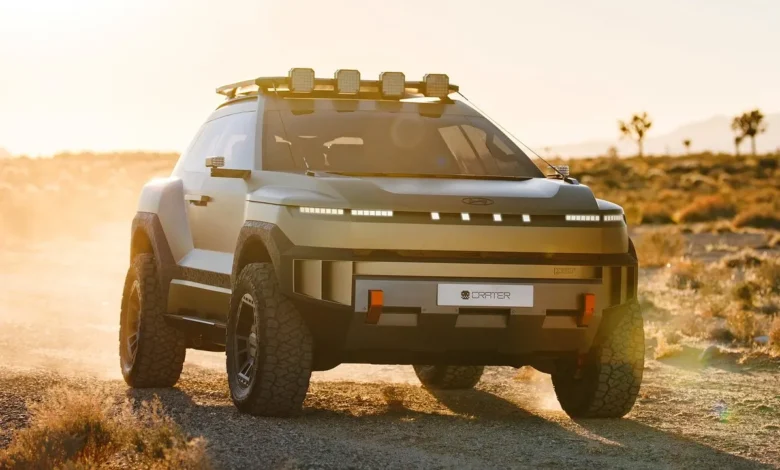
The Hyundai Crater Concept showcases Hyundai’s futuristic design vision with a space-inspired exterior, modular interior, advanced AI systems and zero-emission powertrain potential. Blending electrification, sustainability and autonomy, the Crater Concept hints at the next evolution of mobility. This in-depth review explores its design philosophy, engineering ideas and technological innovations.
The Hyundai Crater Concept represents a bold leap into the future of mobility design, combining visionary engineering with an extraterrestrial-inspired aesthetic that pushes far beyond the boundaries of traditional automotive development. As automakers explore concepts that challenge conventional norms, Hyundai has positioned itself at the forefront of futuristic innovation with a concept vehicle that reflects the brand’s evolving design language, technological ambition and forward-looking mobility strategy. The Crater Concept is not merely a design exercise; it is Hyundai’s statement about the next era of vehicle architecture—an era defined by modularity, sustainability, adaptability and mobility ecosystems that function on Earth, off-road and potentially beyond. This comprehensive article examines the Hyundai Crater Concept in detail, covering its design philosophy, aerodynamic engineering, zero-emission powertrain possibilities, interior architecture, digital technologies, autonomous systems, real-world applications and the broader implications it brings to Hyundai’s long-term mobility vision.
Gallery: Hyundai Crater Concept
A Space-Inspired Exterior That Breaks Conventional Automotive Form
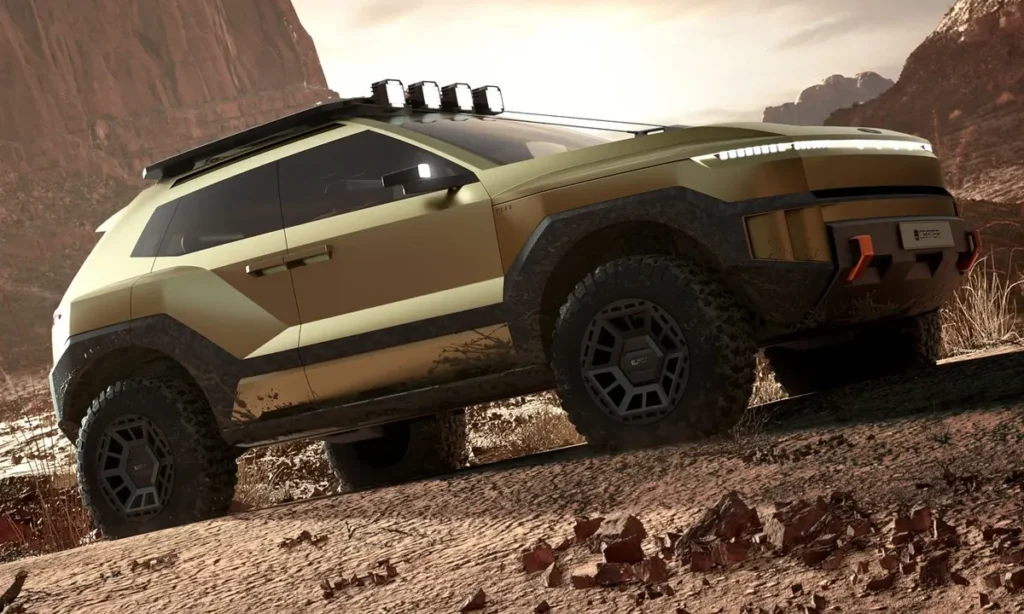
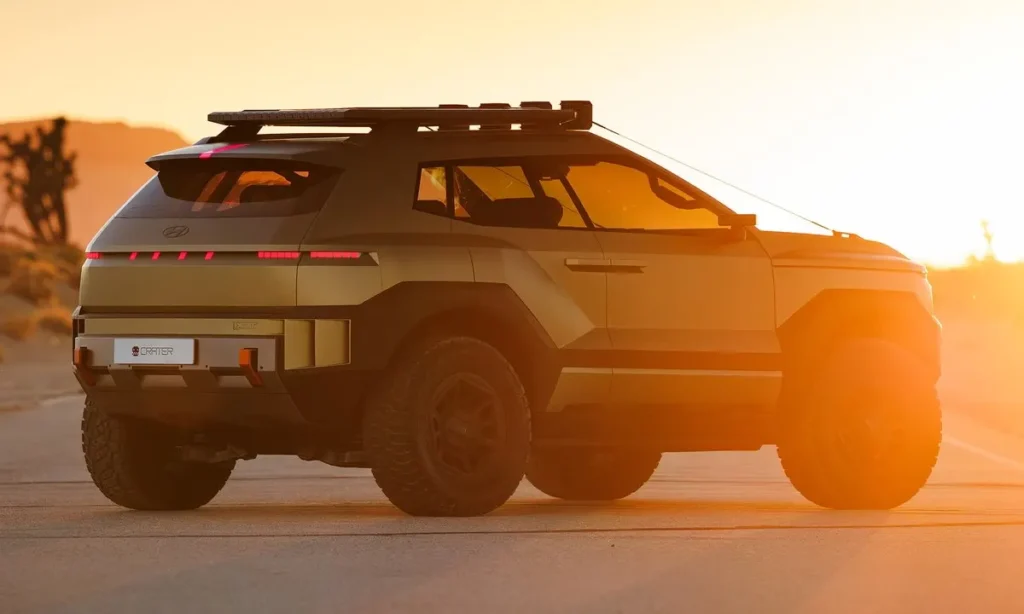
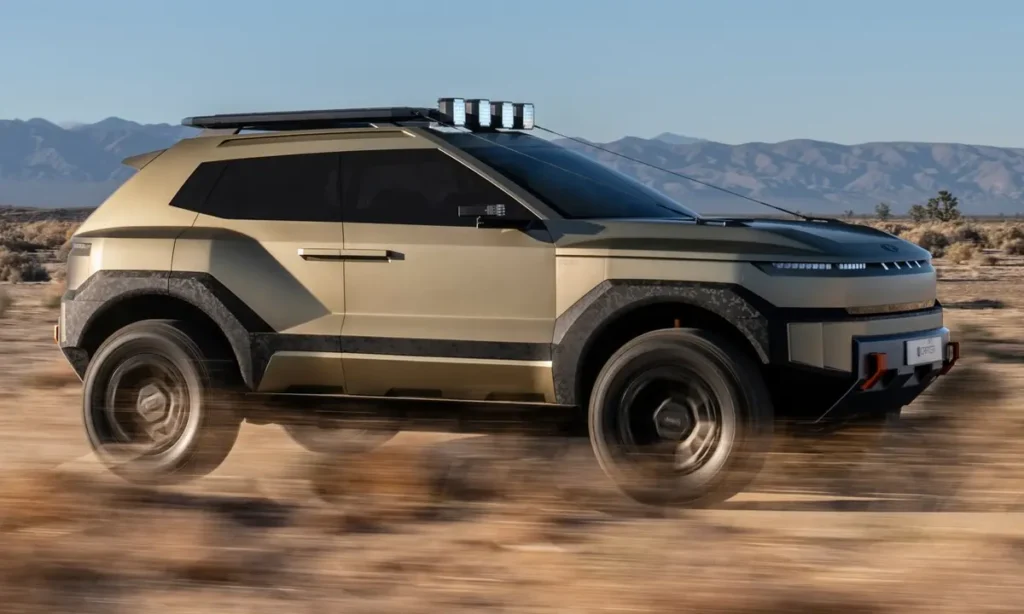
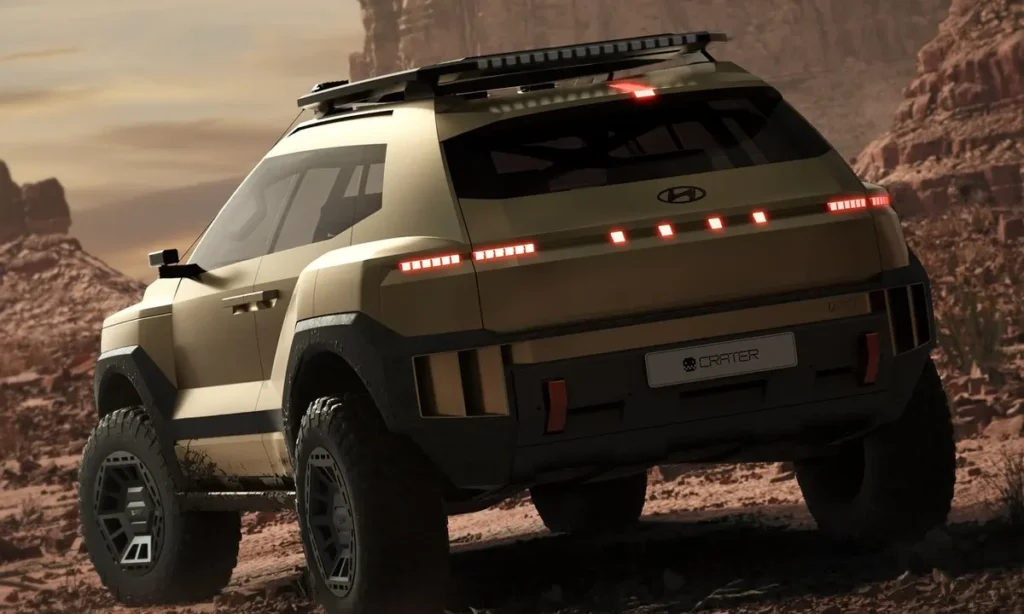
The Hyundai Crater Concept derives its name from the geometric and structural formations found on lunar and planetary surfaces. This inspiration shapes the vehicle’s dramatic exterior, which blends sculptural minimalism with bold, polygonal contours. The bodywork features deep creases, crater-like surface textures and intersecting design layers that provide both aesthetic and functional benefits. The outer shell incorporates advanced lightweight composite materials engineered to withstand harsh climates and environments—from extreme heat to unpredictable weather and even simulated extraterrestrial terrain.
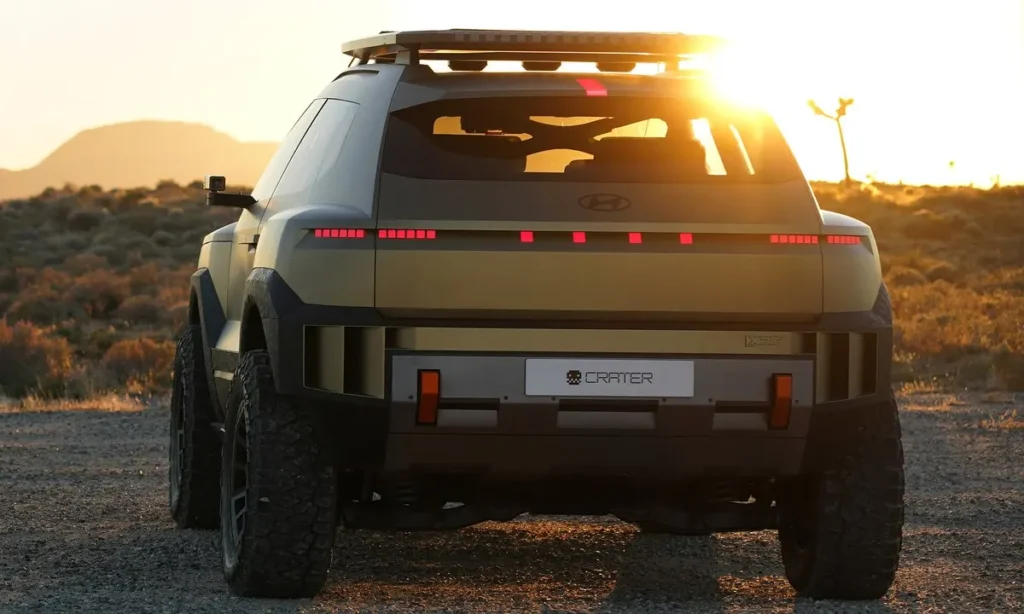
LED lighting signatures follow an orbital pattern, with headlamps and taillights arranged in concentric rings that mimic celestial formations. This light language gives the Crater Concept a distinct identity, ensuring visibility while symbolizing continuous motion and energy. The aerodynamic shape extends toward a tapered rear section, where integrated airflow channels reduce turbulence. Hyundai’s designers intentionally minimized unnecessary protrusions, allowing the vehicle to slip through the air with a level of efficiency suited for electric mobility.
The Crater Concept’s elevated ground clearance and multi-surface tires further reinforce its off-planet inspiration. These tires incorporate adaptive rubber compounds and reconfigurable tread patterns, enabling the vehicle to traverse sand, snow, mud and uneven landscapes. This capability positions the Crater Concept as a conceptual crossover that could operate both on city streets and in remote wilderness areas.
Interior Design: A Modular, Immersive and Human-Centered Environment
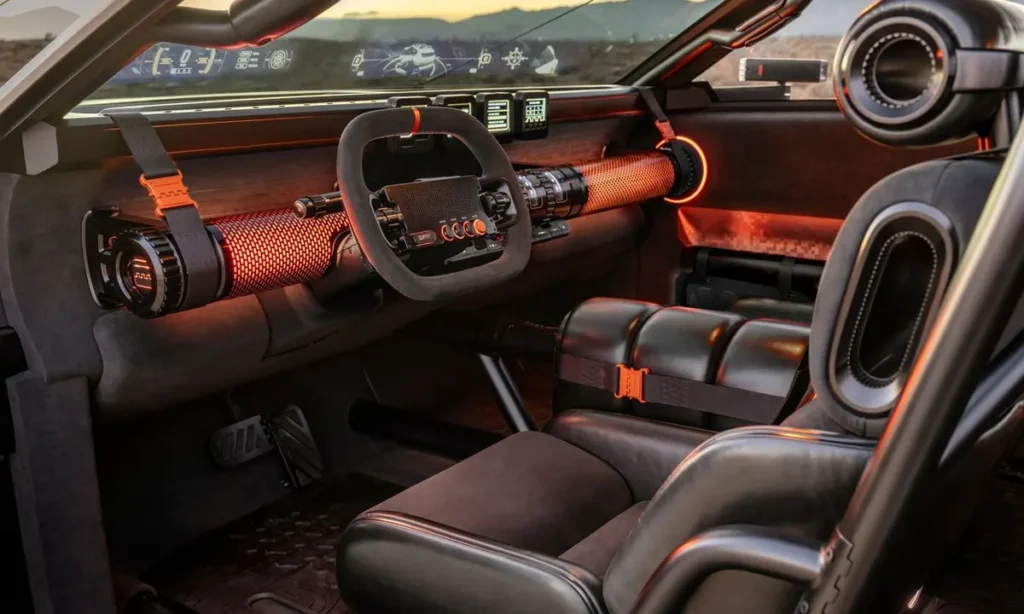
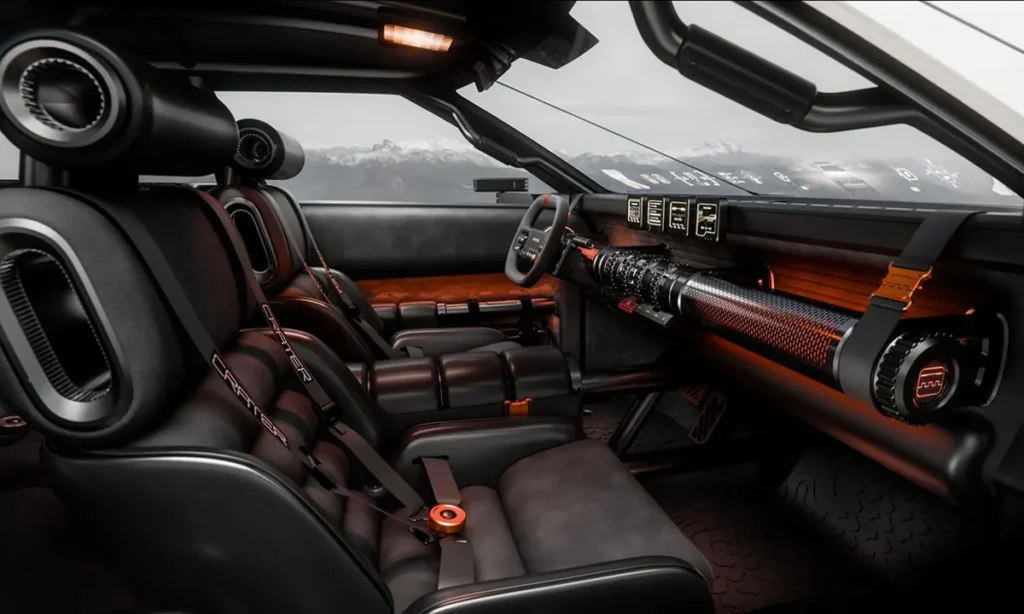
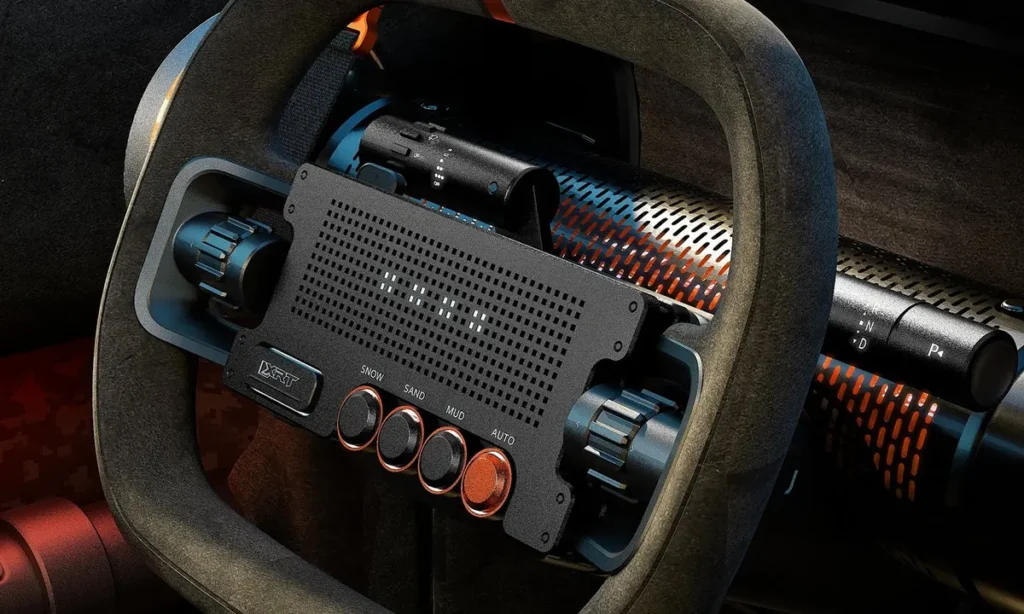
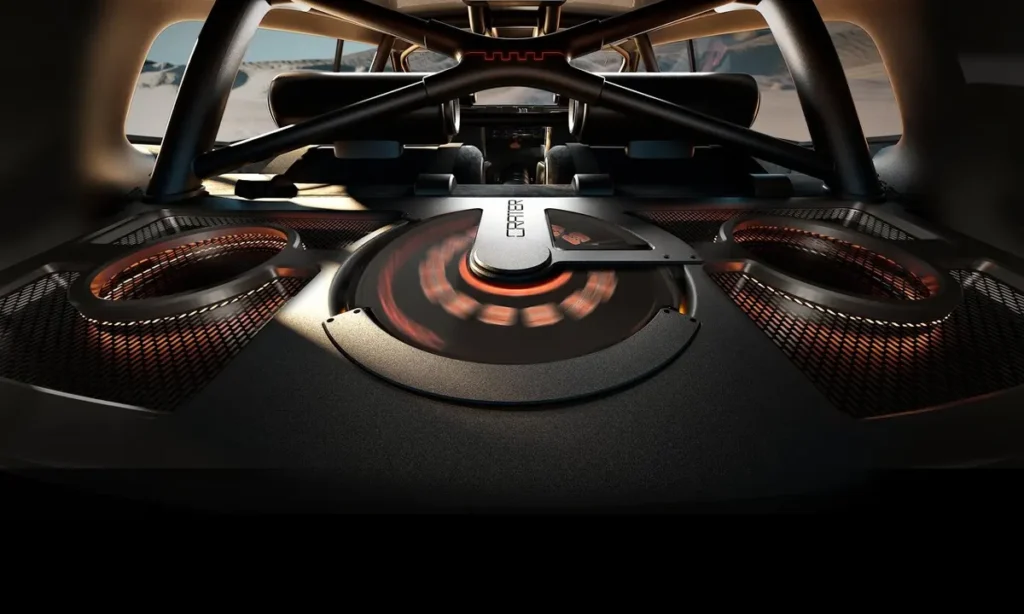
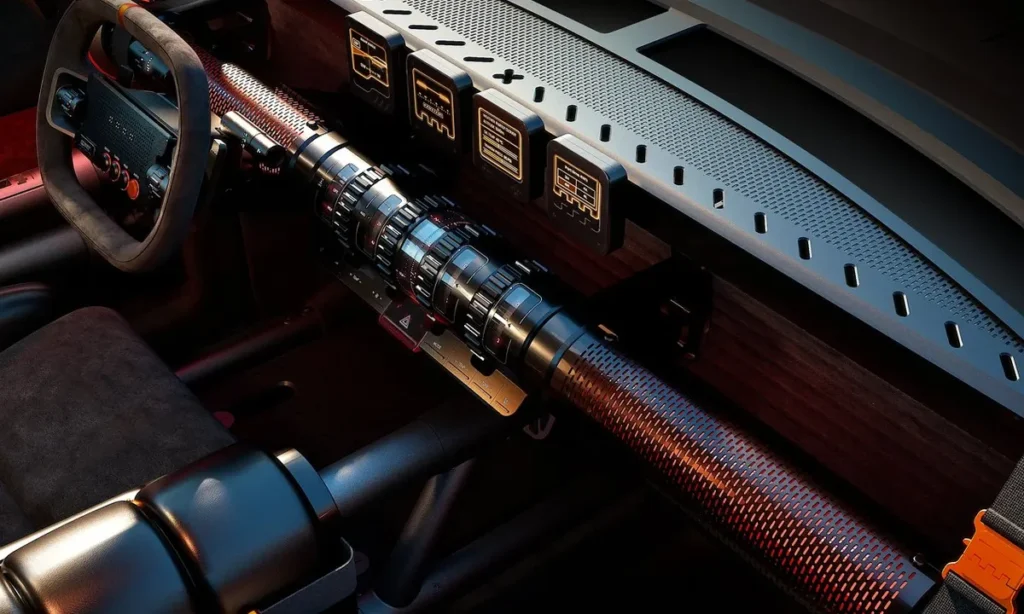
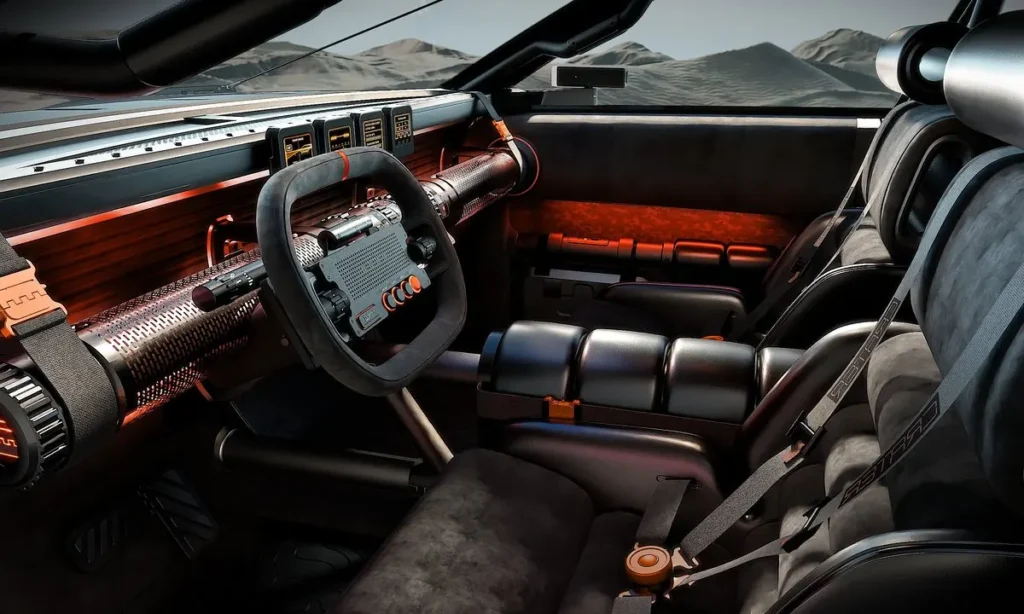
Inside the Hyundai Crater Concept, the design shifts toward a focus on adaptive comfort, digital fluidity and sustainability. The cabin is envisioned as a living space that can reconfigure itself depending on purpose: everyday commuting, relaxation, exploration or autonomous travel. The interior adopts a lounge-style layout with advanced ergonomic seating that swivels, folds and extends, transforming the cabin into a mobile environment that can support work, leisure or rest.
Materials throughout the interior highlight Hyundai’s sustainability commitment. Recycled composites, plant-based textiles and bio-engineered surfaces reduce environmental impact without compromising premium feel. Soft ambient lighting imitates lunar reflection, creating a calming atmosphere that mirrors natural light cycles. This enhances passenger comfort during long journeys and promotes a sense of spatial openness.
The panoramic roof uses reactive smart glass that adjusts opacity in response to lighting conditions, offering protection from UV exposure while allowing passengers unobstructed views of their surroundings. The dashboard becomes a dynamic interface rather than a static component. A seamless digital screen spans the width of the front cockpit, offering navigation, vehicle insights, weather patterns, energy usage metrics and immersive augmented-reality views during exploration scenarios.
Advanced Digital Ecosystem and AI Integration
The Hyundai Crater Concept represents a futuristic approach to in-vehicle technology. It integrates Hyundai’s most advanced AI-driven software architecture, enabling adaptive learning and autonomous decision-making. The system analyzes driver preferences, environmental conditions and journey patterns to enhance safety, comfort and efficiency.
A next-generation heads-up display projects augmented-reality navigation directly onto the windshield, providing directions, hazard alerts and terrain maps that overlay onto real-world imagery. This AR integration is particularly beneficial for off-road or unfamiliar environments, where terrain scanning provides real-time topographical analysis.
The vehicle’s AI assistant interacts with passengers through natural-language conversation, controlling climate settings, entertainment, lighting and driving modes. Over-the-air updates ensure the Crater Concept remains up-to-date with the latest software enhancements, allowing its capabilities to grow over time.
Zero-Emission Powertrain Possibilities: Hydrogen, Battery Electric or Multi-Energy Platform
While Hyundai has not officially defined the Crater Concept’s powertrain, the design strongly aligns with the brand’s ongoing electrification strategy. The concept accommodates multiple sustainable propulsion technologies: battery-electric, hydrogen fuel-cell or a multi-energy platform capable of switching between configurations.
A fully electric variant would likely use Hyundai’s advanced e-GMP platform or a conceptual successor, enabling high-capacity battery storage, rapid charging and extended range. The skateboard layout would provide low center of gravity, improved stability and flexible cabin space.
A hydrogen fuel-cell variant would align perfectly with Hyundai’s long-term zero-emission ambitions. Hydrogen mobility offers fast refueling, lightweight energy storage and long-distance endurance—ideal for a vehicle envisioned to operate in remote or rugged environments.
The Crater Concept’s modular platform allows integration of hub motors or dual-motor all-wheel-drive systems, delivering instant torque and precise control on varied terrains. Adaptive torque distribution, terrain scanning and active suspension enable the vehicle to adjust to surface irregularities, enhancing safety and comfort.
Autonomous Capability for Next-Generation Mobility
The Hyundai Crater Concept incorporates a high level of autonomous driving capability, with a system designed to function in a wide variety of environments beyond traditional road networks. High-resolution LiDAR, radar systems, long-range cameras and ultrasonic sensors create a 360-degree awareness bubble around the vehicle. This environmental perception allows the Crater Concept to navigate tight urban spaces, highways and off-road routes with equal confidence.
The autonomous system also integrates predictive learning. It analyzes patterns in terrain, weather and driving behavior to anticipate obstacles or optimize energy usage. In autonomous mode, the vehicle transitions into a lounge-like environment where passengers can relax, work or enjoy content on the panoramic digital display.
Sustainability at the Heart of Hyundai’s Concept Design
Sustainability is a core component of the Hyundai Crater Concept. The model demonstrates Hyundai’s eco-friendly vision through material selection, energy utilization and lifecycle planning. The interior uses renewable materials, while exterior panels incorporate lightweight composites that minimize environmental footprint during production.
Hyundai also envisions the Crater Concept as part of a future mobility ecosystem. This ecosystem includes renewable charging networks, hydrogen refueling infrastructure and smart cities that support sustainable mobility. By positioning the Crater Concept as a conceptual anchor within this framework, Hyundai underscores its commitment to long-term environmental responsibility.
Read: 2026 Jeep Recon Reinvents the Electric Off-Road SUV
Real-World Applications: From Urban Commutes to Exploration
Although a concept, the Hyundai Crater is designed to inspire future production models capable of addressing diverse mobility needs. In urban settings, the Crater would serve as an efficient, connected and quiet commuter vehicle. Its compact footprint, smooth acceleration and intelligent traffic navigation make it suitable for metropolitan driving.
On rugged terrain, the Crater functions as an exploration vehicle with the stability, clearance and adaptability needed for outdoor adventures. Its autonomous systems help navigate isolated regions safely, while its digital interfaces assist drivers with terrain modeling, weather tracking and route optimization.
The Crater Concept also hints at future applications in scientific exploration, humanitarian operations or remote logistics—fields that require robust vehicles capable of functioning beyond paved road networks.
Hyundai Crater Concept Specifications Chart (Conceptual)
| Category | Specification | Notes |
| Platform | Multi-Energy Modular Architecture | Supports EV and hydrogen options |
| Powertrain | Electric / Hydrogen Fuel-Cell | Zero-emission mobility |
| Drivetrain | AWD with Adaptive Torque Control | Designed for mixed terrains |
| Sensors | LiDAR, Radar, Multi-Angle Cameras | High-level autonomous capability |
| Interior Layout | Modular Lounge Design | Reconfigurable seating |
| Display System | Full-Width Digital Cockpit + AR HUD | Immersive navigation and data |
| Materials | Sustainable Composites & Bio-Textiles | Lightweight & eco-friendly |
| Suspension | Adaptive Terrain Response System | Optimized for off-road comfort |
| Roof | Smart Glass Panoramic Canopy | Adjustable tint and privacy |
| Lighting | Orbital LED Signature | Space-inspired design language |
Conclusion: A Bold Vision for the Future of Mobility
The Hyundai Crater Concept represents a profound expression of Hyundai’s forward-thinking design and technological ambition. While it may never reach production in its full conceptual form, its influence on future Hyundai vehicles is undeniable. From its space-inspired exterior to its modular interior, from its zero-emission propulsion potential to its autonomous systems, the Crater Concept demonstrates what the next evolution of mobility could look like—adaptable, sustainable, intelligent and emotionally engaging.
As the automotive industry continues its transformation toward electrification and intelligent mobility, the Crater Concept stands as a symbolic bridge to the future. It encapsulates Hyundai’s dedication to innovation, environmental responsibility and bold experimentation, shaping a new era of concept design that inspires imagination and informs real-world engineering.