Is the VC-Turbo Engine in the Infiniti QX60 Worth It? Engineering Ambition Meets Real-World Ownership
Variable Compression Ratio Technology That Took Infiniti Over Two Decades to Perfect, a 2.0-Litre Four-Cylinder Producing 268 Horsepower Through Compression Ratios That Shift Between 8:1 and 14:1 in Real Time, Fuel Economy Promises That the Specification Sheet Makes Compelling and the Honest Owner Data That Determines Whether the World's First Production Variable Compression Engine Delivers on Its Extraordinary Engineering Premise in the Real World of American Luxury SUV Ownership
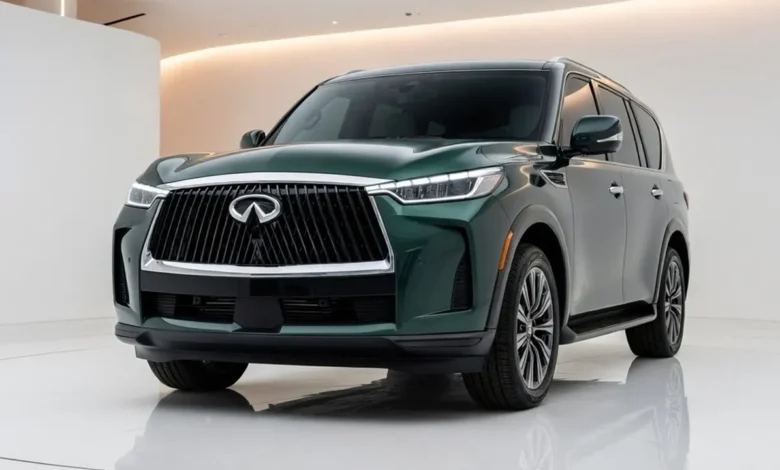
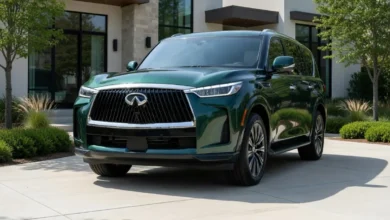
Infiniti QX60: There are engineering achievements in the automotive industry that arrive with the weight of decades behind them — technologies whose development consumed resources, careers and institutional patience on a scale that only becomes apparent when the finished product is examined against the timeline of its creation. The Infiniti VC-Turbo engine — whose variable compression ratio technology was publicly demonstrated in concept form in 1998 and whose production introduction in 2018 represented the conclusion of a twenty-year development programme — is unambiguously one of those achievements. The question that prospective QX60 buyers must answer is not whether the engineering is impressive. It demonstrably is. The question is whether the engineering achievement translates into a real-world ownership proposition that justifies choosing the VC-Turbo QX60 over the naturally aspirated 3.5-litre V6 alternative that Infiniti continues to offer alongside it.
What the VC-Turbo Engine Actually Does
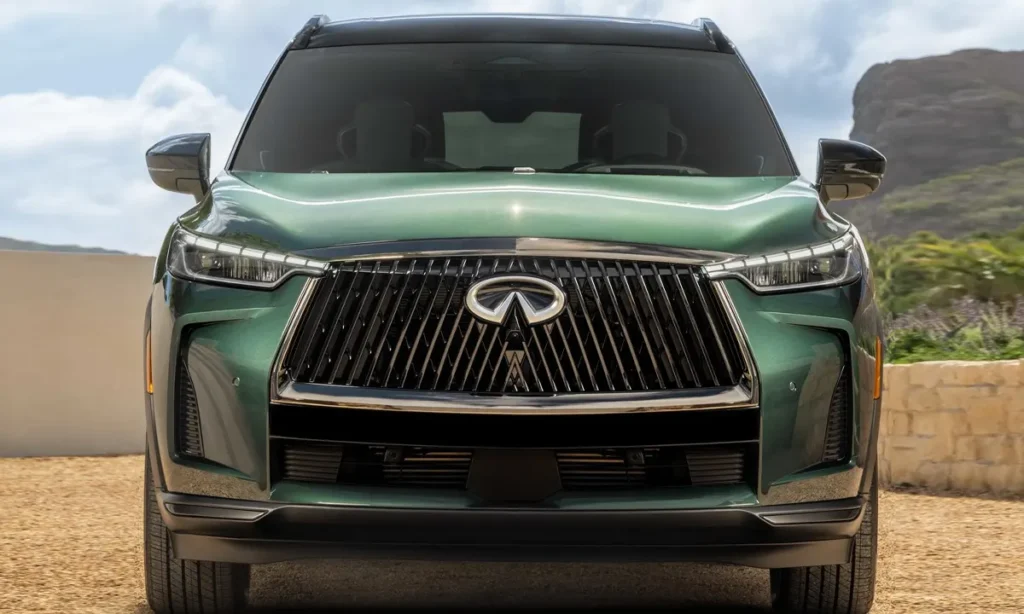
The Variable Compression Turbo engine’s fundamental innovation is the ability to alter its compression ratio continuously while the engine operates — shifting between a high compression ratio of 14:1 that maximises fuel efficiency during light-load cruising and a low compression ratio of 8:1 that provides the knock resistance required for high-boost turbocharged performance under heavy load. The mechanism that achieves this compression ratio variation replaces the conventional fixed crankshaft with a multi-link system whose geometry changes in response to an actuator controlled by the engine management system — an arrangement of extraordinary mechanical complexity whose development required Infiniti’s engineers to solve problems of component durability, friction management and system reliability that no production engine had previously addressed at the temperatures and pressures that real-world operation imposes.
The practical consequence of this variable compression architecture is a 2.0-litre four-cylinder engine that produces 268 horsepower and 380 Newton-metres of torque — outputs that comfortably exceed what a conventional 2.0-litre turbocharged four-cylinder of equivalent displacement achieves, reflecting the VC-Turbo’s ability to run higher boost pressure at low compression ratio without the detonation risk that limits conventional turbocharged engine output. The EPA fuel economy rating of 24 miles per gallon city and 30 highway for the front-wheel-drive QX60 with the VC-Turbo represents a meaningful improvement over the naturally aspirated V6’s 20 city and 26 highway — a difference whose annual financial significance depends on mileage and fuel pricing but that translates to approximately $300 to $500 in annual fuel cost savings at typical American driving patterns and current fuel prices.
The Real-World Fuel Economy Question

The VC-Turbo’s EPA fuel economy advantage over the naturally aspirated V6 is genuine in the testing cycle — but real-world owner data introduces the important qualification that turbocharged engines whose fuel economy advantage is most pronounced in light-load conditions are most vulnerable to losing that advantage when driven with the throttle inputs that the engine’s 268-horsepower capability invites. Owner-reported fuel economy figures from QX60 VC-Turbo drivers across American ownership forums and aggregated data platforms consistently return real-world combined figures between 22 and 27 miles per gallon — a range whose lower boundary approaches the naturally aspirated V6’s real-world performance closely enough to reduce the fuel economy argument’s practical significance for drivers whose usage pattern involves frequent acceleration from rest, sustained highway speeds above 70 miles per hour or the extended urban idling that stop-and-go commuting imposes.
The VC-Turbo’s fuel economy advantage is most reliably realised by drivers whose primary use case is steady-state highway cruising at moderate speeds — the driving pattern that most closely resembles the light-load conditions where the high compression ratio’s efficiency contribution is maximised and where the turbocharged engine’s displacement advantage over the naturally aspirated V6 is most consistently relevant to fuel consumption. For the QX60 buyer whose daily driving involves the suburban and urban mixed patterns that characterise most American luxury SUV use, the fuel economy differential between the VC-Turbo and the V6 in practice is narrower than the EPA comparison suggests — a reality that should inform the powertrain decision without necessarily reversing it.
Reliability: The Question Every VC-Turbo Buyer Must Confront

The VC-Turbo’s mechanical complexity — whose multi-link compression ratio variation mechanism involves moving parts operating at temperatures and loads that conventional engine components do not encounter — raises the long-term reliability question that every technologically ambitious automotive engineering solution must answer across the accumulated evidence of real-world ownership. The VC-Turbo entered production in 2018 in the QX50, providing approximately eight years of real-world reliability data across the ownership population before the 2026 model year’s QX60 application.
That data presents a picture that is encouraging without being unequivocal. The majority of VC-Turbo owners across the QX50 and QX60 applications have not experienced the catastrophic multi-link mechanism failures that the system’s complexity theoretically makes possible — a positive finding whose significance is genuine and whose reflection of Infiniti’s durability validation programme’s effectiveness is real. The concerns that have emerged within the ownership community centre on oil consumption at higher mileages — a characteristic that some owners report becoming apparent beyond 60,000 miles and that reflects the additional sealing demands that the variable compression mechanism’s moving components impose on the engine’s lubrication system relative to conventional fixed-geometry alternatives.
The recommendation that follows from this reliability picture is disciplined maintenance — oil change intervals followed without extension, oil level monitoring between service visits and attention to any early indicators of consumption increase that would signal wear patterns requiring attention before they progress to more consequential mechanical events.
Driving Character: Four Cylinders or Six Smooth Ones

The driving character comparison between the VC-Turbo and the naturally aspirated V6 is where the ownership decision becomes most subjective and where individual priority weighting most directly determines the correct answer for any specific buyer. The VC-Turbo’s 268 horsepower arrives with the turbocharger’s characteristic urgency when boost pressure builds — producing a power delivery whose immediacy at mid-range revs is genuinely impressive but whose four-cylinder mechanical character, despite the sophisticated engineering that minimises its vibration and acoustic signature, does not achieve the silken smoothness that the naturally aspirated V6’s additional cylinders and absence of forced induction intrusion provide at highway cruise.
The naturally aspirated V6’s power delivery is linear, smooth and acoustically refined in a manner that the VC-Turbo’s more complex powertrain cannot precisely replicate — producing a luxury SUV driving experience whose qualitative character aligns more naturally with the refinement expectations that the QX60’s premium positioning creates. For buyers whose daily driving involves extended highway commutes where engine refinement is perceived continuously, the V6’s smoothness advantage over the VC-Turbo is a daily dividend whose value compounds across ownership in a way that a single test drive does not fully reveal.
Read: The Dawn of a New Seltos! The 2027 Kia Seltos Fully Explained
Is the VC-Turbo Worth It? The Honest Verdict
The VC-Turbo engine in the Infiniti QX60 is worth choosing under a specific set of conditions — and not worth the premium or the complexity trade-off under others. For the buyer whose primary concern is fuel economy, whose driving pattern involves substantial highway cruising at moderate speeds and who approaches engine maintenance with the discipline that the VC-Turbo’s complexity rewards, the engine delivers its engineering promise with sufficient consistency to justify the choice. The EPA fuel economy advantage is real, the power output is genuinely impressive for the displacement and the engineering achievement deserves the ownership experience that choosing it provides.
For the buyer whose priorities include maximum powertrain refinement, maximum long-term reliability confidence and the simplicity of a proven naturally aspirated architecture whose ownership cost predictability is higher, the 3.5-litre V6 remains the more straightforwardly satisfying QX60 powertrain — a less technologically remarkable but more consistently excellent engine whose twenty-plus years of Nissan-Infiniti application history provide the ownership confidence that the VC-Turbo’s more recent and more complex architecture cannot yet match with equivalent statistical authority.
The VC-Turbo is genuinely extraordinary engineering. Whether it is the right engine for your QX60 depends entirely on whether extraordinary engineering is what your ownership priorities require — or whether extraordinary refinement serves them better.
VC-Turbo vs 3.5L V6 — QX60 Powertrain Comparison
| Category | VC-Turbo 2.0L | 3.5L NA V6 |
| Displacement | 2.0 Litres | 3.5 Litres |
| Horsepower | 268 hp | 295 hp |
| Torque | 380 Nm | 340 Nm |
| Compression Ratio | 8:1–14:1 (Variable) | Fixed |
| EPA City MPG | 24 mpg | 20 mpg |
| EPA Highway MPG | 30 mpg | 26 mpg |
| Real-World Combined | 22–27 mpg | 20–24 mpg |
| Cylinder Count | 4 | 6 |
| Forced Induction | Turbocharger | None |
| Refinement Character | Good (Complex) | Excellent (Smooth) |
| Long-Term Reliability | Good (With Maintenance) | Excellent |
| Oil Consumption Risk | Moderate (High Mileage) | Low |
| Technology Interest | Exceptional | Conventional |
| Best Suited For | Highway / Efficiency Focus | Refinement / Reliability Focus |