Infiniti QX60 vs Its Most Dangerous Rivals. The Luxury Three-Row Battle Nobody Saw Coming
Seven-Seat Luxury Cabin Architecture, a 295-Horsepower Twin-Turbocharged V6, Real-World Ownership Costs That Undercut German Competitors by Thousands of Dollars Annually, Interior Quality That Has Consistently Surprised Evaluators Who Expected Less and the Competitive Reality That the Infiniti QX60 Has Quietly Become One of the Most Compelling Value Propositions in the American Luxury Three-Row SUV Segment Without Ever Receiving the Recognition Its Specification Deserves
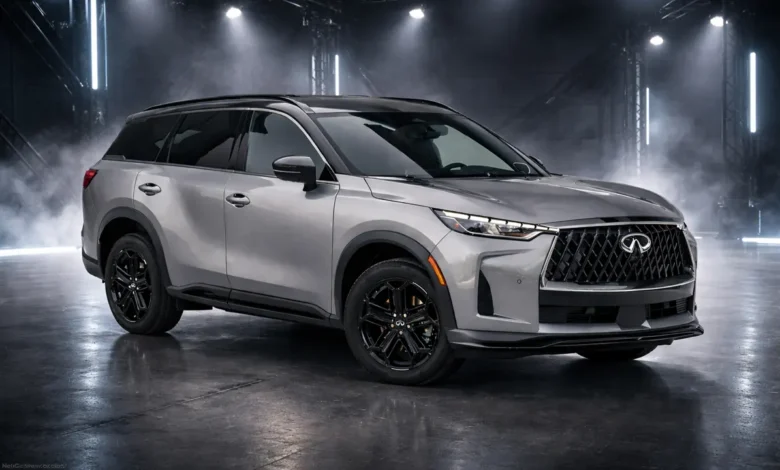
There are segments of the automotive market where the competitive hierarchy is so firmly established in the collective consciousness of buyers and journalists alike that genuinely capable alternatives operating outside that hierarchy receive a fraction of the consideration their objective specification warrants. The American luxury three-row SUV segment is precisely such a market — a category whose mental shortlist for the overwhelming majority of buyers begins and frequently ends with the Cadillac Escalade, the Lincoln Navigator, the BMW X7 and the Mercedes-Benz GLS, leaving the vehicles that operate at lower price points but with overlapping capability and refinement to compete for the attention of buyers who arrive at them through research rather than aspiration.
The Infiniti QX60 is the most compelling and most consistently underappreciated vehicle in that secondary tier — a three-row luxury SUV whose combination of interior quality, powertrain refinement, technology integration and real-world ownership cost creates a value proposition that its German and American competitors at higher price points would find uncomfortable to defend in a direct specification comparison conducted without reference to badge prestige. Understanding where the QX60 stands against its most relevant rivals — the Acura MDX, the Buick Enclave Avenir, the Genesis GV80 and the Volvo XC90 — requires examining the comparison across the dimensions that three-row luxury SUV buyers actually weight in their purchase decisions rather than the headline figures that specification sheets lead with.
The QX60 Powertrain: Refinement Over Raw Numbers
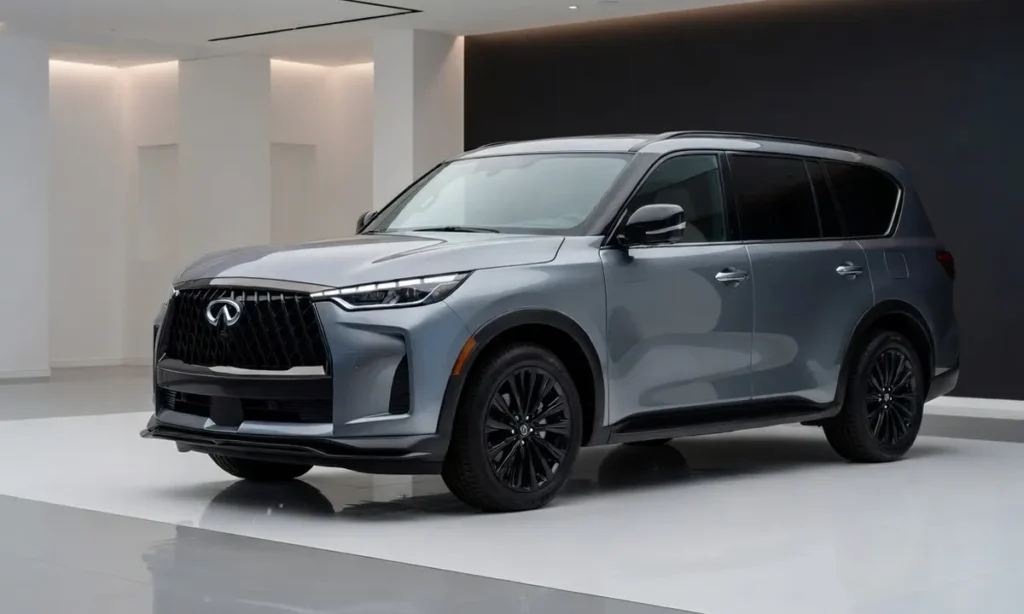
The Infiniti QX60’s 3.5-litre naturally aspirated V6 producing 295 horsepower — paired with a nine-speed automatic transmission and available in both front-wheel-drive and all-wheel-drive configurations — is an engine whose specification does not immediately announce itself as a segment leader and whose power output figure sits at or below several competitors. What the specification does not capture is the engine’s refinement character — the smoothness of its power delivery, the quietness of its operation at highway cruise and the absence of the turbocharger-related acoustic signature that competitors’ forced induction alternatives introduce at certain throttle positions and engine speeds.
The naturally aspirated V6’s fuel economy — returning EPA figures of 20 miles per gallon city and 26 highway in front-wheel-drive specification — reflects the inherent efficiency advantage that the absence of turbocharger parasitic losses provides in moderate driving conditions, while the nine-speed transmission’s calibration manages the available torque with sufficient intelligence to make real-world fuel consumption figures that track the EPA rating more closely than many competitors’ turbocharged alternatives manage in genuine mixed driving conditions. The QX60’s powertrain is not the segment’s most powerful, most technologically sophisticated or most immediately impressive — it is the segment’s most consistently pleasant, a distinction whose value compounds across years of daily ownership in ways that first-drive assessments rarely capture with adequate weight.
QX60 vs Acura MDX: The Japanese Premium Showdown
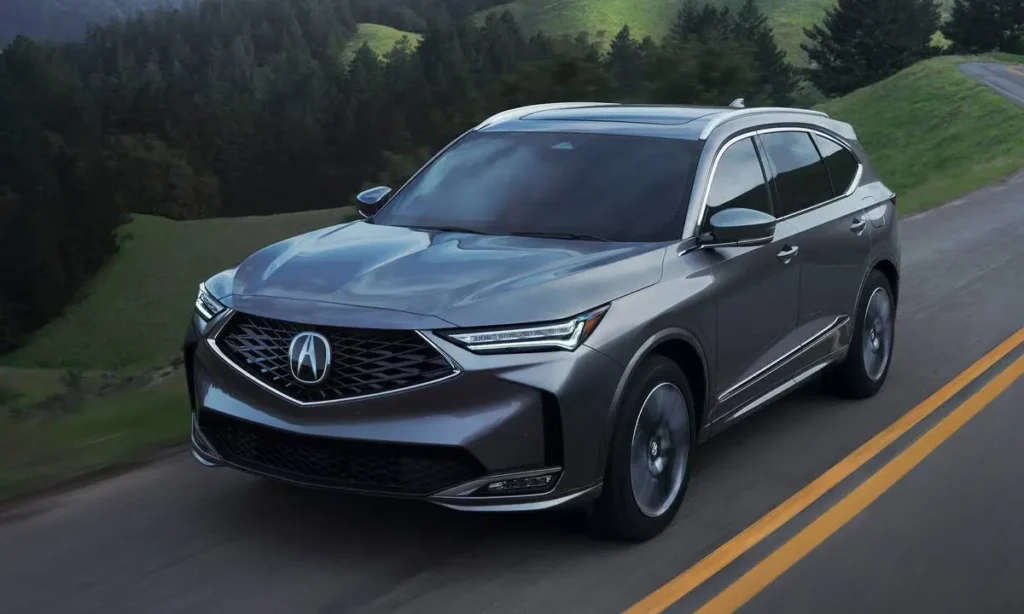
The most direct and most technically relevant comparison the QX60 faces is against the Acura MDX — a three-row luxury SUV whose Japanese premium positioning, shared brand heritage relationship with Infiniti’s Nissan parentage and broadly comparable pricing create a competitive dynamic whose resolution determines which Japanese luxury manufacturer wins the accessible luxury three-row argument in the American market.
The Acura MDX’s 3.5-litre naturally aspirated V6 producing 290 horsepower in standard specification — virtually identical to the QX60’s output — reflects the same naturally aspirated philosophy applied to a platform whose chassis tuning prioritises the sportier, more driver-focused character that Acura’s brand positioning has historically emphasised relative to Infiniti’s more comfort-oriented approach. The MDX Type S — whose turbocharged 3.0-litre V6 produces 355 horsepower — introduces a performance differential at the top of the MDX range that the QX60 lineup does not match, providing MDX buyers whose priorities include dynamic engagement alongside luxury refinement with an argument that the QX60’s lineup structure cannot currently answer.
Where the QX60 holds its competitive ground against the MDX is in interior space utilisation — particularly in second-row accommodation whose width, legroom and the available captain’s chair configuration provide a passenger experience that the MDX’s slightly narrower interior cannot match with equal generosity — and in the infotainment system’s user interface simplicity, whose accessibility and responsiveness compare favourably with the MDX’s more complex human-machine interface whose learning curve first-time users consistently identify as steeper than the QX60’s more intuitively organised equivalent.
QX60 vs Buick Enclave Avenir: The American Luxury Value Argument
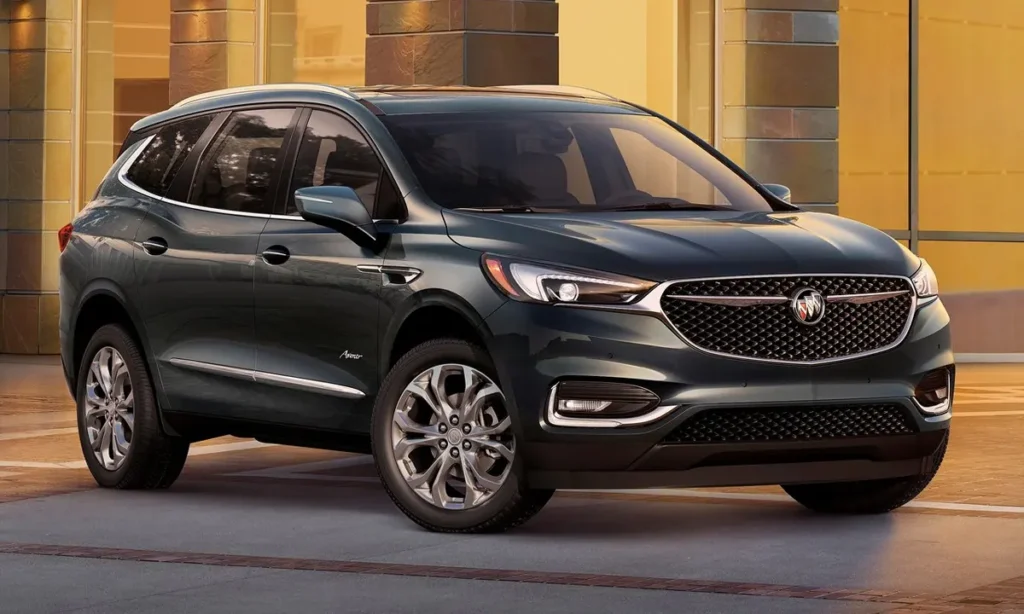
The Buick Enclave Avenir — whose Avenir trim level represents General Motors’ most comprehensive luxury appointment package for the Enclave platform — competes with the QX60 at a price point that overlaps meaningfully at the upper end of the QX60’s trim range and whose interior quality, in the Avenir specification’s most generously equipped configurations, challenges the QX60’s cabin presentation with a legitimacy that the Buick nameplate’s historical luxury reputation did not historically support.
The Enclave’s 3.6-litre naturally aspirated V6 producing 310 horsepower provides a modest power advantage over the QX60 while maintaining the refinement character that naturally aspirated engines provide in the luxury SUV context. The Enclave’s dimensional advantage — a longer wheelbase that provides third-row accommodation more genuinely usable for adult passengers than the QX60’s more compact third row manages — represents a meaningful practical distinction for buyers whose three-row selection is genuinely motivated by seven-seat passenger use rather than the occasional supplementary seating that many luxury SUV third rows realistically provide.
The QX60’s competitive response to the Enclave Avenir is found primarily in the driving dynamics dimension — where the Infiniti’s more precisely weighted steering, more composed cornering behaviour and more driver-communicative chassis tuning provide a behind-the-wheel experience that the Enclave’s comfort-prioritised suspension calibration does not approach — and in the residual value performance that Infiniti’s ownership cost data demonstrates relative to the Buick equivalent, whose depreciation curve produces five-year ownership costs that the QX60’s stronger residual retention partially offsets against the initial price comparison.
QX60 vs Genesis GV80: The Prestige Challenger
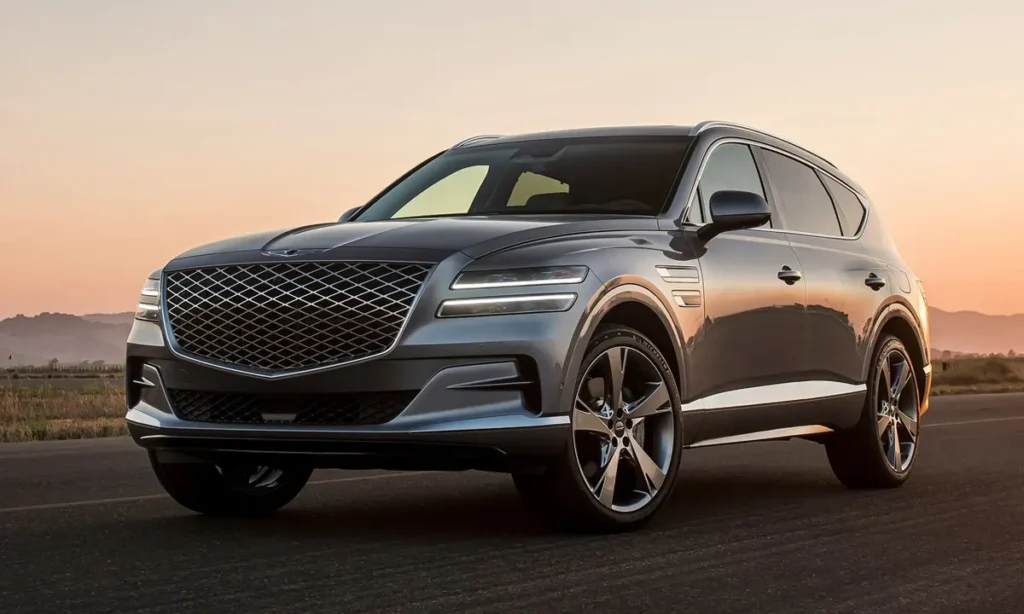
The Genesis GV80’s arrival in the American luxury SUV market introduced the most significant competitive challenge the QX60 has faced from a brand positioned at its price point — a three-row luxury SUV whose interior design and material quality have been assessed by automotive journalists as legitimate competitors to German premium standards and whose turbocharged powertrain lineup provides a performance capability range that the QX60’s single naturally aspirated engine option cannot replicate.
The GV80’s 2.5-litre turbocharged four-cylinder and 3.5-litre twin-turbocharged V6 options bracket the QX60’s naturally aspirated V6 in terms of power output — with the twin-turbo V6’s 375 horsepower representing a meaningful performance step above the QX60’s 295 horsepower and providing the GV80 with a dynamic capability argument whose real-world impact in the performance-oriented buyer’s consideration set is genuine. The GV80’s interior design — whose quilted leather, ambient lighting integration and material selection drew consistent comparison to vehicles costing significantly more — presents the QX60’s cabin with its most aesthetically challenging competition in the accessible luxury tier.
The QX60’s response to the GV80 challenge is most effectively mounted on reliability grounds — where Infiniti’s longer production history and Nissan’s established manufacturing quality record provide ownership confidence data that the Genesis brand’s shorter American market tenure has not yet accumulated in sufficient volume to match with equivalent statistical authority. For the buyer whose luxury SUV decision weights long-term ownership reliability evidence alongside initial product impression, the QX60’s established record provides reassurance that the GV80’s undeniable design achievement cannot yet fully counter.
QX60 vs Volvo XC90: The Scandinavian Sophistication Test
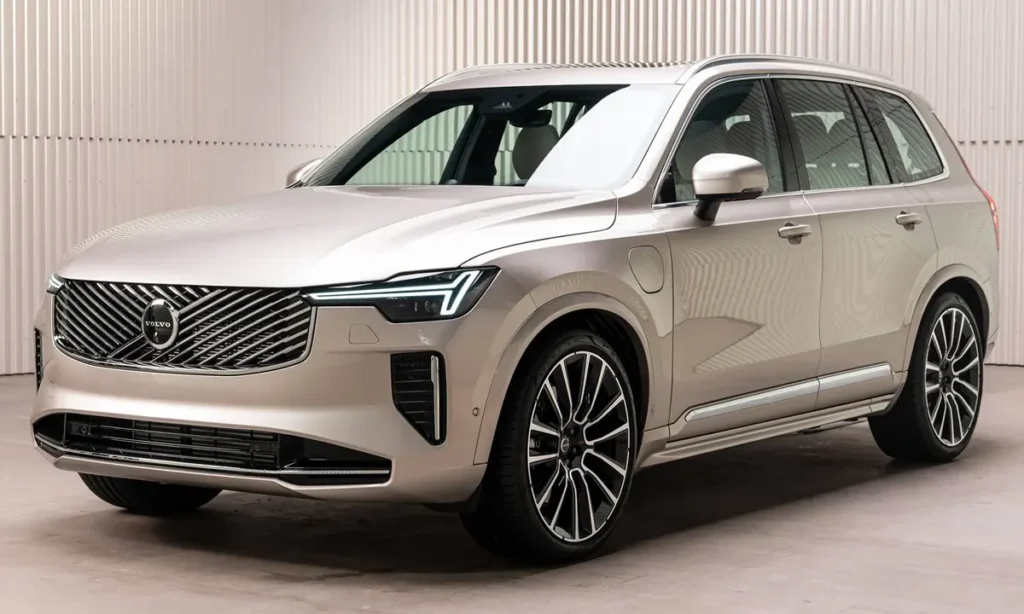
The Volvo XC90’s position in the three-row luxury SUV comparison operates on a dimension that the other competitors on this list do not primarily contest — the safety technology leadership and Scandinavian design philosophy whose combination has established the XC90 as the considered, values-driven alternative to both the prestige-oriented German competitors and the value-proposition Japanese alternatives in a buyer segment that weights these qualitative dimensions alongside specification comparisons.
The XC90’s B6 mild-hybrid powertrain — a 2.0-litre turbocharged and supercharged four-cylinder producing 295 horsepower with mild-hybrid assistance — matches the QX60’s power output from considerably smaller displacement through the combination of turbocharging, supercharging and electrification that represents the most technically complex powertrain solution on this list. Real-world fuel economy figures for the XC90 B6 are comparable to the QX60’s naturally aspirated equivalent despite the powertrain complexity differential — reflecting the mild-hybrid system’s contribution to low-speed efficiency and the four-cylinder’s inherent displacement advantage in moderate driving conditions.
The QX60 outpoints the XC90 in interior space — particularly in second and third-row accommodation whose dimensional generosity the XC90’s more architecturally constrained interior cannot match — and in powertrain refinement at highway cruise speeds, where the QX60’s naturally aspirated V6’s smoothness and acoustic composure distinguish it from the four-cylinder XC90’s more mechanical character at high engine loads.
Read: 2026 Infiniti QX80 Sport: Redefining Luxury Performance in Full-Size SUVs
The Verdict: Why the QX60 Deserves More Consideration Than It Receives
The Infiniti QX60’s competitive position across this four-rival comparison is that of a vehicle whose strengths are real, whose weaknesses are specific and whose value proposition is stronger than its sales volume and brand recognition suggest it should be. Against the Acura MDX, it offers more interior space and a simpler user experience. Against the Buick Enclave Avenir, it provides superior driving dynamics and stronger residual values. Against the Genesis GV80, it contributes established reliability confidence and competitive pricing. Against the Volvo XC90, it delivers dimensional generosity and powertrain refinement.
No competitor on this list defeats the QX60 across every dimension simultaneously — and in a segment where buyers’ individual priority weighting determines the optimal choice more than any objective ranking can, the QX60’s broad competence across every relevant dimension makes it the luxury three-row SUV that more buyers should place at the top of their consideration list before the badge on the bonnet has been factored into the comparison.
The luxury SUV battle nobody expected to be this close has produced a result that the QX60’s advocates have always known was coming — and that its competitors’ marketing budgets have worked hard to ensure fewer buyers discover than the vehicle’s genuine merit deserves.
Read: 2027 Infiniti QX65 Review. The FX Spirit Is Finally Back and It Brought Everything With It
Infiniti QX60 vs Rivals Full Comparison
| Category | Infiniti QX60 | Acura MDX | Buick Enclave Avenir | Genesis GV80 | Volvo XC90 |
| Engine | 3.5L NA V6 | 3.5L NA V6 | 3.6L NA V6 | 3.5L TT V6 | 2.0L Turbo/SC + MHV |
| Horsepower | 295 hp | 290 hp | 310 hp | 375 hp | 295 hp |
| Transmission | 9-Speed Auto | 10-Speed Auto | 9-Speed Auto | 8-Speed Auto | 8-Speed Auto |
| AWD Available | Yes | Yes | Yes | Yes | Yes |
| Third Row | Yes (2+3+2) | Yes (2+3+2) | Yes (2+3+2) | Yes (2+3+2) | Yes (2+3+2) |
| EPA Combined MPG | 22 mpg (FWD) | 21 mpg | 19 mpg | 19 mpg | 22 mpg |
| Starting MSRP | ~$47,000 | ~$48,000 | ~$54,000 | ~$54,000 | ~$57,000 |
| Reliability Rating | Strong | Strong | Average | Limited Data | Strong |
| Interior Quality | Very Good | Very Good | Good–Very Good | Excellent | Excellent |
| Driver Dynamics | Good | Very Good | Average | Good | Good |
| Residual Value | Good | Very Good | Below Average | Good | Good |