From Aston Martin to Denza Z9 GT, Could 007 Switch to Electric?
Six Decades of Silver Birch DB5s, Ejector Seats and Supercharged V8s Face Their Most Provocative Challenger Yet — A 965-Horsepower, Crab-Walking, 800-Volt Chinese Electric Shooting Brake That Outpaces Everything Q Branch Ever Built
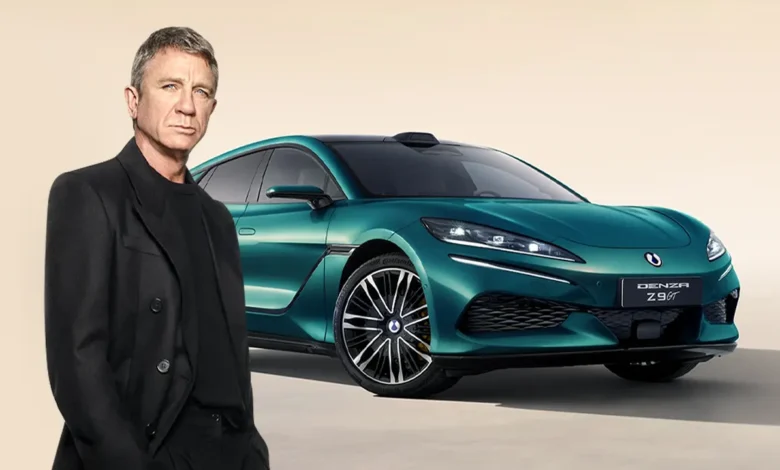
Denza Z9 GT: Few relationships in popular culture are as deeply embedded, as commercially potent and as seemingly immovable as the one between James Bond and Aston Martin. It began in 1964 when a Silver Birch DB5 roared onto cinema screens in Goldfinger, fitted with machine guns behind the headlamps, a passenger ejector seat, revolving number plates and a smoke screen — and the world decided, collectively and immediately, that this was the definitive Bond car. More than sixty years and twenty-five official films later, the DB5 and its Aston Martin successors remain the most recognisable product placement in cinema history, generating cultural currency that no marketing budget could manufacture from scratch and that no rival manufacturer has ever truly threatened to displace. The DB5’s stunt car from No Time to Die sold at auction for nearly three million pounds. Half the world’s population, according to one estimate, would recognise a Silver Birch Aston Martin DB5 on sight. That is not merely brand loyalty — that is mythology.
Gallery: Denza Z9 GT
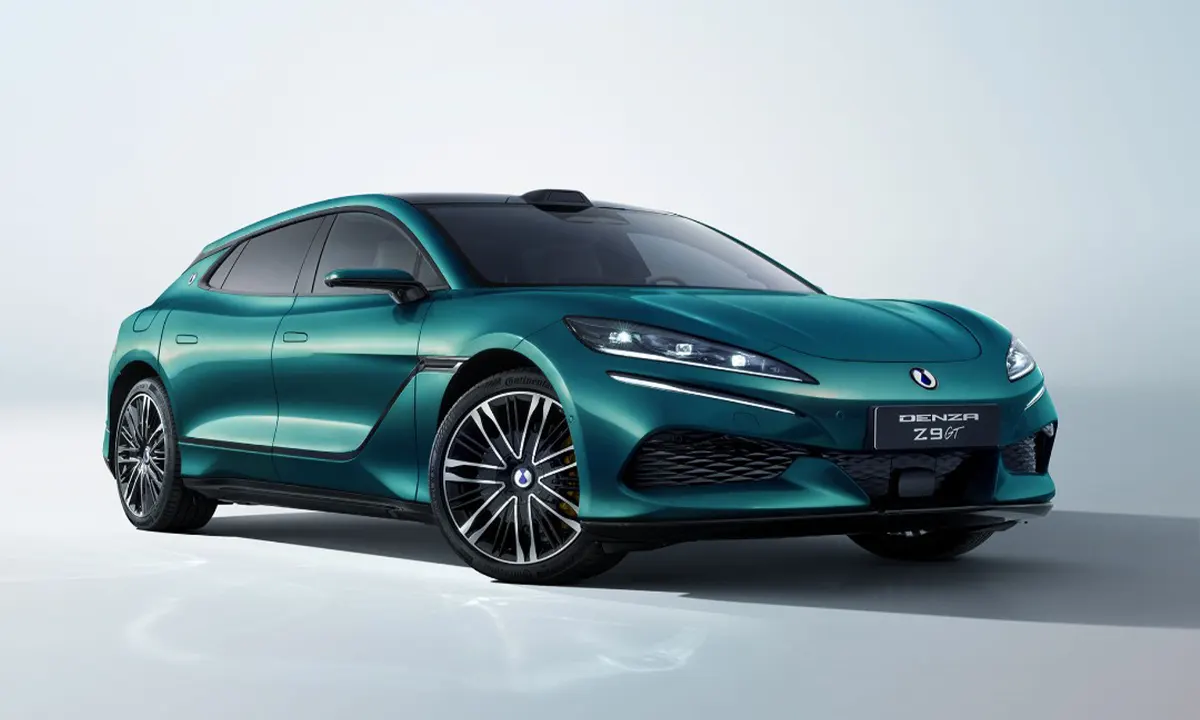
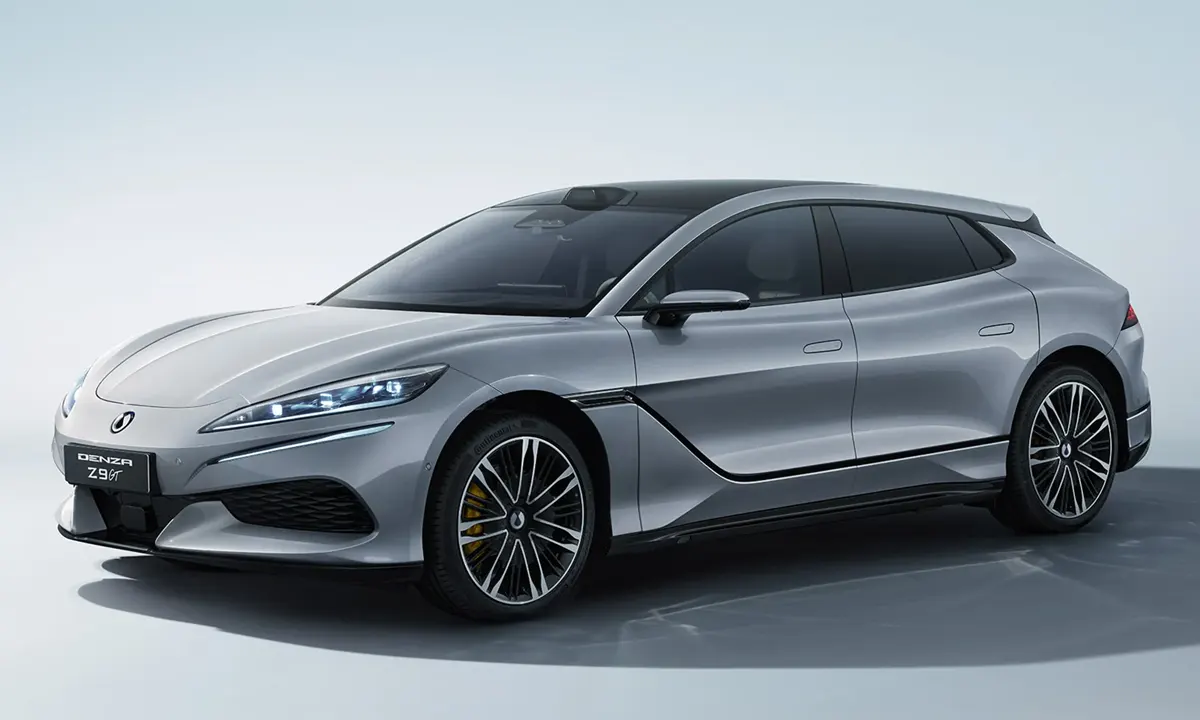
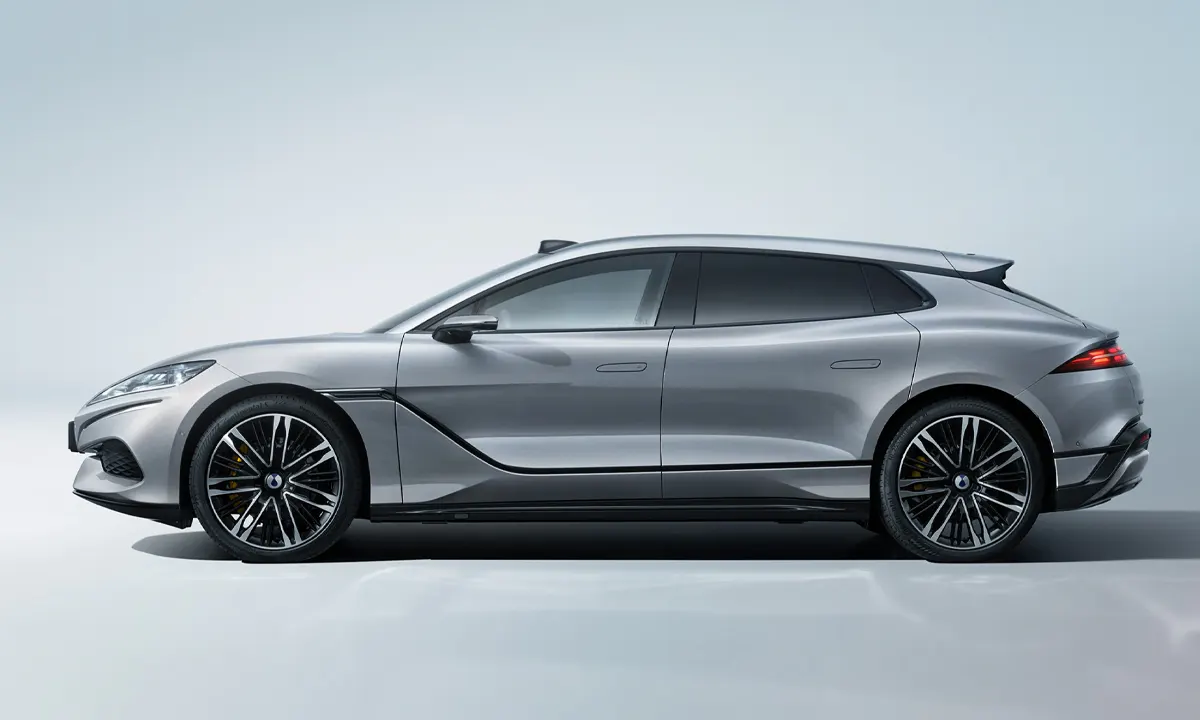
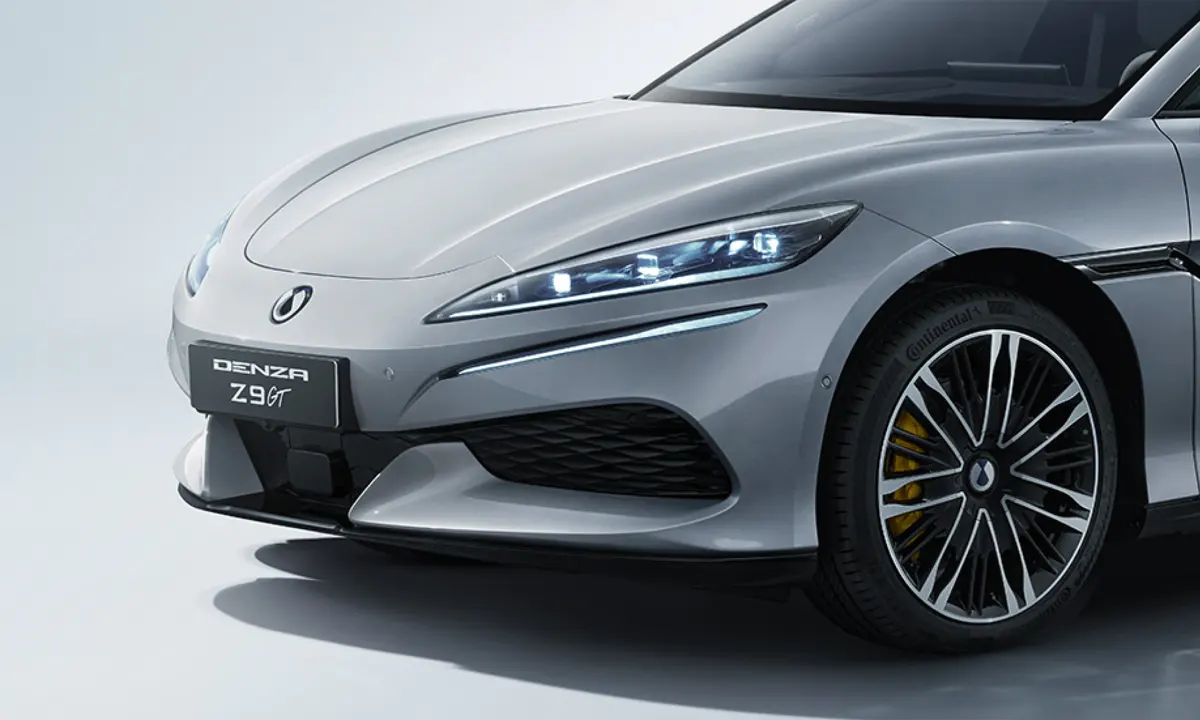
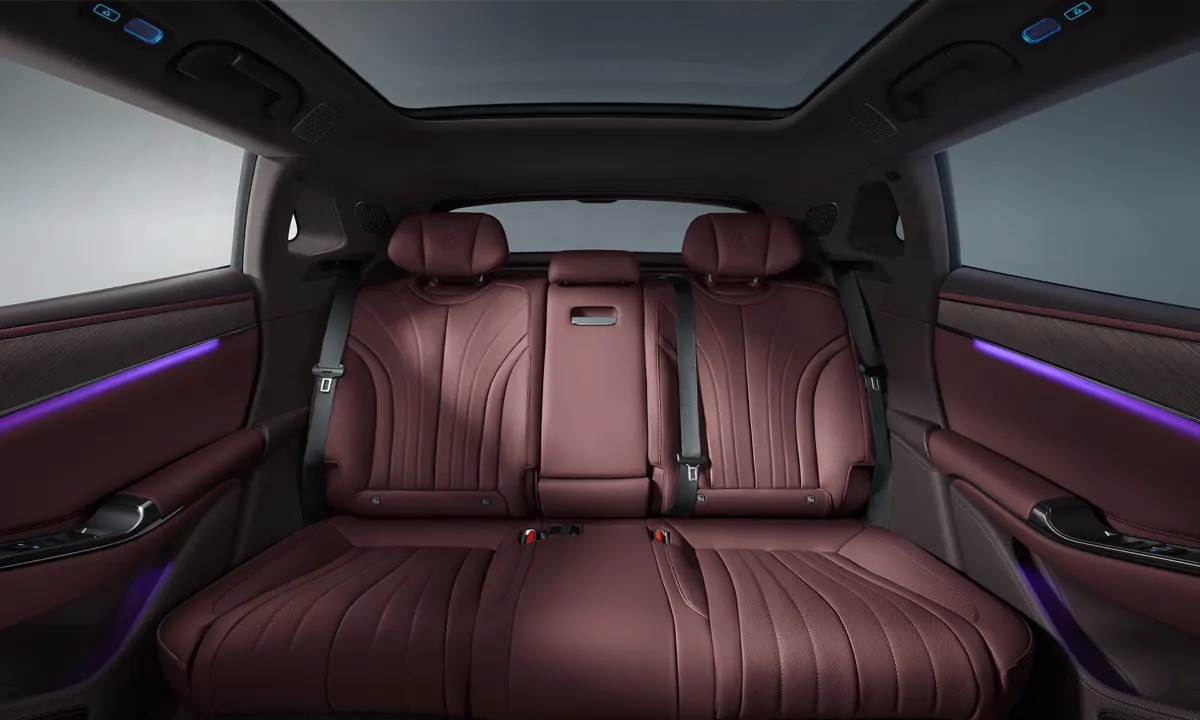
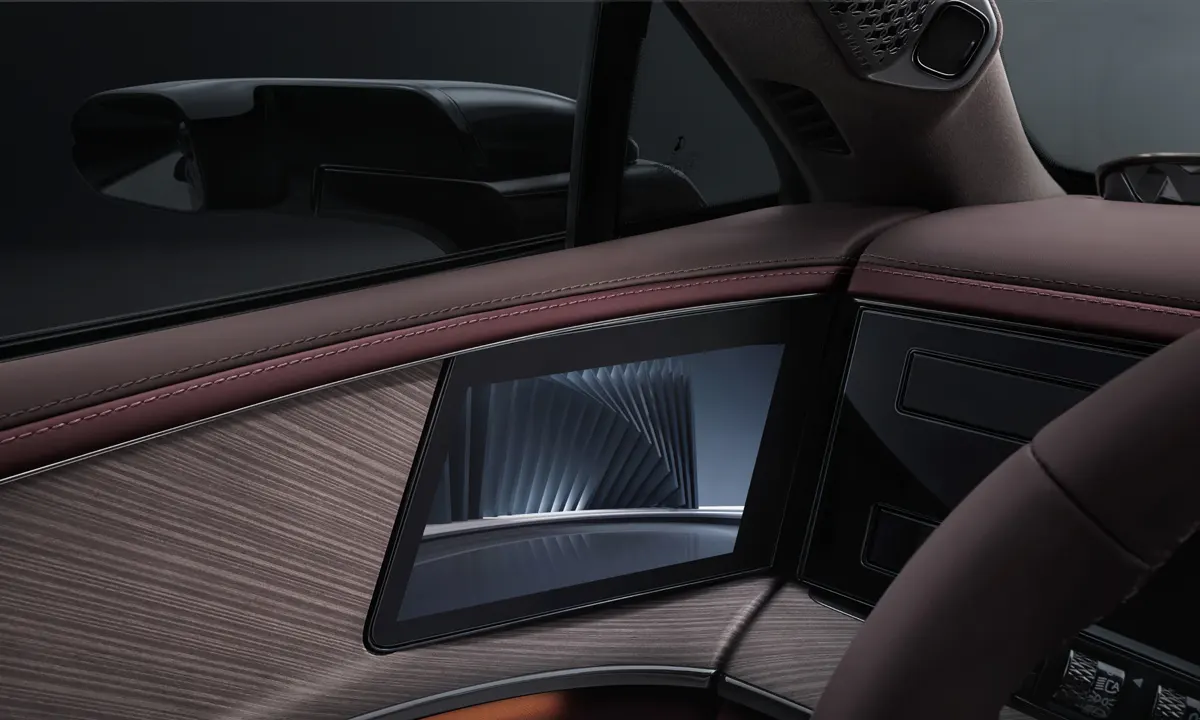
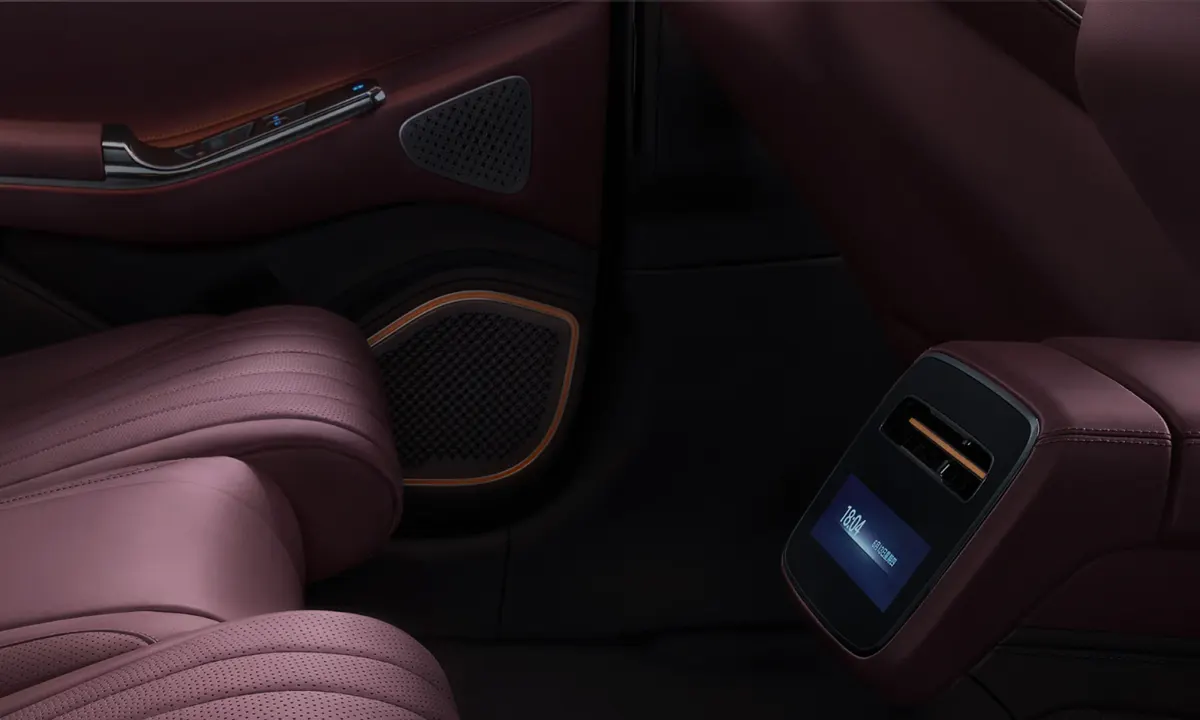
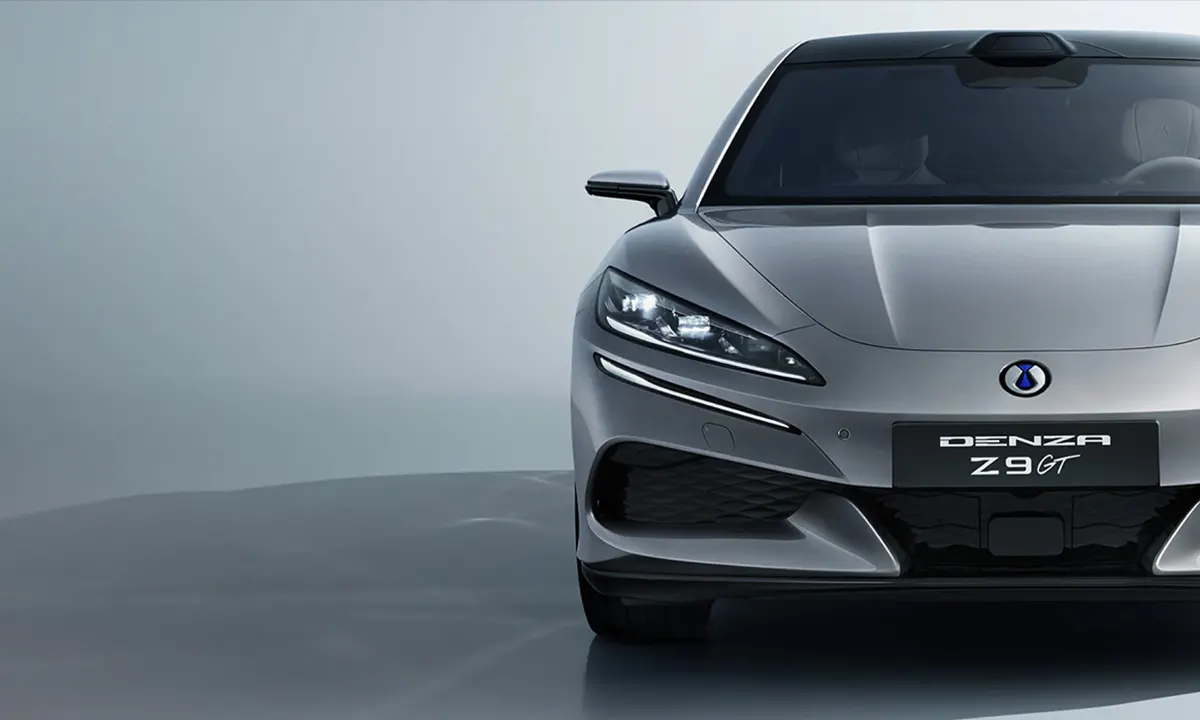
And yet, in 2026, a question that would have seemed absurd a decade ago has become genuinely interesting: could 007’s next car be electric? More specifically — could it be a 965-horsepower, 391-mile-range, crab-walking, 800-volt Chinese electric shooting brake built by a brand called Denza that most of the Western world has never heard of? The Denza Z9 GT is, on paper and in early press drives, the most technically extraordinary performance grand tourer to emerge from China’s rapidly maturing automotive industry. It is faster than a Porsche Taycan Turbo S Sport Turismo, available at a fraction of the price, and equipped with technologies — including independent four-wheel steering that enables the car to execute a complete 360-degree turn on the spot and sustain lane changes by steering all four wheels simultaneously in a crab motion — that have no equivalent in the Western luxury car market. The question of whether 007 could plausibly drive one is both frivolous and genuinely revealing about where the automotive world, the spy genre and the relationship between them are headed.
The Bond Car Formula: What Makes a 007 Machine
Before asking whether the Denza Z9 GT could fill Bond’s garage, it is worth establishing what the Bond car formula actually requires, because the answer is more nuanced than the DB5 nostalgia might suggest. The defining Bond vehicles across six decades have not been chosen for their heritage, their national identity or their collector value. They have been chosen for their combination of credible performance, visual drama, plausible gadget hosting and the ability to make an audience believe that this specific machine is the natural extension of Bond’s character — dangerous, refined, instantly recognisable and capable of something unexpected.
The DB5 met all four criteria in 1964 and has continued to meet them in every subsequent appearance. The V12 Vanquish that appeared in Die Another Day in 2002 and rendered itself invisible through adaptive camouflage met them in the context of the early 2000s technological imagination. The DBS Superleggera that Daniel Craig drove through the last years of his tenure met them within the framework of a grittier, more emotionally complex Bond who had evolved beyond the gadget-dependent playboy of the Connery era. The Aston Martin Valhalla — the hybrid hypercar that made a brief cameo in No Time to Die — hinted at a direction the franchise might pursue when its next chapter begins. Each of these cars shared one quality that no amount of horsepower or gadget specification could manufacture independently: they felt inevitable in the moment of their appearance. The right car for the right Bond.
What the Denza Z9 GT Actually Is
The Denza Z9 GT is BYD’s flagship luxury performance vehicle, produced under the Denza sub-brand that BYD created following its acquisition of full control from the former joint venture with Mercedes-Benz. The name was chosen deliberately and with numerological intent: Z is the final letter of the alphabet — implying the ultimate — and 9 carries connotations of prestige and completion in Chinese numerology. The car is offered in two body styles in China — a saloon and a shooting brake-style grand tourer — with only the latter confirmed for European markets, where it enters the premium segment against the Porsche Taycan Sport Turismo and the Audi e-tron GT as its most direct competitors.
The fully electric Z9 GT EV is powered by a tri-motor arrangement drawing from a 100.1 kWh BYD Blade battery — the same lithium iron phosphate cell chemistry used across BYD’s product range, chosen for its thermal stability, long service life and proven safety record. The three motors produce a combined 952 to 965 horsepower depending on specification, with 848 lb-ft of torque available for a vehicle that covers the 0-62 mph sprint in 3.4 seconds and achieves a top speed of 149 mph. The 800-volt electrical architecture enables DC fast charging at up to 270 kW, with BYD’s forthcoming 1,000 kW Megawatt charging infrastructure — planned for deployment across key European markets — capable of adding 249 miles of range in approximately five minutes when fully operational. These are, by any honest assessment, extraordinary numbers for a vehicle that European pricing is expected to position significantly below the Porsche Taycan Turbo S Sport Turismo, which produces less power and costs upward of €231,000.
The technology embedded within the Z9 GT’s chassis architecture goes considerably further than the powertrain numbers alone suggest. The Yi Sanfang system — Denza’s proprietary combination of three-motor all-wheel drive, dual-motor rear-wheel steering with up to 20 degrees of steering angle, and the crab-walk capability that allows the car to move diagonally at a 15-degree angle — has no precise equivalent in the Western luxury GT market. The rear wheels can steer independently of each other, enabling a complete U-turn in a single movement and a 360-degree on-the-spot pivot that turns a five-metre grand tourer into something that moves with the spatial awareness of a much smaller machine. A tire-burst stability system maintains road holding and driver control at speeds up to 111 mph following a blowout — a safety capability that the car demonstrated publicly during its European introduction and that represents a genuine, measurable engineering achievement rather than a marketing claim.
The Interior: A Different Kind of Q Branch
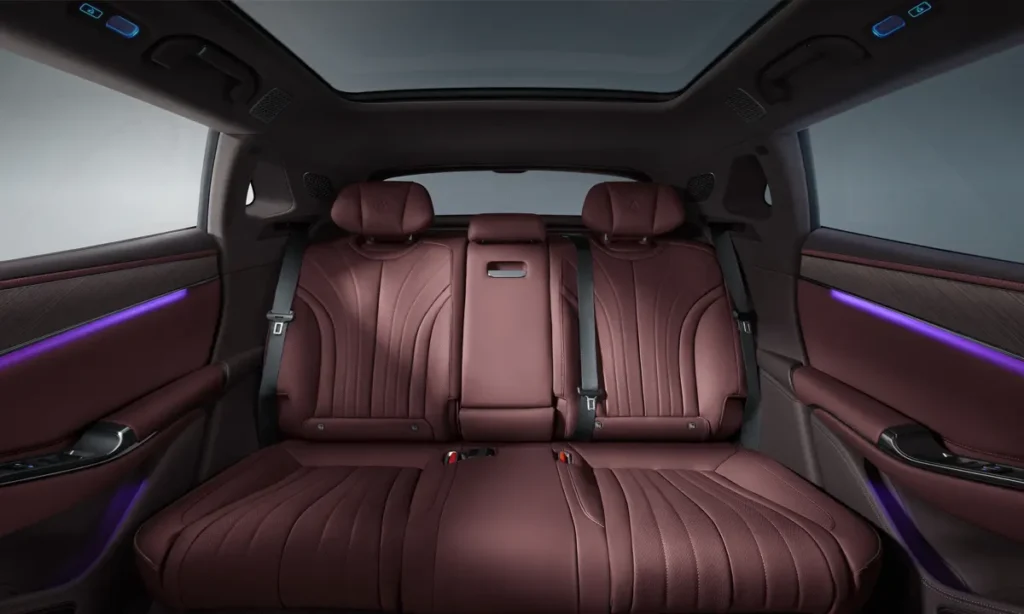
Inside the Denza Z9 GT, the cabin environment reflects BYD’s determination to compete with the established premium order on the terms that the established premium order has set — and to exceed them on the terms that the established premium order has not yet discovered. The dashboard architecture draws inspiration from the flowing, enveloping qualities associated with silk — a material reference that connects the car’s design language to a specific cultural and artistic tradition rather than to the anonymous premium-neutral language that most luxury interiors adopt. The seats feature heating, ventilation and massage functions as standard, with active side bolsters whose operation draws air from the same tanks as the car’s air suspension — a detail of engineering integration that is both practically clever and philosophically consistent with the car’s approach to doing more with less.
The technology stack is presented through three screens: a 17.3-inch central touchscreen, a 13.2-inch digital instrument cluster, and a dedicated 13.2-inch passenger display — an unusually generous provision that positions the front passenger as a genuine participant in the cabin’s digital ecosystem rather than a spectator. A refrigerated compartment beneath the front centre armrest and a considerably larger refrigerator integrated between the rear seats address the grand touring brief with the directness that distinguishes genuinely considered luxury from luxury as a list of specifications. The Dynaudio sound system — the same Scandinavian audio brand used in Volkswagen Group’s premium products — provides a reference audio quality within the cabin that places the Z9 GT in credible competition with the Burmester systems deployed in comparable Mercedes products.
For a car that Q Branch might theoretically prepare for field use, the Z9 GT’s technology infrastructure is both a strength and an interesting subject for reflection. The crab-walk capability alone, in the right hands and the right screenplay, is more cinematically compelling than most of the gadgets that Bond cars have deployed over six decades. A car that can park sideways, execute a 360-degree pivot in an underground carpark, or change lanes by steering all four wheels simultaneously while pursuing a villain through European city streets would require very little invention from a screenwriter working with a blank page.
The Case For and Against: 007’s Electric Future
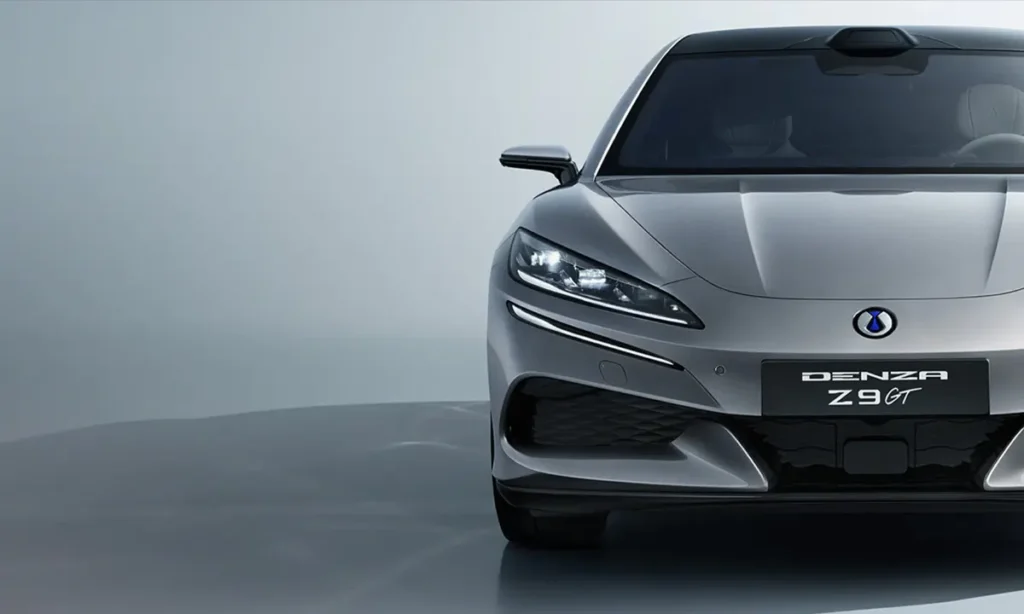
The case for a Bond franchise willing to place 007 in a Denza Z9 GT — or in any fully electric grand tourer of this capability — rests on a reading of where the Bond character and the global automotive market are simultaneously heading. The franchise has never been reluctant to reflect the technology of its era, and the era of the naturally aspirated six-cylinder is receding in the rear view mirror regardless of how loudly its advocates lament its passing. The Aston Martin Valhalla’s cameo in No Time to Die signalled that EON Productions understands the direction of travel. The question is not whether Bond will drive an electric car in a future film — the question is which electric car best serves the character’s identity when that moment arrives.
The case against the Denza Z9 GT specifically is rooted not in performance — where the car is entirely credible — but in brand recognition and the cultural shorthand that the Bond car needs to communicate instantly to a global audience. The DB5 requires no explanation. The Taycan Sport Turismo requires modest explanation. The Denza Z9 GT, for a Western audience in 2026, requires a paragraph — and Bond films do not pause for paragraphs. That will change as Denza establishes its European presence and its brand recognition builds. Whether it will change quickly enough to serve as a Bond car in the next chapter of the franchise is a timing question rather than a capability question.
What the comparison between the Silver Birch DB5 and the Denza Z9 GT ultimately reveals is something both simple and significant: the definition of the world’s most capable, most desirable and most technologically advanced performance car is no longer the exclusive property of the European manufacturers who have held it for most of the automotive century. The Z9 GT is faster than the Taycan. It costs less. It charges faster. It does things with its wheels that no Western luxury GT can replicate. It seats its occupants in a cabin of genuine quality and genuine cultural character. If the next Bond drives it, the choice will not be a compromise. It will be a statement — about where the automotive world has arrived, about where the franchise is willing to look, and about the fact that Q Branch, in its finest tradition, goes wherever the best technology leads.
Read: Xiaomi Vision GT Concept Reveals a Stunning Futuristic Electric Hypercar
Denza Z9 GT vs Aston Martin — Bond Car Comparison Chart
| Category | Aston Martin DB12 / DBS | Denza Z9 GT EV |
| Engine / Motor | 4.0L Twin-Turbo V8 / 5.2L V12 | Tri-Motor Electric — 380hp Front + 322hp x2 Rear |
| Horsepower | 671 hp (DB12) / 715 hp (DBS) | 952–965 hp |
| Torque | 590 lb-ft (DB12) | 848 lb-ft |
| 0–62 mph | 3.6 sec (DB12) / 3.4 sec (DBS) | 3.4 seconds |
| Top Speed | 202 mph (DB12) | 149 mph |
| Range | N/A (Petrol) | 391 miles WLTP / 630 km CLTC |
| DC Fast Charging | N/A | Up to 270 kW (1,000 kW Megawatt Future) |
| Battery | N/A | 100.1 kWh BYD Blade LFP |
| Electrical Architecture | N/A | 800 Volt |
| All-Wheel Drive | No (RWD Standard) | Yes — Tri-Motor eAWD |
| Rear-Wheel Steering | No | Yes — Dual-Motor, Up to 20 Degrees |
| Crab-Walk Capability | No | Yes — 15-Degree Lateral Movement |
| 360-Degree Pivot | No | Yes — On-the-Spot Full Turn |
| Tyre-Burst Stability | Standard ABS | Control Maintained to 111 mph |
| Infotainment Screens | Dual Display | Three Screens (17.3″ + 13.2″ x2) |
| Passenger Screen | No | Dedicated 13.2-inch |
| Audio System | Bespoke Aston Martin / Optional Bang and Olufsen | Dynaudio Standard |
| Rear Refrigerator | No | Yes — Between Rear Seats |
| Front Armrest Refrigerator | No | Yes |
| Seat Functions | Heated and Ventilated | Heated, Ventilated, Massage, Active Side Bolsters |
| Body Style Available | Coupe / Volante Convertible | Shooting Brake (Europe) / Saloon (China) |
| Seating | 2+2 | 5 (Grand Touring) |
| Cargo Capacity | 270 litres | 488 litres |
| Starting Price (Europe) | ~€250,000+ | ~€70,000–€100,000 (Est.) |
| Porsche Taycan Turbo S ST (Rival) | ~£160,000 | Positioned Below |
| Bond Films Featuring Aston Martin | 13+ Films | 0 (To Date) |
| Assembly | Gaydon, England | Shenzhen, China |
| Parent Company | Aston Martin Lagonda | BYD — via Denza Sub-Brand |
| Former JV Partner | N/A | Mercedes-Benz (Until BYD Full Control) |