Why the Koenigsegg Gemera Is a Collector’s Dream: The World’s First Mega GT Belongs in Every Serious Collection
2,300 Horsepower, Four Adults, 250 Miles Per Hour, 300 Units Ever Made, a Nine-Speed Lightspeed Transmission and the Only Hypercar on Earth That Can Carry Your Family and Simultaneously Destroy Every Record on the Track — The Gemera Is Not a Car. It Is a Monument to What Human Engineering Can Achieve When Ambition Has No Ceiling
There is a category of collector automobile that transcends the conventional metrics by which enthusiasts evaluate desirable cars. Price, performance and rarity are necessary conditions for inclusion in this category, but they are not sufficient ones — the cars that collectors return to repeatedly, that appreciate most consistently across the long arc of automotive history and that generate the deepest and most enduring emotional investment are the cars whose story cannot be told without reference to the moment in automotive development that produced them. They are vehicles that answer a question the automotive world did not know it had been asking. They are, in the most meaningful and the most complete sense of the word, genuinely unprecedented. The Koenigsegg Gemera is precisely this kind of automobile — a vehicle whose combination of performance, practicality, engineering innovation and philosophical originality places it in a category of automotive significance that no other car currently in production occupies or approaches. Understanding why the Gemera is a collector’s dream requires understanding not merely what it does but what it represents — and what it represents is nothing less than the most complete redefinition of the performance automobile concept since the original mid-engine Ferrari of the 1960s.
Gallery: Koenigsegg Gemera
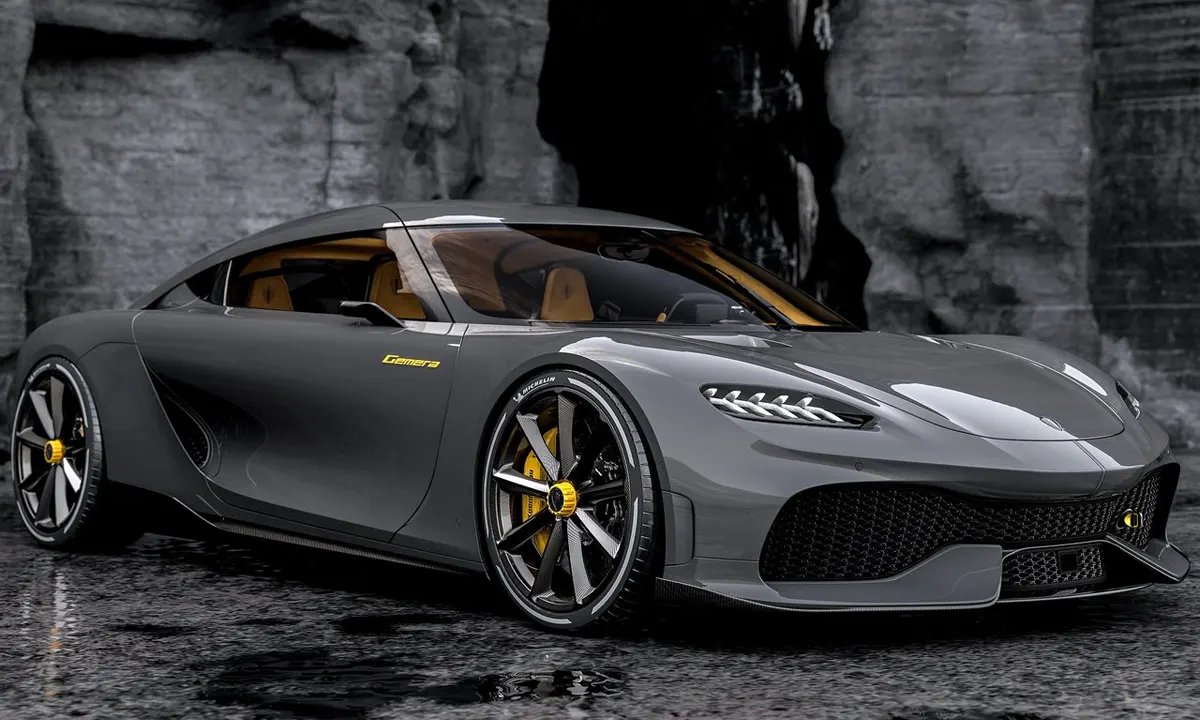
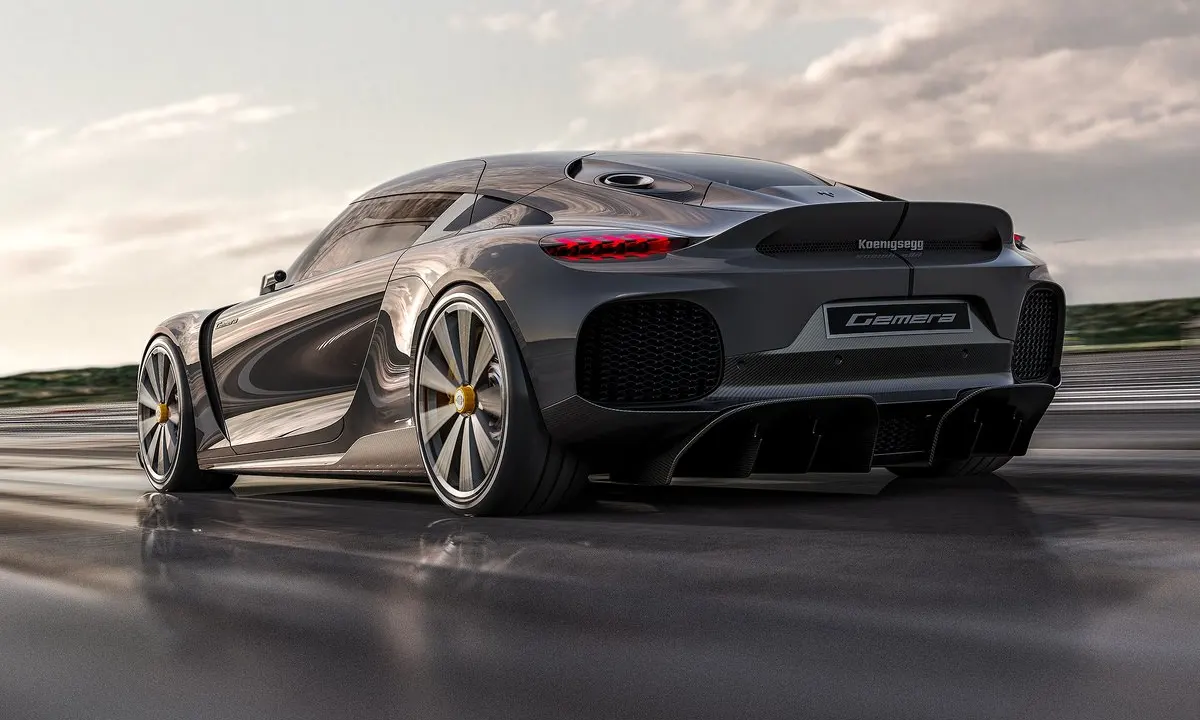
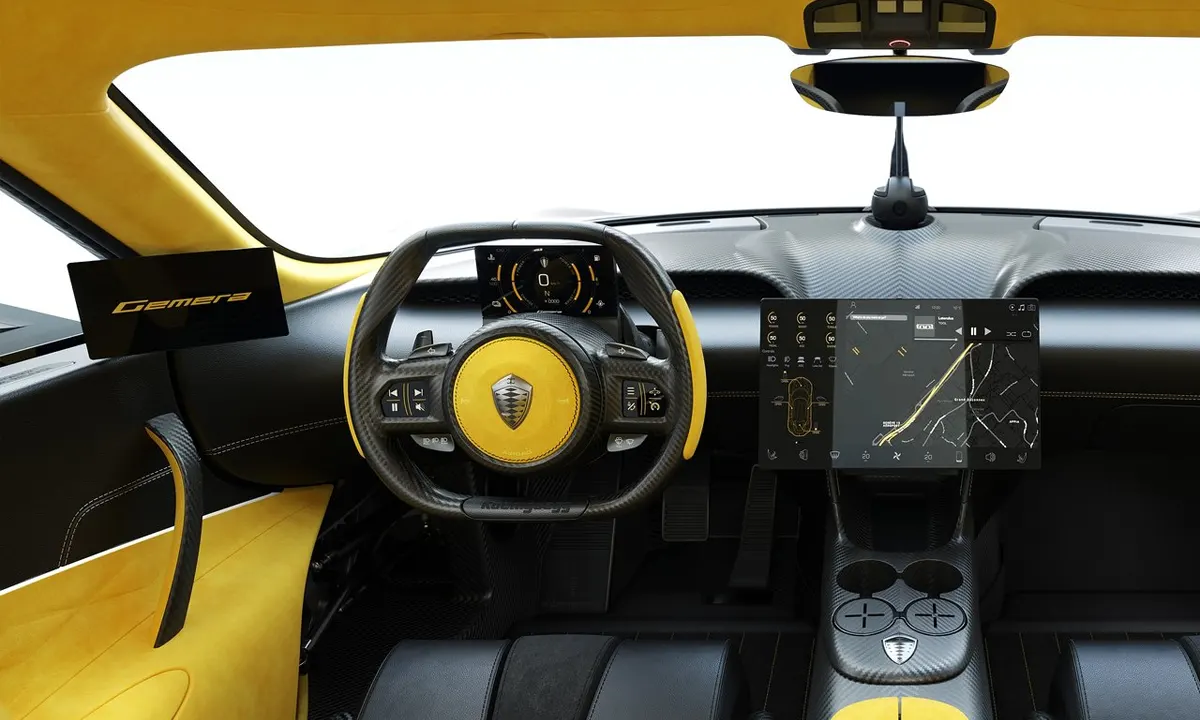
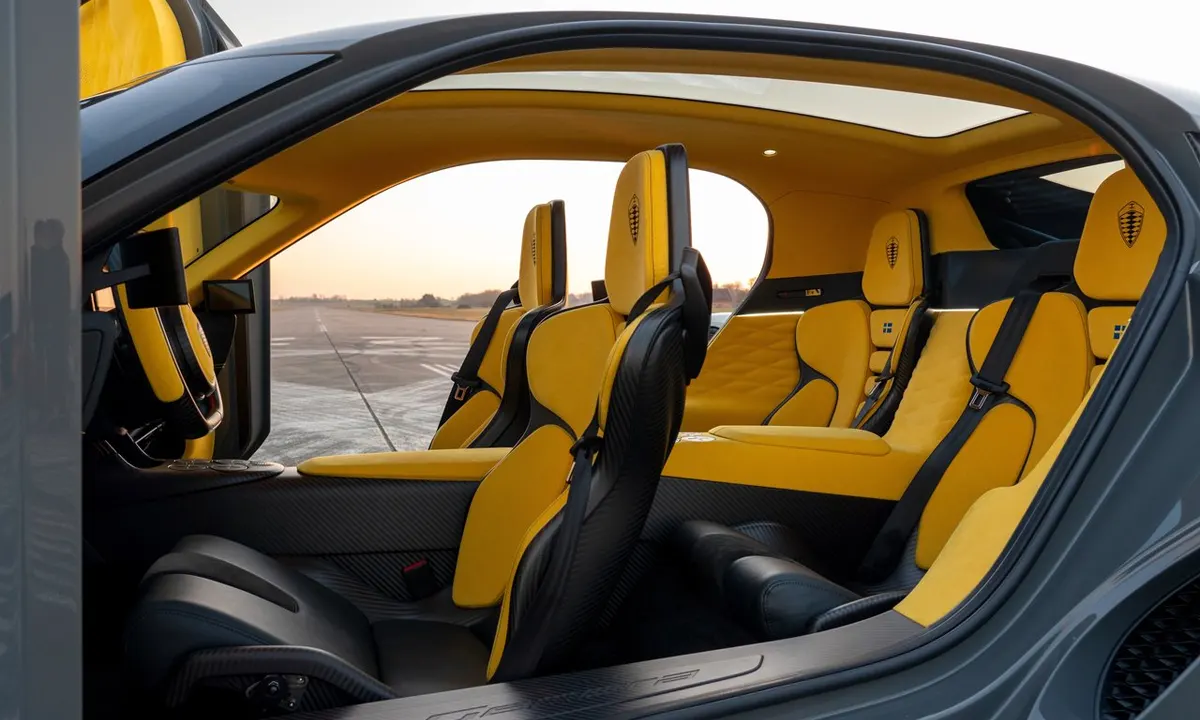
The Car That Created Its Own Category
The Koenigsegg Gemera was introduced to the world in March 2020 in circumstances that were themselves extraordinary — unveiled to a global audience through an online presentation at the moment the Geneva Motor Show was canceled, the Gemera made its debut to a world in the grip of a pandemic whose most profound consequence for the automotive industry was to compress the period between astonishment and acceptance. The world was, at that moment, maximally receptive to the idea that fundamental assumptions could be overturned overnight — and the Gemera’s proposition was itself a fundamental assumption turned on its head. A Koenigsegg that seats four adults. A hypercar that accommodates a family. A vehicle producing more than 1,000 kilowatts of combined output that can carry your children, their luggage and their child seats while covering zero to 60 miles per hour in 1.9 seconds. The Gemera did not fit any existing automotive category because no existing automotive category had been designed to contain it. Koenigsegg solved this problem with characteristic directness — the Gemera invented a new category, the Mega GT, and immediately populated it with the most extreme and most technically accomplished example of that category that could possibly have existed.
The name itself is drawn from the Swedish meaning of offering more — and in the specific context of Koenigsegg’s product heritage, the implicit promise of that name is profound. Koenigsegg had, across every previous model in its production history, offered the most extreme two-seat performance experience available at any price. The Gemera offers more than that — it offers that experience multiplied by four, without any measurable sacrifice in the dimensions of performance, exclusivity or engineering ambition that define the Koenigsegg identity. Collectors who understand the Gemera’s position within its manufacturer’s lineage understand immediately and completely why it is the most historically significant Koenigsegg ever produced — and why its significance within the broader history of the performance automobile extends well beyond the specific achievements of its specification.
2,300 Horsepower and the Engineering That Makes It Possible
The Gemera’s powertrain is one of the most technically extraordinary systems ever assembled within a production road car — a combination of a twin-turbocharged 5.0-litre Hot-Vee V8 engine and three Koenigsegg Dark Matter electric motors whose combined output reaches 2,300 horsepower and 2,028 pound-feet of torque in the HV8 specification that represents the production Gemera’s definitive powertrain configuration. The decision to adopt this configuration followed an extensive development period that explored a variety of powertrain architectures — including a turbocharged 2.0-litre three-cylinder engine known as the Tiny Friendly Giant that was briefly offered as an alternative — before Koenigsegg concluded that the extraordinary performance and engineering sophistication of the V8 hybrid combination was the configuration that most completely fulfilled the Gemera’s ambitions and most completely justified its position as the definitive Mega GT.
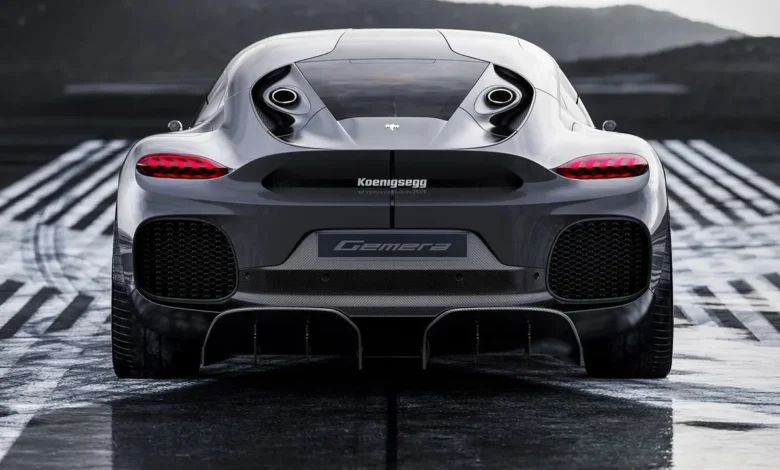
The Hot-Vee V8 engine’s naming reflects a specific turbocharger mounting innovation — the twin turbochargers are positioned within the V of the engine rather than on its outer flanks, a packaging decision that reduces the turbocharging system’s contribution to the car’s overall width and length while improving thermal management and reducing turbo lag. The Dark Matter electric motors — developed entirely by Koenigsegg’s own engineering team — provide instantaneous torque delivery from zero rpm that fills every gap in the combustion engine’s power curve with seamless, immediate response. Together, the combustion and electric systems are integrated through Koenigsegg’s nine-speed Lightspeed Tourbillon Transmission — a completely new gearbox architecture developed specifically for the Gemera that achieves a drivetrain weight reduction of approximately 150 kilograms compared to the conventional transmission architecture it replaces. The Lightspeed Tourbillon Transmission simultaneously enables four-wheel drive and four-wheel torque vectoring — both firsts in a Koenigsegg vehicle — distributing the Gemera’s 2,300 horsepower between all four driven wheels with a precision and an intelligence that makes the car’s performance capability genuinely exploitable rather than merely theoretical. The result is a zero to 62 miles per hour time of 1.9 seconds and a top speed of 250 miles per hour — numbers whose combination with four-seat occupancy and a luggage capacity sufficient for four carry-on suitcases places the Gemera in a performance territory that no other production vehicle in history has previously occupied.
300 Units: The Rarity That Defines Collector Value
The Koenigsegg Gemera will be produced in a total of 300 units across its complete production run — a number that is simultaneously large enough to constitute a genuine production car rather than a one-of-one commission and small enough to ensure the kind of genuine scarcity that drives the long-term appreciation trajectories of the most sought-after collector cars. Every previous Koenigsegg model has demonstrated the brand’s consistent ability to command price premiums in the secondary market that substantially exceed the original purchase price — a performance record that reflects both the quality of the engineering and the depth of the brand identity that Christian von Koenigsegg and his team have built across more than three decades of relentless development and improvement. The Gemera, as the most technically ambitious and most historically significant Koenigsegg ever produced, inherits this appreciation trajectory with the additional advantage of being the car whose category it invented — a status that no subsequent four-seat mega GT from any manufacturer will be able to displace, regardless of the performance credentials it brings to the comparison.
At a starting price of approximately $1.7 million in base specification and rising to approximately $2.5 million to $3 million for the HV8 variant and fully specified examples, the Gemera sits at a price point that makes it the most accessible Koenigsegg in the brand’s current production roster — a fact whose irony is not lost on buyers who recognise that $1.7 million represents only the beginning of the investment that a fully personalised Gemera ownership requires. The personalisation programme available for the Gemera is extensive and genuinely bespoke — encompassing exterior colours in solid, metallic and two-tone combinations, wheel designs in black, polished, carbon fibre and gold finishes and an interior specification programme whose depth reflects Koenigsegg’s understanding that buyers investing at this level expect a vehicle that is genuinely unique to their personal specification. The Ghost Squadron insignia — a historical connection to the Swedish Air Force unit that once operated from the Angelholm airbase where Koenigsegg’s factory was established — can be specified in different colour treatments, and a public configurator released by Koenigsegg provides a degree of specification transparency unusual for a manufacturer at this volume and price level.
The KATSAD Door System: Engineering as Theatre
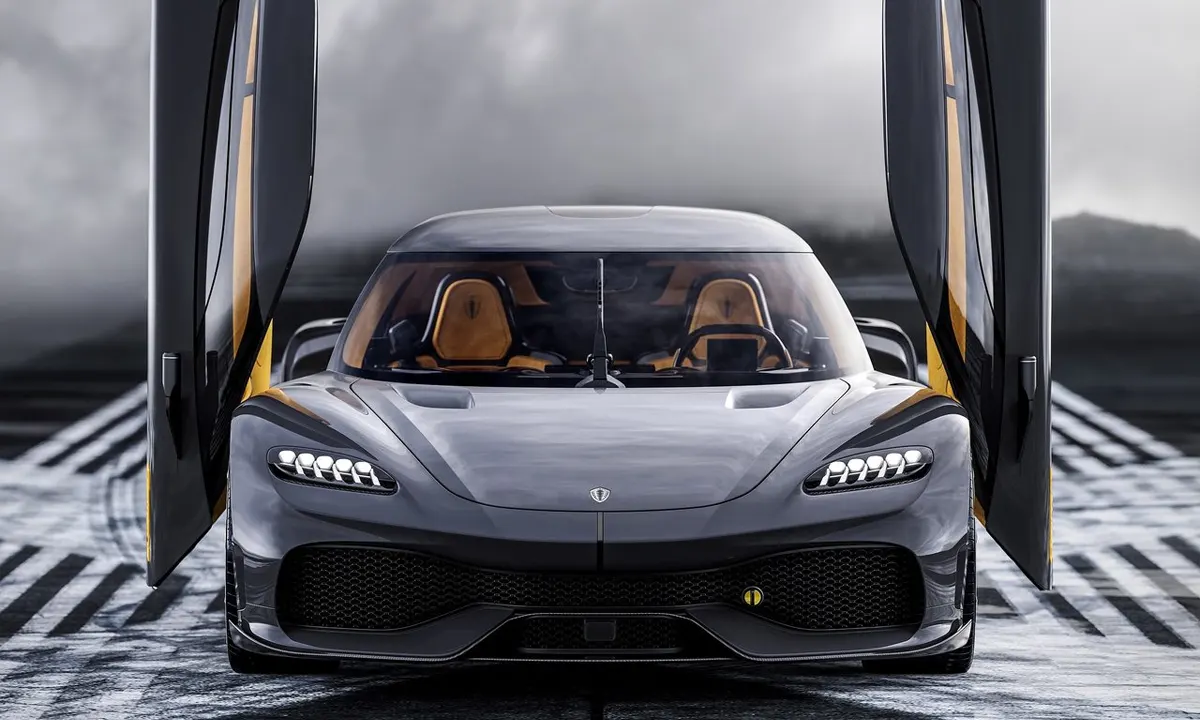
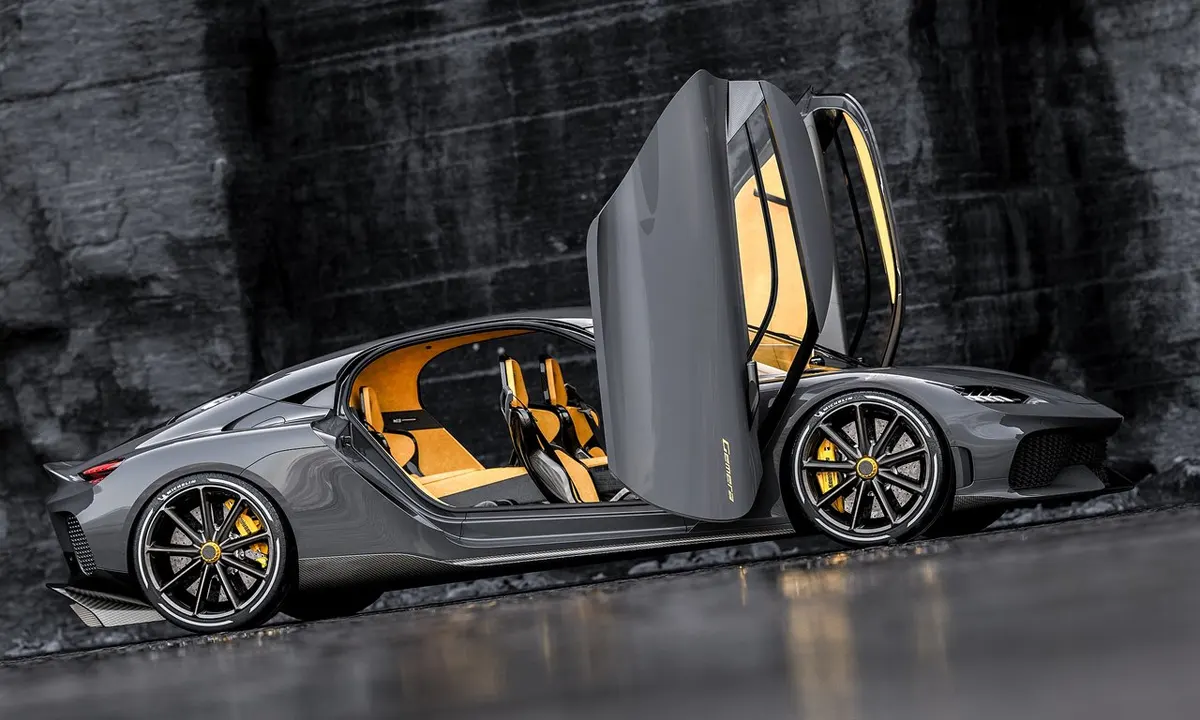
Collector cars are not valued solely on the basis of their mechanical specifications or their historical significance — they are valued on the totality of the ownership experience they provide, including the theatrical and the sensory dimensions that distinguish genuinely memorable automobiles from merely capable ones. The Koenigsegg Gemera’s KATSAD door system — Koenigsegg Automated Twisted Synchrohelix Actuation Doors — is one of the automotive world’s most spectacular functional features and one of the most immediately compelling aspects of the Gemera experience for anyone who encounters the car for the first time. The system opens the entire side profile of the vehicle simultaneously for both front and rear passengers, providing unimpeded access to all four seats without requiring the adjustment of any seat position and without the awkwardness that most four-seat performance cars impose on rear occupants during entry and exit. The kinematic precision of the KATSAD mechanism — developed specifically for the Gemera’s wider body after being refined across multiple previous Koenigsegg models — is itself a demonstration of engineering achievement whose visual impact is entirely disproportionate to its functional simplicity. Watching the Gemera open is, as many automotive journalists and event attendees have noted over the years since the car’s introduction, one of the most spectacular automotive theatre experiences available outside a race circuit — a quality that collectors who display their cars at concours events and private showings regard as genuinely valuable.
A Practical Hypercar: The Genuinely Unprecedented Achievement
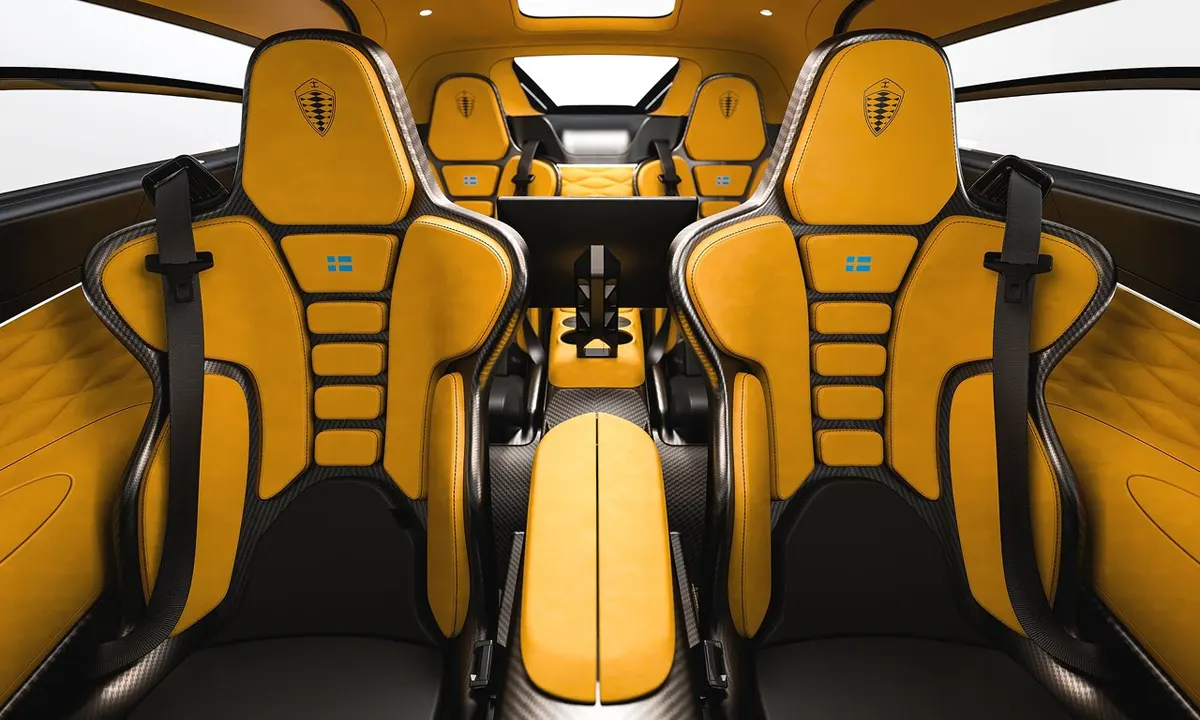
The dimension of the Gemera’s achievement that most consistently surprises automotive commentators encountering it for the first time is its genuine, uncompromised practicality as a four-seat touring vehicle. The cabin accommodates four tall adults with the legroom and headroom appropriate to a genuine touring car — not the token rear seat provision of a 911 or the uncomfortable occasional seating of a mid-engine sports car whose rear cabin is an afterthought rather than a design priority. The luggage capacity behind the rear seats accommodates four carry-on suitcases — a provision that makes the Gemera genuinely capable of serving as a family touring vehicle for journeys whose distance is constrained only by the car’s 80-kilometre electric-only range and the availability of fuel for the combustion engine beyond that threshold. Four cup holders — two heated and two chilled — serve each row of seating. Entertainment screens with Apple CarPlay are available to both front and rear passengers. Eleven speakers deliver audio performance appropriate to a vehicle at this price level. The induction charging ports provide the wireless phone charging convenience that every modern vehicle at any price now offers as a baseline expectation.
These provisions are not remarkable in a luxury saloon. They are extraordinary in a car that covers zero to 62 miles per hour in 1.9 seconds and reaches 250 miles per hour at its maximum velocity — and their combination with that performance in a single vehicle is the specific and unrepeatable achievement that makes the Gemera a collector’s car of the most historically significant kind. There is no other vehicle in the history of automotive production that has provided this combination. There may never be another — because the specific convergence of engineering capability, brand courage and market conditions that enabled the Gemera’s creation is not a circumstance that automotive history guarantees will repeat.
The Investment Case: Why Collector Value Is Secured
The collector car investment case for the Koenigsegg Gemera rests on four pillars whose combined strength makes it among the most compelling collector vehicle propositions currently available at any price. The first pillar is rarity — 300 units total, spread across the global collector car market, ensures genuine scarcity across a timeframe that will appreciate rather than diminish as the years pass. The second is engineering uniqueness — the Lightspeed Tourbillon Transmission, the Dark Matter electric motors and the Hot-Vee V8 represent technologies that are exclusive to the Gemera and that have no equivalent in any other production vehicle. The third is historical significance — as the inventor of the Mega GT category, the Gemera’s place in automotive history is permanently and irrevocably secured in a manner that no subsequent competitor can displace. The fourth is brand trajectory — Koenigsegg’s consistent appreciation performance across its previous models provides the most relevant available evidence of the Gemera’s long-term value trajectory, and that evidence is both consistent and compelling for buyers whose investment horizon extends across a decade or more of ownership.
For collectors who have built their collections around the principle of acquiring the most historically significant and the most technically unprecedented vehicles available in their generation, the Gemera is not an optional consideration. It is a mandatory one — the single vehicle in the current production landscape that most clearly and most completely embodies the collector’s fundamental conviction that the most extraordinary automobiles are the ones whose like the world has not seen before and may not see again.
Read: Skip the Maybach? Here Are the Best Ultra-Luxury Alternatives Under $150,000 in 2027
Koenigsegg Gemera – Specifications & Collector Reference Chart
| Category | Specification |
| Vehicle Classification | Mega GT – Four-Seat Hypercar |
| Powertrain (HV8) | 5.0-Litre Twin-Turbo Hot-Vee V8 + Three Dark Matter E-Motors |
| Combined System Power | 2,300 hp (HV8) |
| Combined Torque | 2,028 lb-ft |
| Transmission | 9-Speed Lightspeed Tourbillon (LSTT) |
| Drivetrain | Four-Wheel Drive with Four-Wheel Torque Vectoring |
| 0–62 mph | 1.9 Seconds |
| Top Speed | 250 mph (400 km/h) |
| Electric-Only Range | Approx. 50 Miles (80 km) |
| Seating Capacity | Four Adults (Genuine Full-Size) |
| Luggage Capacity | Four Carry-On Suitcases |
| Door System | KATSAD (Koenigsegg Automated Twisted Synchrohelix Actuation) |
| Audio System | 11-Speaker System |
| Infotainment | Apple CarPlay (Front and Rear) |
| Cup Holders | Eight (Four Heated / Four Chilled) |
| Charging | Two Wireless Induction Ports |
| Body Construction | Full Carbon Fibre |
| Starting MSRP | Approx. $1.7 Million (Base) |
| HV8 Premium | Approx. +$400,000 |
| Fully Specified Range | $2.5 Million – $3 Million+ |
| Total Production Volume | 300 Units Worldwide |
| Production Commencement | End of 2024 / Deliveries 2025 |
| Production Location | Gripen Atelier, Ängelholm, Sweden |
| Category Created | Mega GT (World’s First) |
| Historical Status | First Four-Seat Koenigsegg Ever Produced |