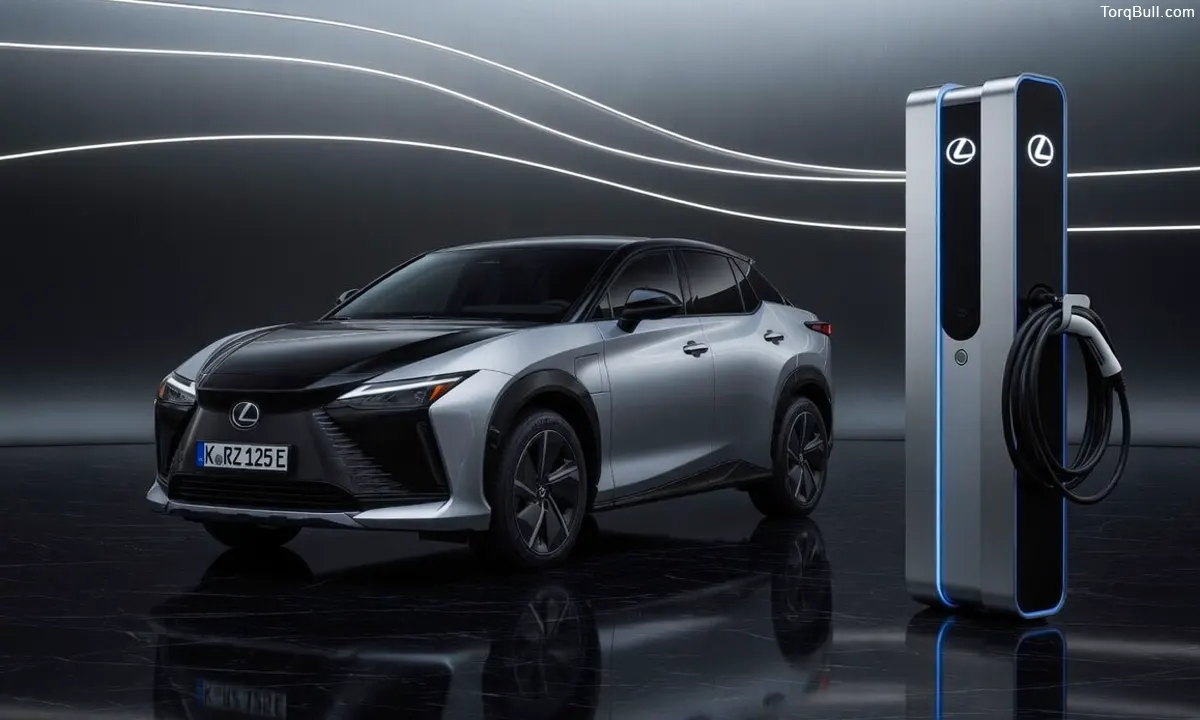
- The 2026 Lexus RZ can fully recharge in about 8–11 hours using a Level 2 home charger.
- Charging from a standard 120-volt household outlet can take approximately 30–50 hours for a full charge.
- The new NACS charging port provides access to more than 25,000 Tesla Supercharger stations across the United States.
The 2026 Lexus RZ represents the most significant upgrade in the nameplate’s charging architecture since its 2023 introduction — adding a standard NACS port that provides adapter-free access to the Tesla Supercharger network, upgrading the onboard AC charger to 22 kW for faster Level 2 home charging and improving the battery’s DC fast charging capability to achieve 10 to 80 percent in approximately 30 minutes under ideal conditions. For the majority of RZ owners whose charging occurs primarily at home during overnight parking, the home charging speed and setup is the most practically relevant specification in the vehicle’s entire charging profile. This guide covers every home charging scenario, the specific equipment required to achieve the fastest practical home charging rate and the complete practical context that every RZ owner needs to charge effectively and protect battery longevity.
The Three Home Charging Options: Level 1, Level 2 and What Each Provides
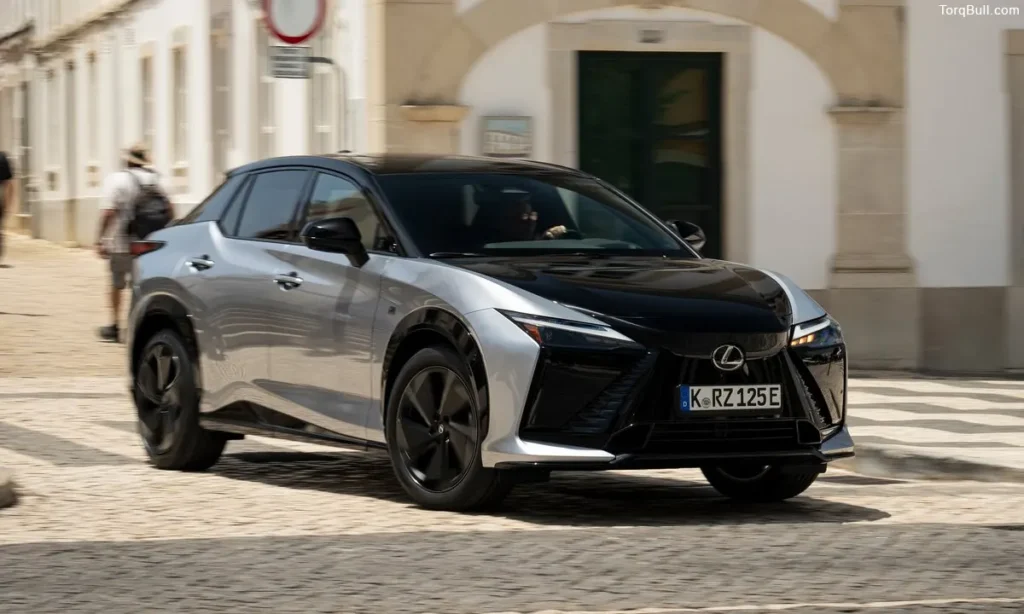
The 2026 Lexus RZ supports charging through three distinct power levels, with the first two available at home and the third exclusively at public infrastructure. Understanding what each level provides in terms of charging speed, equipment cost and practical daily value is the foundation of any RZ home charging plan.
Level 1 Charging: The Standard Household Outlet
Level 1 charging uses a standard 120-volt household outlet — the same outlet found in every American garage, driveway electrical outlet and parking area with accessible power. No additional equipment installation is required beyond the Level 1 charging cable that Lexus includes with the vehicle.
The charging speed from a 120-volt outlet is approximately 3 to 5 miles of range per hour of charging — the lowest charging rate available and the rate that most EV manufacturers and owners consider insufficient for primary daily charging. A full charge from near-empty to 100 percent takes approximately 30 to 50 hours at Level 1 — meaning a full battery recovery from a depleted state requires multiple overnight periods rather than a single overnight session.
Level 1 charging is most practical as a supplemental charging source for RZ owners who cover very low daily mileage — typically under 20 miles per day — and who can tolerate slow recovery rates. An owner who depletes 15 to 20 miles of range daily during a typical commute can partially recover that range during an overnight Level 1 session, maintaining a functional daily driving capability without Level 2 installation. For owners whose daily mileage regularly exceeds 30 to 40 miles, Level 1 charging is inadequate as a primary home charging solution.
Level 2 Charging: The Recommended Home Setup
Level 2 charging uses a 240-volt circuit — the same voltage used by electric dryers, electric stoves and electric water heaters in most American homes. Level 2 charging requires either a professionally installed home charging unit or a compatible 240-volt outlet and charging cable.
The 2026 Lexus RZ’s onboard AC charger accepts up to 22 kW from a Level 2 source — the most important specification for determining actual Level 2 charging speed, because the vehicle’s onboard charger capacity determines the maximum rate at which electricity is accepted regardless of how much the external charging unit can provide. A 22 kW capable Level 2 charging unit at home provides a full charge in approximately 8 to 11 hours from near-empty — well within a typical overnight parking period for most owners.
A more commonly installed home Level 2 unit at 7.2 kW or 11 kW provides proportionally longer charge times — approximately 8 to 12 hours for a full charge at 7.2 kW depending on the specific battery state at connection. For owners whose overnight parking period is 8 or more hours — the typical scenario for owners who arrive home in the evening and depart the following morning — any Level 2 charger with 7 kW or greater output provides complete overnight charging coverage regardless of the RZ’s state of charge at connection.
The equipment cost for Level 2 home installation typically ranges from $400 to $1,200 for the charging unit itself and $300 to $800 for professional electrical installation — a total investment of approximately $700 to $2,000 depending on the home’s existing electrical capacity, the charger’s output level and local electrician rates.
Read: Genesis vs Lexus Reliability: Which Luxury Brand Can You Actually Trust Long Term?
The 22 kW Onboard Charger: What It Changes for 2026 RZ Owners
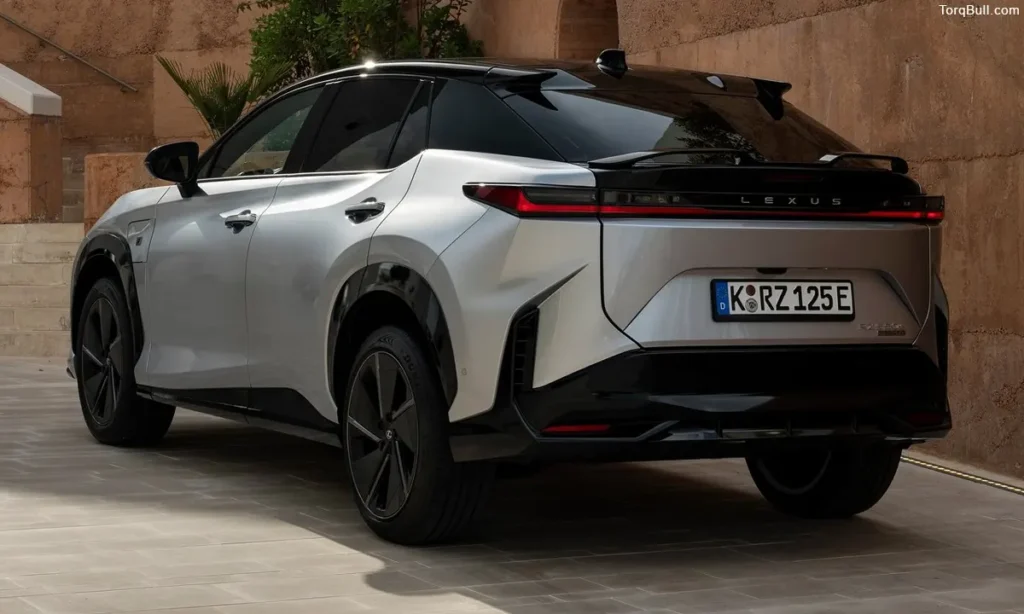
The 2026 Lexus RZ’s standard 22 kW onboard AC charger is a meaningful upgrade from earlier RZ configurations and represents one of the highest onboard AC charging rates available in any electric vehicle sold in the American market.
The practical significance of the 22 kW onboard charger is most apparent for owners who have access to high-output Level 2 charging infrastructure — either a 22 kW capable home charging unit or compatible public Level 2 stations that provide this output level. For owners with a 22 kW capable home charger, a full charge from 0 percent to 100 percent can be achieved in approximately 3 to 4 hours — dramatically faster than the 8 to 11 hours required with a more commonly installed 7.2 kW unit.
For the majority of home charging scenarios where overnight charging is the primary use pattern, the 22 kW onboard charger’s speed advantage is less practically significant — because even a 7.2 kW charger completes a full overnight charge within the typical 8 to 10 hour overnight window. The 22 kW rate becomes most valuable in specific scenarios where rapid partial charging is needed during daytime periods: a two-hour lunch break with a 22 kW charger provides approximately 40 to 50 miles of recovered range, compared to approximately 15 to 20 miles from a 7.2 kW charger in the same time.
The Optimal Home Charging Practice: 20 to 80 Percent
Professional EV battery guidance across multiple manufacturers and independent battery researchers consistently converges on the same recommendation for home charging practice: charge to 80 percent for daily use rather than 100 percent, and do not allow the battery to deplete below 20 percent before recharging.
This 20 to 80 percent charging range — commonly called the 80 percent rule — reduces the electrochemical stress on the lithium-ion battery cells that occurs at the extreme ends of the charge state. Keeping the battery consistently within the 20 to 80 percent range extends the battery pack’s long-term capacity retention, meaning the battery retains a higher percentage of its original capacity across years of daily charging compared to a battery that routinely charges to 100 percent and depletes to near-zero.
The practical consequence for daily planning is straightforward. An RZ 450e AWD with 261 miles of EPA range at 100 percent provides approximately 183 miles of practical range at 80 percent charge — more than adequate for any typical daily use scenario in most American driving environments. Most RZ owners should schedule a daily home charge routine that begins when they arrive home and targets 80 percent completion, reserving 100 percent charging for specific long-distance trip departures where maximum range is required.
The RZ’s scheduling function allows owners to program the charge to complete at a specific time — most commonly set to complete shortly before the typical departure time to ensure the battery is at its freshest thermal state for the day’s first use.
Read: Five Reasons the Lexus GX Beats the Toyota Land Cruiser
Lexus RZ 2026 Home Charging — Complete Reference Chart
| Charging Type | Power Source | Equipment Required | RZ Charging Rate | Full Charge Time | Range Added Per Hour | Best Use Case |
| Level 1 Standard | 120V household outlet | Included Level 1 cable | 1.4 to 1.9 kW | 30 to 50 hours | 3 to 5 miles | Supplemental for very low mileage |
| Level 2 Standard | 240V, 7.2 kW unit | Home charging unit + installation | 7.2 kW | 8 to 12 hours | 25 to 30 miles | Most common overnight home charging |
| Level 2 High Output | 240V, 11 kW unit | High output home unit + installation | 11 kW | 6 to 8 hours | 35 to 42 miles | Faster overnight or partial day charging |
| Level 2 Maximum | 240V, 22 kW unit | 22 kW capable home unit + installation | 22 kW | Approx 3 to 4 hours | Up to 75 miles | Fastest home charging for partial top-ups |
The NACS Port and What It Means for Away-from-Home Charging
While home charging handles the majority of typical RZ owners’ charging needs, the 2026 model’s switch to the NACS port from the previous CCS connector meaningfully changes the away-from-home charging experience in ways that reduce range anxiety on longer drives.
The NACS port provides direct, adapter-free connection to the Tesla Supercharger network — over 25,000 charging points nationwide as of 2026. Tesla’s Supercharger network is specifically valued for its reliability: an independently documented charge station failure rate of approximately 4 percent compared to meaningfully higher failure rates at some competing charging networks. For RZ owners who make occasional long-distance drives where fast charging at public stations is required, NACS access eliminates the compatibility concerns and adapter management that CCS-only vehicles required.
The 2026 RZ includes SAE J1772 and CCS adapters for backward compatibility with existing charging infrastructure — ensuring owners can access the full spectrum of public charging options regardless of network affiliation. The Plug and Charge capability, once configured through the Lexus app, automates payment authorisation at compatible stations, eliminating app-based check-in steps at each charging session.
For home charging, the NACS port is irrelevant — Level 2 home charging units connect through the J1772 standard connector that the included adapter supports. The NACS advantage is exclusively a public fast-charging network benefit.
Read: 2026 Lexus LC 500: The Last of the Great Naturally Aspirated Grand Tourers
Electricity Cost: What Home Charging Actually Costs
The Lexus RZ’s battery capacity and home charging electricity cost determine the per-charge fuel cost that EV owners compare against the gasoline equivalent. With the RZ 450e AWD’s approximately 72 kWh battery requiring a full charge and a national average residential electricity rate of approximately $0.17 per kilowatt-hour, a full charge from near-empty costs approximately $12.24 at home — compared to the gasoline equivalent for 261 miles of driving at $3.08 per gallon and 30 MPG, which costs approximately $26.79. The home charging cost advantage of approximately $14.55 per full charge accumulates to approximately $1,000 to $1,400 per year for owners who primarily charge at home and avoid public DC fast charging costs that are typically higher than residential electricity rates.