Luxury Cars With Best Resale Value in 2026. The Smart Buyer’s Guide to Depreciation-Proof Premium Motoring
Luxury Cars With Best Resale Value: Every luxury car buyer understands, on some level, that the vehicle they are purchasing will be worth less the moment it leaves the dealership. What the majority of those buyers do not fully appreciate — until the moment they return to trade in or sell — is precisely how dramatically that loss of value can vary between models sitting at adjacent price points in the same showroom. An average 2026 model-year vehicle retains approximately 45 percent of its original value after five years of ownership, according to Kelley Blue Book’s 2026 Best Resale Value analysis — meaning a $60,000 car purchased today will be worth somewhere in the region of $27,000 half a decade from now. In the luxury segment, where transaction prices regularly begin at $50,000 and extend well beyond $100,000, the financial consequences of a poor depreciation curve are correspondingly more severe. The good news is that specific luxury cars defy the trend decisively — retaining value at rates that mainstream vehicles rarely approach and that the weakest performers in the luxury segment cannot remotely match. These are the luxury cars with the best resale value in 2026, and understanding why they hold their worth is as important as understanding which models they are.
Why Resale Value Matters More Than Most Luxury Buyers Realise
Before examining the specific models that lead the luxury segment in value retention, it is worth establishing why resale value deserves considerably more attention in the purchase decision than the majority of buyers give it. Depreciation is, by any objective financial assessment, the single largest cost of vehicle ownership across the first five years — exceeding fuel costs, insurance premiums and maintenance expenditure combined for most buyers in most ownership scenarios. A luxury car that retains 65 percent of its value after five years costs its owner meaningfully less in total ownership terms than an equally priced rival that retains only 45 percent, regardless of which car offers the lower insurance rate or the better fuel economy. The difference between a strong and a weak depreciation curve in the luxury segment frequently amounts to ten, fifteen or even twenty thousand dollars over a five-year ownership period — a figure large enough to substantially affect the financial logic of the purchase decision and one that deserves to be weighted accordingly by any buyer for whom the economics of ownership matter alongside the experience of driving.
Porsche 911: The Luxury Sports Car That Barely Depreciates at All
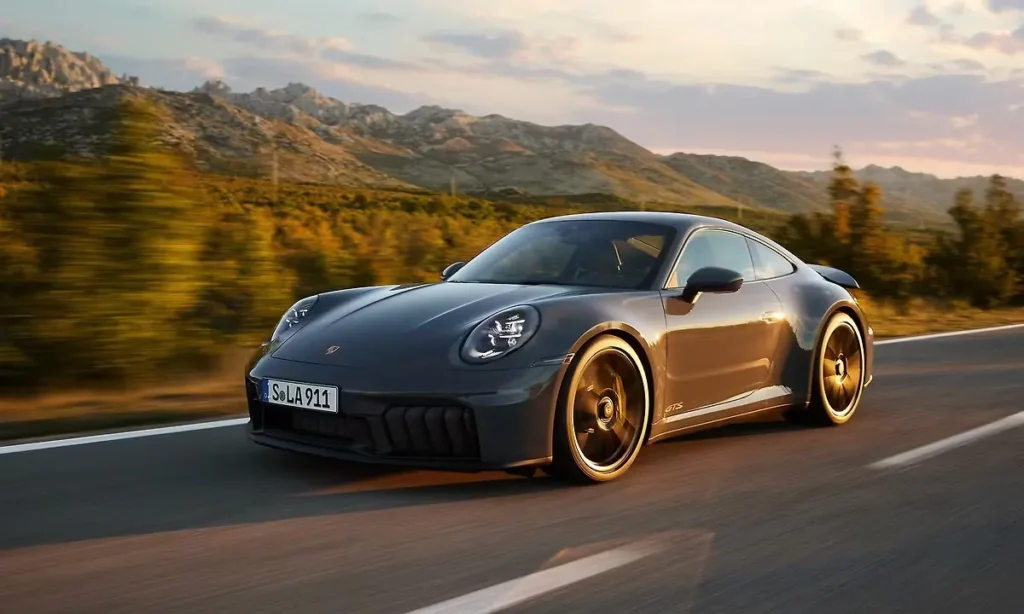
5-Year Resale Value: 92.2% (Coupe) | Starting Price: From $129,950
The Porsche 911 occupies a position in the resale value conversation that no other luxury car — and, with the exception of a small number of dedicated performance vehicles — no other production vehicle of any kind approaches. A 5-year resale value of 92.2 percent, as recorded by iSeeCars analysis of millions of vehicle transactions, means that a 911 purchased today for $130,000 is projected to retain over $119,000 of its original value after five years and 75,000 miles — a depreciation rate so low that it makes the 911 a genuinely unusual financial proposition among depreciating assets. The factors behind this extraordinary value retention are well understood and mutually reinforcing: the 911’s timeless and instantly recognisable design avoids the styling obsolescence that causes many rivals’ values to deteriorate rapidly; the model’s reputation for mechanical durability and long-term reliability sustains buyer confidence in the used market; and the consistent demand from a global community of enthusiasts who regard 911 ownership as an aspiration rather than merely a purchase creates the market conditions in which supply rarely meets demand at the lower price points of the used 911 spectrum. The 2026 model year adds the newly hybridised Turbo S producing 701 horsepower alongside updates to the infotainment architecture across the range, providing the technology currency that protects values against the obsolescence risk that afflicts rival luxury models whose interior tech provision dates more rapidly. For the buyer who intends to sell or trade within five years, the 911 is not merely the best sports car in the luxury market — it is the best financial decision.
Lexus LC 500: The Japanese Grand Tourer That Defies Luxury Depreciation
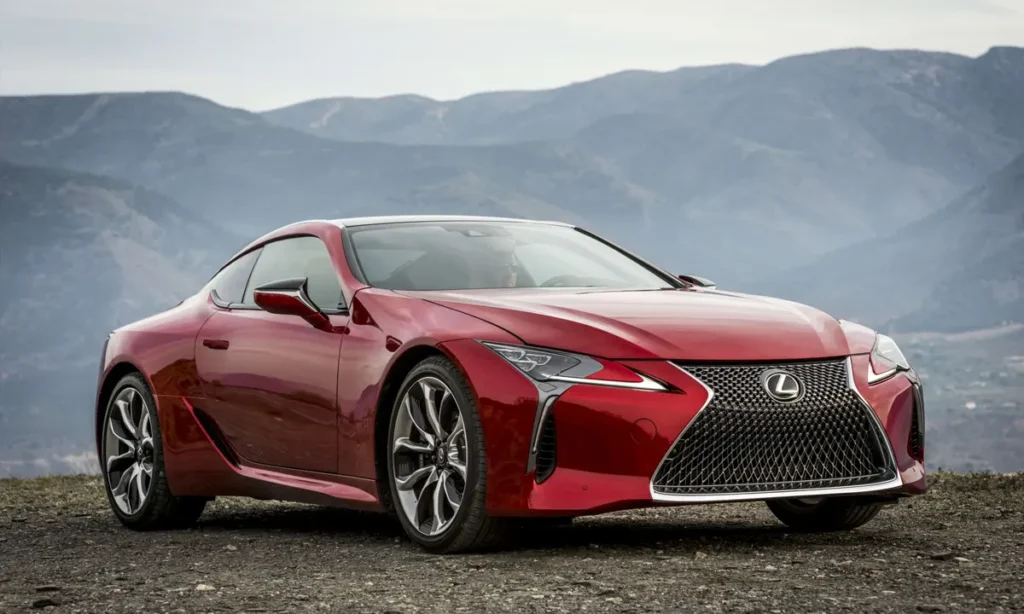
5-Year Resale Value: 65.5% | Starting Price: From $99,850
The Lexus LC 500 leads the luxury grand tourer segment in resale value by a margin that reflects both the extraordinary quality of the car itself and the broader pattern of Lexus depreciation performance that has made the brand, according to Kelley Blue Book’s 2026 Best Resale Value Awards, the winner of the Best Resale Value: Luxury Brand award for the fifth consecutive year. A 65.5 percent five-year resale value — achieved without the exclusivity advantage that Porsche commands through limited production and collector demand — derives instead from the combination of Lexus’s near-unmatched reputation for long-term mechanical reliability and the LC 500’s genuine desirability as a driver’s car whose naturally aspirated 5.0-litre V8 producing 471 horsepower and 398 pound-feet of torque provides a visceral, high-revving character that the electrification trend is progressively eliminating from the market. The 2026 model year is confirmed as the final production year of the LC 500, a designation that historically — and measurably — supports used values by creating the scarcity dynamic that collectors and enthusiasts respond to. Lexus’s ownership cost advantages extend beyond the purchase transaction: the brand’s maintenance costs and long-term repair frequency rates are consistently the lowest in the luxury segment, reducing the total cost of ownership calculation in the LC 500’s favour relative to European grand tourers at comparable original prices.
Lexus GX 550: The Luxury SUV That Earns Its Premium Back
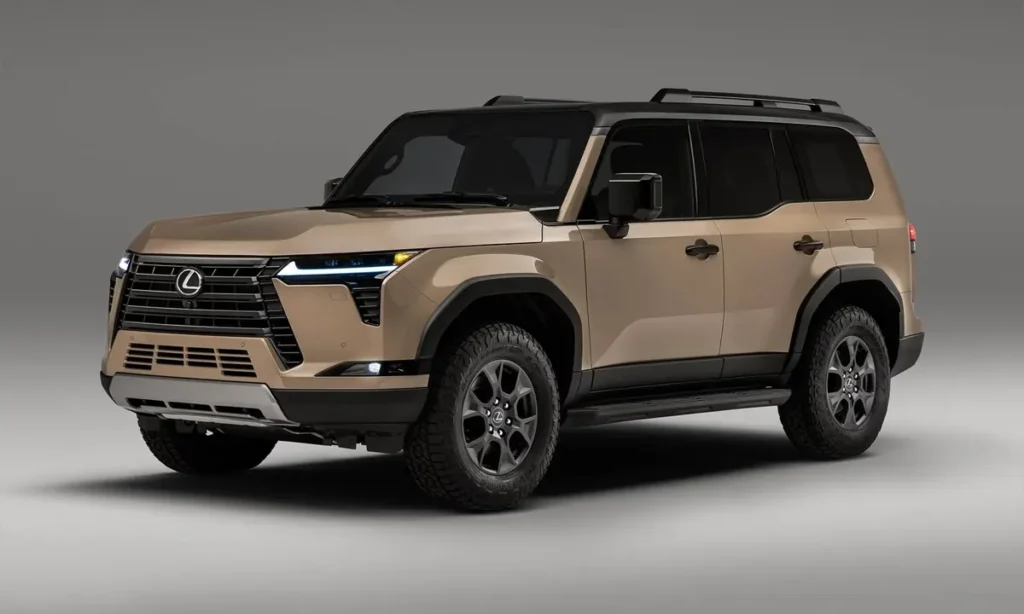
5-Year Resale Value: 65.7% (GX 460) | Starting Price: From $62,900
The Lexus GX 550 — comprehensively redesigned for the 2024 model year and carrying that generation’s strong value retention into 2026 — represents the most compelling intersection of luxury SUV capability, Lexus reliability credentials and depreciation performance available in its segment. The GX depreciates approximately 30 to 35 percent across a five-year ownership period, a figure that dramatically outperforms the segment averages recorded by competing luxury SUVs from BMW, Mercedes-Benz, Audi and Land Rover — brands whose premium positioning does not, in most cases, translate into premium value retention. The GX 550’s underpinning on a body-on-frame platform — shared with the Toyota Land Cruiser and engineered for the kind of long-term mechanical durability that independent analysts consistently associate with minimal depreciation — combined with its genuinely capable all-terrain performance and its thoroughly appointed interior give it the breadth of buyer appeal in the used market that sustains values above what comparable European alternatives achieve. The twin-turbocharged 3.4-litre V6 producing 349 horsepower, combined with the GX’s three-row seating availability and generous interior dimensions, ensures that the car’s practical proposition does not narrow as it ages — a critical factor in sustained used-market demand and the primary reason that the GX consistently outperforms similarly priced luxury SUV rivals in five-year value retention studies.
Mercedes-Benz G-Class: The Icon Whose Value Time Cannot Diminish
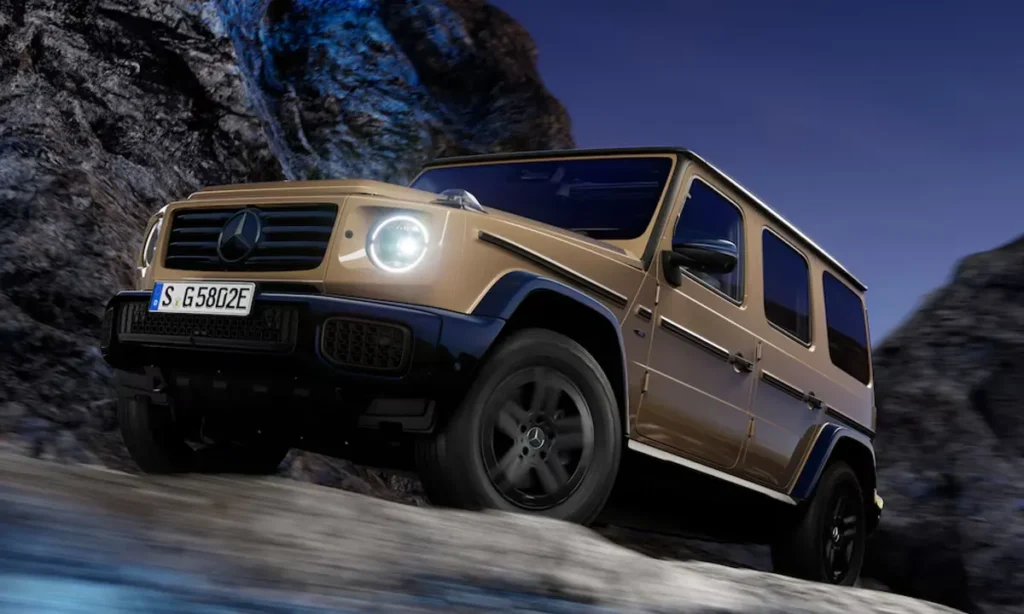
5-Year Resale Value: 65.3% | Starting Price: From $142,500
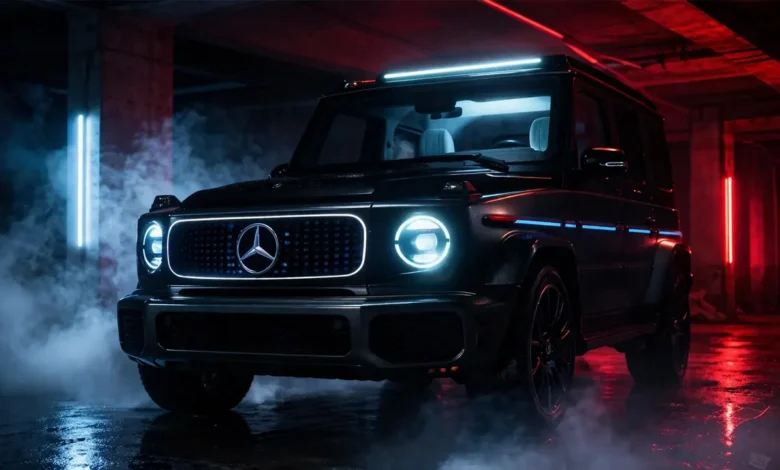
The Mercedes-Benz G-Class occupies a category of its own in the luxury SUV value retention discussion — a vehicle whose combination of genuinely iconic status, extraordinarily durable body-on-frame construction and sustained global demand from buyers who regard the G-Wagen silhouette as irreplaceable produces resale value characteristics that no amount of depreciation pressure from newer, more technically sophisticated rivals has been able to significantly erode. A 65.3 percent five-year resale value from a starting price of $142,500 means the G-Class retains its value more effectively than almost any other luxury SUV currently available, despite — or more accurately, because of — its decades-old design language that has resisted modernisation in a manner that has only increased rather than diminished buyer desire. The 2026 G-Class is available with the 4.0-litre twin-turbocharged V8 producing 577 horsepower in the AMG G63 specification, and the newly introduced electric G 580 with EQ Technology — expanding the G-Class family’s buyer reach without diluting the heritage product’s appeal. The off-road capability that the G-Class provides through its three locking differentials and proven mechanical drivetrain architecture sustains demand across buyer demographics that no comparable luxury SUV serves as effectively — a breadth of appeal that directly translates into the used-market demand that supports the G-Class’s exceptional value retention across ownership periods that extend well beyond the standard five-year assessment window.
Lexus ES 350: The Most Value-Retentive Luxury Sedan in Its Class
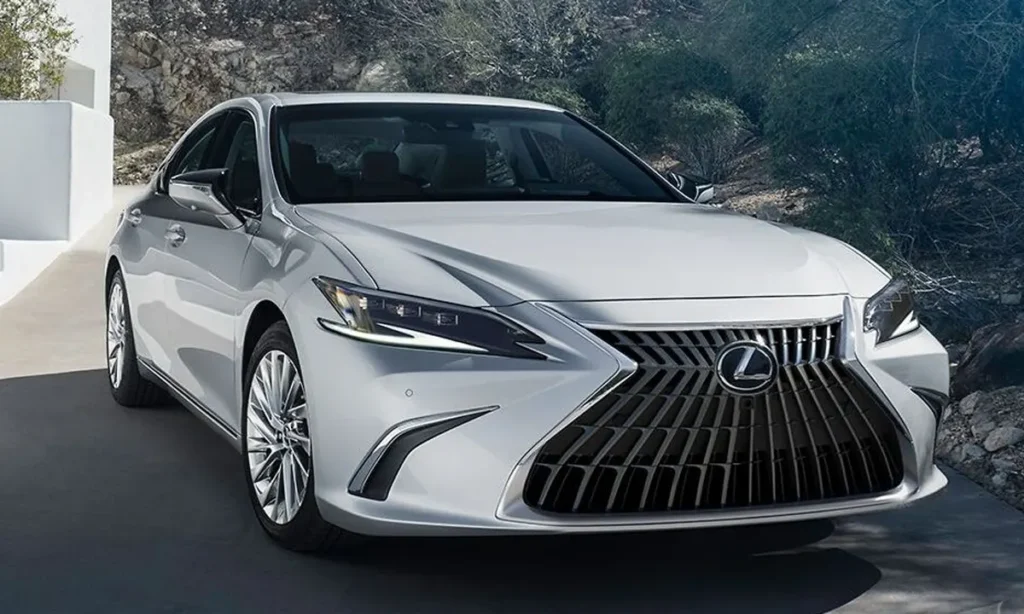
5-Year Resale Value: 64.2% | Starting Price: From $43,450
The Lexus ES 350 closes this list as the most financially rational luxury sedan purchase available at its price point — a car that combines the material quality, technology provision and refinement expected of a premium brand at $43,000 with a depreciation curve that systematically outperforms every German competitor it faces in its segment. A 64.2 percent five-year resale value, achieved by a car that begins below $45,000, means the ES 350 loses approximately $15,600 of its original value across five years of ownership — a figure that the equivalent Mercedes-Benz C-Class, BMW 3 Series and Audi A4 buyer cannot approach. The combination of Lexus’s reputation for near-faultless long-term reliability, the ES 350’s naturally aspirated 3.5-litre V6 delivering 302 horsepower with the mechanical simplicity that supports longevity, and the car’s comprehensive standard equipment provision — which minimises the perceived obsolescence risk that affects more sparsely equipped luxury sedans in the used market — creates the conditions for value retention that Kelley Blue Book and iSeeCars analysis consistently confirms as the best available in the luxury sedan segment below $60,000.
Luxury Cars With the Best Resale Value 2026 — At a Glance
| Model | Starting Price | 5-Year Resale Value | Segment |
| Porsche 911 (Coupe) | From $129,950 | 92.2% | Luxury Sports Car |
| Lexus LC 500h (Hybrid) | From $99,850 | 72.1% | Luxury Grand Tourer |
| Lexus LC 500 | From $99,850 | 65.5% | Luxury Grand Tourer |
| Lexus GX 460/550 | From $62,900 | 65.7% | Luxury Midsize SUV |
| Mercedes-Benz G-Class | From $142,500 | 65.3% | Luxury Large SUV |
| Lexus ES 350 | From $43,450 | 64.2% | Luxury Sedan |
What Makes a Luxury Car Hold Its Value: The Factors That Matter
The resale value patterns visible across the cars on this list are not accidental — they reflect a consistent set of underlying factors whose presence or absence reliably predicts depreciation performance across every segment of the luxury market.
Reliability reputation is the foundational factor. The dominance of Lexus across multiple resale value categories directly reflects the brand’s consistent standing at the top of long-term reliability studies, which sustains buyer confidence in the used market and supports pricing that brands with higher maintenance cost profiles cannot match. Porsche’s 911 benefits from the same dynamic — a heritage of mechanical durability that used-market buyers trust despite the car’s high-performance specification.
Brand desirability sustains demand. The G-Class and the 911 demonstrate how a car whose visual identity is genuinely irreplaceable — whose silhouette is distinctive enough to generate desire independent of its age or specification — can resist the value erosion that affects rivals whose designs become dated. The ES 350 and the GX demonstrate that reliability reputation functions as an equivalent sustainer of demand for buyers whose priorities are practical rather than emotional.
Scarcity and production limits support values at the premium end. The LC 500’s final model year designation provides the kind of scarcity signal that the used market responds to measurably — a dynamic that applies equally to limited editions, special specifications and discontinued models across every luxury segment.
For any luxury car buyer in 2026, prioritising resale value alongside the driving experience, the brand prestige and the specification level is not a compromise — it is the financial discipline that distinguishes a truly smart luxury purchase from an expensive one.