Deadly by Design! 5 of the Most Dangerous Cars Ever Made
The history of the automobile is, in large part, a history of hard lessons learned at devastating cost. For every engineering breakthrough that made cars faster, more efficient or more comfortable, there exists a corresponding chapter in which manufacturers prioritized budget, aesthetics or performance over the fundamental obligation to keep the people inside their vehicles alive. Some of the most dangerous cars ever built were commercial successes — sold in enormous numbers, marketed with confidence and driven by millions of ordinary people who had no reason to suspect that the vehicle beneath them harbored a design flaw capable of killing them. Others were recognized as dangerous almost immediately, their reputations overtaking their sales figures and their names entering the automotive lexicon as permanent warnings about what happens when corners are cut in engineering decisions whose consequences cannot be recalled along with the vehicles themselves. These are five of the most dangerous cars ever made — and the specific, documented failures that earned each of them their place in this unwelcome category.
1. Ford Pinto (1971–1980): The Car With a Built-In Explosion
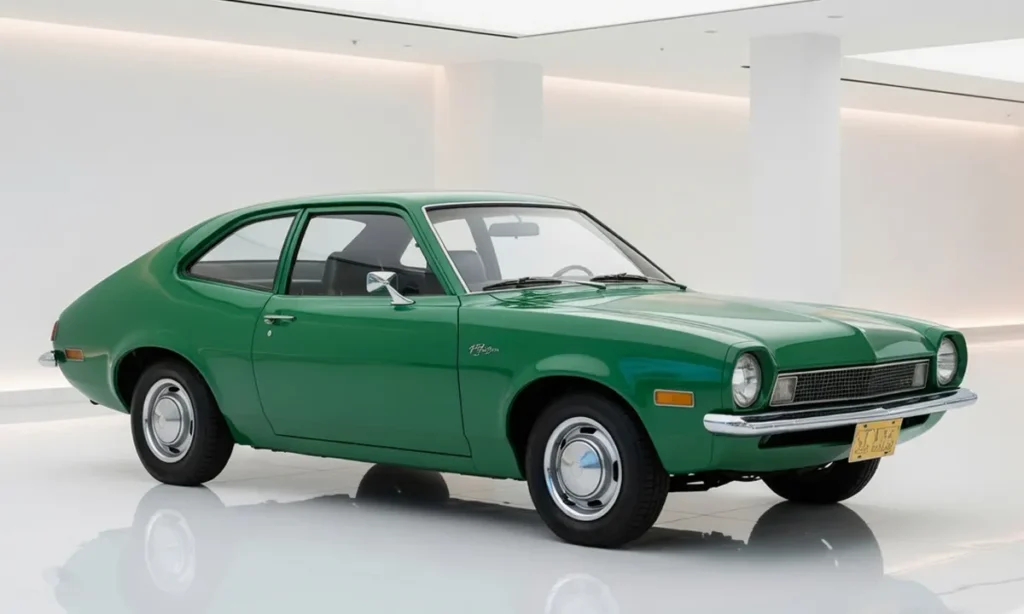
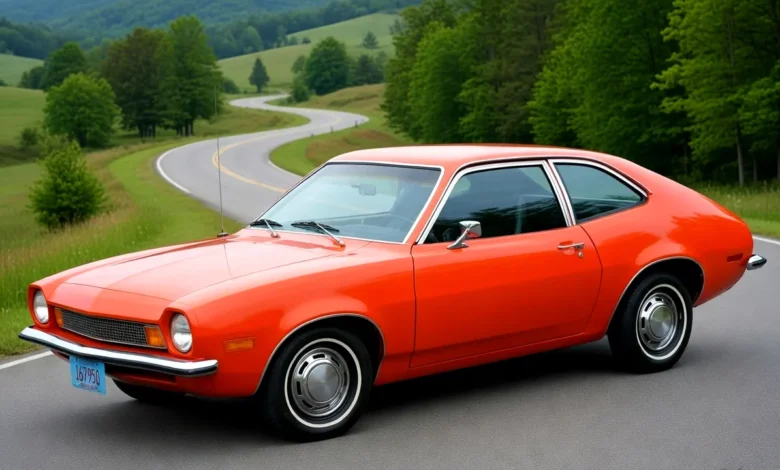
No vehicle in American automotive history carries a more notorious safety legacy than the Ford Pinto — a compact car whose fundamental structural flaw transformed a routine rear-end collision into a potential death sentence for its occupants. The problem was the fuel tank’s location, positioned just six inches from the rear bumper with insufficient structural protection between it and any vehicle that struck the Pinto from behind. In a rear collision, the tank ruptured, spraying fuel across the hot exhaust components directly behind it. The result — fire, and in the worst cases, explosion — was predictable, and the evidence later revealed that Ford’s own internal cost-benefit analysis had calculated the expense of a legal settlement for deaths as less than the cost of modifying the design across the production run. That calculation, when it became public, defined the Pinto’s legacy as not merely a mechanical failure but a moral one. The vehicle was also known to shift into reverse gear spontaneously, a separate defect that caused additional fatalities entirely unrelated to its fire risk. By the mid-1970s, exploding Pintos had claimed dozens of lives, a recall was eventually issued, and the Pinto became the automobile industry’s most enduring argument for independent safety regulation.
2. Chevrolet Corvair (1960–1969): Unsafe at Any Speed
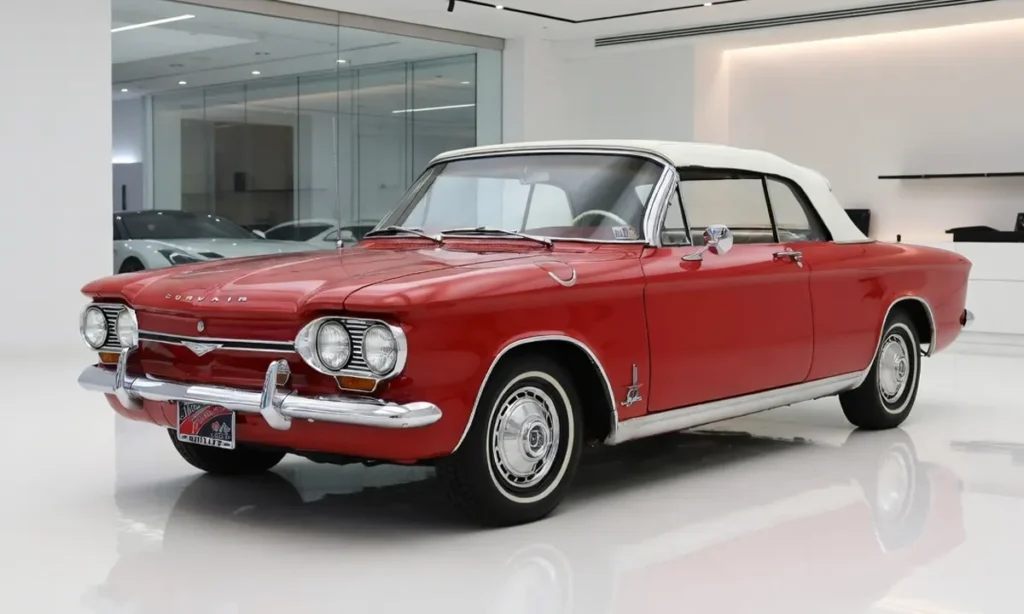
The Chevrolet Corvair has the distinction of being the vehicle that changed American automotive safety history — not because it was fixed, but because it inspired the regulatory framework that eventually forced every manufacturer to take safety seriously. Its primary mechanical flaw was a matter of physics and engineering philosophy: the rear-mounted, air-cooled engine created a weight distribution that demanded drastically different tire pressures between the front and rear axles to maintain stable handling. Most drivers, unaware of this requirement, ran their Corvairs at uniform pressure, which produced a tendency toward sudden and dramatic oversteer at speed — a behavior that could send the vehicle sideways or into a roll with little warning. A separate and equally serious problem afflicted early models: the heating system drew warm air directly from the engine compartment and circulated it through the cabin, channeling exhaust fumes and carbon monoxide to occupants alongside the heat they were seeking. General Motors faced more than one hundred liability lawsuits related to Corvair accidents, injuries and fatalities. Ralph Nader’s 1965 book, which used the Corvair as its primary exhibit in a broader indictment of the American auto industry’s safety culture, drove the car’s commercial discontinuation and catalyzed the passage of the National Traffic and Motor Vehicle Safety Act of 1966 — the legislation that established federal safety standards for every vehicle sold in the United States thereafter.
3. Yugo GV (1985–1992): Dangerous by Construction

The Yugo GV arrived in the American market in 1985 carrying a single, overwhelming commercial advantage — it was the cheapest new car available for purchase in the United States. That price reflected the reality of what buyers were receiving: a vehicle constructed from materials and to tolerances that provided almost no meaningful protection in any collision scenario. In frontal crashes, the Yugo’s body offered occupants virtually nothing between themselves and whatever they had struck. The electrical system was unreliable to the point of creating fire risk. The engine was prone to failure at relatively low mileage, and parts of the vehicle’s structure were known to detach from vibration alone. The death rate recorded for the Yugo — approximately 3.6 fatalities for every 10,000 vehicles produced — reflected a construction quality that rendered survival in a serious accident more a matter of fortunate circumstance than designed protection. One of the most cited incidents involved a Yugo being blown off the Mackinac Bridge in Michigan by a wind gust, underscoring a vehicle so light and structurally compromised that ordinary natural forces posed dangers that contemporary engineering would have designed out entirely. NPR’s Car Talk program voted it the worst car of the millennium — a title the Yugo earned through consistent, comprehensive inadequacy rather than any single dramatic flaw.
4. Pontiac Fiero (1984–1988): The Sports Car That Caught Fire

The Pontiac Fiero arrived in 1984 as a genuinely appealing proposition — a mid-engined two-seater with the visual identity of a sports car at a price accessible to everyday buyers, and with crash test safety ratings that were, paradoxically, among the segment’s better results. The problem was not what happened to the Fiero in a crash — it was what happened to it while parked. During its five-year production run, nearly 260 reported cases of the Fiero’s engine compartment catching fire were documented, a figure that reflected two overlapping mechanical deficiencies. The engine’s connecting rods were prone to failure in vehicles that ran low on oil — a not-uncommon condition in the hands of owners who did not monitor fluid levels with the vigilance the engine’s tolerances required — and when a rod broke, it punched through the engine block, releasing oil directly onto hot exhaust components. The second pathway to fire involved the Fiero’s electrical wiring, whose design allowed for the ignition of combustible materials in the engine bay. General Motors eventually issued a recall, but the vehicle’s production was discontinued in 1988, its safety reputation having comprehensively overtaken its design appeal in the eyes of both buyers and the manufacturer.
Read: How Toyota Became the Global Leader in Hybrid Technology
5. General Motors Chevy Cobalt (2004–2010): The Ignition Switch That GM Knew About

The Chevrolet Cobalt represents one of the most consequential and most deliberately concealed safety scandals in modern automotive history — a case in which the manufacturer identified a fatal defect, calculated its cost to fix and chose, for nearly a decade, to do neither. The defect was an ignition switch whose torque specification was too low, allowing a heavy key ring or road vibration to rotate the switch from the run position to the accessory position while the vehicle was in motion. When this occurred, the engine lost power — and, critically, the airbag system was disabled simultaneously, because the airbag control module interpreted the switch position as indicating the vehicle was not running and therefore not in an accident condition. Drivers involved in collisions at highway speed had no airbag deployment at the moment they most urgently required it. General Motors received its first reports of the defect in 2004, the same year the Cobalt entered production. The recall that addressed the problem did not arrive until 2014 — ten years during which the company absorbed over 4,200 legal claims for wrongful death and injury and was ultimately fined $35 million by the National Highway Traffic Safety Administration for its failure to issue a timely recall. The Cobalt ignition scandal resulted in congressional hearings, a complete organizational reckoning at General Motors and a permanent revision of how regulators approach manufacturer disclosure obligations for known safety defects.
Read: Toyota GR Supra Finally Goes Pure No More BMW DNA
The Lesson Every Dangerous Car in History Teaches the Same Way
What connects the Ford Pinto’s rear-positioned fuel tank to the Cobalt’s ignition switch, separated by four decades of automotive progress, is a single shared characteristic: each failure was known, documented and — in the most troubling cases — economically evaluated before the vehicles that carried those failures were sold to the public. The most dangerous cars ever made were not dangerous because the engineering was beyond the knowledge of the era that produced them. They were dangerous because the decisions that produced them prioritized something other than the safety of the people inside. That lesson has driven every meaningful advance in vehicle safety regulation since Ralph Nader first articulated it in 1965 — and it remains the most important thing any buyer, regulator or manufacturer can carry forward from the automotive industry’s most uncomfortable history.