- The 2026 Nissan Rogue S FWD delivers up to 29 MPG city, 36 MPG highway and 32 MPG combined, making it one of the most efficient non-hybrid compact SUVs.
- Annual fuel costs are estimated at about $1,444 based on 15,000 miles of driving.
- The Rogue PHEV can reduce annual fuel expenses to roughly $500–$700 for owners who charge regularly, while five-year fuel costs for the gas model total about $4,344.
The Nissan Rogue’s fuel economy story is one of the most compelling in the compact SUV segment — a vehicle whose VC-Turbo Variable Compression engine delivers the most efficient fuel economy rating of any non-hybrid compact crossover SUV in the American market. At 32 MPG combined for the most efficient FWD configuration, the Rogue outperforms competing naturally aspirated four-cylinder alternatives by 2 to 4 MPG combined while simultaneously providing more power than most of those alternatives. For families and daily commuters whose primary ongoing ownership cost concern is the fuel bill, the Rogue’s efficiency credentials translate into real annual savings that compound across the ownership period. This complete guide provides every fuel cost figure for every Rogue configuration and every mileage scenario.
The EPA Fuel Economy Ratings: Every 2026 Configuration
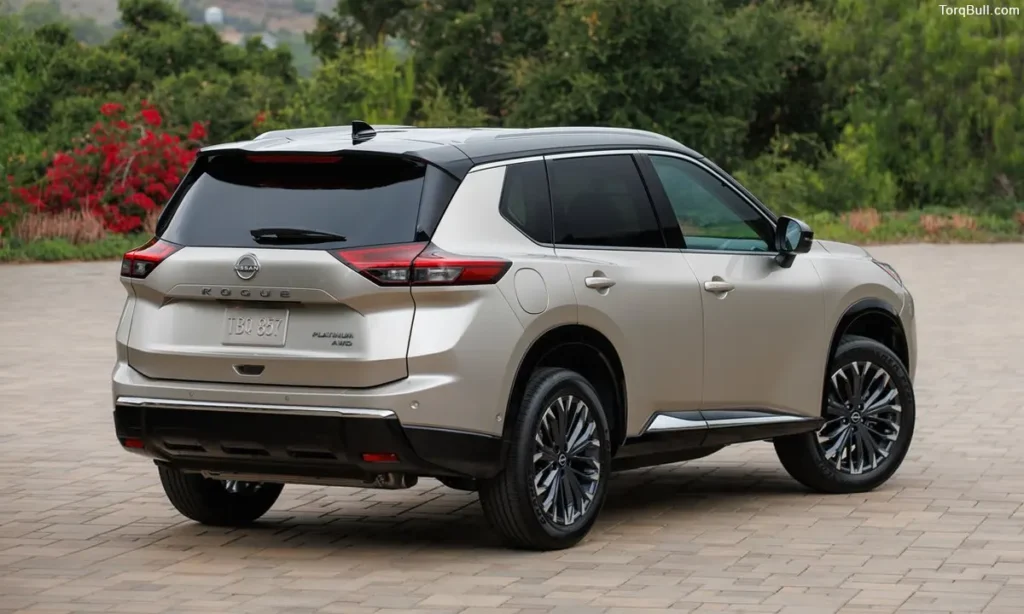
The 2026 Nissan Rogue’s fuel economy ratings distribute across its trim hierarchy in a pattern that reflects both the 1.5-litre VC-Turbo engine’s variable compression efficiency advantage and the predictable efficiency reduction that AWD produces relative to FWD through additional drivetrain weight and occasional four-wheel engagement.
The S and SV trims with front-wheel drive achieve the highest Rogue fuel economy at 29 MPG city, 36 MPG highway and 32 MPG combined — the figures that position the Rogue as the most fuel-efficient non-hybrid compact SUV available in 2026. This 32 MPG combined ranking is industry-leading for a conventional gasoline-powered compact crossover without electrification.
The SL and Platinum trims with front-wheel drive achieve 27 MPG city, 34 MPG highway and 30 MPG combined — modestly below the base configuration due to the additional equipment weight and different aerodynamic profile of upper trims. The AWD versions across all trim levels achieve 27 MPG city, 32 MPG highway and 29 MPG combined for the most efficient AWD configurations and approximately 27 to 28 MPG combined for upper AWD trims.
The 2026 Rogue PHEV — the plug-in hybrid addition available on SV and SL trims — achieves an EV-only range of approximately 18 miles on the electric motor before the gasoline engine activates, with a combined fuel economy of approximately 26 MPG when operating in hybrid gasoline mode after the battery is depleted. For owners who charge daily and whose round-trip commute falls within 18 miles, the majority of weekday driving occurs on electricity at zero fuel cost.
Read: Nissan Rogue Common Problems. What Long-Term Owners Report
Annual Fuel Cost: The Real Numbers at Every Mileage Level
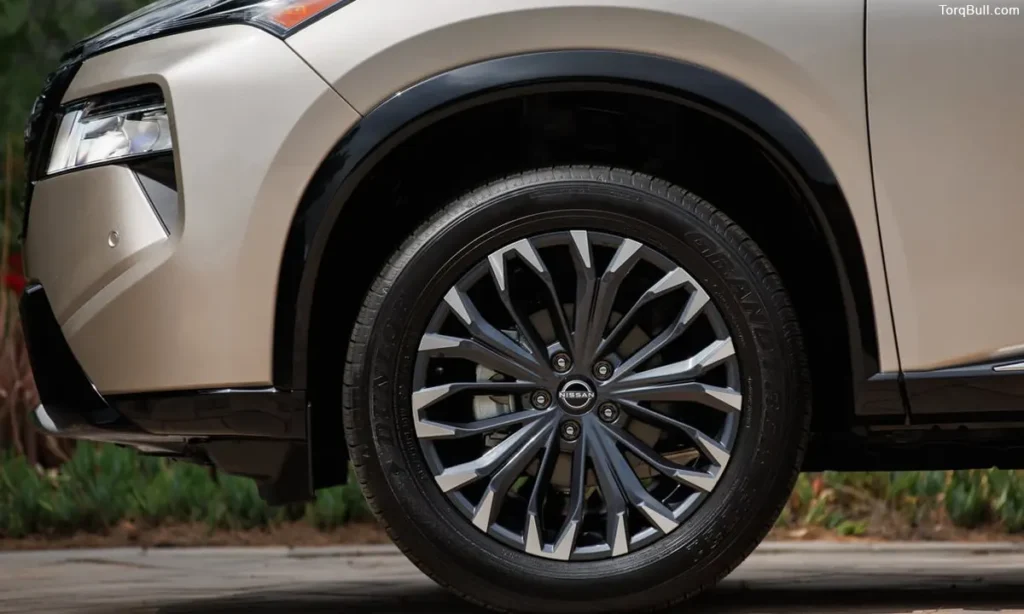
Converting the 2026 Rogue’s EPA fuel economy figures into annual fuel cost at three mileage scenarios and national average fuel pricing provides the most practically useful planning numbers for any prospective or current Rogue owner.
For calculations at the FWD S and SV’s 32 MPG combined using $3.08 per gallon regular unleaded:
At 10,000 annual miles: approximately $963 per year At 15,000 annual miles: approximately $1,444 per year At 20,000 annual miles: approximately $1,925 per year
For the AWD configurations at 29 MPG combined:
At 10,000 annual miles: approximately $1,062 per year At 15,000 annual miles: approximately $1,593 per year At 20,000 annual miles: approximately $2,124 per year
The AWD fuel cost premium above FWD at 15,000 annual miles is approximately $149 per year — approximately $745 over five years. This is the ongoing annual cost of the all-wheel-drive system’s efficiency reduction, which buyers should incorporate into the AWD versus FWD decision alongside the AWD option’s approximately $1,400 purchase cost premium.
Verified five-year ownership cost data places the Rogue’s total fuel cost at $4,344 over five years — averaging approximately $869 per year. This lower annual figure compared to the EPA-based calculation above reflects the specific mileage assumption and fuel price data used in the tracking methodology — likely lower annual mileage than 15,000 miles for the average tracked owner in that dataset and fuel prices that varied across the five-year tracking period.
The VC-Turbo Engine Advantage: Why the Rogue Leads Non-Hybrid Efficiency
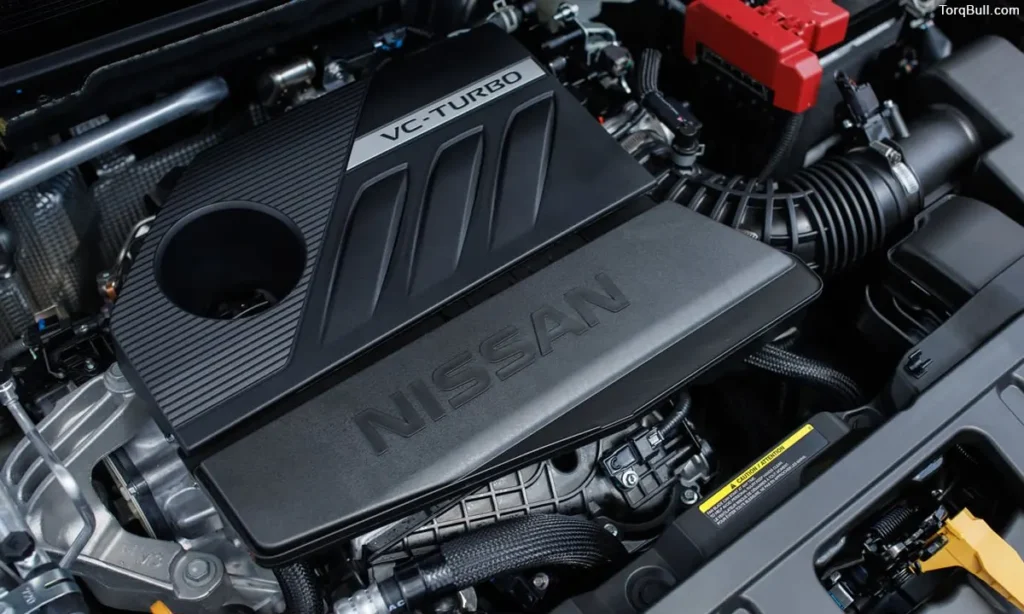
The VC-Turbo engine’s variable compression ratio technology is the specific engineering feature that produces the Rogue’s non-hybrid efficiency leadership — and understanding how it works explains why the 32 MPG combined figure is achievable without the hybrid system that competing vehicles require to approach similar efficiency.
Conventional gasoline engines operate at a fixed compression ratio — a single ratio that represents the best compromise between performance and efficiency across the engine’s full operating range. A ratio optimal for low-load highway cruise would produce detonation under high-load acceleration, so manufacturers select a compromise ratio that is neither ideal for efficiency nor ideal for performance.
The VC-Turbo engine continuously adjusts its compression ratio from 8:1 for high-load performance operation through 14:1 for light-load efficiency maximisation — always operating at the ratio that produces the best result for the current driving condition. At 14:1 compression during highway cruise, the engine achieves efficiency that approaches diesel engine territory while maintaining the smooth power delivery and emissions compliance of a modern gasoline unit. At 8:1 compression under hard acceleration, the engine accepts turbocharger boost without detonation risk that higher compression would produce.
This dynamic optimisation is what enables the Rogue to achieve 36 MPG highway — the highest highway figure available from a non-hybrid compact SUV — while simultaneously producing 201 horsepower from only 1.5 litres of displacement.
Read: Nissan Rogue Ownership Cost Breakdown 2026. Is It an Affordable Compact SUV to Own?
Real-World Owner Fuel Economy: Matching the EPA Estimate

The practical question most Rogue buyers ask is whether the EPA 32 MPG combined figure is achievable in real driving rather than only in the standardised test cycle — and the answer from real-world owner accounts is specifically positive.
Most Rogue owners report fuel economy within one to two MPG of the EPA estimates in combined driving conditions — a closer correlation between EPA estimate and real-world result than many competing turbocharged SUVs achieve, where the turbocharger’s boost demand under real-world driving conditions often produces results further below the EPA figure than the specification would suggest.
Highway-dominant drivers report real-world results approaching or occasionally exceeding the 36 MPG highway EPA estimate when maintaining steady speeds at 65 to 70 MPH — the specific speed range where the VC-Turbo’s compression optimisation is most actively engaged. City-dominant drivers in stop-and-go conditions report real-world results in the 27 to 30 MPG range — somewhat below the 29 MPG city EPA estimate in heavier urban traffic but still competitive with most non-hybrid alternatives across equivalent conditions.
2026 Nissan Rogue Annual Fuel Cost — Complete Configuration Chart
| Configuration | EPA City | EPA Highway | EPA Combined | Annual Cost (10K miles) | Annual Cost (15K miles) | Annual Cost (20K miles) | 5-Year Total |
| S, SV FWD (most efficient) | 29 MPG | 36 MPG | 32 MPG | approximately $963 | approximately $1,444 | approximately $1,925 | approximately $7,219 |
| SL, Platinum FWD | 27 MPG | 34 MPG | 30 MPG | approximately $1,027 | approximately $1,540 | approximately $2,053 | approximately $7,700 |
| S, SV AWD | 27 MPG | 32 MPG | 29 MPG | approximately $1,062 | approximately $1,593 | approximately $2,124 | approximately $7,966 |
| SL, Platinum AWD | 27 MPG | 31 MPG | 28 MPG | approximately $1,100 | approximately $1,650 | approximately $2,200 | approximately $8,250 |
| PHEV (gas-only mode) | approximately 26 MPG combined | approximately $1,185 | approximately $1,777 | approximately $2,369 | approximately $8,885 | ||
| PHEV (daily charging, 18 EV miles) | Mostly electric weekday | approximately $330 to $500 | approximately $500 to $700 | approximately $650 to $900 | approximately $2,500 to $3,500 | ||
| Toyota RAV4 Hybrid (comparison) | 41 MPG | 38 MPG | 39 MPG | approximately $790 | approximately $1,185 | approximately $1,580 | approximately $5,923 |
| Honda CR-V Hybrid (comparison) | 40 MPG | 36 MPG | 38 MPG | approximately $811 | approximately $1,216 | approximately $1,622 | approximately $6,079 |
All fuel cost calculations at $3.08 per gallon regular unleaded. PHEV electricity costs not included in PHEV electric mode estimates.
Read: Nissan Best Family Vehicle Isn’t Even Sold In USA. Find Out Which Car American Never Got
Fuel Cost vs Competing Non-Hybrid SUVs: The Rogue’s Competitive Advantage
The Rogue’s 32 MPG combined FWD fuel economy leadership among non-hybrid compact SUVs produces a specific and measurable annual cost advantage over competing non-hybrid alternatives whose lower MPG figures translate directly into higher annual fuel bills.
The Ford Escape’s most efficient non-hybrid configuration at approximately 28 to 29 MPG combined produces an annual fuel cost of approximately $1,594 to $1,645 at 15,000 miles and $3.08 per gallon — approximately $150 to $200 more per year than the Rogue FWD’s most efficient configuration. The Chevrolet Trax at approximately 28 MPG combined produces similar annual cost. The Jeep Compass non-hybrid at approximately 22 to 25 MPG combined produces annual fuel costs of approximately $1,848 to $2,100 — $400 to $660 more per year than the Rogue FWD.
Against hybrid alternatives, the Rogue’s non-hybrid figure is less competitive — the Toyota RAV4 Hybrid at 39 MPG combined and the Honda CR-V Hybrid at 38 MPG combined both produce annual fuel costs approximately $260 to $310 less than the Rogue FWD at equivalent mileage. For buyers specifically choosing between the Rogue and a hybrid alternative, the Rogue’s approximately $260 to $310 annual fuel cost disadvantage relative to the hybrid competitors must be weighed against the Rogue PHEV’s competitive positioning and the non-hybrid’s typically lower purchase price.