Peugeot Polygon Concept 2025: A Bold New Vision of Electric Design
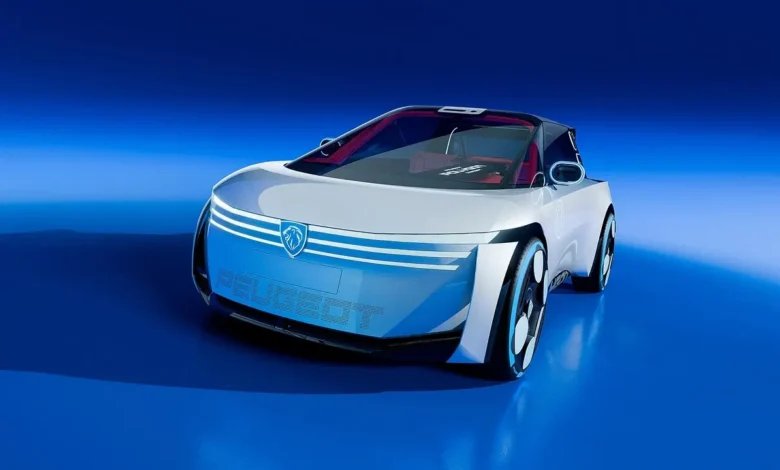
The Peugeot Polygon Concept (2025) marks a striking and transformative moment for Peugeot’s design and engineering philosophy. As the global automotive industry shifts toward electrification and software-driven ecosystems, Peugeot has seized the opportunity to redefine its identity with a concept that blends geometric sculpture, advanced electric performance and immersive digital experiences. The Polygon Concept stands not simply as a preview of future models, but as an artistic manifesto for Peugeot’s vision of mobility in the coming decade. This concept vehicle embraces bold architectural language, reshapes conventional notions of aerodynamics, and introduces next-generation electric technologies that signal Peugeot’s direction for 2026 and beyond.
Peugeot has long been recognized for its creative and emotionally charged designs, especially in its recent EV models and high-performance concepts. The Polygon Concept continues this legacy by presenting a sharply faceted form reminiscent of architectural structures and industrial sculpture. Peugeot designers approached the Polygon not as a traditional automobile but as a mobile geometric canvas that merges modern art with advanced automotive engineering. Through this approach, the Polygon captures both futuristic aesthetics and real-world functionality. It is a statement of purposeful design, sustainability and innovation that aligns with Peugeot’s move toward full electrification in Europe by 2030.
Gallery: Peugeot Polygon Concept 2025
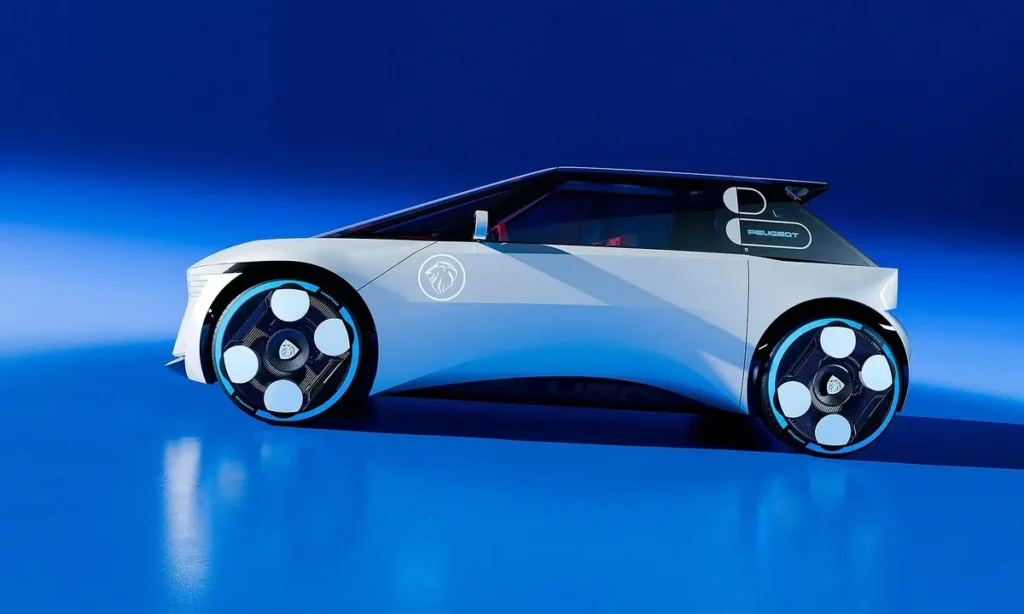
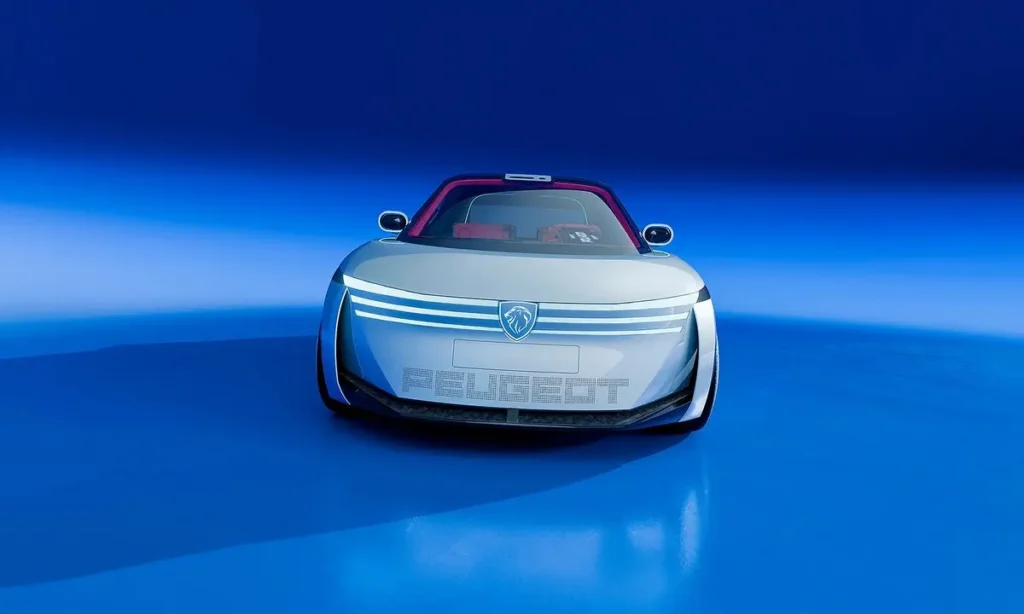
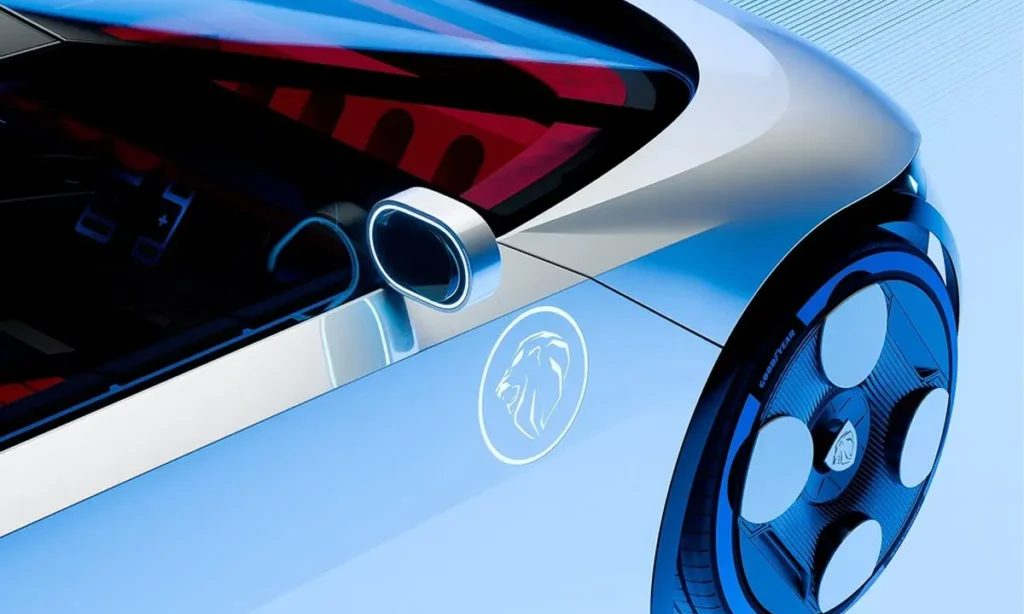
The Polygon Concept draws its name from the polygonal shapes that dominate the exterior and interior architecture of the vehicle. These forms are not merely stylistic flourishes; they contribute to structural rigidity, optimized air channels, improved safety zones and enhanced battery cooling pathways. The concept demonstrates a new intersection between design purity, geometric precision and functional efficiency. At the same time, the 2025 Polygon serves as an experimental platform for Peugeot’s advanced e-modular drive systems, next-generation digital cockpit and sustainable interior materials. This article explores the Polygon Concept in depth, examining its design philosophy, engineering innovations, performance expectations, cabin design, digital ecosystem and its significance for Peugeot’s future lineup.
Exterior Design: The Geometry of Motion
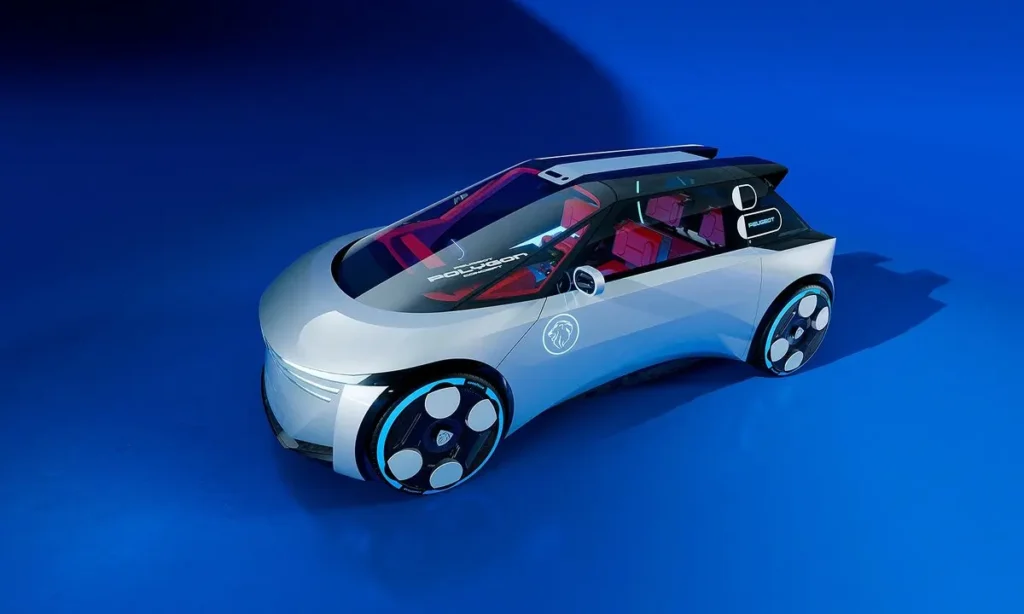
The exterior of the Peugeot Polygon Concept is unlike any Peugeot before it. The design language breaks from traditional curvatures seen in modern automotive styling and instead embraces sharp polygonal surfaces, intersecting planes and origami-like folded sections. These geometric surfaces form a futuristic silhouette that stands out with its complex interplay of angles and reflections. Peugeot’s designers describe the Polygon as “a study in kinetic geometry,” with each surface intended to capture motion even when the vehicle is stationary.
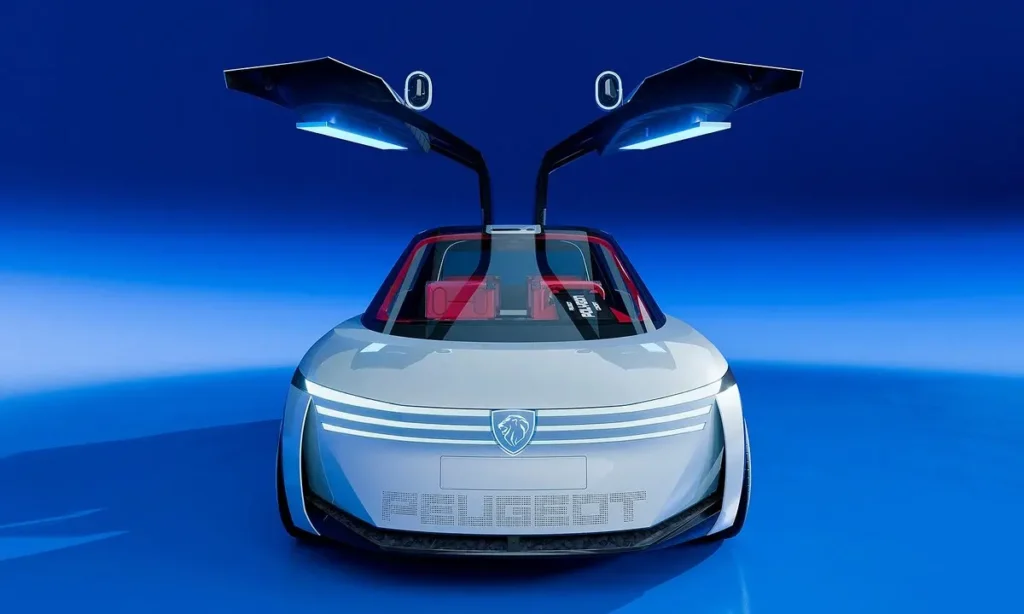
The front fascia showcases an illuminated frameless grille structure with polygon-shaped LED signatures replacing traditional headlamp designs. These multi-faceted lighting modules respond dynamically to driving conditions, adjusting brightness, pattern and color based on environmental feedback. The signature Peugeot fangs remain but are reinterpreted into crystalline vertical light shards that extend into the bumper architecture. The front end also incorporates active air channels hidden within faceted grille elements, contributing to aerodynamic efficiency while maintaining the uninterrupted geometric theme.
The side profile is a bold departure from conventional SUV or crossover shapes. Peugeot positions the Polygon Concept as a new category of electric crossover-coupe “architecture vehicle,” using strong character lines and angular surfaces to create a confident and athletic stance. The sharply sculpted wheel arches house large aerodynamic polygon-pattern alloy wheels designed to reduce turbulence. Integrated side panel vents distribute air along the body for enhanced aerodynamic control. Even the door handles are polygonal, retracting flush into the bodywork to preserve the exterior’s sculptural purity.
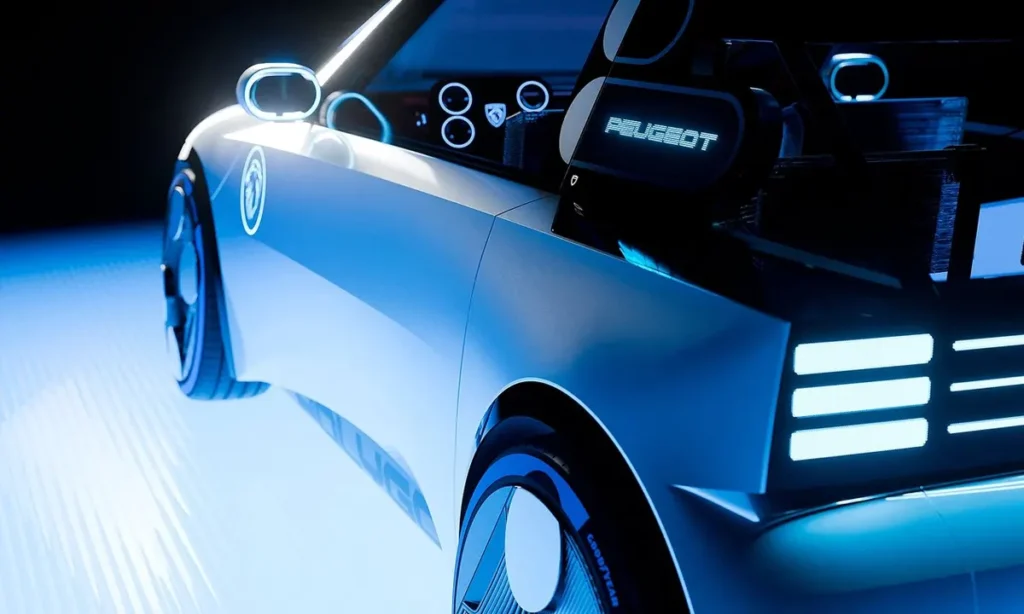
The rear of the Polygon Concept is equally dramatic, featuring a triangular light blade spanning the width of the vehicle. This floating 3D taillight structure uses high-density LEDs to project layered geometric effects, giving the rear end a sense of depth and motion. An aerodynamic diffuser integrates seamlessly with the faceted rear bumper, while the roofline flows into a crystalline rear spoiler that assists with downforce.
The overall impression is one of futuristic strength, architectural beauty and technical elegance—a new design identity for Peugeot that challenges traditional automotive norms.
Powertrain and Performance: Next-Generation Electric Capability
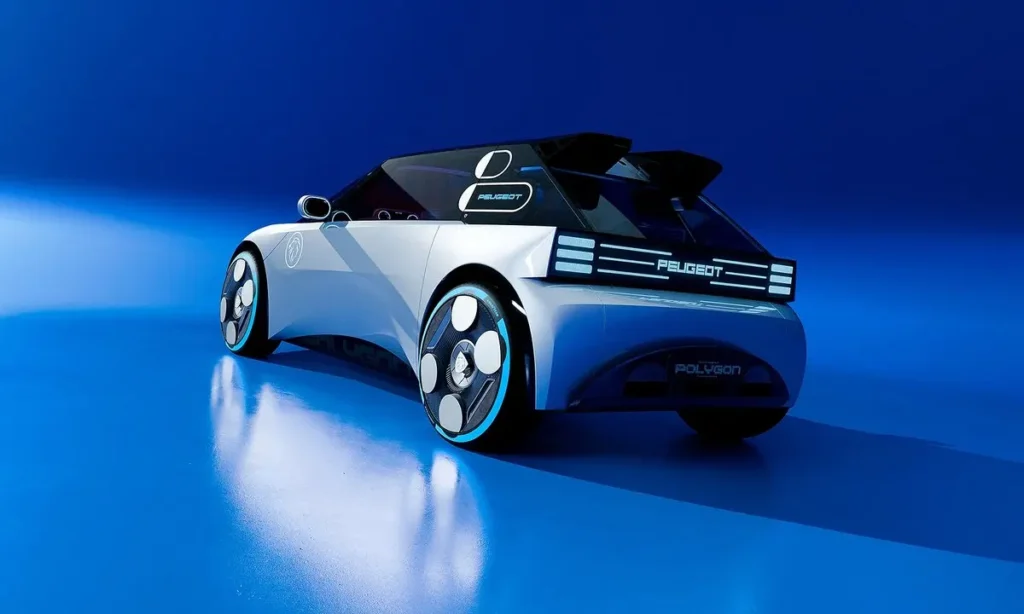
While the Peugeot Polygon Concept is primarily a design and technology statement, it also introduces the next evolution of Peugeot’s electric powertrain architecture. The concept is built around a dual-motor electric layout, offering intelligent all-wheel drive and performance figures that position the Polygon above Peugeot’s existing e-platform models. Peugeot engineers developed an upgraded version of the STLA Medium-Plus platform, optimized for high-output battery cooling, variable torque delivery and modular drive systems.
The dual-motor setup is projected to deliver approximately 450 horsepower and instant all-electric torque that ensures rapid acceleration and confident high-speed capability. Engineers incorporate torque vectoring technology that distributes power between axles and individual wheels to maximize traction and turn-in response. This enables the Polygon Concept to adapt its dynamics to road conditions, driver inputs and performance demands.
A new generation high-density battery pack with around 100 kWh of usable capacity supports long-distance travel. Peugeot estimates a driving range of 650 kilometers on the WLTP cycle, achieved through improved battery chemistry, enhanced regenerative braking and aerodynamic refinements across the Polygon’s sculpted exterior. Liquid-cooled thermal management ensures consistent performance even under demanding acceleration or high ambient temperatures.
Fast-charging capability allows the Polygon to reach 80 percent capacity in under 20 minutes using the latest high-power charging infrastructure. This positions the concept competitively against premium EVs and highlights Peugeot’s commitment to developing future-proof charging solutions.
The Polygon Concept’s performance profile is not purely about speed. Peugeot engineers focused on delivering controlled, predictable and refined dynamics that feel intuitive and confidence-inspiring. Electric torque vectoring, adaptive air suspension and low battery placement contribute to a stable and balanced driving experience. The Polygon stands as a compelling demonstration of how Peugeot’s EV future will combine excitement with everyday usability.
Interior Design: A Polygonal Digital Sanctuary
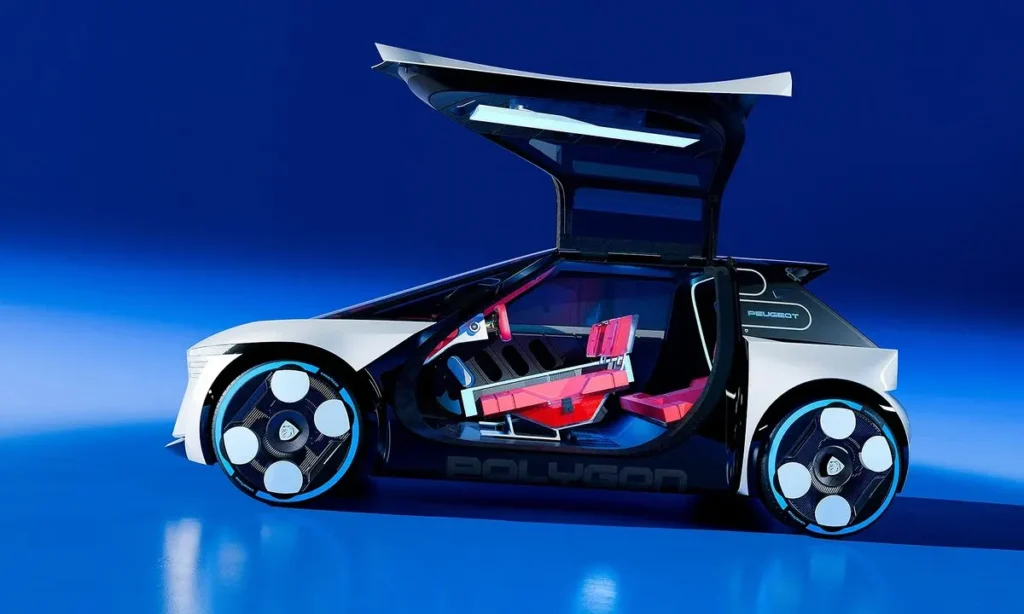
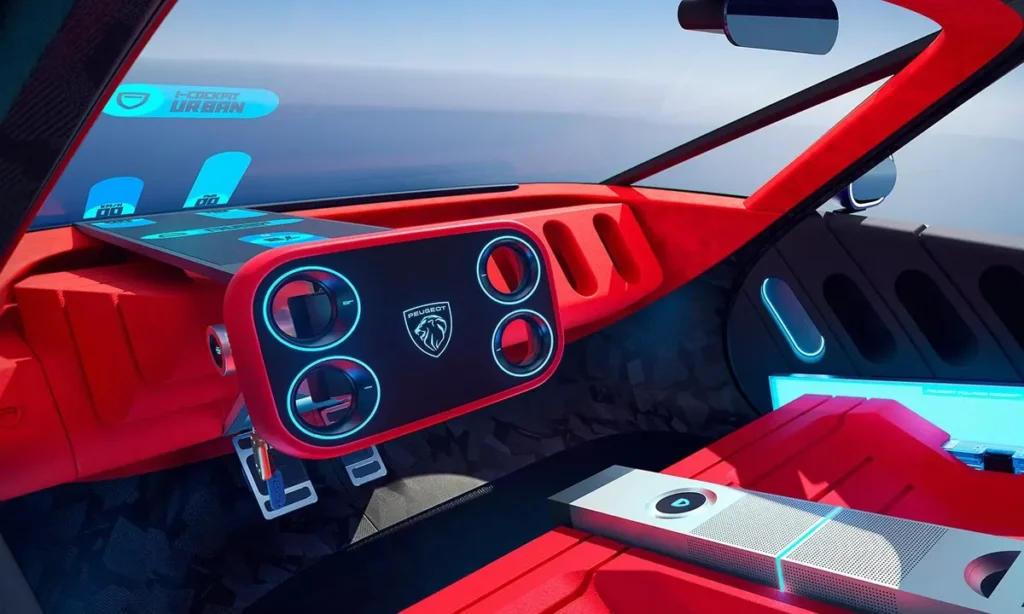
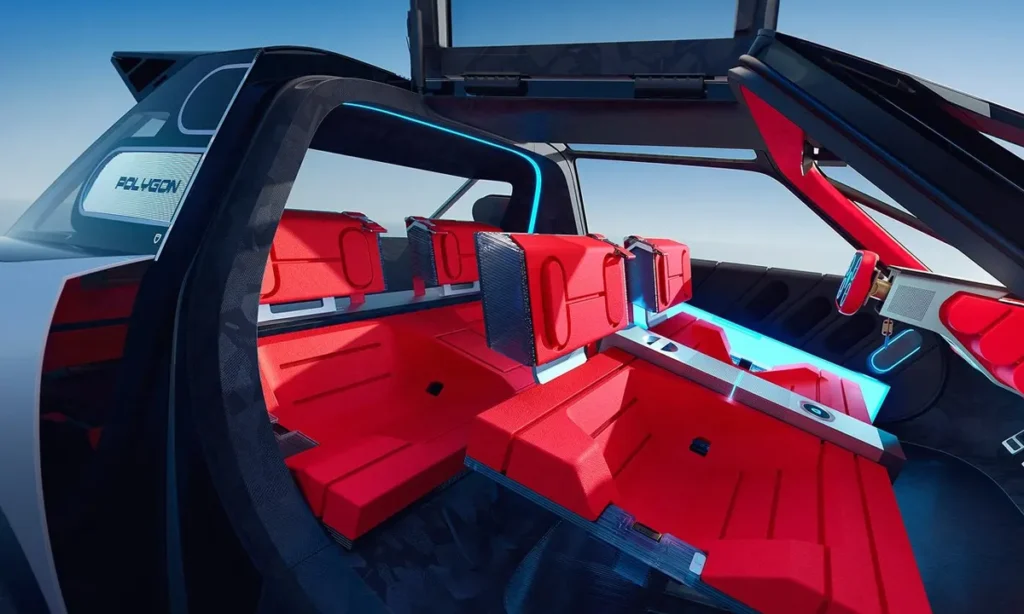
The interior of the Peugeot Polygon Concept is a futuristic reimagining of the i-Cockpit philosophy. The cabin embodies a geometric architectural environment built around polygonal motifs, layered surfaces and a refined digital ecosystem. Peugeot describes the interior as a “digital sanctuary”—a space where tactile craftsmanship meets advanced human-machine interaction.
The dashboard is an expansive polygonal structure with crystalline textures, incorporating a floating multi-layer digital display that stretches nearly the full width of the cabin. This display is divided into dynamic zones that adjust based on driving mode, environmental conditions and user preferences. Embedded haptic surfaces provide tactile feedback while preserving a minimalistic aesthetic.
The steering control adopts Peugeot’s next-generation rectangular steering module, designed to improve visibility of the digital cluster and reduce driver fatigue. The polygonal steering unit includes programmable touch surfaces that replace traditional controls, offering intuitive access to navigation, media, and driver-assistance features.
Seating is crafted from sustainable materials including bio-sourced textiles, recycled microfibers and plant-based polymer composites. The seats feature a floating polygonal frame that provides a lightweight yet supportive structure, enhancing comfort for long journeys. Ambient lighting integrated within the seat structures and interior panels creates a multi-dimensional effect that changes tone and intensity based on driving mode or user preference.
The center console is designed as a multi-layer geometric sculpture incorporating wireless charging, modular storage and customizable display surfaces. Rear passengers benefit from individual digital panels embedded into the seatbacks, offering entertainment, climate control and connectivity features.
The Polygon’s interior is not simply a showcase of digital luxury—it reflects Peugeot’s commitment to sustainability, craftsmanship and emotional design.
Technology, Connectivity and Autonomy
The Peugeot Polygon Concept is engineered around an advanced digital ecosystem designed to elevate connectivity, safety and user experience. Peugeot leverages next-generation artificial intelligence to create an adaptive cabin environment that learns driver habits, predicts user preferences and responds organically to commands.
The concept introduces Peugeot’s AI-Driven Companion, an intelligent interface capable of analyzing driving patterns, suggesting route optimizations, managing cabin settings and providing safety alerts. The system integrates seamlessly with cloud-based services, enabling continuous updates and content streaming.
Level 3+ autonomous capability is showcased through an advanced sensor suite embedded in the Polygon’s SmartVision front fascia. Lidar, radar and long-range camera systems work together to enable automated highway driving, intelligent lane changes, traffic assistance and predictive obstacle detection. Peugeot’s digital safety systems anticipate hazards, adjust vehicle behavior and maintain driver awareness through haptic alerts.
Over-the-air software upgrades ensure long-term technological relevance, allowing the Polygon to evolve and expand its capabilities over time.
Driving Dynamics: Precision Through Geometry
The driving dynamics of the Peugeot Polygon Concept emphasize precision, comfort and confidence. The rigid polygonal body structure contributes to excellent chassis stability, while the adaptive air suspension smoothly adjusts to road conditions. Whether cruising on highways or navigating tight city streets, the Polygon maintains a composed and responsive character.
The seamless delivery of electric torque, combined with advanced traction systems, provides impressive acceleration without compromising comfort. The cabin’s acoustic insulation and sound-dampening materials ensure a quiet and relaxing driving environment, enhancing the grand-touring appeal of the concept.
Read: This Cadillac Opulent Velocity Concept Might Be The Most Beautiful EV Ever Designed
Strategic Importance for Peugeot’s Future
The Peugeot Polygon Concept plays a key role in defining the brand’s electrified trajectory. It demonstrates Peugeot’s readiness to explore bolder design philosophies, advanced digital ecosystems and high-performance electric platforms. The Polygon signals the potential for future production models influenced by its geometric design language and electrified powertrain technologies.
For Peugeot, the 2025 Polygon Concept is both a creative experiment and a technological landmark—a glimpse into the future of its premium EV lineup.
Peugeot Polygon Concept (2025) – Specifications Chart
| Specification | Detail |
| Powertrain | Dual-Motor All-Wheel Drive |
| Power Output | ~450 hp (Projected) |
| Torque | High Instant Electric Torque |
| Battery Capacity | ~100 kWh (Projected) |
| Range | ~650 km WLTP |
| Charging | 350 kW Fast-Charging Capability |
| Platform | STLA Medium-Plus (Next-Gen Adaptation) |
| 0–100 km/h | ~4.0 seconds |
| Top Speed | Electronically Limited |
| Suspension | Adaptive Air Suspension |
| Interior | Polygonal Digital i-Cockpit, Sustainable Materials |
| Autonomous Tech | Level 3+ Highway Autonomy |
| Exterior | Multi-Faceted Polygonal Architecture |