2025 Renault Twingo EV: A Retro Icon Reborn as an Affordable Electric
In the ever-evolving world of mobility, where electric vehicles dominate headlines and cities demand smaller, smarter cars, Renault is doing what it does best — innovating for the everyday driver. The French automaker has announced the comeback of one of its most beloved models, the Renault Twingo, this time as a fully electric, budget-friendly urban car.
For decades, the Twingo has been a symbol of practicality, personality, and charm — a car that brought color and character to city streets. And now, with its electric rebirth, Renault aims to make sustainable driving accessible to all.
Let’s dive deep into the story of the Renault Twingo, from its playful origins to its bold electric future.
Gallery: 2025 Renault Twingo EV
A Brief History: The Birth of a Small-Car Legend
When Renault first unveiled the Twingo at the 1992 Paris Motor Show, it was unlike anything the world had seen.
Compact, cheerful, and full of personality, the first-generation Twingo was designed to make driving in European cities fun again. It was named after a fusion of the words “Twist,” “Swing,” and “Tango” — a reflection of the car’s playful spirit and dynamic design philosophy.
First Generation (1993–2007): A Revolution in Small-Car Thinking
Launched in 1993, the first Twingo broke all conventions. Its single-box shape, massive windshield, and colorful interiors made it stand out instantly.
It was practical too — with a sliding rear seat, modular interior, and surprisingly spacious cabin, the Twingo redefined how compact cars could use space. Its lightweight structure and small engines (ranging from 1.2L to 1.3L) made it perfect for city driving, while its quirky design earned it a cult following across Europe.
Second Generation (2007–2014): More Mature, Yet Familiar
After more than a decade of success, Renault launched the second-generation Twingo in 2007.
This version was more refined, offering improved build quality, efficiency, and technology, while keeping its compact footprint. Though less radical in design, it remained an affordable, reliable choice for young drivers and city commuters.
Renault also experimented with sportier variants, such as the Twingo RS, which injected performance flair into the compact segment.
Third Generation (2014–2024): Reinvented from the Ground Up
The third-generation Twingo, launched in 2014, was a bold step forward. Co-developed with Daimler (the parent company of Smart), it introduced a rear-engine, rear-wheel-drive layout — a rarity in modern cars.
This unique configuration allowed for a shorter bonnet, tighter turning circle, and more cabin space, making it ideal for congested cities.
Despite its innovative engineering, the third-gen Twingo faced growing pressure from rising emissions standards and the shift toward electric mobility. Production officially ended in 2024 — but Renault had bigger plans brewing.
The Electric Comeback: Twingo Reimagined for a New Era
In November 2025, Renault made headlines when it announced the return of the Twingo as an electric vehicle (EV).
Unveiled as part of Renault’s long-term sustainability roadmap, the new Twingo EV will be positioned as a compact, affordable, and fun-to-drive city car, echoing the spirit of the 1990s original but designed for the electric age.
According to Reuters, the new Twingo Electric is set to launch in early 2026, with prices starting below €20,000 — a groundbreaking figure in the European EV market.
Design: A Modern Take on a Classic
Renault’s design team has managed to capture the nostalgic charm of the original Twingo while giving it a futuristic twist.
Exterior Design
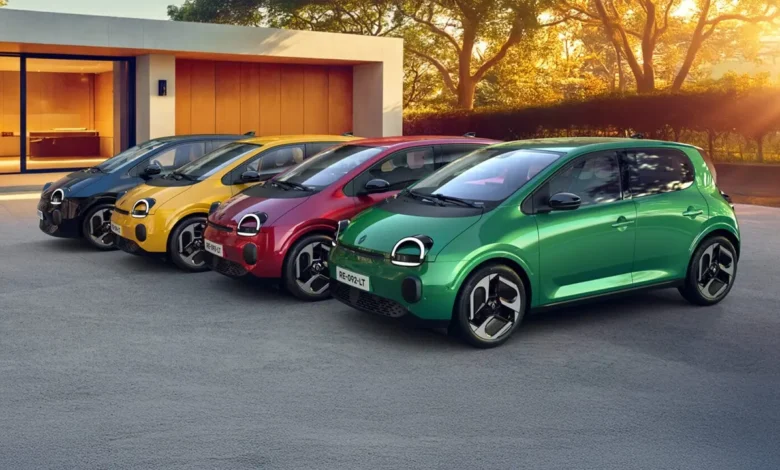
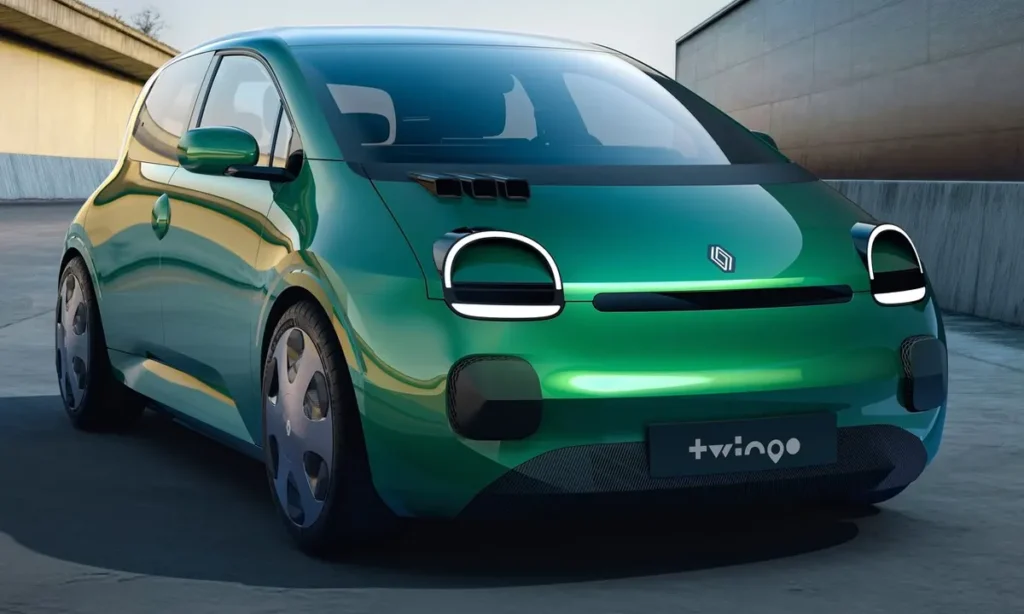
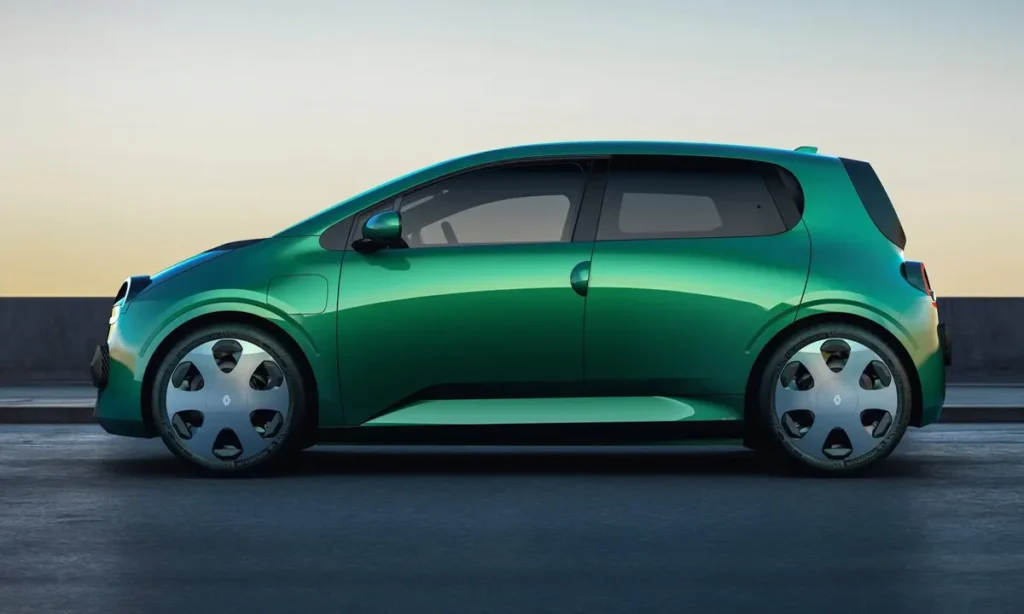
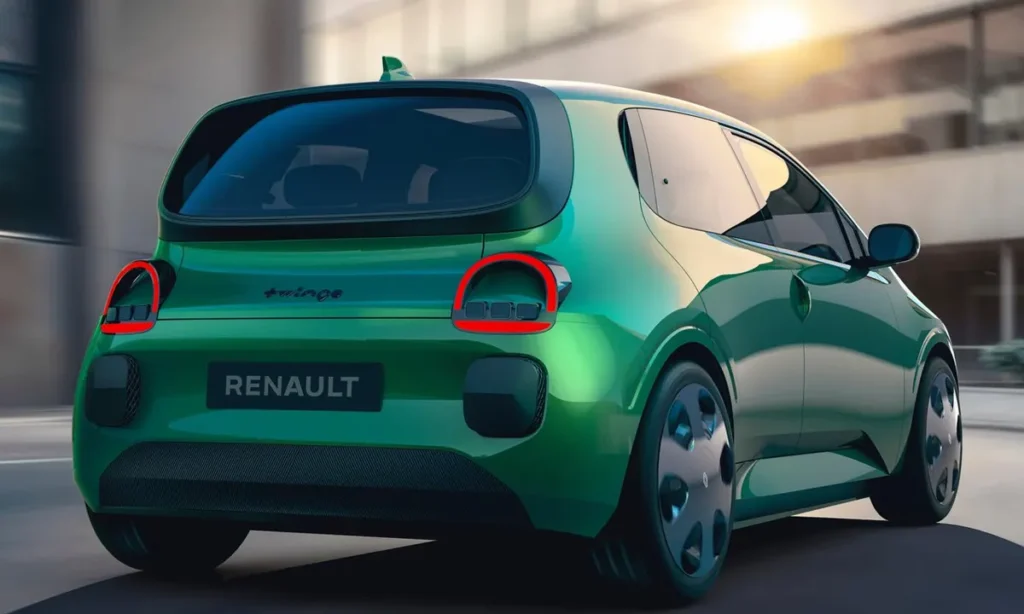
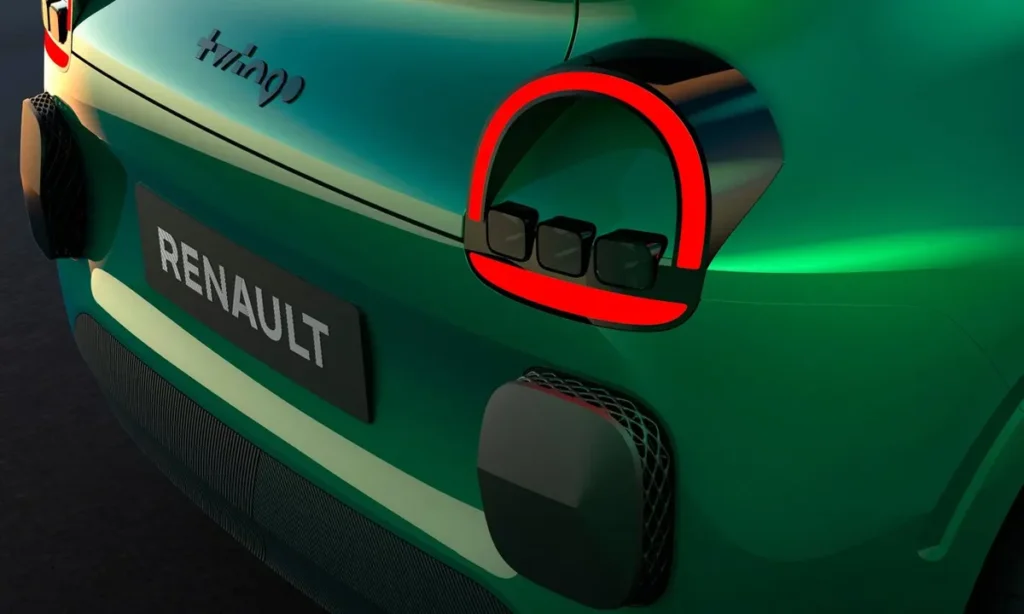
The new Twingo EV blends retro cues with modern simplicity. The compact dimensions, round headlights, and friendly face pay homage to the original, while the clean surfaces and aerodynamic body align with Renault’s new design language.
The car’s proportions are ideal for tight urban spaces, ensuring easy maneuverability and visibility — features that have always defined the Twingo experience.
Expect the Twingo to feature LED signature lighting, bold color options, and minimalist styling that makes it stand out without being loud.
Interior
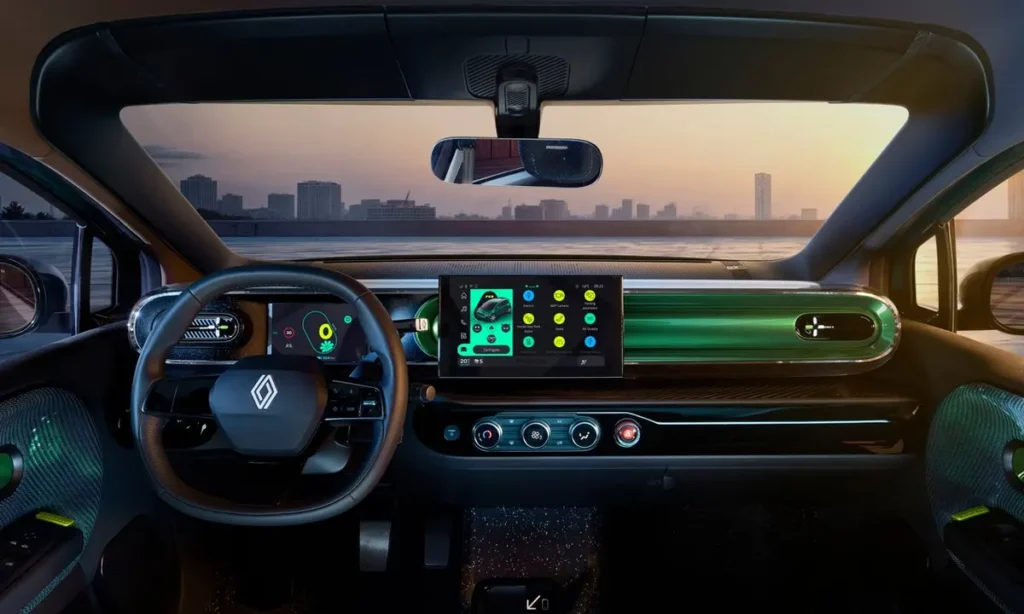
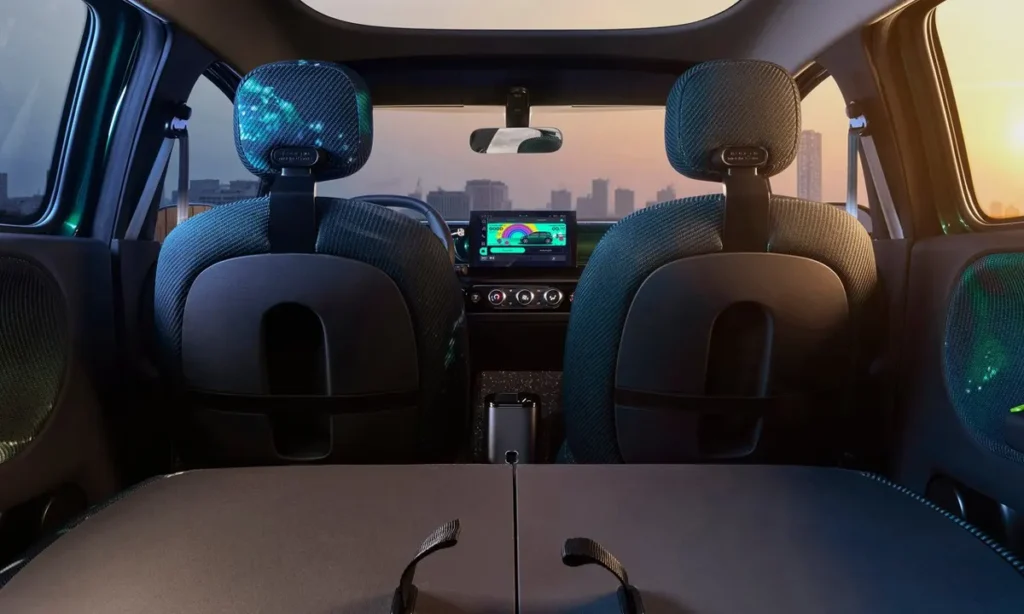
Inside, Renault focuses on functionality and sustainability. The cabin will feature recycled materials, a digital dashboard, and an intuitive infotainment system compatible with Android Auto and Apple CarPlay.
While the interior remains compact, clever packaging ensures plenty of space for passengers and luggage. The Twingo’s flat floor, made possible by its EV platform, allows for better comfort and legroom.
Powertrain and Performance: Small Car, Big Efficiency
The 2025 Renault Twingo EV will use a 27.5 kWh LFP (Lithium Iron Phosphate) battery, delivering an estimated 262 km (163 miles) of WLTP range.
That may not sound like much in an era of 400-mile EVs, but Renault’s engineers understand the mission — this car is built for cities, not motorways.
Performance Specs (Expected)
- Power Output: 60–80 hp (estimated)
- Battery Capacity: 27.5 kWh
- Range (WLTP): ~262 km (163 miles)
- Charging Time: 80% in ~30 minutes (DC fast charger)
- Top Speed: ~135 km/h (limited for efficiency)
By using LFP battery technology, Renault ensures lower production costs and better long-term durability. Unlike nickel-based batteries, LFP cells are safer, cheaper, and ideal for smaller urban EVs.
Technology and Connectivity
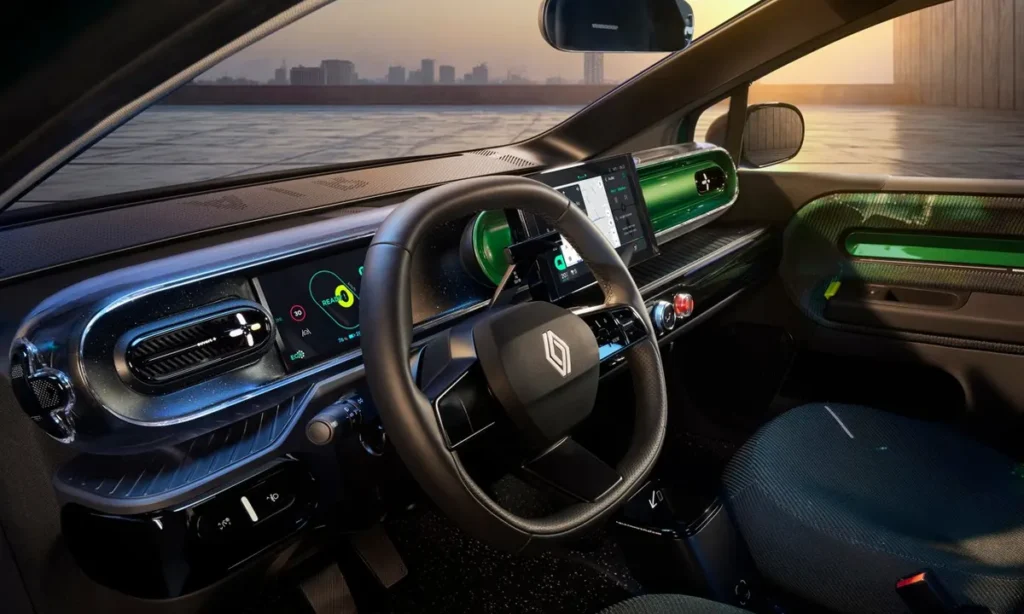
Renault’s new Twingo will feature the latest version of the OpenR Link infotainment system, integrating Google Built-in apps for maps, voice control, and navigation.
The dashboard layout will be simple and intuitive — reflecting the brand’s focus on minimalism. Wireless smartphone connectivity, customizable themes, and over-the-air updates will all be standard.
Driver assistance features such as lane-keeping assist, adaptive cruise control, and emergency braking are expected to be available even on base trims, emphasizing safety for urban driving.
The Mission: Affordable Electrification
The new Renault Twingo EV represents more than just another electric car launch — it’s a statement about making EVs accessible to everyone.
While other automakers focus on premium electric SUVs, Renault is targeting the opposite end of the spectrum: affordable electric mobility.
At under €20,000, the Twingo EV will compete directly with the Dacia Spring, Fiat 500e, and Citroën ë-C3, aiming to capture buyers who want an EV but can’t stretch to high-end models.
By using cost-effective materials, streamlined manufacturing, and localized production in Slovenia, Renault ensures the Twingo EV can stay within reach for the average consumer.
Market Outlook: Europe Today, the World Tomorrow
Initially, the Renault Twingo EV will focus on European markets, where city-friendly cars and strict emissions laws create strong demand for small EVs.
However, Renault could expand its footprint to emerging markets in the future. Countries like India, Brazil, and parts of Southeast Asia are beginning to embrace compact electric cars, and a Twingo EV could fit perfectly in these regions with some local adaptation.
In India, for example, where Renault already sells models like the Kwid and Triber, an electric Twingo could become an ideal premium city EV alternative.
Challenges Ahead
While the new Twingo EV shows immense promise, it’s not without challenges.
- Competition: The small EV market is heating up, with rivals like the Citroën ë-C3, BYD Seagull, and Dacia Spring targeting similar price brackets.
- Profitability: Low-cost EVs are notoriously difficult to make profitable, as batteries still account for a significant portion of production costs.
- Charging Infrastructure: In some markets, urban charging networks are still developing — a factor that could affect adoption.
Still, Renault’s experience in cost-efficient manufacturing and its strong European dealer network give it a solid head start.
Chart: Renault Twingo EV vs Rivals
| Model | Battery | Range (WLTP) | Price (Est.) | Target Market |
| Renault Twingo EV | 27.5 kWh LFP | 262 km | €19,500 | Urban Europe |
| Fiat 500e | 42 kWh | 320 km | €29,000 | Premium city EV |
| Dacia Spring | 26.8 kWh | 230 km | €17,000 | Budget EV |
| Citroën ë-C3 | 44 kWh | 320 km | €23,000 | Compact EV |
| BYD Seagull | 30 kWh | 305 km | €15,000 (est.) | Asia, Europe |
The Twingo sits comfortably between affordability and performance — offering slightly better refinement and brand credibility than the Dacia Spring, while staying more affordable than the Fiat 500e.
The Legacy Lives On
For Renault, the Twingo isn’t just another car — it’s a cultural icon. Since its debut, over 2.6 million units have been sold worldwide, and its playful personality continues to inspire nostalgia among fans.
The new electric Twingo carries that same DNA into a new age, ensuring that personality, practicality, and accessibility remain at its core.
Final Verdict: The People’s Electric Car
The 2025 Renault Twingo Electric is shaping up to be one of the most important EV launches in Europe.
It’s compact, efficient, and, most importantly, affordable — three words that perfectly capture what millions of drivers are looking for.
By combining retro-inspired design, smart engineering, and sustainable materials, Renault has managed to breathe new life into a legendary nameplate while keeping true to its original mission: to make city driving simple and joyful.
If Renault delivers on its promise of sub-€20,000 pricing and 260+ km range, the Twingo could become the benchmark for affordable electric mobility — not just in Europe, but around the world.
In a time when many automakers chase luxury margins, the Renault Twingo EV stands out as something rare — an electric car built not for the few, but for the many.
Read: The Ferrari Elettrica: A New Charge of Pure Performance
Frequently Asked Questions (FAQ)
Q1: When will the Renault Twingo EV be released?
Renault plans to launch the Twingo EV in early 2026 in Europe.
Q2: What will be the price of the new Renault Twingo EV?
The expected starting price is under €20,000, making it one of the most affordable electric cars in Europe.
Q3: What range will the Twingo EV offer?
It’s expected to deliver a 262 km WLTP range on a single charge.
Q4: Where will the new Twingo be made?
Production will take place in Slovenia, using local and European supply chains.
Q5: Will it come to India or Asia?
While not yet confirmed, Renault could consider launching it in emerging markets depending on demand and EV infrastructure.