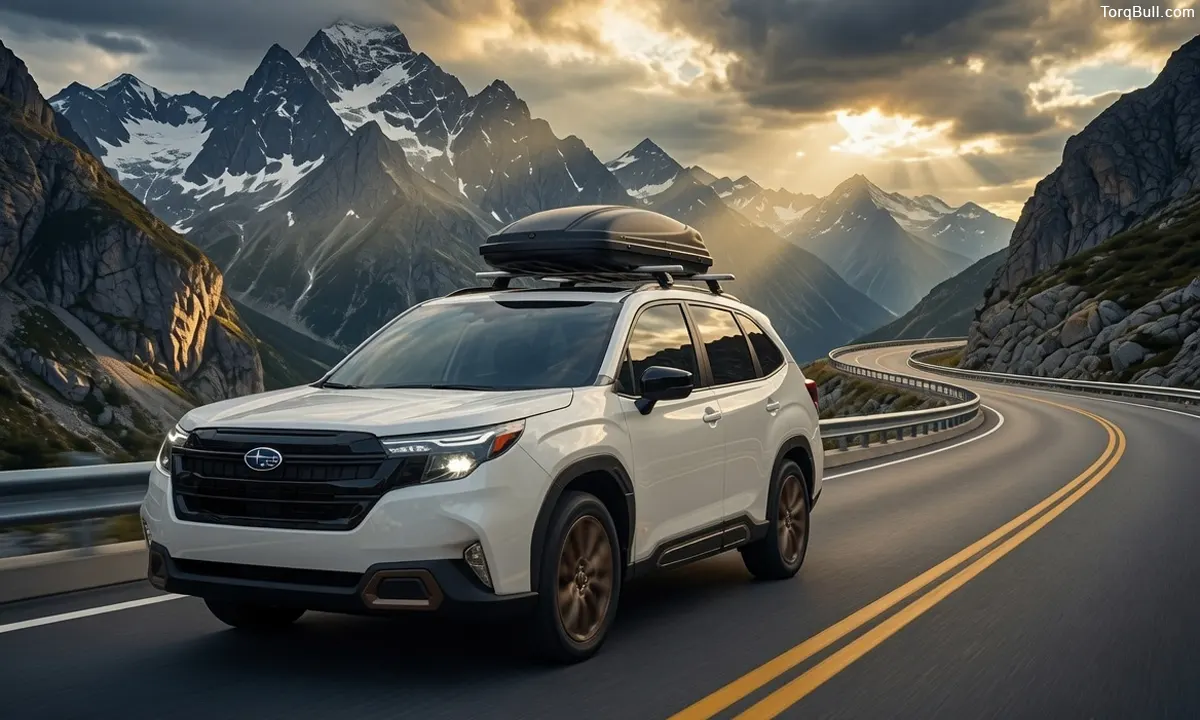
- The 2026 Subaru Forester earns a strong reliability rating, with a JD Power score of 84 out of 100.
- Owners experience relatively few unplanned repairs, and many Foresters exceed 200,000 miles with proper maintenance.
- Annual repair costs are somewhat higher than the compact SUV average, but the Forester remains a solid long-term ownership choice.
The Subaru Forester’s long-term ownership case is built on a specific and identifiable combination of standard all-wheel drive, EyeSight driver assistance technology on every equipped trim, a boxer engine architecture with decades of production history and a compact crossover body that accommodates families, adventure gear and all-weather driving without requiring the buyer to choose between capability and daily practicality. It is the compact crossover specifically recommended for buyers who live in winter-heavy climates, who regularly drive unpaved roads and who value the driver visibility that the Forester’s tall glasshouse body provides over the sleeker profile competitors choose for styling reasons. The reliability story across the Forester’s 2018 through 2026 production covers both its genuine strengths and the specific documented concerns — windshield fragility, exterior lighting issues and earlier-generation head gasket history — that honest long-term ownership assessment requires addressing alongside the positive data. This complete guide provides both.
The Reliability Score Across Generations: Good but Not Class-Leading
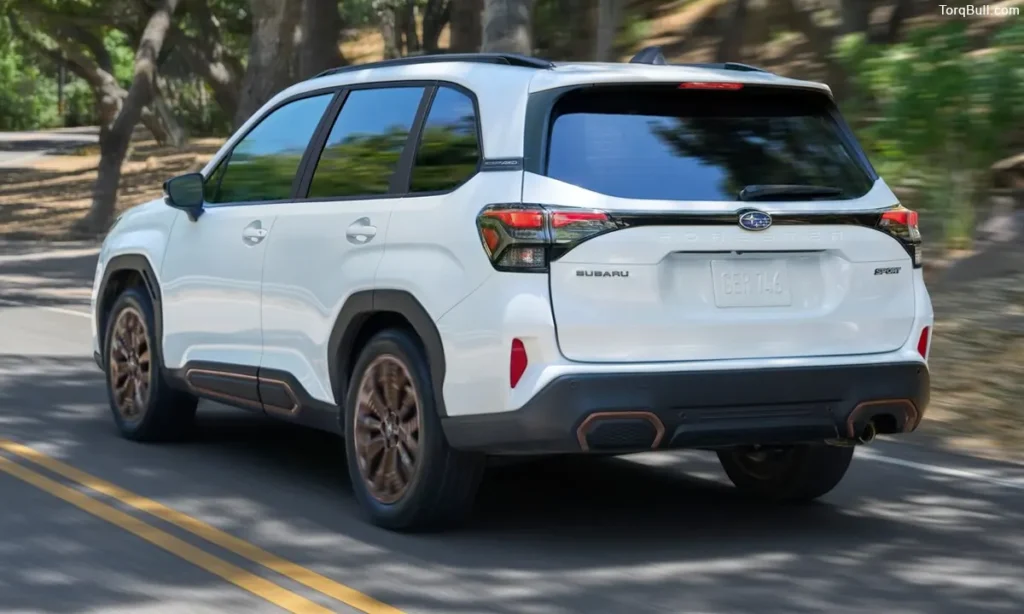
The Subaru Forester’s average reliability score of 75 out of 100 across 2018 through 2026 production — rated Good by independent reliability assessment standards — places it in the competitive middle of the compact crossover segment rather than at the class-leading position that Toyota and Honda alternatives occupy in the equivalent reliability comparison.
The JD Power quality and reliability score of 84 out of 100 for the 2024 Forester — the most recent year with comprehensive JD Power data — places the Forester in the Great category and at a level competitive with class leaders including the Honda CR-V. This discrepancy between the broader 75 out of 100 multi-year average and the specific JD Power 84 out of 100 single-year score reflects the improvement trajectory across the Forester’s generational history — the fifth generation from 2019 to 2024 consistently maintained a minimum reliability rating of 4 out of 5, showing Subaru’s commitment to addressing the past issues that earlier generations documented.
The 2025 Forester is described as expected to be much more reliable than the average new car based on available data — the strongest single-year reliability prediction in the current Forester production history. The 2026 Forester is predicted to have about average reliability compared to the average new car — a modest step below the 2025 assessment that reflects the first-year production adjustment typical of any new generation introduction. Both current-year predictions position the Forester as a reasonable long-term ownership choice while acknowledging the reliability ceiling that Toyota and Honda alternatives consistently occupy in the most stringent reliability assessments.
Read: Subaru Forester Maintenance Cost. Is This Popular SUV Budget-Friendly?
What Makes the Forester Genuinely Good for Long-Term Ownership
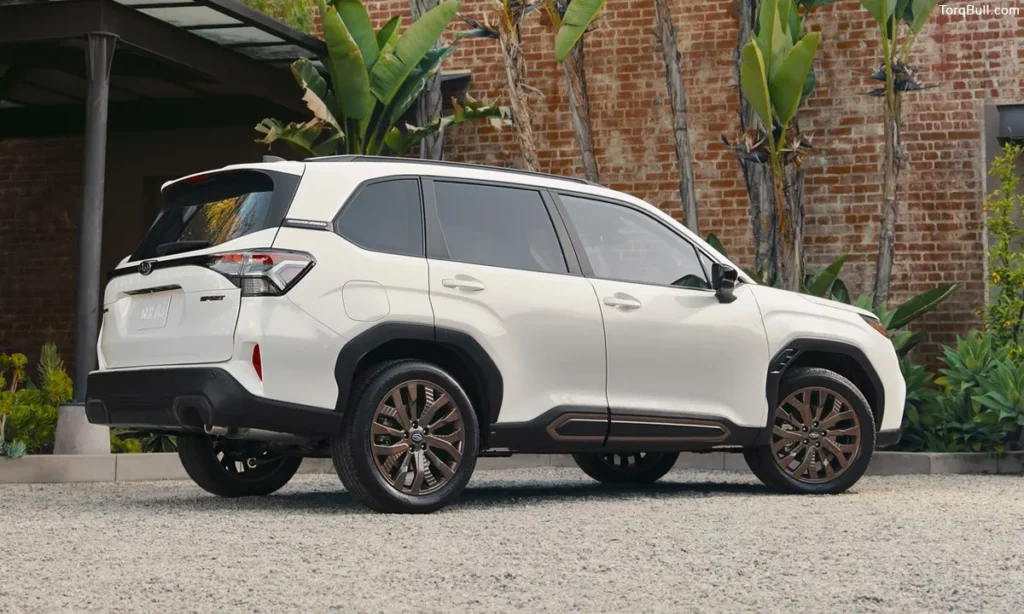
Standard All-Wheel Drive: The Foundational Long-Term Advantage
Every Subaru Forester across every model year includes Subaru’s Symmetrical All-Wheel Drive as standard — not as an option that adds cost and requires configuration, but as the fundamental drivetrain architecture that every Forester buyer receives regardless of trim or budget. This standard AWD is the single feature most frequently cited by long-term Forester owners as the ongoing daily benefit that sustains their ownership satisfaction across multiple years and multiple seasons.
AWD provides better traction in snow and improves stability in all conditions — and for buyers in the Pacific Northwest, northern states, mountain regions and anywhere that winter road conditions are a regular rather than occasional feature of daily driving, this standard AWD is worth thousands of dollars in avoided add-on cost compared to competing compact crossovers where AWD requires a significant purchase premium. The AWD system’s contribution to the Forester’s long-term value is also documented in the JD Power depreciation score of 84 out of 100 — reflecting sustained used-market demand from buyers who specifically seek AWD compact crossovers and who consistently value Forester examples above alternatives at equivalent age and mileage.
Unplanned Repair Frequency: Better Than Average
Forester owners visit the shop for unplanned repairs approximately 0.3 times per year — below the all-vehicle average of 0.4 times. This lower-than-average repair frequency is the practical manifestation of the Forester’s reliability in real ownership rather than just in reliability survey scores. Fewer unplanned visits means less disruption to the owner’s schedule, less stress about unexpected expenses and a more predictable annual ownership cost profile.
Approximately 12 percent of Forester repairs fall into the severe category — those costly events exceeding $1,000 — which aligns with the all-vehicle average rather than being meaningfully better or worse. This balance — fewer visit events overall but equivalent severity when major repairs do occur — produces a reliability profile that is better than average in everyday operational terms while not providing exceptional protection against the specific major failures that occasionally affect any mechanical system.
High-Mileage Documented Capability
With proper care, many Foresters exceed 200,000 miles — and the owner community documents this longevity across multiple Forester generations with sufficient frequency to represent a realistic ownership expectation rather than an aspirational claim. The 2019 through 2024 fifth-generation Foresters specifically build on the reliability improvements that the fourth generation began implementing after earlier generations’ concerns — making the current generation’s high-mileage prospects more confident than the nameplate’s multi-decade average would suggest in isolation.
Read: 2026 Subaru Forester Wilderness Review. Is This the Ultimate Adventure SUV?
The Documented Long-Term Concerns: What Honest Ownership Review Requires Addressing
Windshield Fragility: The Most Consistently Reported Design Concern
Windshield fragility is the documented concern that appears most consistently across Forester owner accounts across multiple production years — including the 2024, 2025 and 2026 generations. The specific pattern involves windshields developing chips or cracks more readily than comparable vehicles in equivalent driving conditions — a characteristic that owners in regions with road gravel, construction zones and winter road treatment specifically notice and specifically find frustrating.
The 2025 Forester’s 48 owner complaints include exterior lighting and wiper visibility as the most commonly reported problem areas alongside unknown-category concerns — with windshield-related visibility documented across multiple accounts. This windshield concern does not constitute a safety defect in the traditional recall sense — the windshield functions as designed and provides structural protection — but the higher-than-expected replacement frequency that some Forester owners document adds an unplanned ownership expense that vehicle reliability scores do not fully capture.
The Active 2026 Rear Hatch Recall
The 2026 Forester carries an active recall affecting vehicles where a rear hatch support bracket may have been manufactured with an incorrect or incorrectly oriented component — allowing the rear hatch to fall unexpectedly during use and increasing the risk of injury. This recall is resolved through dealer inspection and, if necessary, replacement of the stay and support bracket at no cost to the owner. Any 2026 Forester owner should verify through the NHTSA VIN-specific recall database whether their vehicle is subject to this recall and schedule the dealer remedy promptly.
Earlier Generation Head Gaskets: Historical Context, Not Current Risk
Head gasket failures are the most historically significant Subaru Forester reliability concern — a known vulnerability specifically associated with the first through third generation Foresters using the EJ-series engine architecture. For buyers evaluating any Forester from 2001 through 2012 as a used purchase, this historical concern is actively relevant and warrants verification of documented head gasket service history before purchase.
The fourth generation’s 2014 through 2018 FB-series engine represented Subaru’s engineering response to these earlier concerns — with the current sixth-generation 2025 Forester using the FA-series engine that further addresses the head gasket vulnerability through updated material specifications and improved cooling architecture. For buyers of 2019 and newer Foresters, the head gasket concern is historical context rather than active ownership risk — but it remains worth understanding as the background against which current Forester reliability should be evaluated.
Subaru Forester Long-Term Reliability — Complete Assessment Chart
| Model Year Range | Generation | Reliability Score | Key Concerns | Unplanned Repair Rate | High-Mileage Outlook |
| 2001 to 2007 | First and Second | Below average | Head gasket (EJ engine), oil consumption | Above average | 150K to 200K with repairs |
| 2008 to 2013 | Third | Mixed | Head gasket persistent, oil consumption | Average | 150K to 180K |
| 2014 to 2018 | Fourth | Good | Improved head gasket, some oil burning | Average | 175K to 220K |
| 2019 to 2024 | Fifth | Good to Excellent | Windshield fragility, CVT monitor | 0.3 per year | 200K plus with maintenance |
| 2025 | Sixth (launch) | Predicted much better than average | Wiper visibility, exterior lighting | Data accumulating | Strong early indicators |
| 2026 | Sixth | Predicted about average | Rear hatch bracket recall (active) | 0 complaints filed | Good early signal |
Read: 2027 Subaru Getaway Review: This Compact Adventure Wagon That Fills the Gap No Other Subaru Could
The Maintenance Discipline That Determines Long-Term Outcome
Every documented high-mileage Forester ownership account — those reaching 200,000 miles and beyond — shares one consistent and non-negotiable characteristic: oil changes at or before the manufacturer-specified interval using the correct specification oil.
The boxer engine’s specific oil requirements — full-synthetic at the manufacturer’s specified viscosity — are more precision-dependent than many competing engine architectures due to the horizontal cylinder orientation’s specific lubrication demands. Oil changes extended significantly beyond the 6,000-mile interval that Subaru recommends under normal driving conditions produce accumulated oil quality degradation that the boxer design tolerates less generously than conventional vertically-mounted engine alternatives.
The CVT transmission’s 60,000-mile fluid change — an interval that Subaru recommends but that many Forester owners neglect — is the second most impactful maintenance decision affecting long-term drivetrain durability. Fresh CVT fluid at this interval costs approximately $100 to $150 and prevents the progressive belt and pulley wear that degraded fluid accelerates toward the expensive failure mode that the most negative Forester transmission accounts document.