Six Family SUVs That Earned the Highest Safety Ratings in America
The SUVs That Score Highest With the NHTSA and IIHS — Because the Most Important Specification on Any Family Vehicle Is Not Horsepower, Torque or Towing Capacity. It Is the Certainty That Every Occupant Returns Home
There is a category of automotive decision that transcends the conventional considerations of styling, efficiency, cargo capacity and quarterly incentive pricing — a category where the stakes are high enough that no amount of marketing can substitute for independently verified, rigorously tested, publicly available evidence. Choosing a family SUV on the basis of safety ratings is that decision. The two organisations responsible for producing that evidence in the United States — the National Highway Traffic Safety Administration, which conducts its own crash testing programme and awards ratings on a five-star scale, and the Insurance Institute for Highway Safety, whose more demanding evaluation protocol includes the newer, more stringent small overlap front test alongside assessments of headlight performance, child seat ease of use and the effectiveness of vehicle-to-pedestrian detection systems — together provide American families with the most comprehensive and reliable safety data available for any vehicle category in the world. What follows is an examination of the SUV models that have earned the highest combined assessments from both organisations in the 2025 and 2026 model year cycles, alongside the technical reasoning that explains why their ratings matter and what the numbers actually represent for the families who will drive them.
Why Safety Ratings Matter More Than Ever in the Modern SUV Market
The proliferation of driver assistance technologies across the mainstream SUV segment — automatic emergency braking, lane-keeping assistance, blind-spot monitoring, rear cross-traffic alert, adaptive cruise control — has created a perception among buyers that all modern SUVs are broadly equivalent in their safety provision. This perception is incorrect, and the testing data produced by the NHTSA and IIHS consistently demonstrates the gap between manufacturers who have genuinely engineered their vehicles around occupant protection and those who have installed the minimum required technology to satisfy regulatory thresholds without investing in the structural engineering, restraint system calibration and sensor integration that transforms a vehicle into a genuinely safe conveyance.
The IIHS Top Safety Pick Plus designation — the institute’s highest award, reserved for vehicles that achieve Good ratings across all crashworthiness evaluations while also earning an Acceptable or Good headlight rating and a Superior or Advanced rating for front crash prevention performance — is the single most meaningful quality mark available in the American market for families prioritising occupant protection. The NHTSA’s five-star overall rating provides a complementary but distinct assessment, reflecting crash performance across its own frontal, side and rollover testing protocols. The SUVs that earn the highest ratings from both organisations simultaneously represent the genuine pinnacle of family vehicle safety engineering in the current market.
Subaru Forester: The Benchmark That All-Wheel Drive Meets Structural Excellence
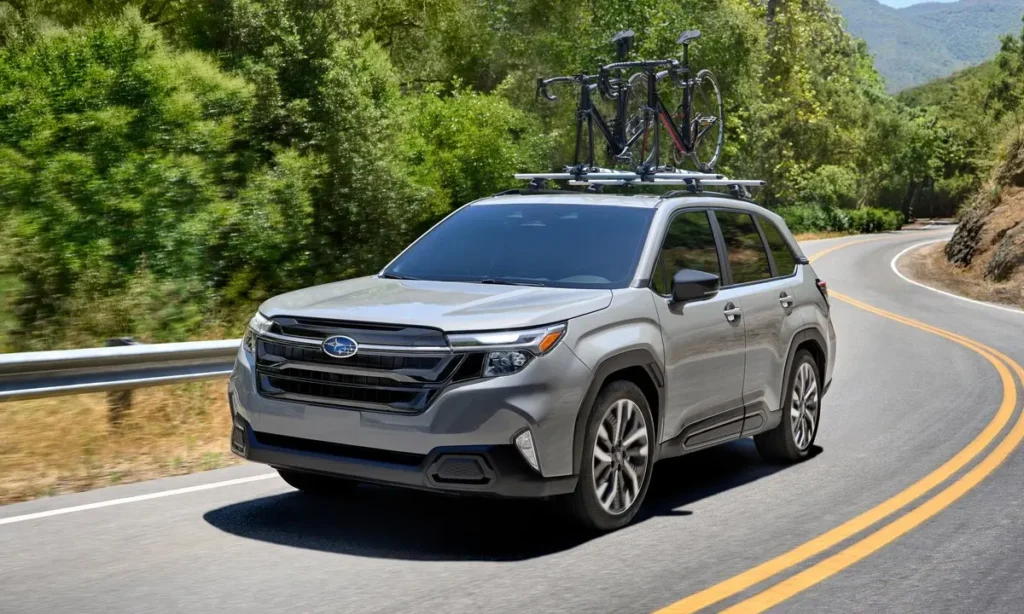
The Subaru Forester has occupied a position of consistent distinction in independent safety assessments for a period long enough that its performance can no longer be attributed to a single model year’s engineering refinement — it reflects a systematic organisational commitment to occupant protection that runs through every aspect of the vehicle’s development. The 2025 Forester earned IIHS Top Safety Pick Plus designation and a five-star overall rating from NHTSA, achieving Good scores across every crashworthiness evaluation category including the small overlap front test that catches structural weaknesses in vehicles whose central crash structures perform adequately while their corner geometry fails to protect the driver’s lower leg and foot space.
Subaru’s EyeSight driver assistance suite — a stereo camera-based system that provides automatic emergency braking, adaptive cruise control, lane departure warning and lane-keeping assistance — has been independently assessed as one of the most effective front crash prevention systems available in the family SUV segment, earning Superior ratings in IIHS vehicle-to-pedestrian and vehicle-to-vehicle detection evaluations. The Forester’s combination of symmetrical all-wheel drive as standard equipment across the entire model range — not as an optional extra commanding a price premium — with this level of safety technology integration makes it a unique proposition in the compact family SUV category.
Toyota RAV4: Volume Leadership Sustained by Safety Credibility
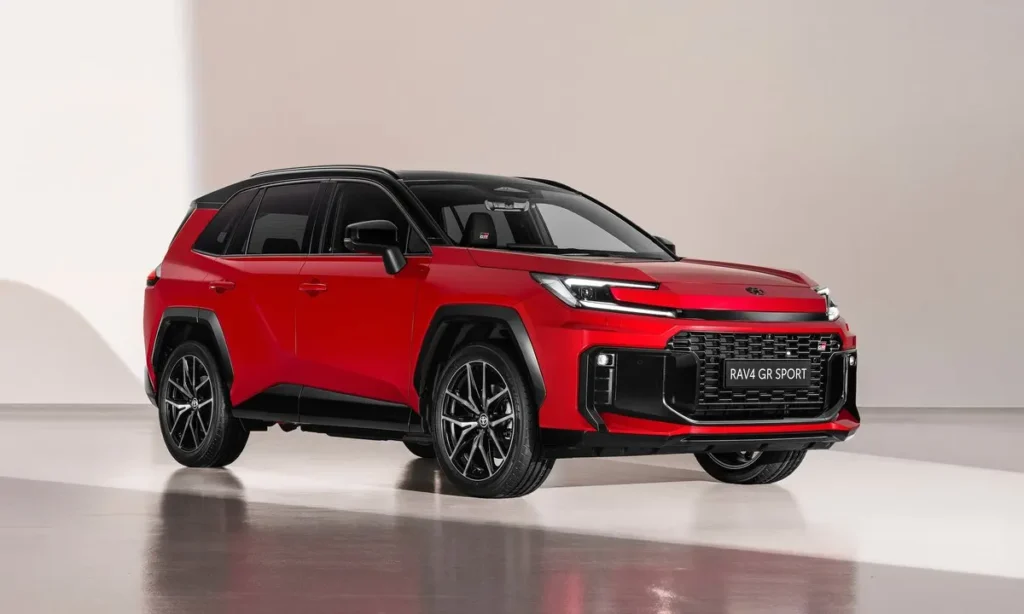
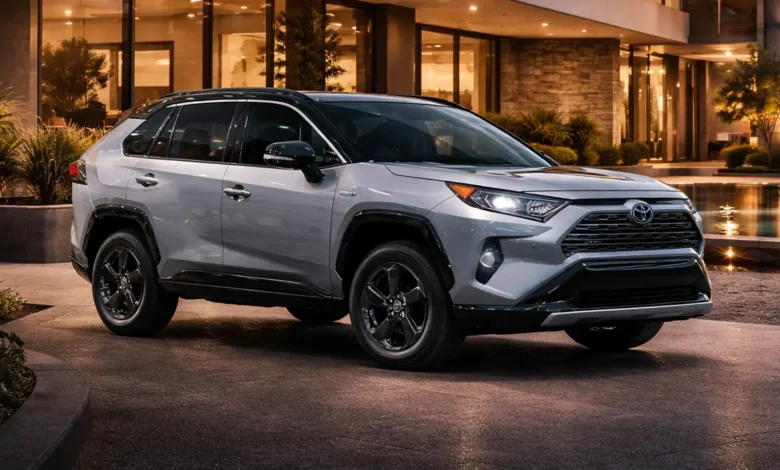
The Toyota RAV4’s position as the best-selling SUV in the United States is a commercial fact that attracts relatively little critical examination of the underlying reasons for its sustained popularity. Among those reasons, the vehicle’s consistent performance in independent safety assessments deserves greater recognition than it typically receives in the consumer conversation around the model. The 2025 RAV4 achieved IIHS Top Safety Pick Plus designation across multiple trim levels and earned a five-star overall NHTSA rating, reflecting structural engineering and restraint system calibration that has been refined through successive generational developments without the regression in crashworthiness performance that volume manufacturers sometimes introduce when prioritising cost reduction during mid-cycle refreshes.
Toyota Safety Sense — the suite of driver assistance features included as standard equipment across the RAV4 range — encompasses pre-collision braking with pedestrian and cyclist detection, radar cruise control, lane departure alert with steering assistance and automatic high-beam control. The inclusion of these systems as standard rather than optional equipment ensures that the safety technology performance demonstrated in IIHS evaluations reflects what buyers actually receive regardless of the trim level they select — a consideration that becomes significant when comparing the RAV4 against competitors whose safety equipment configurations vary substantially across the model range.
Honda CR-V: The Hybrid Powertrain That Raises the Structural Standard
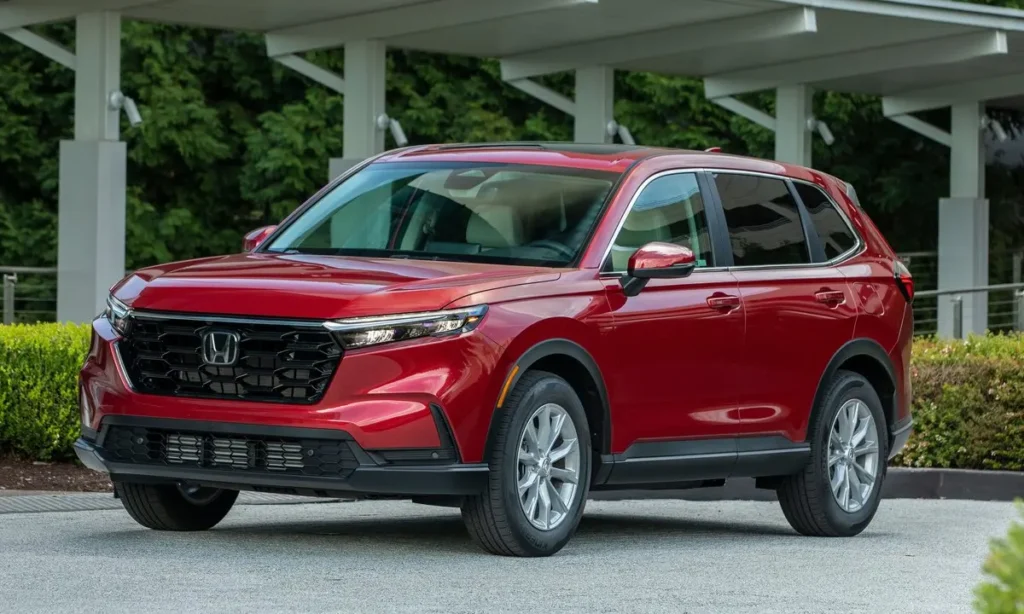
Honda’s approach to the CR-V’s safety engineering across the current generation reflects the company’s investment in the Advanced Compatibility Engineering body structure — a crash energy management architecture designed to distribute impact forces more effectively through the vehicle’s structure while simultaneously protecting against incompatible collision scenarios where a lighter vehicle interacts with a heavier one. The 2025 CR-V and CR-V Hybrid both earned IIHS Top Safety Pick Plus recognition with Good ratings across crashworthiness categories and Superior front crash prevention assessment scores, representing a consistency of safety performance across powertrain variants that not every manufacturer achieves when translating a conventional model into a hybrid application.
Honda Sensing — the standard driver assistance suite — includes collision mitigation braking, road departure mitigation, adaptive cruise control and lane-keeping assistance across the CR-V range. The hybrid variant’s electric motor integration provides an additional functional safety benefit beyond fuel efficiency: instant torque availability supports more responsive evasive manoeuvre performance in emergency scenarios where the driver is attempting to steer around an obstacle rather than brake through it — a dynamic characteristic that no crash test currently captures but that contributes meaningfully to real-world accident avoidance.
Mazda CX-5: Driving Dynamics Engineered Alongside Passive Safety
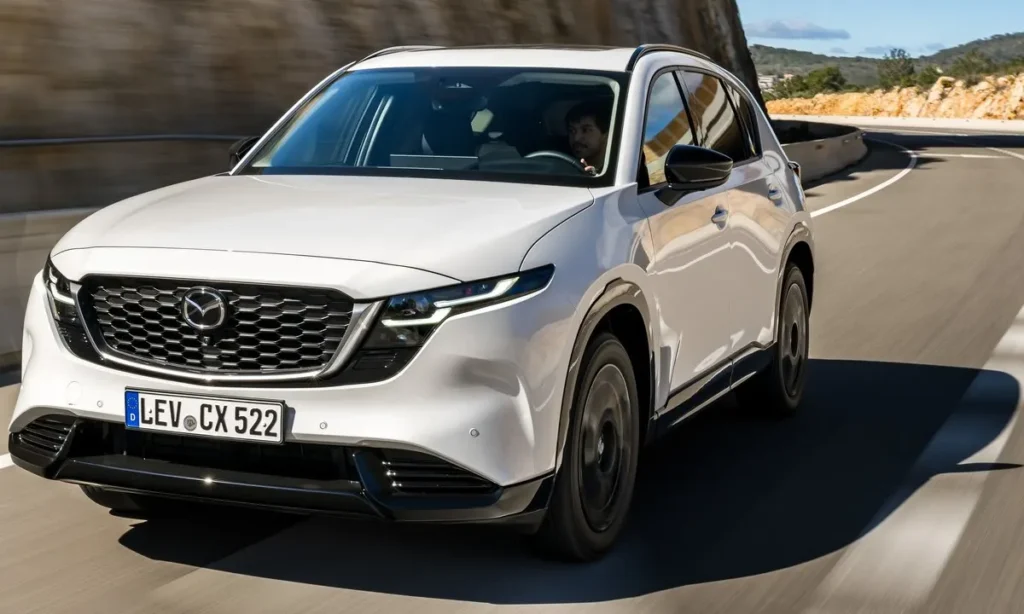
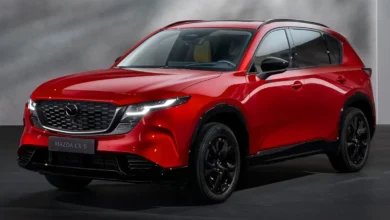
The Mazda CX-5 occupies a distinctive position in the family SUV safety conversation because it is the model whose driver engagement credentials — consistently praised by automotive journalists for the precision of its steering and the communication quality of its chassis — coexist with crashworthiness performance that matches the dedicated safety leaders in the segment. The 2025 CX-5 earned IIHS Top Safety Pick Plus status and NHTSA five-star overall ratings, reflecting structural engineering that prioritises occupant protection without compromising the handling balance that defines the vehicle’s character against its more dynamically anonymous competitors.
Mazda’s i-Activsense safety technology suite includes advanced front monitoring with automatic emergency braking, lane-keep assist, blind-spot monitoring with rear cross-traffic alert and driver attention alert — a system that uses steering pattern recognition and camera data to identify driver fatigue or distraction and prompt corrective action before concentration lapse contributes to a collision. The CX-5 demonstrates that the conventional compromise between driving engagement and passive safety is one of the automotive industry’s more durable myths — the engineering disciplines that produce a responsive chassis and those that produce a structurally protective body are complementary rather than competing pursuits when pursued with sufficient development rigour.
Kia Telluride: Three-Row Safety for Larger Families
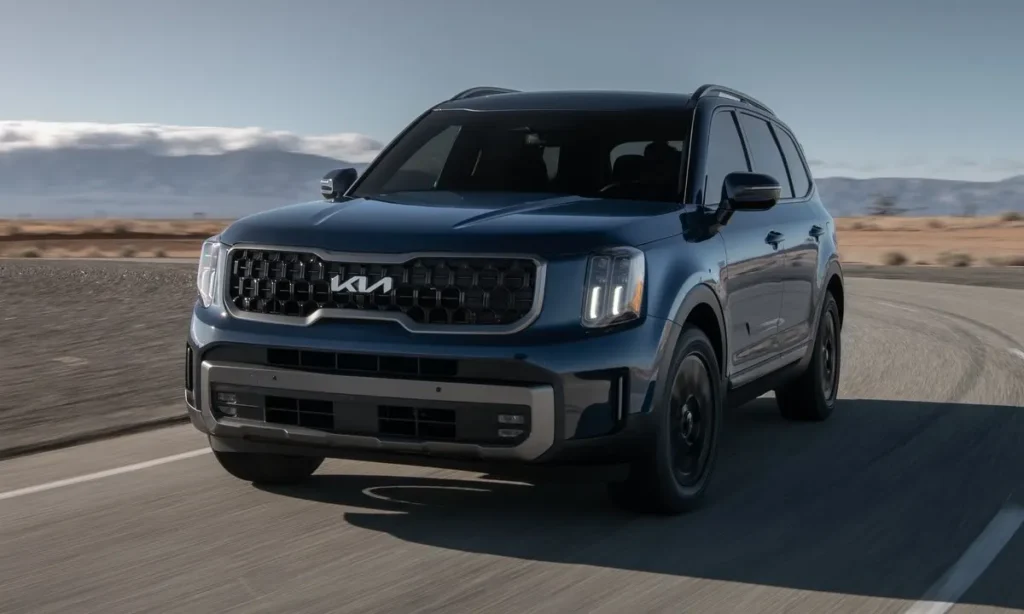
The Kia Telluride’s arrival in the three-row family SUV segment represented an immediate disruption to the assumptions about what South Korean manufacturers could deliver at a mainstream price point — and its safety performance has been as impressive as its design and specification credentials. The 2025 Telluride holds IIHS Top Safety Pick Plus designation and NHTSA five-star overall ratings, achievements made more significant by the additional structural complexity that three-row packaging imposes on crash engineers who must protect occupants in a longer, taller body structure while maintaining the weight and cost parameters appropriate to the vehicle’s market positioning.
Kia’s Drive Wise active safety suite includes forward collision avoidance assist with pedestrian, cyclist and junction detection, blind-spot collision-avoidance assist, rear cross-traffic collision-avoidance assist, lane-keeping assist and driver attention warning across the standard Telluride range. The vehicle’s performance in IIHS side impact assessments — testing updated in 2023 to use a heavier barrier travelling at higher speed to better replicate real-world SUV-to-SUV collision scenarios — reflects structural engineering that anticipated the new, more demanding test protocol rather than reacting to it.
Volvo XC60: Scandinavian Safety Philosophy at the Premium Tier
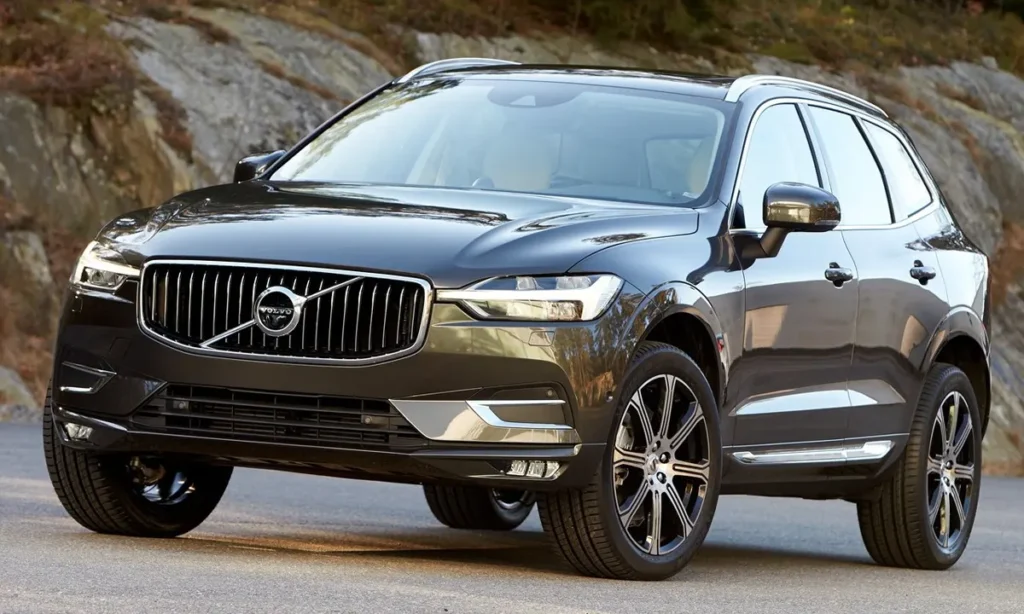
No examination of family SUV safety in the American market is complete without acknowledging the vehicle brand whose entire commercial identity has been constructed around occupant protection philosophy across seven decades of production. The Volvo XC60 continues to represent the premium expression of that philosophy in the mid-size SUV segment — earning consistent IIHS Top Safety Pick Plus recognition and NHTSA five-star overall assessments while delivering a cabin environment and technology integration that justify its positioning above the mainstream competitors listed alongside it.
Volvo’s City Safety system — encompassing automatic emergency braking with oncoming lane mitigation, run-off road mitigation, blind-spot information with steering support and cross-traffic alert with auto-brake — supplements the XC60’s passive safety architecture with active intervention capabilities that reflect Volvo’s ongoing commitment to achieving zero fatalities in new Volvo vehicles. Pilot Assist, the semi-autonomous driver assistance system available on XC60 models equipped with adaptive cruise control, provides hands-on-wheel motorway driving support across extended journey durations where driver fatigue represents one of the most significant real-world accident risk factors for families on long-distance travel.
How to Read Safety Ratings When Making Your Decision
Understanding the distinction between IIHS and NHTSA evaluation methodologies is essential for interpreting the ratings presented above in the context of a specific family’s requirements. The NHTSA tests at higher speeds and uses different barrier configurations from the IIHS, meaning that a vehicle earning five stars from NHTSA and Top Safety Pick Plus from IIHS has satisfied two independent, rigorous and differently structured evaluation programmes — a dual endorsement that provides meaningfully greater confidence than either rating alone. Families with young children should additionally consult the IIHS child seat ease-of-use ratings, which evaluate the practicality of LATCH anchor access, tether anchor positioning and seat belt geometry in a manner that crash test ratings do not capture. Families with teenage drivers should weight the front crash prevention Superior designation particularly heavily, as the vehicle-to-pedestrian detection performance it reflects addresses the collision scenario statistically most associated with serious injury outcomes in urban driving environments.
A Final Note on the Specification That Matters Most
The SUVs assembled in this review share a common characteristic beyond their safety ratings — they are vehicles whose manufacturers have treated occupant protection not as a regulatory compliance exercise but as a primary engineering objective whose achievement validates every other attribute the vehicle offers. In a segment where horsepower figures, infotainment screen dimensions and panoramic roof availability dominate the marketing conversation, the IIHS and NHTSA ratings provide the most honest, most independently verified and most consequential specification available. For families making the purchase decision that determines what vehicle their children travel in every day, that specification deserves to lead the conversation rather than appear as a footnote after the options list.
Read: 2026 Most Reliable Compact SUVs Under $30K. Ranked By Real Data
Top-Rated Family SUVs Safety Ratings at a Glance
| Model | IIHS Award | NHTSA Overall | Standard Safety Tech | Starting MSRP (US) |
| Subaru Forester | Top Safety Pick+ | 5 Stars | EyeSight (Standard) | ~$29,995 |
| Toyota RAV4 | Top Safety Pick+ | 5 Stars | Toyota Safety Sense (Standard) | ~$30,475 |
| Honda CR-V / CR-V Hybrid | Top Safety Pick+ | 5 Stars | Honda Sensing (Standard) | ~$31,895 |
| Mazda CX-5 | Top Safety Pick+ | 5 Stars | i-Activsense (Standard) | ~$29,995 |
| Kia Telluride | Top Safety Pick+ | 5 Stars | Drive Wise Suite (Standard) | ~$36,490 |
| Volvo XC60 | Top Safety Pick+ | 5 Stars | City Safety + Pilot Assist | ~$46,700 |