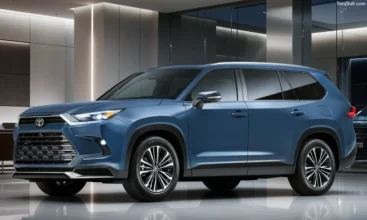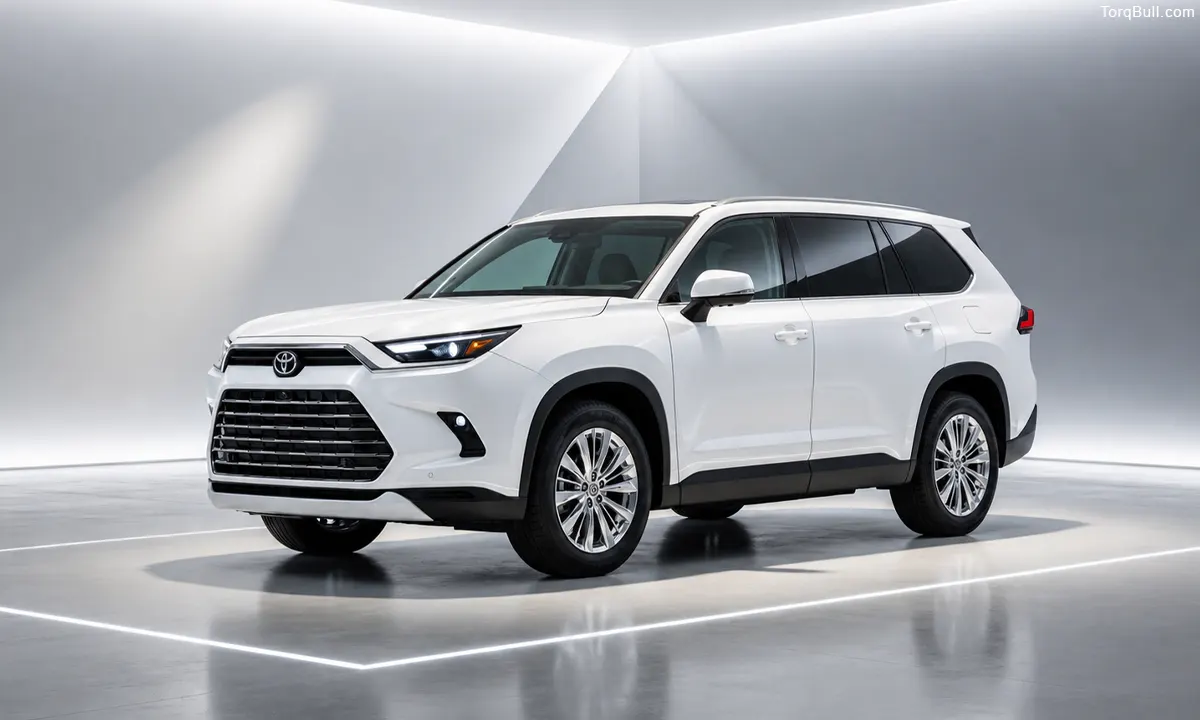
- The 2025 Toyota Grand Highlander is rated significantly more reliable than average and improves on the 2024 model’s record.
- Reliability projections for the 2026 model remain above average based on recent ownership data.
- Long-term testing shows a straightforward maintenance schedule, with service visits every 5,000 miles and oil changes every 10,000 miles.
The Toyota Grand Highlander arrived as an entirely new nameplate for 2024 — Toyota’s response to consistent owner feedback that the standard Highlander’s third row was too cramped for regular adult use and that the gap between the Highlander and the full-sized Sequoia left a specific family-size sweet spot unaddressed. The Grand Highlander’s four additional inches of wheelbase over the standard Highlander translate into 33.5 inches of third-row legroom versus the standard Highlander’s 28 inches — a meaningful physical improvement that changes the vehicle’s usefulness for families who regularly transport adult passengers in all three rows. As a first-generation nameplate still accumulating long-term reliability data, the Grand Highlander’s ownership story is one of improving trajectory — a 2024 launch year with higher complaint volumes giving way to a 2025 model rated much more reliable than average and a 2026 model predicted to maintain above-average reliability. This complete assessment examines every dimension of long-term Grand Highlander ownership.
The Reliability Trajectory: From 2024 Launch to 2026 Improvement
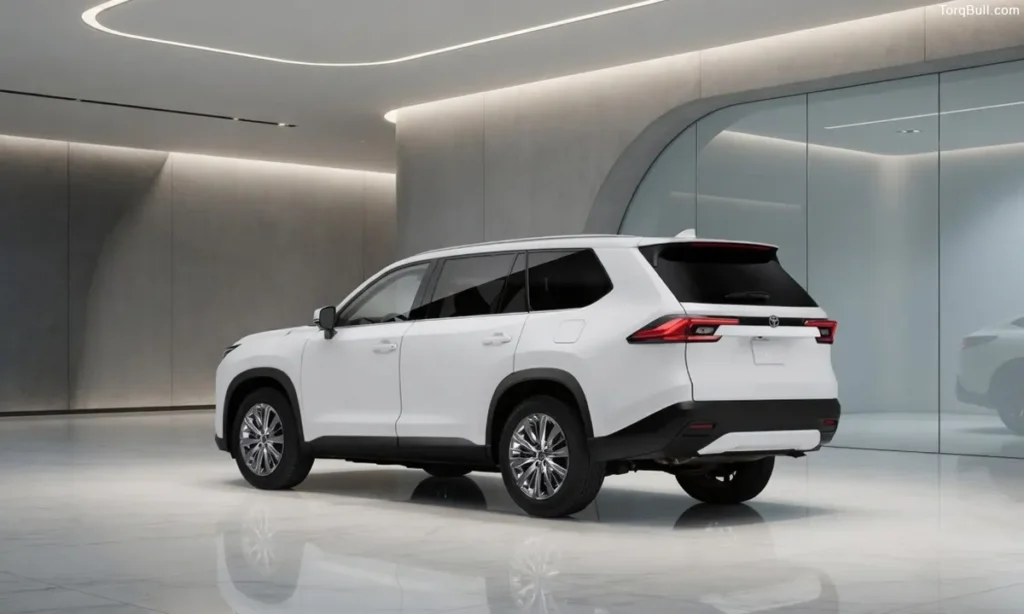
The Toyota Grand Highlander’s reliability picture follows the pattern characteristic of first-generation Toyota nameplates — a launch year with production refinement issues that diminish progressively as manufacturing processes stabilise and early quality concerns are addressed through technical service bulletins and production changes.
The 2024 Toyota Grand Highlander accumulated 7 NHTSA recalls and 171 owner complaints in its debut year, earning a reliability score of 69 out of 100. The complaint areas concentrated in powertrain concerns accounting for 26 complaints, airbag system concerns accounting for 27 complaints and unknown or other categories at 34. The higher complaint volume in 2024 reflects both the challenges of launching an entirely new platform and the scrutiny that a high-profile new model year receives from early adopters who are more likely to document and report issues than buyers of established nameplates in subsequent production years.
The 2025 Toyota Grand Highlander showed substantial improvement — earning a reliability score of 81 out of 100 and receiving the designation of much more reliable than other cars from the same model year in independent owner survey data. This improvement from 69 to 81 across consecutive model years represents one of the most dramatic single-year reliability trajectory improvements available in the three-row midsize SUV segment and suggests that Toyota effectively addressed the 2024 production concerns through manufacturing improvements that translated to meaningfully fewer owner-reported problems in the 2025 production run.
The 2026 Grand Highlander carries a predicted reliability of more than the average new car — based on the accumulated data from 2024 and 2025 models. With zero owner complaints and one NHTSA recall on record at the time of analysis, the 2026 model begins its production life with the cleanest early reliability signal of the three model years in the Grand Highlander’s production history. The 2026 Grand Highlander Hybrid carries two NHTSA recalls — both software related and addressed through dealer software updates at no cost.
Owner accounts from independent forums highlight specific concerns that appeared in the 2024 model year that the 2025 production changes addressed: noisy suspension, hood vibrations and various minor quality concerns that buyers of 2024 examples specifically noted. These concerns were not systemic powertrain failures but build quality refinement issues typical of first-year production that are most consequentially experienced by early adopters and most effectively avoided by buyers who purchase 2025 or 2026 production examples.
Read: Toyota Highlander vs Hyundai Palisade Features Comparison. Which SUV Offers Better Value?
The 40,000-Mile Long Term Service Reality
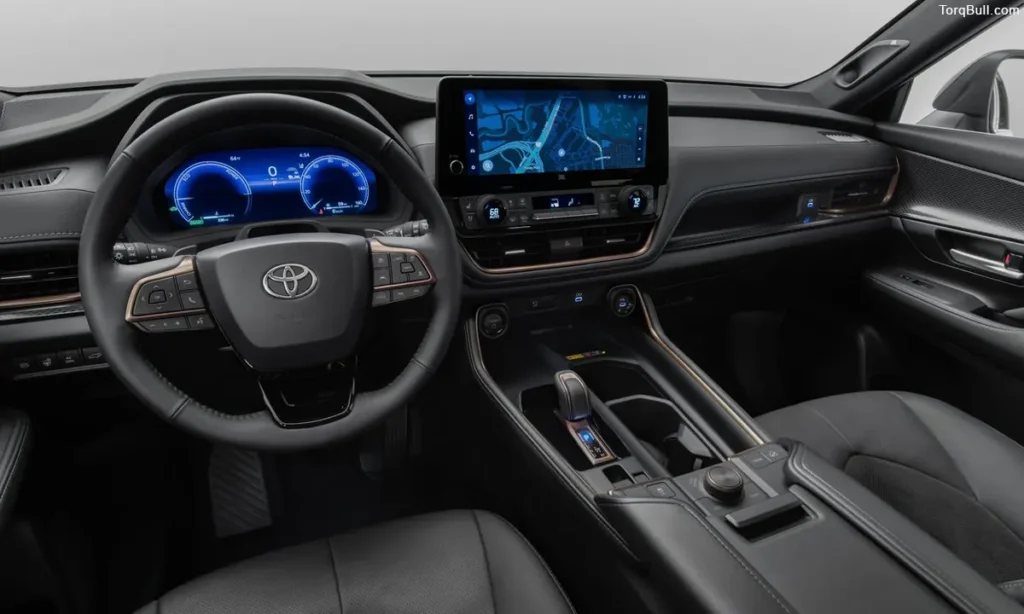
A professional long-term test of the 2024 Toyota Grand Highlander Hybrid Max documented the first 20,000 miles and provided the most practically useful real-world ownership experience available from an extended evaluation of this nameplate.
The service rhythm the evaluation confirmed is specific and consistent: scheduled service stops every 5,000 miles cover tyre rotations and multi-point inspections during the intervals between oil changes. Oil changes are required every 10,000 miles — meaning the 5,000-mile intermediate stops involve no oil service and are primarily logistical maintenance events that confirm tyre wear, fluid levels and brake condition. The evaluation specifically noted that all service is provided at no cost for the first two years or 25,000 miles under the ToyotaCare programme that accompanies every new Toyota purchase — making the actual out-of-pocket service cost zero for the majority of this early ownership period.
The service frequency of a dealer visit every 5,000 miles — six times per year at 30,000 annual miles, or four times per year at 20,000 annual miles — is higher than some competing SUVs whose service intervals are structured around 7,500 or 10,000-mile complete service cycles. For owners who prefer less frequent dealer engagement, this service cadence can feel demanding. For owners who appreciate the regular inspection and documentation rhythm as proactive maintenance, the 5,000-mile inspection stops provide confidence that potential issues are identified early rather than discovered at failure.
The Grand Highlander Hybrid: The Long Term Value Argument
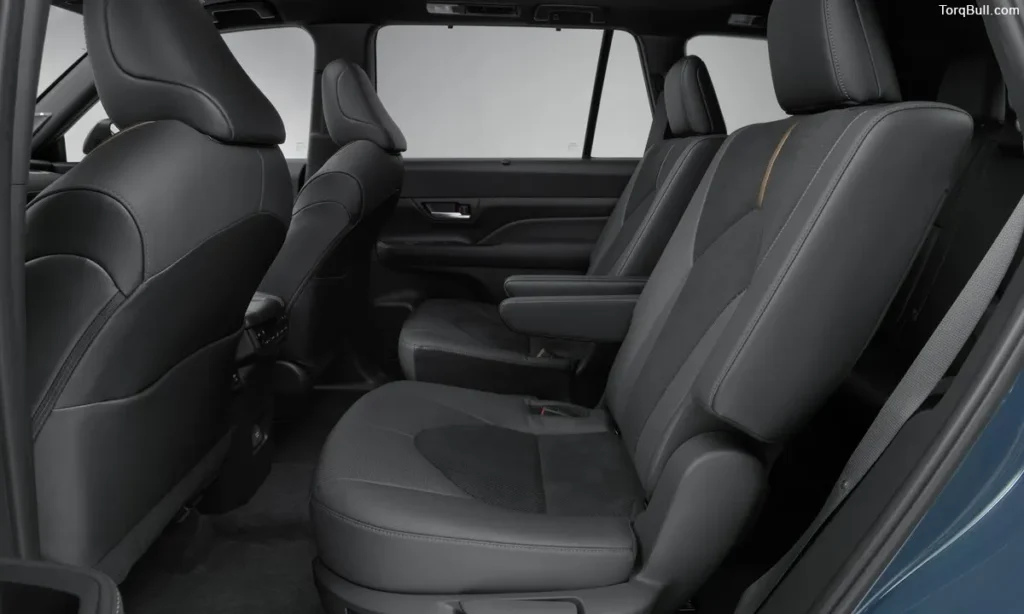
The Corolla Cross Hybrid’s reliability advantage over the gas model — documented across multiple independent reliability assessments — finds its equivalent in the Grand Highlander Hybrid’s advantage over the non-hybrid Grand Highlander for long-term ownership planning.
The naturally aspirated 2.5-litre hybrid powertrain achieves 36 MPG combined EPA — dramatically more efficient than the 2.4-litre turbocharged non-hybrid’s 23 MPG combined. This 13 MPG combined advantage produces an annual fuel cost saving of approximately $750 at 15,000 annual miles and $3.08 per gallon. Over five years, the hybrid saves approximately $3,750 in fuel costs compared to the non-hybrid at equivalent mileage — a significant offset against the hybrid’s higher purchase price.
The naturally aspirated hybrid’s long-term durability argument parallels the standard Highlander Hybrid’s established platform advantage: natural aspiration avoids the turbocharger wear and heat-related component degradation that accumulate in turbocharged applications at high mileage. The Toyota hybrid system’s multi-platform track record across the Prius, Camry Hybrid, RAV4 Hybrid and Highlander Hybrid provides statistical confidence for the Grand Highlander Hybrid’s long-term durability that a relatively newer turbocharged non-hybrid application cannot match with equivalent historical depth.
The turbocharged 2.4-litre hybrid engine in the Max powertrain configuration — producing 362 combined horsepower — provides the most powerful Grand Highlander option but introduces the turbocharged engine’s heat-related wear variables as a long-term consideration beyond the warranty period. Buyers who prioritise maximum long-term reliability confidence over maximum performance output should specifically consider the naturally aspirated hybrid over the turbocharged Max variant.
Read: Toyota Highlander Pros and Cons. Real Owner Review for 2026
ToyotaCare and Long Term Maintenance Planning
Every new Grand Highlander purchase includes ToyotaCare — providing two years or 25,000 miles of complimentary scheduled maintenance covering all factory-specified service visits at no cost. For a buyer covering 15,000 annual miles, this covers the first two complete service years including all oil changes, tyre rotations and multi-point inspections within the programme window.
After ToyotaCare expires, the maintenance cost profile for the Grand Highlander follows Toyota’s typical midsize SUV pattern. Annual maintenance costs for the midsize SUV segment average approximately $750 to $950 depending on the specific year, mileage and service pricing in the owner’s market. Toyota’s documented below-average repair frequency — the statistical probability of a repair event in any given year is lower for Toyota models than the class average — means the Grand Highlander’s annual maintenance spending is more predictable and less prone to unexpected events than competing alternatives with higher repair frequency ratings.
The hybrid battery’s warranty coverage — 8 years or 100,000 miles in most states — provides financial protection for the most expensive potential hybrid system component through the primary family ownership horizon. Buyers who plan ownership beyond 100,000 miles should monitor battery capacity annually using Toyota’s diagnostic tools and budget appropriately for eventual battery service beyond the warranty window.
Toyota Grand Highlander Long Term Ownership — Complete Assessment Chart
| Category | 2024 Model | 2025 Model | 2026 Model | Notes |
| Reliability Score | 69 out of 100 (Good) | 81 out of 100 (Excellent) | 70 out of 100, 0 complaints | Improving trajectory |
| Independent Reliability Rating | Below average (launch year) | Much more reliable than average | Predicted above average | 380,000 vehicle survey basis |
| NHTSA Recalls | 7 recalls | 3 recalls | 1 recall (gas), 2 recalls (hybrid) | Software-related recalls resolved by dealers |
| Owner Complaints | 171 complaints | 33 complaints | 0 complaints | Dramatic improvement year over year |
| Primary Complaint Areas 2024 | Powertrain, airbags, unknown | Power train, structure | None recorded | 2025 and 2026 significantly cleaner |
| Service Interval | Every 5,000 miles (inspection) | Every 10,000 miles (oil change) | Same schedule | ToyotaCare covers first 2 years free |
| Hybrid Fuel Economy | 36 MPG combined (NA hybrid) | 36 MPG combined | 36 MPG combined | NA = naturally aspirated; Max turbo at 27 MPG |
| Third Row Legroom | 33.5 inches | 33.5 inches | 33.5 inches | 5.5 inch advantage over standard Highlander |
| Hybrid Battery Warranty | 8 yr / 100K miles | 8 yr / 100K miles | 8 yr / 100K miles | California states: 10 yr / 150K |
| Annual Maintenance (estimated) | $800 to $1,000 | $750 to $950 | $750 to $950 | Below midsize SUV class average |
Who Should Choose the Grand Highlander for Long Term Ownership
The Grand Highlander’s long term ownership case is most compelling for specific buyer profiles whose priorities align with what the vehicle’s design specifically delivers.
Families who need the third row for regular adult passenger use — not just occasional child transport — find the Grand Highlander’s 33.5 inches of third-row legroom the most practically important competitive advantage over the standard Highlander’s 28 inches. This 5.5-inch difference represents the single most functionally significant specification in the Grand Highlander’s entire feature list for this buyer profile.
Buyers who prioritise long-term reliability and are choosing between model years should specifically target 2025 or 2026 production over 2024 — the reliability improvement from the 2024 launch year’s 7 recalls and 171 complaints to the 2025 model’s 3 recalls and 33 complaints and the 2026 model’s 1 recall and 0 complaints is too significant to overlook for buyers who plan five to ten year ownership horizons.
For maximum long-term fuel cost management, the naturally aspirated 2.5-litre hybrid is the recommended powertrain — combining Toyota’s proven multi-platform hybrid durability with 36 MPG combined efficiency that reduces annual fuel spending by approximately $750 compared to the non-hybrid at equivalent mileage, and providing the natural aspiration advantage over turbocharged alternatives for high-mileage ownership beyond the warranty period.