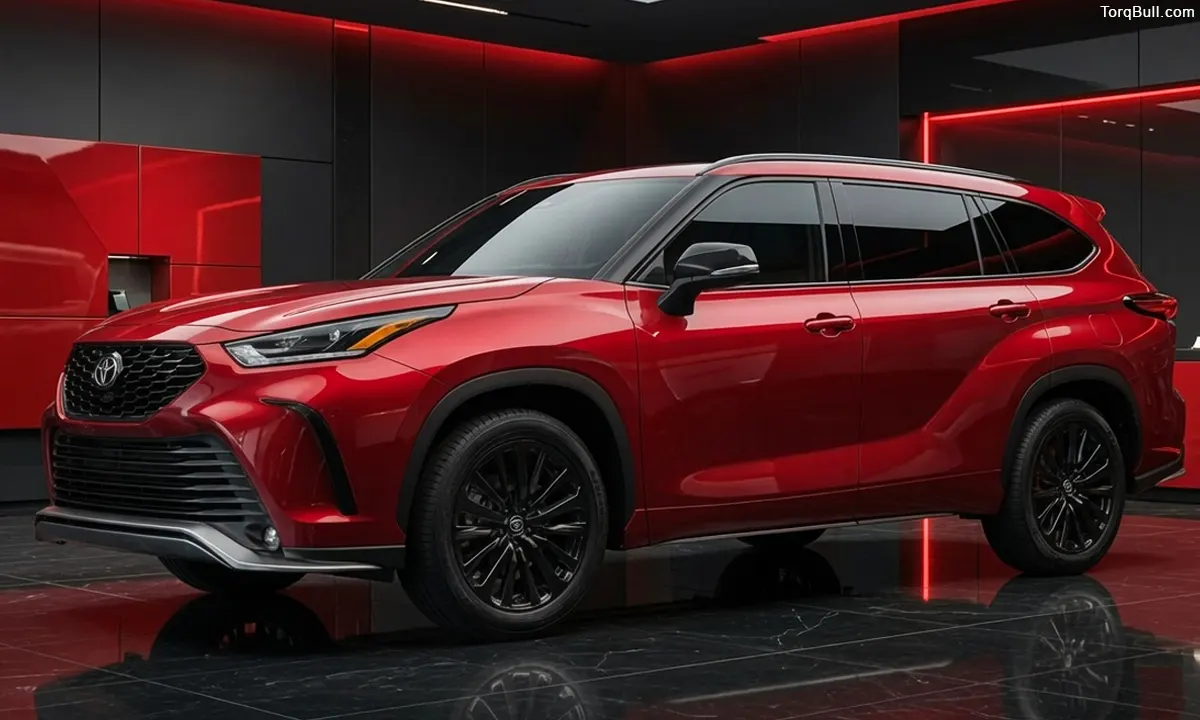
- The 2026 Toyota Highlander Hybrid delivers 35 MPG combined with standard AWD on every trim, making it one of the most efficient three-row SUVs available.
- Owner satisfaction is exceptionally strong, with 85% of owners recommending the vehicle and high ratings for reliability and quality.
- Its higher starting price is the main drawback, but the combination of efficiency, practicality and long-term dependability makes it a compelling family SUV.
The Toyota Highlander Hybrid enters 2026 having survived its most significant competitive challenge in its production history — the introduction of Toyota’s own Grand Highlander Hybrid, which provides a significantly roomier third-row seat at a comparable price point. Despite this internal competition, the Highlander Hybrid retains a specific and defensible value proposition for families who prioritise fuel economy, Toyota’s documented reliability, above-average resale value and the three-row passenger capacity that school runs, sports team transport and extended family road trips demand. The question is whether its starting price of $49,115 is justified against both the internal Toyota competition and the expanding field of hybrid three-row alternatives that increasingly competitive brands have introduced. This complete assessment provides the honest answer.
What the Highlander Hybrid Actually Delivers: The Foundation
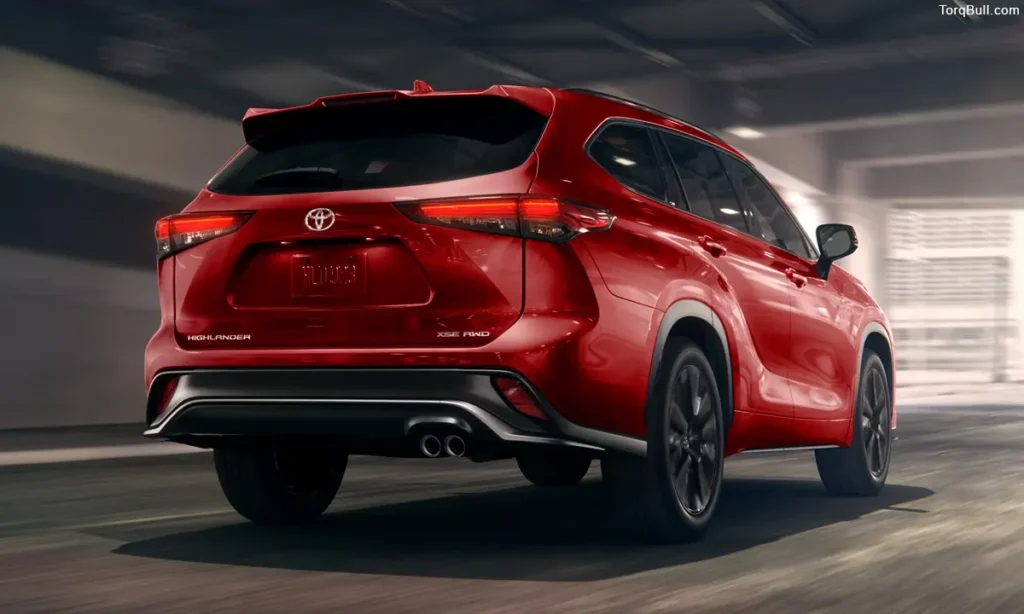
The 2026 Toyota Highlander Hybrid uses a 2.5-litre naturally aspirated four-cylinder engine combined with three electric motors — one at the front axle and one at each rear wheel — for 243 combined horsepower through a CVT automatic transmission with standard AWD across every trim. This three-motor all-wheel drive configuration provides the all-weather traction that northern state buyers specifically require as a daily confidence feature, and it does so while achieving 35 MPG combined in both city and highway driving — one of the most consistent and balanced fuel economy results available in the three-row midsize SUV segment.
The 35 MPG combined city and highway balance is the Highlander Hybrid’s most distinctive fuel economy credential. Most vehicles achieve higher highway figures and lower city results — the Highlander Hybrid achieves near-identical results in both environments because the hybrid system’s regenerative braking energy recovery offsets the city driving’s stop-and-go inefficiency while the gasoline engine sustains its efficiency at highway cruise speeds. At 15,000 annual miles and $3.08 per gallon, this 35 MPG combined produces approximately $1,320 per year in fuel costs — saving approximately $602 per year compared to the gas Highlander at 24 MPG combined.
The four-generation Highlander’s ride quality is described as comfortable during professional extended road testing — the vehicle excels at carrying the squad in comfort and quiet, maintaining the settled, refined character that family passenger comfort across multiple hours of driving requires. The cabin is quiet during regular driving duties — though it becomes a little noisy under hard acceleration as the CVT and hybrid system manage the power delivery demand. Most family driving does not involve hard acceleration, making this characteristic largely academic in daily use.
Read: Toyota Highlander Hybrid vs Gas: Pros, Cons and Best Choice for Families
The 85 Percent Owner Recommendation: What Real Owners Say
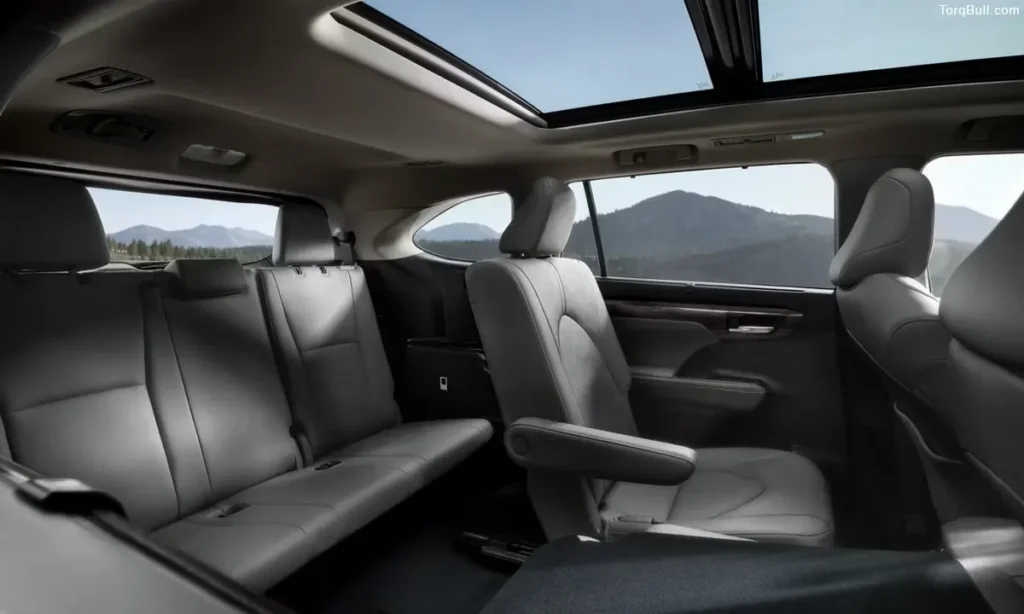
Among 25 owners who provided feedback on the 2026 Toyota Highlander Hybrid, 85 percent recommend the vehicle — one of the stronger recommendation rates available among three-row hybrid alternatives in this price category. Consumer ratings across the 22 ratings compiled place reliability at 4.7 out of 5 and quality at 4.7 out of 5 — the two highest-rated categories that confirm Toyota’s brand reliability promise translates to the Highlander Hybrid’s specific ownership experience.
One verified owner who purchased the XLE specifically praises the smooth ride quality, the comprehensive safety features including blind spot monitoring, lane assist and intelligent cruise control, and the comfortable front seats. This owner’s positive experience is representative of the majority of Highlander Hybrid owner accounts — a genuinely satisfied ownership population that validates the professional recommendation at 35 MPG combined in real family driving conditions.
The owner community’s documented concern involves a specific and practically impactful discrepancy: the 17.1-gallon advertised fuel tank that apparently accepts only 14 gallons in practice — reducing the theoretical range of approximately 600 miles to an actual range of approximately 450 to 490 miles. One owner who investigated this discovered that Toyota acknowledges the functional capacity is approximately 14 gallons despite the 17.1-gallon specification — a specific and honest concern that affects how the Highlander Hybrid performs on long-distance road trips between fuel stops.
The Fuel Economy Value: Where the Hybrid Premium Earns Back

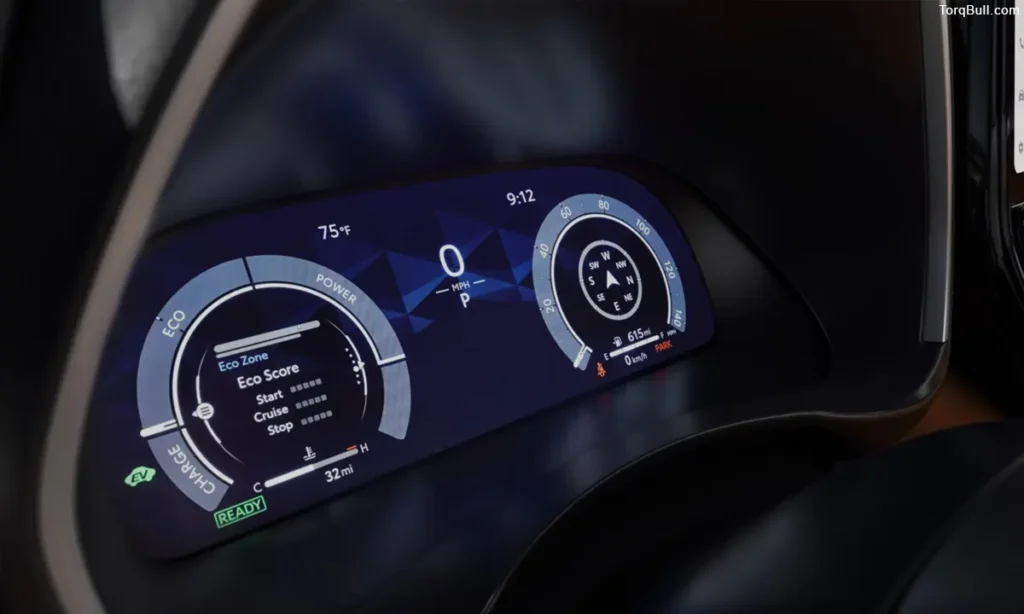
The Highlander Hybrid’s approximately $7,000 to $8,000 purchase premium over the equivalent gas Highlander configuration generates the most important financial question in the entire worth-buying assessment: how long does the fuel saving take to recover this premium?
At the approximately $602 annual fuel saving that the 35 MPG hybrid achieves over the 24 MPG gas model at 15,000 annual miles and current fuel prices, the fuel-cost-only break-even point is approximately 11 to 13 years. This extended break-even timeline means the hybrid premium cannot be justified on fuel savings alone for buyers who plan five to seven years of ownership at average mileage.
However, the hybrid’s value case includes dimensions beyond fuel savings that the break-even calculation alone understates. The hybrid’s AWD is now standard across all trims — where the gas Highlander charges approximately $2,000 for the AWD upgrade. Buyers comparing an AWD gas Highlander against an AWD Hybrid Highlander face a narrower effective price gap of approximately $5,000 to $6,000 rather than the full $7,000 to $8,000 difference that trim-level headline prices suggest. At this narrowed gap, the fuel saving break-even occurs closer to eight to ten years — within the range of typical family SUV ownership horizons for buyers who keep vehicles through their useful life.
Read: Toyota Highlander Hybrid Maintenance Cost Per Year. Complete 2026 Guide
Reliability and Resale Value: The Highlander Hybrid’s Strongest Long-Term Arguments
The Highlander Hybrid’s two strongest financial arguments beyond fuel economy are the reliability record and the resale value performance — both of which specifically reward buyers who plan extended ownership periods beyond the hybrid premium break-even point.
The 2026 Highlander Hybrid carries a predicted reliability score of 82 out of 100 — a Good to Excellent prediction that is supported by the 4.7 out of 5 reliability rating from current owners. Toyota’s documented track record across the Highlander Hybrid’s multiple production generations — each maintaining strong reliability without the systematic failure modes that less-proven hybrid systems sometimes produce — provides the historical depth that validates this prediction with documented evidence rather than speculation.
Toyota Highlander Hybrid resale value is above average for the segment — Toyota is a perennial winner of best resale value awards and the Highlander Hybrid’s used-market demand specifically reflects the sustained family buyer appetite for proven hybrid SUV reliability at used-vehicle pricing. A 2025 Highlander Hybrid Limited depreciated only 11 percent in one year — one of the strongest one-year retention rates available in the three-row midsize SUV segment and evidence that the used market specifically values Highlander Hybrid examples at pricing that maintains strong residual values for current owners.
The Competition: Where the Highlander Hybrid’s Value Case Is Challenged

The Highlander Hybrid’s most immediately relevant competitive challenges in 2026 are both internal and external.
The Toyota Grand Highlander Hybrid at $44,210 starting provides 35 to 36 MPG combined, a significantly roomier third-row seat with 33.5 inches of legroom versus the standard Highlander Hybrid’s 28 inches and a larger cargo area — at a lower starting price than the Highlander Hybrid’s $49,115. For families who specifically need genuine adult-usable third-row seating, the Grand Highlander Hybrid is the more directly appropriate choice and the more financially efficient one at this price comparison.
External competition from the Kia Sorento Hybrid, Hyundai Santa Fe Hybrid and Hyundai Palisade Hybrid — all carrying lower base prices than the Highlander Hybrid — provides the pricing pressure that the Highlander Hybrid’s starting price of $49,115 specifically faces from competing family hybrid SUVs with competitive feature content.
Read: Toyota Highlander Hybrid Real World Fuel Economy. Why This SUV Tells A Very Different Story
2026 Toyota Highlander Hybrid Worth Buying — Complete Assessment Chart
| Assessment Category | Rating | Evidence | Conclusion |
| Fuel Economy | 35 MPG combined city and highway | Equal city and highway efficiency with standard AWD | Excellent and consistent |
| Owner Recommendation Rate | 85% | 25 owner reviews for 2026 model | Strongly positive |
| Reliability Rating | 4.7 out of 5 (owner) 82 out of 100 (predicted) | Multiple owner surveys | Among best in segment |
| Quality Rating | 4.7 out of 5 | Consistent with reliability rating | Best-in-class territory |
| Comfort Rating | 4.2 out of 5 | Weakest consumer category | Adequate; not segment-leading |
| Starting Price | $49,115 (XLE AWD) | Dropped LE trim increases entry point | High concern from professional review |
| Hybrid Premium vs Gas | approximately $7,000 to $8,000 | After AWD cost adjustment closer to $5,000 | Long break-even; non-fuel benefits offset |
| Fuel Cost Saving | approximately $602 per year | vs gas at 24 MPG combined | Meaningful ongoing benefit |
| Resale Value | Above average | Toyota best resale value award winner | Strong long-term financial protection |
| Third Row (adults) | Limited (28 inches legroom) | Grand Highlander has 33.5 inches | Grand Highlander is better for adults |
| Professional Verdict | Smart choice for families | Noted as very sensible choice | Recommended with price awareness |
| Tank Range Concern | Functional 450 to 490 miles vs advertised 600 | Owner-documented discrepancy | Road trip planning adjustment needed |
The Honest Worth-It Verdict
The Toyota Highlander Hybrid is worth buying for a specific and identifiable family buyer profile — one whose priorities align directly with what the Highlander Hybrid specifically delivers.
For families who value 35 MPG combined with standard AWD, who prioritise Toyota’s documented long-term reliability over lower purchase price alternatives, who plan extended ownership periods that allow the resale value advantage and reliability benefits to accumulate and who use primarily two-row passenger capacity with occasional third-row use for smaller children rather than regular adult transport, the Highlander Hybrid’s value proposition is genuinely strong.
The Highlander Hybrid is less compelling for buyers who regularly transport adult passengers in all three rows — for whom the Grand Highlander Hybrid’s $4,905 lower starting price, larger third row and comparable efficiency make it the more appropriate Toyota family hybrid choice. It is also less compelling for buyers whose ownership horizon is under five years and who are evaluating the hybrid strictly on fuel savings payback — the break-even timeline requires extended ownership for the premium to be fully justified through fuel savings alone.
For the family with the right profile, it is a smart, functional, reliable and fuel-efficient three-row SUV that delivers on its core promises with 85 percent of owners confirming the recommendation.