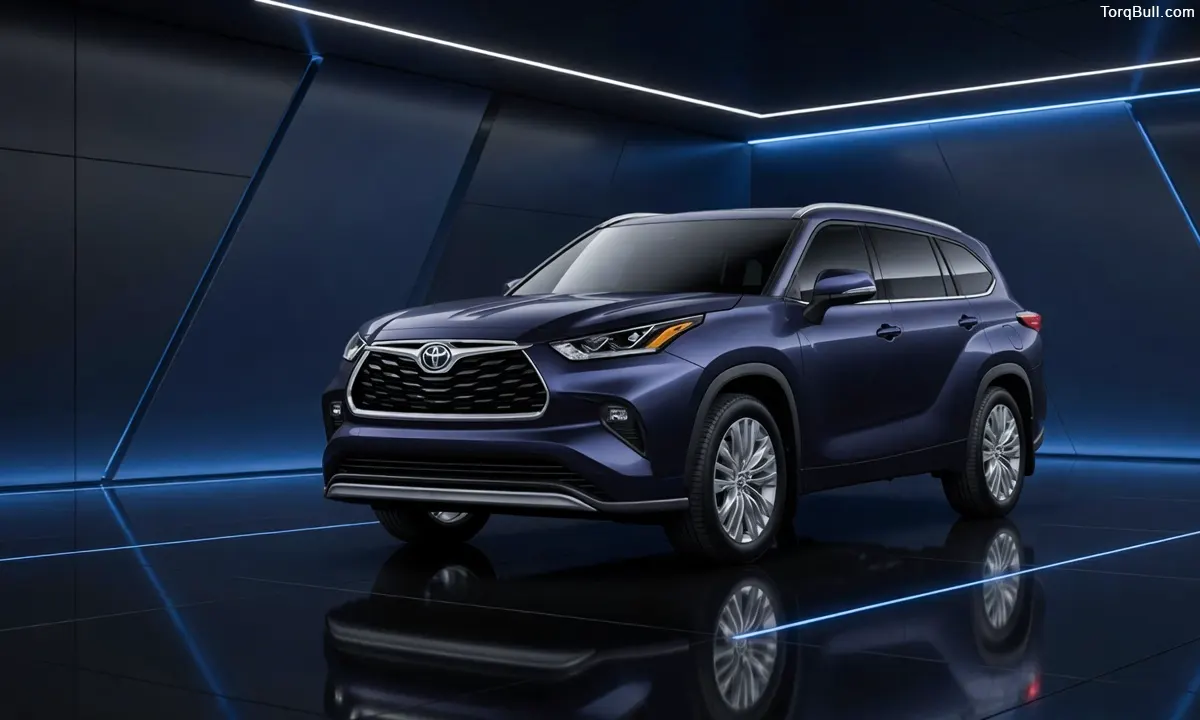
- Independent reliability studies rate the Toyota Highlander at 84 out of 100, with below-average annual repair costs of about $489.
- The 2026 Highlander has no reported recalls or owner complaints, while the 2024 model experienced the most reliability concerns.
- Long-term durability remains a Highlander strength, making it a strong choice for buyers planning to exceed 100,000 miles.
The Toyota Highlander has been one of the American market’s most consistently family-trusted three-row SUVs since its 2001 introduction — a nameplate that has built its reputation across five generations through the documented durability that Toyota’s manufacturing philosophy consistently produces in real-world, high-mileage ownership. Owners of the third generation Highlander regularly document 200,000-mile ownership with disciplined maintenance. Fourth generation owners are accumulating high-mileage experience that the initial reliability data from this generation’s production run now begins to validate. And the fifth generation, which arrives for 2027, starts a new reliability accumulation cycle. For buyers who specifically want to know what the Highlander delivers after the 100,000-mile mark — where warranties expire, where the suspension and drivetrain wear patterns that high-mileage ownership produces become visible, and where the maintenance history starts to determine outcome quality — this complete guide provides the most comprehensive honest answer available.
The Overall Reliability Picture: 84 Out of 100 Across Generations
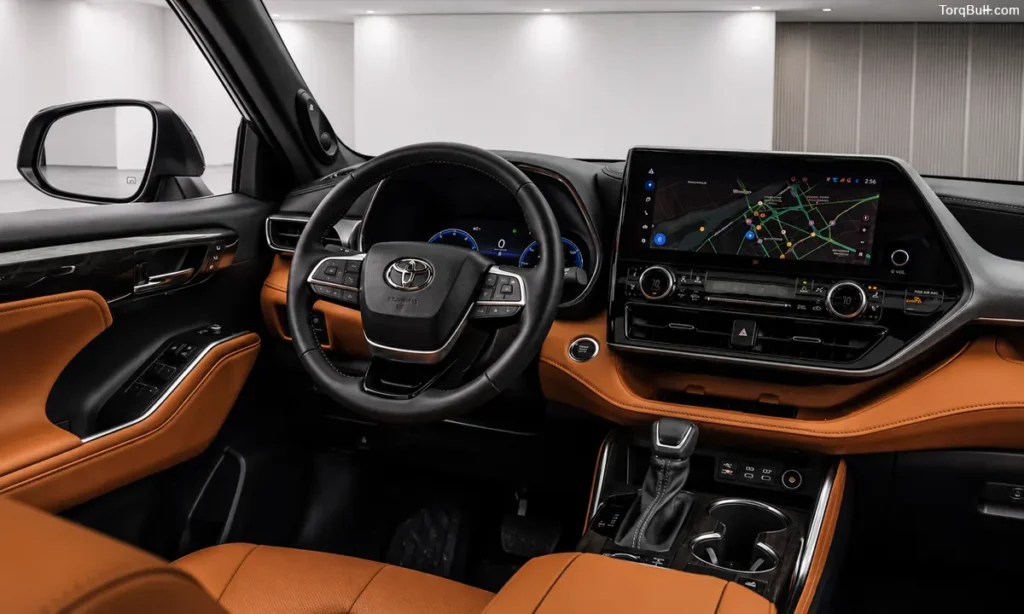
Comprehensive reliability analysis spanning every Highlander from the 2018 through 2026 model years produces an average reliability score of 84 out of 100 — categorised as excellent by independent reliability analysts who specifically note annual repair costs of $489 below the midsize SUV class average. This cross-generational excellence score reflects the Highlander’s consistent performance across both the third and fourth generation’s production runs and represents the most statistically validated reliability assessment available for any extended ownership horizon.
The 2026 Highlander — the final year of the fourth generation before the 2027 all-electric transition — earns a reliability score of 76 out of 100 with zero recalls and zero owner complaints on record at the time of analysis. The 2025 model improves to a reliability score of 67 out of 100 with eight recalls and 40 owner complaints, while the 2024 model produced the most active concern with 16 recalls and 198 owner complaints across its production run. Independent reliability prediction for the 2026 model confirms the expectation that it will be more reliable than the average new car — a prediction based on accumulated data from the 2023, 2024 and 2025 models as the production generation matured through quality refinement.
This pattern — where the first years of a redesigned generation carry higher recall activity that diminishes as manufacturing processes stabilise — is characteristic of Toyota model generations and should be understood as context for any reliability comparison rather than as evidence of fundamental durability problems. The 2021 model year, which represents the first full production year of the fourth generation, was specifically identified by reliability analysts as carrying the fewest recalls of the 2021 through 2024 range — only three recalls, none of which related to mechanical powertrain operation.
Read: Best Toyota Highlander Trim for Families. Which Model Delivers the Most Value In 2026?
What the Highlander’s Third Generation Proves About Long Term Durability
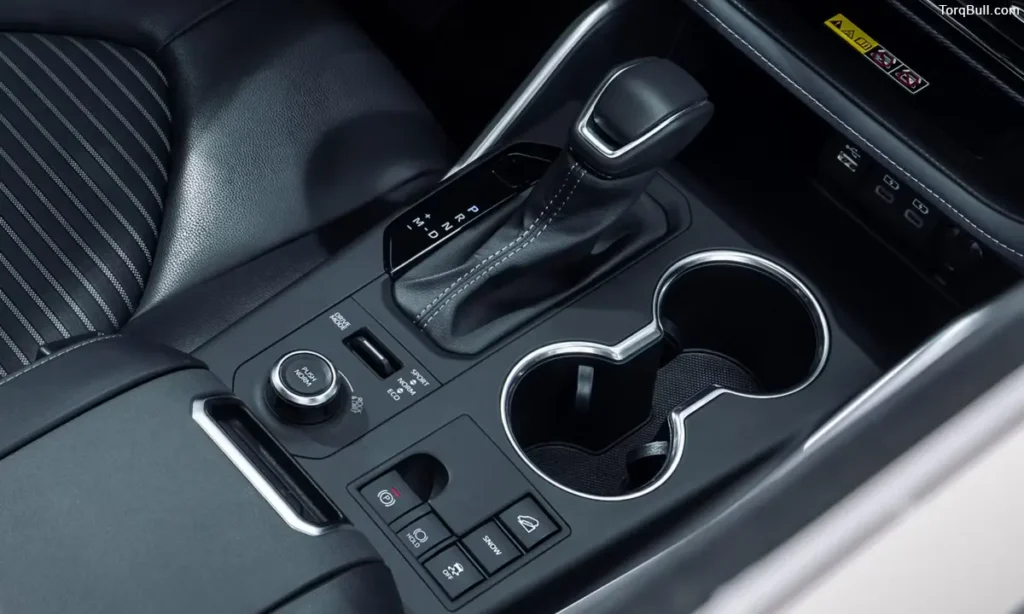
The third generation Toyota Highlander, produced from 2014 through 2019, provides the most complete long-term high-mileage reliability data available for any Highlander generation — because these vehicles have now accumulated eight to twelve years of real-world ownership in the hands of families who drove them through the 100,000, 150,000 and 200,000-mile thresholds that reveal what the platform actually delivers in sustained use.
The third generation’s V6 engine — a naturally aspirated 3.5-litre unit with decades of refinement behind its design — is the primary reason that third-generation Highlanders appear repeatedly in owner community discussions at 200,000-plus miles. Natural aspiration means no turbocharger to maintain, no intercooler system to develop leaks and no boost pressure components whose wear accelerates at the heat and pressure levels that performance driving and sustained highway operation produce. The absence of these components from the failure mode analysis reduces the probability of expensive drivetrain events in the 100,000 to 200,000-mile range.
Owner accounts from multiple Toyota community platforms document third-generation Highlanders — particularly Hybrid versions — reaching 200,000 miles and beyond with original transmissions, original hybrid batteries operating at functional capacity and original engines that required no major internal work. The consistent maintenance factor in these accounts is disciplined oil change adherence — owners who maintained oil changes at or before the manufacturer’s specified interval consistently document better high-mileage outcomes than those who extended intervals beyond specification.
The Fourth Generation’s High-Mileage Profile: The Turbo Variable

The fourth generation Highlander, launched for 2020 and refined through the 2026 model year, introduces the most significant long-term reliability variable in the nameplate’s history — the transition from the third generation’s naturally aspirated V6 to a turbocharged 2.4-litre four-cylinder engine that carries different long-term wear characteristics requiring different maintenance discipline.
Turbocharging fundamentally changes the high-mileage reliability equation compared to natural aspiration. The turbocharger operates under sustained heat and boost pressure that accelerates oil degradation relative to non-turbocharged applications — making oil change interval adherence more critical, not less, as mileage accumulates. The turbocharger’s bearings rely on fresh oil for cooling and lubrication, and oil that has degraded beyond its protective capacity produces turbocharger bearing wear that accumulates quietly until it becomes an expensive failure.
Owner accounts across Toyota community platforms and owner forums for the fourth-generation Highlander at moderate mileage — 60,000 to 80,000 miles — confirm that the turbocharged engine operates well and quietly within this range when maintenance has been consistent. The honest uncertainty for this generation’s post-100,000-mile performance is that fewer owners have accumulated 100,000-plus miles on fourth-generation examples than have done so on third-generation vehicles — making the statistical confidence of high-mileage claims lower for the current generation than for its predecessor.
The turbocharged 2.4-litre’s heat-related wear concerns beyond 80,000 miles are the most specific high-mileage reliability question for current Highlander buyers to monitor as the fourth generation’s ownership population ages into the 100,000-mile territory over the 2026 and 2027 ownership period.
Read: Toyota Highlander Hybrid vs Gas: Pros, Cons and Best Choice for Families
The Highlander Hybrid’s Specific Post-100,000 Mile Consideration
The Toyota Highlander Hybrid adds a specific and significant component to the post-100,000-mile reliability picture that gas model owners do not face: the hybrid battery.
The hybrid battery warranty covers the hybrid battery and electric motor components for 8 years or 100,000 miles in most states, or 10 years or 150,000 miles in California emissions states. For Highlander Hybrid owners approaching or exceeding these thresholds, battery capacity monitoring becomes the most important ongoing reliability assessment.
Toyota’s hybrid battery technology has demonstrated strong longevity across multiple hybrid platforms — the Prius, Camry Hybrid and RAV4 Hybrid all document hybrid battery survival well beyond 150,000 miles in many documented owner accounts, with capacity declining gradually rather than failing suddenly in the majority of cases. The Highlander Hybrid’s liquid-cooled battery pack provides better thermal management than air-cooled alternatives in competing vehicles, contributing to the battery’s ability to operate through significant temperature variation across years of ownership.
Battery replacement outside warranty costs approximately $3,500 to $5,500 for the Highlander Hybrid’s specific battery application. For owners who plan extended high-mileage ownership beyond the warranty window, annual battery capacity monitoring through Toyota diagnostic tools is the specific maintenance step that identifies degradation early — allowing planning for eventual replacement rather than encountering sudden failure.
The Specific Wear Items Between 100,000 and 200,000 Miles
Beyond the powertrain considerations, the Highlander’s post-100,000-mile reliability picture includes specific chassis and component wear items that owners who plan long-term high-mileage operation should budget for predictively.
Suspension components — shock absorbers, struts, bushings and ball joints — typically reach the end of their service life between 80,000 and 130,000 miles depending on road surface exposure, off-pavement use frequency and climate conditions. Salt belt states with winter road exposure accelerate suspension component wear through corrosion that dry climate operation does not produce. A comprehensive suspension refresh at 100,000 to 120,000 miles costs approximately $900 to $1,800 at an independent shop and is the most predictable major maintenance event in the post-100,000-mile ownership window.
Wheel bearings are the second most consistently documented wear category in the 100,000 to 150,000-mile range for Highlander owners — particularly on AWD models where the additional drivetrain loading and water exposure from all-weather operation accelerate bearing wear. A single wheel bearing replacement costs approximately $250 to $450 at an independent shop.
Timing chain inspection and confirmation of normal operation is specifically recommended at 100,000-plus miles for the turbocharged fourth-generation engine — oil change interval discipline throughout the ownership period is the primary factor that determines whether the timing chain reaches this mileage in normal operating condition.
Read: Toyota Highlander vs Hyundai Palisade Features Comparison. Which SUV Offers Better Value?
Toyota Highlander Post-100,000 Mile Reliability — Complete Reference Chart
| Mileage Range | Key Components | Estimated Cost | Generation Notes |
| 0 to 60,000 miles | Oil changes, tyre rotations, filters, ToyotaCare | $2,500 to $4,000 cumulative | Fourth gen turbo: ensure 10K oil change discipline |
| 60,000 to 100,000 miles | Brakes, suspension inspection, major fluid services | $3,000 to $6,000 cumulative | Both gens: transmission fluid at 60K important |
| 100,000 to 150,000 miles | Shock and strut replacement, wheel bearings, timing chain check | $1,500 to $4,500 additional | Third gen V6: strong track record. Fourth gen turbo: data emerging |
| 150,000 to 200,000 miles | Potential full suspension refresh, cooling system, seals | $2,000 to $5,500 additional | Third gen V6: 200K documented with maintenance |
| Hybrid battery (any hybrid) | Capacity monitoring, potential replacement beyond warranty | $3,500 to $5,500 | Coverage ends 8 to 10 years or 100,000 to 150,000 miles |
| Overall 10-year repair cost | Scheduled and unscheduled combined | approximately $4,890 | $489/yr average below midsize SUV average |
The Maintenance Habits That Determine Long Term Outcome
Every high-mileage Highlander owner whose experience is documented in community forums and reliability databases shares one characteristic above all others: disciplined maintenance adherence from the first service visit. Oil changes at or before the specified interval — not extended beyond specification because the oil looks clean or because the service indicator has not illuminated — is the single maintenance decision that most consistently separates the 200,000-mile success stories from the 130,000-mile drivetrain problem reports.
For the third generation’s naturally aspirated V6, this discipline was important but forgiving — the V6 tolerated moderate interval extension without immediate visible consequences. For the fourth generation’s turbocharged 2.4-litre, this discipline is non-negotiable — the turbocharger’s oil quality dependency means that extended intervals produce cumulative bearing wear that the engine does not communicate until the damage is already significant.
The 2026 Highlander’s combination of excellent reliability prediction, zero current recalls and Toyota’s overall reliability platform position make it the most complete expression of Highlander long-term value available in the nameplate’s final gas-powered year before the 2027 all-electric transition.