Hybrid vs Electric, Why Toyota Still Believes in a Multi-Path Strategy
While Competitors Race Toward Full Electrification and Retreat When the Market Disappoints Them, Toyota's Conviction That Hybrids, Plug-in Hybrids, Battery-Electric Vehicles, Hydrogen and Synthetic Fuels All Have a Role to Play Is Being Validated by Every Major Market Indicator in 2025 and 2026
The automotive industry’s relationship with certainty has always been complicated. Manufacturers have repeatedly committed to directions that seemed inevitable — the diesel age, the peak oil response, the hydrogen decade — with a confidence that subsequent events proved premature. The current era’s equivalent conviction, held with extraordinary force across boardrooms, regulatory bodies and financial markets from approximately 2019 to 2023, was that the future of personal mobility was exclusively, inevitably and imminently battery-electric. Every manufacturer that was serious about the future was going all-electric. Every manufacturer that maintained commitment to internal combustion in any form was, by the emerging consensus, a company failing to see the obvious and destined to fall behind. Into that environment, Toyota’s Chairman Akio Toyoda consistently, publicly and at considerable reputational cost maintained a different position. Carbon dioxide was the enemy, he argued — not the internal combustion engine per se. And the most effective strategy for reducing carbon dioxide across the global vehicle fleet was not mandating a single technology pathway but pursuing every technology pathway simultaneously, deploying whichever approach reduced emissions most effectively in each specific market, infrastructure environment and consumer context. He called it the multi-pathway strategy. For several years, the industry largely dismissed it. In 2025 and 2026, the industry is increasingly adopting it.
The Argument Toyota Has Always Made
Toyota’s multi-pathway conviction is not, as critics have sometimes characterised it, a rearguard defence of internal combustion engines by a manufacturer reluctant to invest in the electrification transition. It is a specific, evidence-based argument about the carbon economics of different powertrain technologies in different operating environments — an argument that draws its credibility from Toyota’s position as the manufacturer with more real-world hybrid vehicle operating data than any other company in the world.
The argument begins with a fundamental observation about grid electricity. A battery-electric vehicle produces zero tailpipe emissions, but its lifetime carbon footprint includes the emissions generated during battery production and the emissions associated with generating the electricity it consumes. In markets where the electricity grid is powered predominantly by renewable sources, the BEV’s lifetime carbon advantage over a conventional combustion vehicle is substantial and grows progressively as the grid becomes cleaner. In markets where electricity is generated predominantly from coal or gas thermal power plants, the carbon advantage of the BEV over a well-engineered hybrid is significantly smaller and in some cases may be negative — meaning the hybrid produces lower lifetime carbon emissions than the BEV when the grid’s carbon intensity is factored into the total lifecycle calculation.
Toyota’s own figures, presented by Chairman Toyoda in multiple public forums, state that the company’s 27 million hybrid vehicles sold globally have produced the same carbon reduction impact as nine million battery-electric vehicles would have achieved — because those 27 million hybrids operated in markets, driving conditions and climate environments where hybrid technology delivered its carbon reduction immediately and efficiently, without requiring charging infrastructure that did not exist or electricity grid investment that had not yet occurred. The specific ratio — three hybrids equalling one BEV in carbon impact — reflects the particular conditions of markets like Japan where thermal power generation dominates the electricity mix. The ratio changes in favour of the BEV as renewable electricity penetration increases, and Toyota acknowledges this explicitly. But the observation that the ratio varies meaningfully across different market conditions — and therefore that a global emissions reduction strategy based exclusively on BEV deployment will produce suboptimal carbon outcomes in markets where grid decarbonisation lags — is the empirical foundation of Toyota’s multi-pathway position.
The Market Validated What Toyota Predicted
The most significant development in the electric vehicle transition story of 2024 and 2025 was not a technological breakthrough or a regulatory tightening. It was the slowdown in battery-electric vehicle adoption across several major markets that had been projected by industry analysts, government bodies and manufacturers themselves to show much faster growth. Consumer adoption of pure BEVs in Europe and the United States slowed meaningfully relative to the aggressive projections that had been published two and three years earlier, as buyers encountered the practical challenges of public charging infrastructure reliability, range anxiety management and the premium pricing that battery-electric vehicles continued to carry in the mainstream market. Several manufacturers that had publicly committed to accelerated all-electric transitions revised their timelines, scaled back EV production plans and, in several cases, announced significant reinvestment in hybrid technology as a medium-term bridge to the electrified future they still intend to reach.
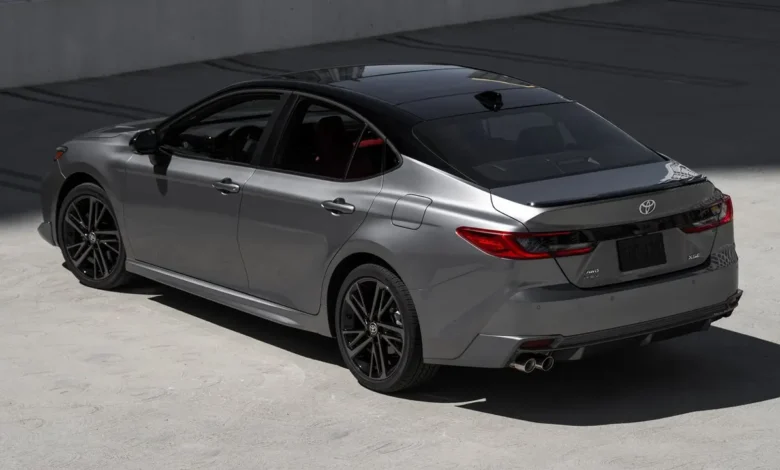
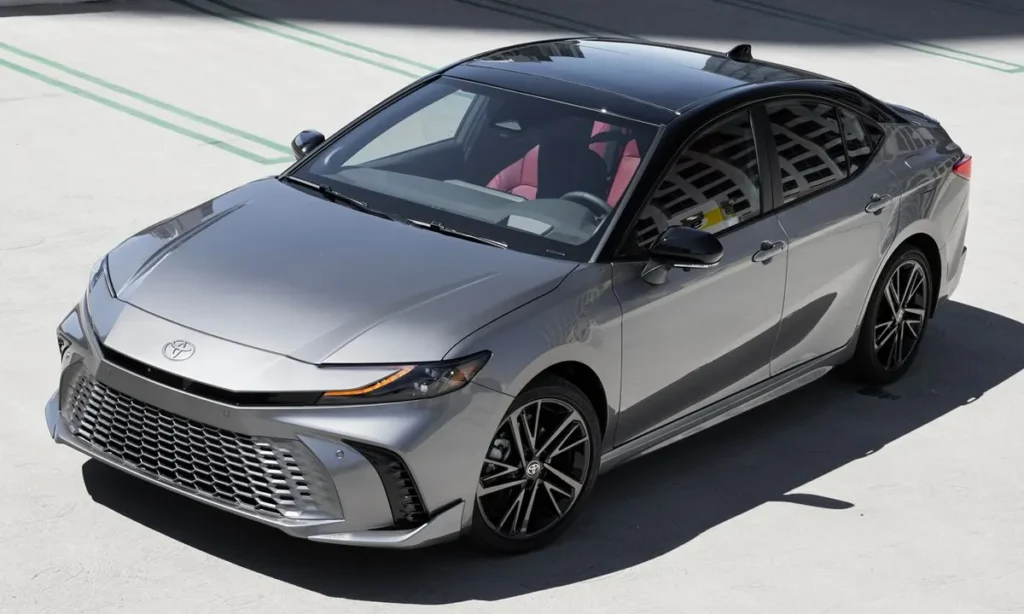
This development was not a surprise to Toyota’s leadership. President Koji Sato, who succeeded Akio Toyoda as CEO in April 2023, adjusted Toyota’s own BEV production projection for 2026 — revising downward from the 1.5 million unit annual target that had been announced under his predecessor — specifically in response to the evidence of actual consumer demand rather than projected demand. This revision was honest, data-driven and consistent with Toyota’s broader philosophy of making decisions based on observable market reality rather than predetermined timelines. The Camry, the world’s best-selling passenger car for the American market, completed its transition to hybrid-only powertrains in the 2025 model year. The RAV4 followed for 2026. The Land Cruiser and Sienna had already made the same transition. These are not decisions to delay electrification — they are decisions to electrify using the proven technology that Toyota can deploy immediately, at scale, at accessible purchase prices, without requiring infrastructure investment that has not yet occurred.
China, the world’s largest automotive market and the country where battery-electric adoption has moved fastest, presents the most interesting challenge to Toyota’s multi-pathway framework. New energy vehicle sales — combining BEVs and PHEVs — exceeded 51 percent of new car sales in China by mid-2025, substantially exceeding the 30 percent ceiling that Chairman Toyoda had suggested would represent the long-term BEV market share globally. Toyota’s response to China’s faster adoption has been to accelerate its BEV product development for that specific market — introducing additional bZ-series models, investing in Chinese battery suppliers and partnering with local technology companies for software and infotainment development — while maintaining the multi-pathway approach in markets where adoption is proceeding at a different rate. The multi-pathway strategy is not a single global posture but a market-by-market allocation of technology investment to match actual consumer demand and available infrastructure, and the China evidence confirms that the allocation can and does shift as market conditions change.
The Four Technologies Toyota Is Developing Simultaneously
The concrete expression of Toyota’s multi-pathway commitment in 2025 and 2026 is a simultaneous investment across four distinct technology streams that would represent the full electrification R&D budget of most manufacturers individually, but that Toyota funds in parallel as the practical expression of its belief that no single technology will dominate every market globally.
The hybrid and plug-in hybrid stream remains the largest and most commercially productive. Toyota’s fifth-generation Hybrid Synergy Drive — deployed in the current Prius, RAV4, Camry, Corolla and expanding across the lineup — represents three decades of continuous refinement and provides the highest-volume, most immediately profitable foundation of the electrification portfolio. PHEV plug-in range is being extended beyond the current standards to over 124 miles of electric-only operation in next-generation systems, addressing the most frequent practical objection to PHEV ownership by ensuring that the majority of everyday commuting can be completed on electric power alone while maintaining the combustion range for longer journeys without range anxiety.
The battery-electric stream is accelerating on a revised but committed schedule. Toyota’s solid-state battery program — the most advanced in the automotive industry by development duration and patent count — is targeting commercial deployment in production vehicles by 2027 or 2028, with pre-production solid-state cells already achieving the energy density and charging speed targets that would make the technology transformative for BEV range and convenience. The gigacasting manufacturing technology that Toyota demonstrated in prototype form — capable of producing major body structural components in three minutes compared with conventional stamping processes — will reduce BEV production costs when deployed in the new-platform electric vehicles planned for the second half of the decade. Toyota has already demonstrated a prototype gigacast component and has confirmed plans to use the technique in a new BEV model arriving in 2026, applying a manufacturing philosophy pioneered by Tesla to Toyota’s own production system with the quality control discipline that Toyota’s engineering culture demands.
Hydrogen fuel cell development continues under Chairman Toyoda’s personal direction, with the third-generation fuel cell system announced in February 2025 targeting commercial vehicle applications with durability twice that of the previous generation and a service life comparable to diesel engines — figures specifically chosen to make hydrogen commercially competitive in heavy transport where battery-electric technology faces the most significant range and refuelling time disadvantages. Toyota has supplied more than 2,700 fuel cell systems to over 100 customers globally across bus, railway, marine and stationary power generation applications, building the commercial hydrogen ecosystem that consumer vehicle adoption would eventually require. And a new engine program — personally commissioned by Akio Toyoda and described as an exploration of internal combustion operation on carbon-neutral fuels including hydrogen combustion — maintains the potential for conventional engine architecture to contribute to the carbon neutrality timeline in applications where electrification faces structural barriers.
The Leadership Dynamic: Two Perspectives, One Strategy
One of the most interesting dimensions of Toyota’s multi-pathway strategy is the complementary but distinct perspectives that Chairman Akio Toyoda and President Koji Sato bring to its execution. Toyoda, whose public statements have consistently emphasised hybrid technology’s carbon credentials and expressed scepticism about the inevitability of BEV dominance, represents the deep institutional conviction that built the hybrid program from its 1997 origins into the world’s most commercially successful automotive technology franchise. His personal commitment to the multi-pathway approach has been so consistent, so public and so resistant to the considerable pressure from governments, investors and environmental organisations to move exclusively toward BEV that it has shaped the entire industry’s conversation about electrification strategy — including, ultimately, the position that several manufacturers who initially opposed it have quietly adopted as market realities shifted.
Sato, whose background in the Lexus brand and whose public statements are oriented more toward BEV acceleration and meeting regulatory requirements in key markets, provides the institutional balance that ensures Toyota’s multi-pathway commitment does not become an excuse for insufficient BEV investment. His revision of the 2026 BEV volume target was honest rather than defensive — a recalibration to actual demand rather than a retreat from the strategy — and his continued commitment to the solid-state battery program and the new-platform BEV architecture confirms that Toyota’s BEV development is proceeding with genuine urgency even as the public timeline adjusts to market reality. The dynamic between the two leaders is not a contradiction in Toyota’s strategy but a productive tension between the brand’s proven technology heritage and its emerging technology future — a tension that, managed well, produces better strategy than either perspective alone would generate.
Why the Multi-Path Strategy Is Right for 2026 and Beyond
The vindication of Toyota’s multi-pathway strategy in 2025 and 2026 is not simply a story about a manufacturer being proven right while competitors were proven wrong. It is a story about the value of engineering humility — the willingness to acknowledge that the real world is more complex than any single model of the future can accommodate, and that the most durable competitive advantage in the automotive industry is not the ability to identify the winning technology but the ability to develop multiple technologies simultaneously and deploy whichever works best in each market, each operating environment and each consumer context.
Toyota’s 42 percent hybrid share of its record 11.3 million global sales in 2025, its 58 percent global hybrid market share, its advancing BEV program with solid-state batteries approaching production readiness, its hydrogen fuel cell commercial vehicle deployments and its new engine program for carbon-neutral fuels collectively represent a technology portfolio whose breadth and depth no competitor has assembled. The multi-pathway strategy is not a hedge against uncertainty. It is the most comprehensive and most honest response to the genuine uncertainty of the global energy transition — pursued with the patient, evidence-based discipline that has always characterised Toyota’s approach to technological challenges and that has produced, generation after generation, the result that the data confirms: the world’s best-selling, most reliable and most enduringly trusted vehicles in every market where they compete.
Read: 5 Toyota Cars That Last Forever! Myth or Reality?
Toyota Multi-Pathway Strategy — Technology and Market Data Chart
| Category | Data / Status |
| Toyota Global Sales 2025 | 11.3 Million Units — Record High |
| Hybrid % of Toyota Sales 2025 | 42% |
| Global Hybrid Market Share | 58% |
| BEV % of Toyota Sales 2025 | 1.9% |
| Hybrid Carbon Impact Claim | 27M Hybrids = Impact of 9M BEVs |
| Akio Toyoda BEV Market Share Prediction | 30% Long-Term Global Maximum |
| China NEV Market Share (Mid-2025) | 51%+ (BEV + PHEV) — Exceeds Toyoda’s 30% Ceiling |
| Global EV Sales Growth 2025 | +27% Year-on-Year |
| 2026 BEV Volume Target (Revised) | Reduced from 1.5M — Revised to Actual Demand |
| 2030 BEV Volume Target | 3.5 Million (Subject to Demand Revision) |
| Europe CO2 Reduction Target | 100% in New Vehicle Sales by 2035 |
| Global Carbon Neutrality Target | 2050 |
| Hybrid Battery Warranty | 10 Years / 150,000 Miles |
| PHEV Electric Range (Next Gen) | 200+ km (124+ Miles) |
| Solid-State Battery Target | Production Vehicles by 2027–2028 |
| Gigacasting Technology | Prototype Demonstrated — New BEV Model 2026 |
| Third-Gen Fuel Cell System | Announced Feb 2025 — 2x Previous Durability |
| FC Systems Supplied (Non-Vehicle) | 2,700+ Units to 100+ Customers Globally |
| New Engine Program | Commissioned by Toyoda — Carbon-Neutral Fuels |
| Models Transitioned to Hybrid-Only | Camry (2025), RAV4 (2026), Land Cruiser, Sienna |
| Hybrid Output Target 2028 | 6.7 Million Units — +30% vs 2026 Target |
| U.S. Manufacturing Investment | $10 Billion Over 5 Years |
| Battery Plant (U.S.) | Liberty, North Carolina — Operational 2025 |
| Japan CO2 Reduction via Hybrids | 23% Reduction — Only Developed Nation to Achieve |
| Simulated Manual EV Gearbox | Available From 2026 — Patent Up to 14 Gears |
| G7 Multi-Pathway Endorsement | Japan Advocated — 2024 G7 Summit |
| Competitors Reverting to Hybrids | General Motors and Others — 2024–2025 |