- The Toyota Sienna has faced issues including 12-volt battery drain, sliding door malfunctions, infotainment glitches and regenerative braking complaints in certain model years.
- Some fourth-generation models have been affected by recalls involving third-row seat bolts and other component-related concerns.
- Despite these issues, the Sienna maintains a generally strong reliability reputation, making model year selection important for long-term ownership satisfaction.
The Toyota Sienna is one of the most consistently dependable family minivans ever sold in the American market, and its fourth generation launched for 2021 brought a significant transformation: the elimination of the V6 engine in favour of an exclusive hybrid powertrain combining a 2.5 litre four cylinder with a pair of electric motors producing 245 combined system horsepower. That architectural change made the Sienna the only minivan in the United States sold exclusively as a hybrid, delivering an EPA combined fuel economy rating of 36 miles per gallon and eliminating the need for a traditional transmission entirely through a planetary gear electronic continuously variable arrangement. It also introduced a new set of potential failure modes that the previous generation’s conventional powertrain had never encountered.
Understanding the Toyota Sienna’s common problems across the 2021 to 2025 model years is not an exercise in condemning a fundamentally poor vehicle. The Sienna’s reliability scores have remained consistently in the 72 to 76 out of 100 range across the generation, rated Good across every model year with no statistical outlier years in either direction. The 2023 model year achieved the highest score of the generation at 76 out of 100. These are not the scores of an unreliable vehicle. They are, however, the scores of a vehicle with a defined set of recurring concerns that prospective buyers and current owners should understand clearly before purchase or during the ownership period.
Problem One: 12 Volt Auxiliary Battery Drain
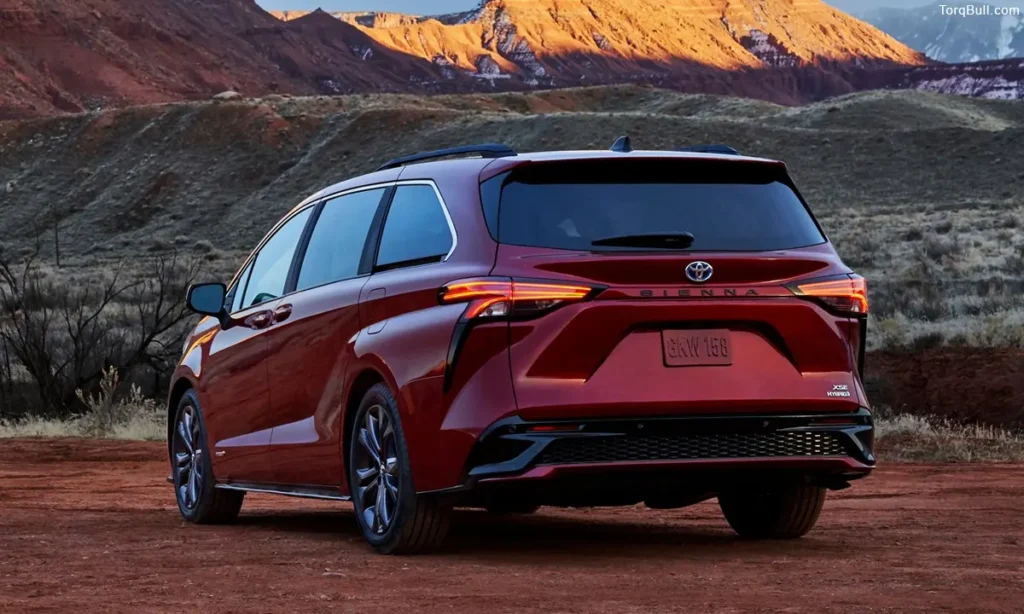
The single most widely documented and most frequently discussed problem affecting the fourth generation Toyota Sienna across multiple model years is parasitic drain on the 12 volt auxiliary battery, resulting in a dead battery after the vehicle has been parked for extended periods. This issue has generated a substantial volume of owner complaints and forum discussion across 2021, 2022 and 2023 model years in particular.
The root cause in many documented cases relates to the hybrid vehicle electronic control unit failing to enter sleep mode when the vehicle is switched off. In a conventional vehicle, a battery drain caused by a module remaining active would discharge the battery over several days. In the Sienna’s hybrid architecture, the 12 volt battery is a relatively small auxiliary unit responsible for powering control systems, sensors and accessories, and its capacity is insufficient to sustain an actively communicating control unit for extended periods without the main hybrid battery system recharging it. When the hybrid ECU fails to sleep correctly, the auxiliary battery can be depleted overnight or within 24 to 36 hours of the vehicle being parked.
Toyota issued a Technical Service Bulletin addressing this concern on 2021 model year Sienna hybrids, directing dealers to update the hybrid system software to prevent the ECU from remaining active after shutdown. Owners experiencing this problem on 2021 model years should request the specific software update from their dealer, referencing the relevant TSB documentation. The issue has also been reported on 2022 and 2023 model years in lower volume.
A secondary contributing factor involves the kick sensors mounted at the base of passenger sliding doors and the rear liftgate. These sensors detect foot movement beneath the door for hands free entry and can remain in a low power active state longer than intended in certain conditions, contributing to parasitic drain. Toyota has acknowledged this as a known concern and dealers have replaced kick sensor assemblies and associated control modules as a corrective measure. Owners experiencing repeated dead batteries on 2022 model years should specifically raise the kick sensor concern with their servicing dealer, as this represents a distinct failure mode from the ECU sleep issue affecting 2021 models.
The practical recommendation for Sienna owners who experience repeated 12 volt battery failure is to request a parasitic draw test from the dealer, confirm whether any open software updates are outstanding and, if the standard lead acid battery has been replaced, consider specifying an AGM type replacement battery, which provides meaningfully better resistance to repeated partial discharge and recharge cycles than the standard flooded lead acid unit.
Read: Toyota Corolla Cross Reliability Review 2026. What Makes This SUV a Smart Buy?
Problem Two: Regenerative Braking Interruptions and Brake System Concerns
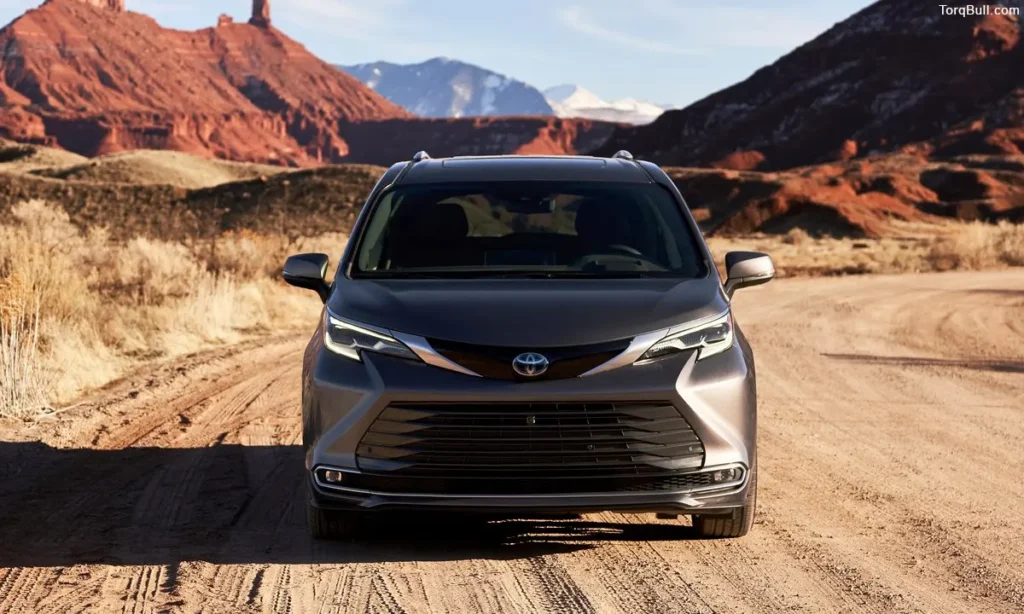
Brake related complaints represent the second most frequently cited problem category across the fourth generation Sienna lineup, with service brake concerns appearing as the top reported problem area for both 2023 and 2024 model years in independent analysis of owner and safety authority complaint data.
The nature of the brake complaints falls into two distinct categories. The first involves the regenerative braking system behaving inconsistently at low speeds during deceleration to a stop, with a small proportion of owners reporting a sensation of the vehicle appearing to move forward momentarily or experiencing reduced braking effect at very low speed as the system transitions from regenerative to friction brake engagement. This transition management is a characteristic of all hybrid brake systems and Toyota has addressed the calibration through software updates across multiple model years. Owners experiencing this concern should confirm with their dealer that the most current brake system calibration software is installed.
The second category involves premature wear of brake pads and rotors, reported at mileages that are unexpectedly low given the extended brake component life that hybrid regenerative braking typically provides in other vehicles. Pulsation and vibration through the brake pedal at highway speeds, indicating warped or unevenly worn rotors, represents the most commonly cited specific symptom in this category. The occurrence of premature rotor wear in a hybrid system that theoretically uses friction brakes less frequently than a conventional vehicle remains an area of ongoing owner concern and appears in reliability survey results for 2024 and 2025 model years.
Problem Three: Third Row Seat Bolt Recall
A safety recall affecting 2021 through 2025 Toyota Sienna Hybrid vehicles requires specific attention from owners of the affected model years. The bolts securing third row seatback assemblies were identified as potentially not tightened to specification during manufacturing, creating a condition where the third row seats could fail to meet federal safety standards for seating systems, head restraints and child restraint anchorage. This recall covers a substantial portion of the fourth generation Sienna’s production run.
The corrective procedure involves a dealer inspection and retightening of the affected seat assembly bolts at no cost to the owner. Owner notification letters were distributed in spring 2025. Sienna owners across all affected model years should verify through the vehicle identification number whether this recall has been completed on their specific vehicle, as the concern relates directly to occupant protection in the event of a collision.
Problem Four: Sliding Door Mechanism and Power Liftgate Issues
Power sliding door and liftgate concerns represent a recurring theme across the fourth generation Sienna’s reliability profile. Owner reports describe powered sliding door failures to open or close consistently, unusual resistance during operation, and in a smaller number of cases, sliding door mechanisms that become inoperative and require manual operation. The liftgate strut assemblies, responsible for holding the powered rear hatch open, have been reported as failing prematurely on 2021 model years by multiple owners, with replacement required in some cases on multiple occasions.
Water intrusion through the sliding door seals has been reported on 2021 model years, with affected owners describing slow water entry during heavy rain that crossed the door threshold seals and found its way beneath the interior flooring. Repair in documented cases involved replacement of water drain seals, realignment of door latch assemblies and in the most severe cases, replacement of interior carpeting and underlayment where moisture damage had accumulated. Owners of early 2021 model year vehicles in high rainfall climates should inspect the sliding door seal condition and threshold area for evidence of moisture intrusion, particularly if the vehicle has covered significant mileage.
Problem Five: Electrical System and Infotainment Faults
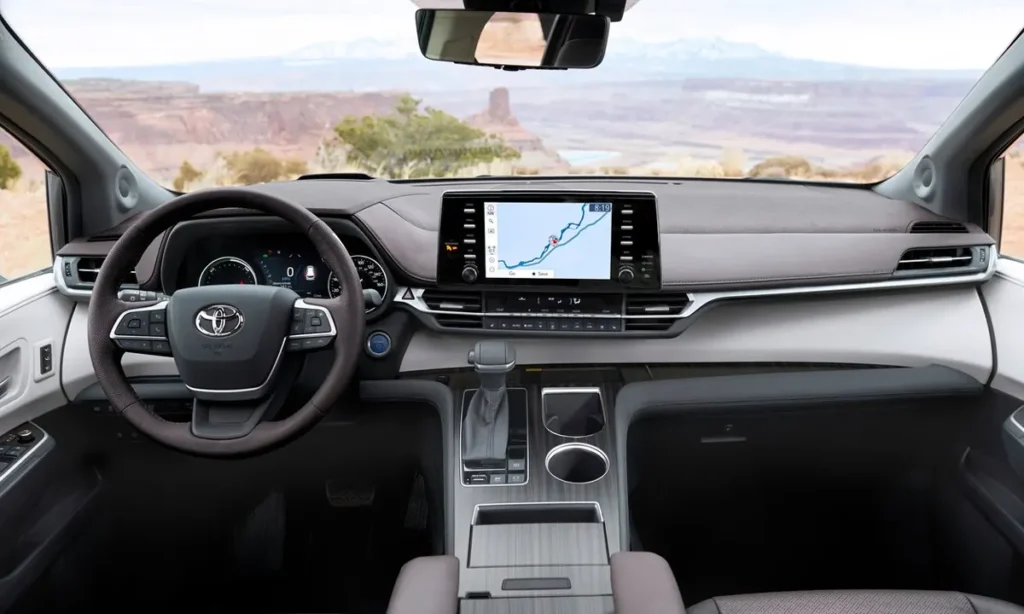
Electrical system concerns beyond the 12 volt battery issue include a range of reported infotainment, warning system and accessory faults that owner survey data places as the third most commonly reported problem category across the generation. Specific concerns include the panoramic view monitor camera display failing to activate correctly or displaying a blank image when the vehicle is shifted into reverse, which prompted a recall on certain 2022 to 2026 Sienna vehicles equipped with the panoramic view monitor system. Dealers reprogrammed the display control software to address this concern at no cost to owners.
Instrument cluster readability in bright sunlight has been noted as a design limitation rather than a mechanical failure, with the gauge display proving difficult to read clearly when daytime running lights are active and strong ambient light creates washout conditions. Dashboard warning light activation across multiple systems simultaneously following a 12 volt battery complete discharge represents a secondary consequence of the primary battery drain issue rather than an independent fault, as the hybrid system requires all connected modules to reinitialise following a complete auxiliary power loss, sometimes generating a cascade of error codes that clear themselves after several restart cycles.
Read: Toyota Corolla Maintenance Cost Per Year 2026. Full Ownership Breakdown
Problem Six: Exhaust System Concerns on 2024 and 2025 Models
Exhaust system related reports, covering the catalytic converter, muffler, exhaust manifold and associated heat shields, appear in owner reliability surveys specifically for the 2024 and 2025 model years with above average frequency compared to the earlier fourth generation models. The specific nature of these reports spans premature exhaust system noise development and heat shield related rattles rather than fundamental catalytic converter failure, and the majority of documented cases are addressed under the standard warranty during the affected vehicles’ early ownership period. Owners of 2024 and 2025 Sienna models who notice exhaust related rattling or unusual noise should have the heat shield mounting points inspected, as loose or corroded shield fixings are a straightforward and low cost repair when addressed early.
Toyota Sienna Common Problems at a Glance
| Problem Area | Model Years Affected | Severity | Status |
| 12 Volt Auxiliary Battery Drain (ECU Sleep Fault) | 2021 primarily, 2022 to 2023 also reported | High practical impact | TSB and software update available |
| 12 Volt Battery Drain (Kick Sensor Fault) | 2022 to 2023 | Moderate to high | Kick sensor replacement at dealer |
| Regenerative Braking Interruption at Low Speed | 2021 to 2024 | Moderate | Software calibration updates available |
| Premature Brake Pad and Rotor Wear | 2024 to 2025 | Moderate | Warranty coverage for early failures |
| Third Row Seat Bolt Recall | 2021 to 2025 | Safety critical | National recall, free dealer repair |
| Sliding Door Mechanism Failure | 2021 to 2023 | Moderate | Dealer repair under warranty |
| Power Liftgate Strut Failure | 2021 | Moderate | Component replacement |
| Sliding Door Water Intrusion | 2021 | High (if untreated) | Seal replacement and realignment |
| Panoramic View Monitor Display Blank | 2022 to 2026 | Moderate | Recall, software reprogramming |
| Instrument Cluster Sunlight Readability | All model years | Minor (design) | No fix available |
| Exhaust System Noise and Heat Shield Rattle | 2024 to 2025 | Minor to moderate | Dealer inspection and fastener repair |
| Multiple Warning Lights After Battery Drain | 2021 to 2023 | Low (secondary) | Clears after restart, address root cause |
Reliability Scores by Model Year
| Model Year | Reliability Score | Rating | Notable Concern |
| 2021 | 72 out of 100 | Good | 12V battery drain, sliding door water intrusion, third row recall |
| 2022 | 74 out of 100 | Good | 12V battery drain, regenerative brake concerns |
| 2023 | 76 out of 100 | Good (Best of generation) | Brake complaints, electrical system |
| 2024 | 74 out of 100 | Good | Service brakes, exhaust system |
| 2025 | 72 out of 100 | Good | Service brakes, 5 active recalls |
| Average (Generation) | 73 out of 100 | Good | No statistical outlier years |
Read: Toyota Camry Hybrid Real World Mileage . Does It Live Up To The Hype?
What Sienna Owners Should Do Right Now
Current owners of fourth generation Sienna models should take three immediate practical steps. First, verify the vehicle identification number against outstanding recall records, specifically confirming whether the third row seat bolt recall has been completed and whether the panoramic view monitor software update has been applied if that feature is equipped. Second, owners of 2021 and 2022 model years who have experienced dead battery incidents should request the hybrid ECU software update and kick sensor inspection at the next dealer visit, even if the battery has since been replaced, to address the root cause rather than the symptom. Third, owners of 2024 and 2025 model years should monitor brake feel and request a brake system inspection if any pulsation, vibration or inconsistency is noted, as early intervention before rotor damage progresses keeps repair costs minimal.
The Toyota Sienna remains a genuinely reliable family minivan whose documented problems are real but manageable, predominantly addressable through dealer software updates and recall completions, and whose overall ownership experience continues to place it among the best choices in its segment. Understanding these known concerns transforms ownership from reactive management into informed, proactive care.