- The Toyota Hilux uses a 2.8-liter turbo-diesel engine with up to 3,500 kg of towing capacity and 1,240 kg of payload.
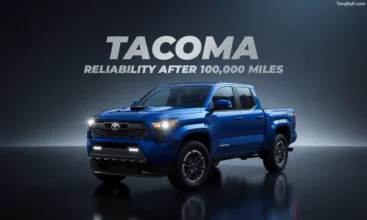
- The Toyota Tacoma offers turbocharged gasoline and hybrid powertrains, with up to 6,500 pounds of towing capacity.
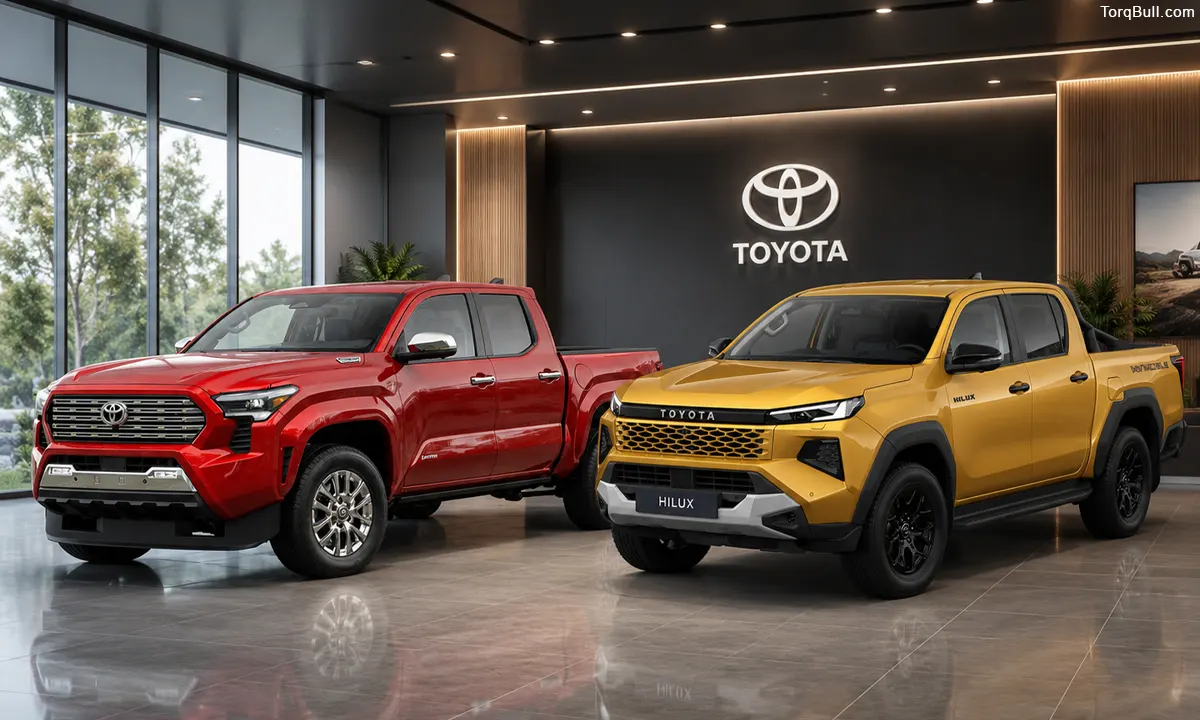
- While both are Toyota pickups, the Hilux prioritizes global work-truck durability, whereas the Tacoma focuses on North American comfort, technology and daily usability.
The Toyota Tacoma versus Toyota Hilux is the most frequently debated comparison in global truck culture — a conversation driven partly by genuine curiosity and partly by the fact that Americans who have encountered the Hilux overseas know they cannot buy one new at home and want to understand what they are missing. The Hilux is not a competitor in the American midsize truck market for the straightforward reason that it is not sold there — the Tacoma occupies that role entirely. But for buyers outside North America who genuinely choose between these two trucks, and for the large community of American enthusiasts who follow both with interest, the comparison between them reveals two vehicles that share a nameplate heritage but were engineered for genuinely different operating environments, buyer priorities and working conditions. This guide provides the most complete and most honest assessment of both vehicles across every meaningful comparison dimension.
Market Availability: The Most Important Starting Point
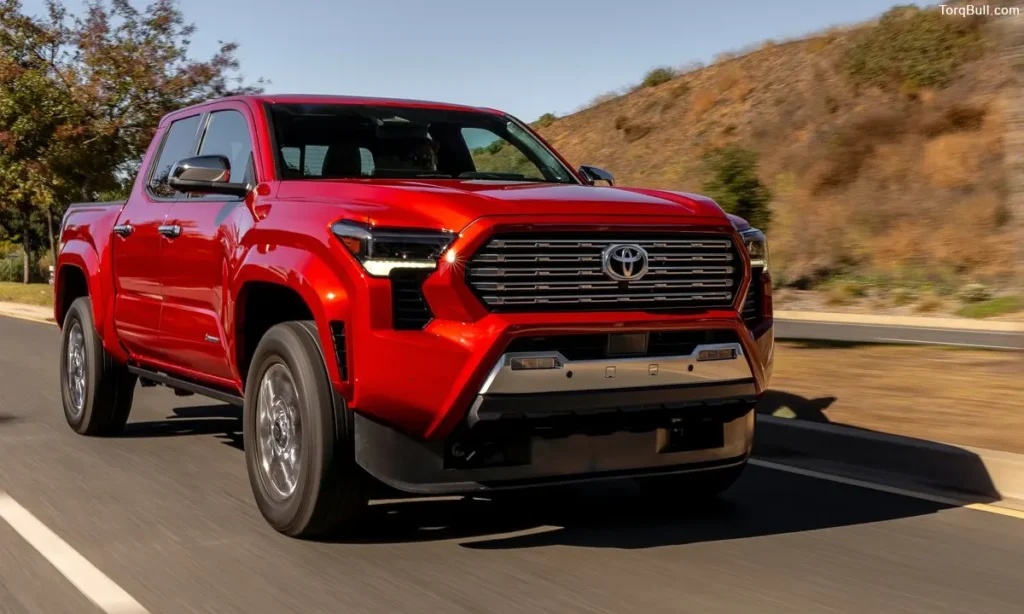
The single most important fact in the Tacoma versus Hilux comparison is the one most commonly omitted from enthusiasm driven discussions: the Toyota Hilux is not sold in the United States or Canada. It is sold in Australia, the United Kingdom, Europe, South America, Asia, Africa, the Middle East and most global markets except North America. The Toyota Tacoma is sold in North America — specifically the United States, Canada, Mexico, Costa Rica, Bolivia and a small number of other nearby markets.
This market separation is not an oversight or a temporary arrangement — it is a deliberate Toyota product strategy rooted in decades of engineering decisions, regulatory compliance and consumer preference divergence between these markets. The Hilux was sold in the United States until 1995, at which point Toyota replaced it with the Tacoma — a specifically North American truck engineered for American roads, American consumer preferences and American lifestyle use rather than the global commercial work truck mandate that defines the Hilux’s character.
For American buyers, the Tacoma is the only new Toyota midsize truck available regardless of how the Hilux compares on specific capability metrics. For buyers in Australia, the UK and most global markets, the Hilux is the primary offering with no Tacoma availability. Understanding this market division makes the comparison most useful for overlanding enthusiasts who travel internationally, buyers in transitional markets and the global truck community that follows both vehicles with genuine interest.
Read: Toyota Tacoma Maintenance Cost Per Year. Reliable Pickup or Hidden Expense?
Engine and Powertrain: Diesel vs Petrol and Their Consequences
The most fundamental engineering difference between these two trucks is the powertrain philosophy that each represents — and this difference shapes every other aspect of the ownership experience including fuel cost, torque character, towing capability and long term maintenance.
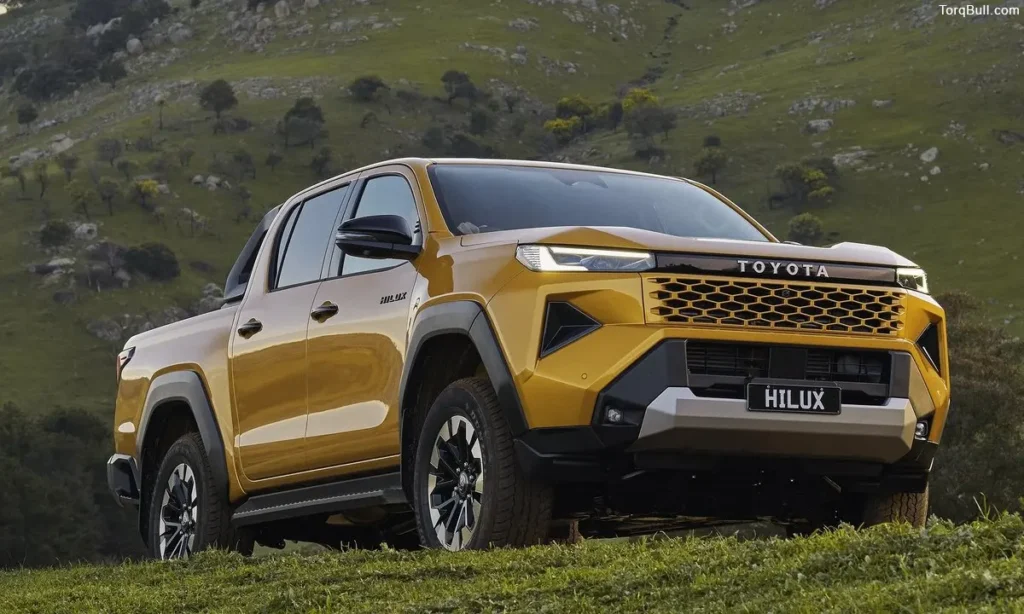
The 2026 Toyota Hilux’s standard powertrain across most global markets is a 2.8 litre turbocharged inline four cylinder diesel engine — updated for the 2026 model year with a mild 48-volt diesel and electric hybrid system that provides an 11 horsepower boost during acceleration and smooths the engine’s start and stop transitions. The diesel’s torque output and low RPM pulling power are the defining characteristics of the Hilux’s work capability — diesel engines produce maximum torque at very low engine speeds, providing the immediate grunt required for heavy towing and loaded operation that commercial users specifically need. The 2.8 litre diesel’s fuel economy in real world commercial use is substantially better than any petrol alternative at equivalent work loads, making the Hilux dramatically more economical for fleet operators who measure cost per kilometre over hundreds of thousands of working miles.
The 2026 Toyota Tacoma offers two petrol powertrain options: the 2.4 litre turbocharged four cylinder producing 278 horsepower and 317 pound feet of torque, and the i-Force MAX hybrid version of the same engine combined with an electric motor for 326 combined horsepower and 465 pound feet of torque. The i-Force MAX hybrid’s electric motor provides instant torque delivery at zero RPM — a characteristic that approximates diesel’s low speed grunt without diesel’s fuel type dependency, though the comparison is more relevant for recreational off road use than for sustained commercial payload work where diesel’s fuel economy advantage is most pronounced.
The Tacoma uses no diesel option in its North American specification — and American truck buyers who specifically want diesel power in a midsize package must look beyond Toyota entirely. The Hilux’s diesel availability in global markets is a specific competitive advantage for commercial operators, fleet buyers and markets where diesel fuel infrastructure is well established and diesel fuel pricing is favourable relative to petrol.
Towing and Payload: Hilux Leads on Raw Capability
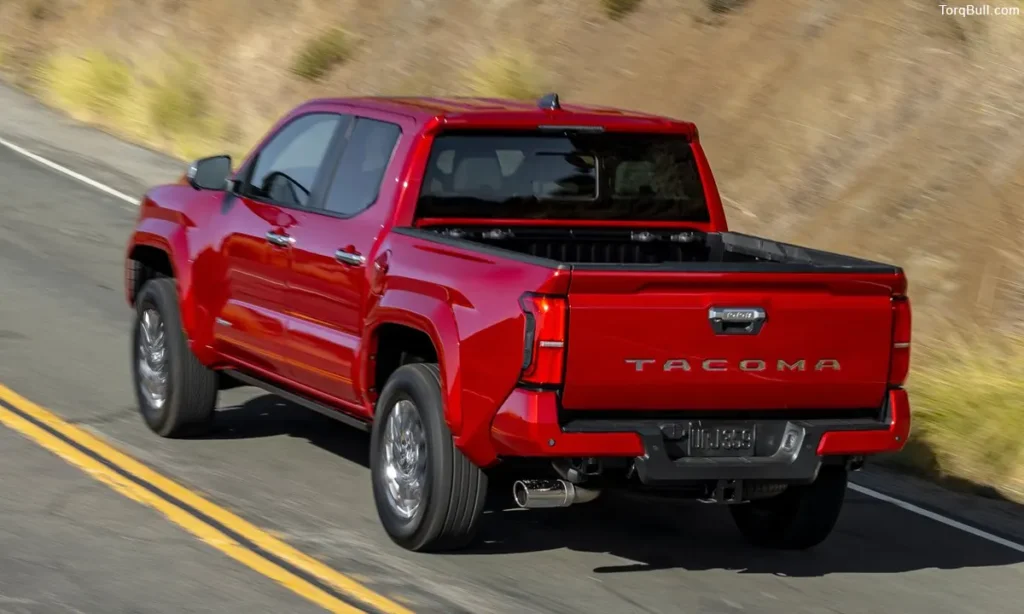
Towing and payload capacity comparisons between these vehicles reflect their fundamentally different engineering priorities — the Hilux optimised for maximum work capability and the Tacoma for the balance of work capability and lifestyle comfort that North American buyers specifically seek.
The 2026 Toyota Hilux’s maximum towing capacity is 3,500 kilograms — equivalent to approximately 7,716 pounds. The Tacoma’s maximum towing capacity in its most capable configuration is 6,500 pounds, equivalent to approximately 2,948 kilograms. The Hilux’s towing advantage of approximately 1,200 pounds at maximum specification reflects the diesel engine’s torque advantage and the Hilux’s frame and powertrain engineering oriented toward heavy commercial use rather than the recreational and lifestyle use that defines most Tacoma applications.
Maximum payload capacity follows the same pattern. The Hilux provides approximately 1,240 kilograms — approximately 2,734 pounds — of payload in its most capable configuration. The Tacoma provides approximately 1,700 pounds — approximately 771 kilograms — in comparable configurations. The Hilux’s payload advantage of approximately 1,034 pounds represents a meaningful commercial use difference that determines whether specific loading scenarios — bulk materials, commercial equipment, agricultural supplies — fall within or outside each truck’s safe operating parameters.
For commercial operators, agricultural users, construction fleets and anyone who uses a pickup as a genuine working tool rather than primarily a lifestyle vehicle, the Hilux’s superior towing and payload metrics translate directly to reduced operating trips, lower operating cost per tonne of freight and greater operational flexibility. For the recreational buyer who tows a camper, boat or off road trailer and prioritises the daily driving experience, the Tacoma’s lower capability ceiling is irrelevant to most real world use scenarios.
Read: Toyota Tacoma TRD Off Road vs Sport Differences. Which Trim Matches Your Real Driving Life 2026
Daily Comfort and Interior Refinement: Tacoma Leads Decisively
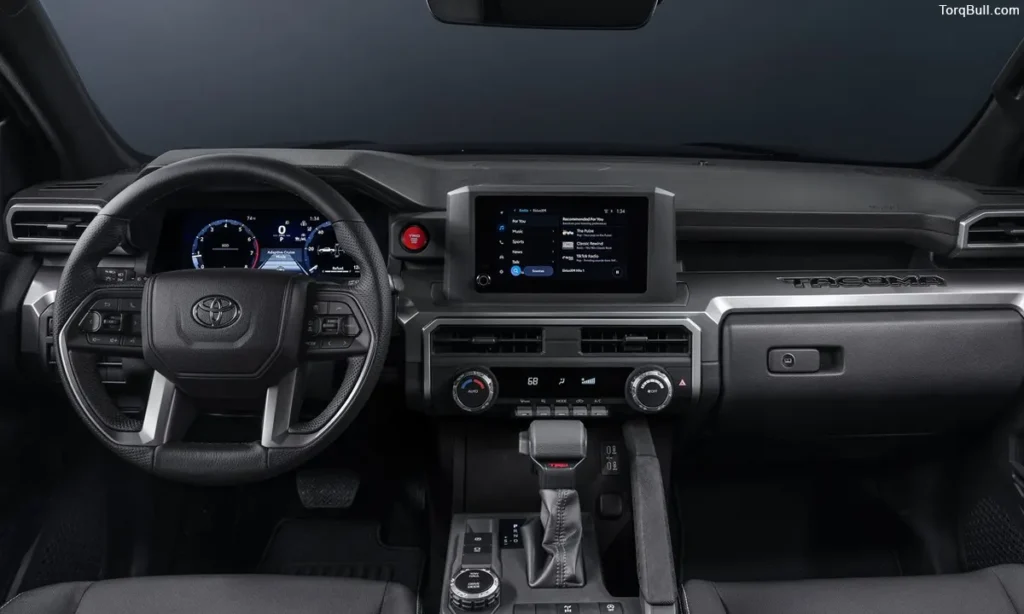
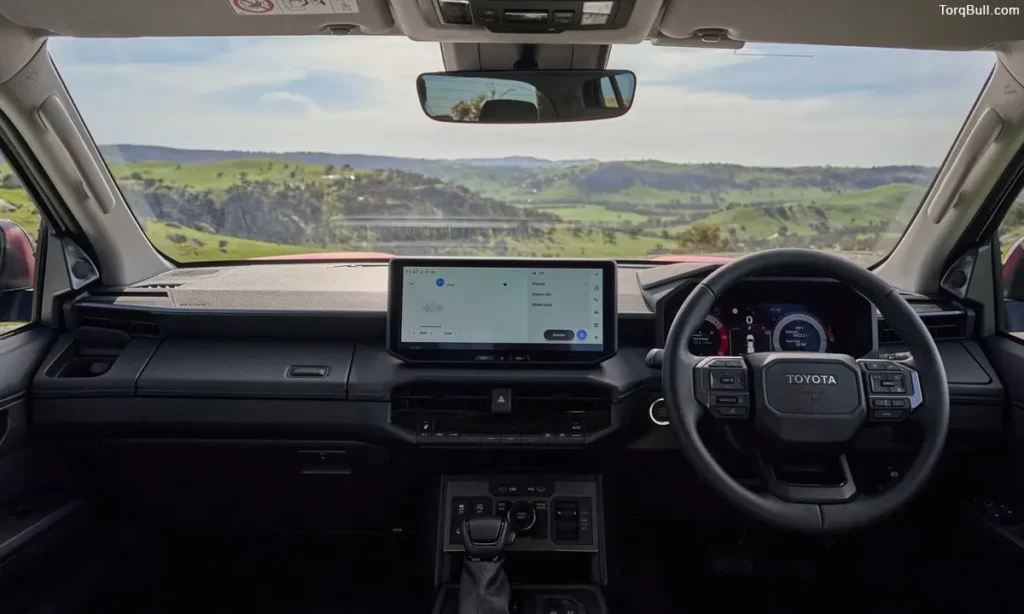
The interior quality and daily comfort comparison between these two trucks reverses the Hilux’s capability leadership — and the reversal is decisive and consistently documented across every professional comparison between them.
The Tacoma is described across independent evaluations as notably softer and more refined than its Hilux sibling — a characterisation that captures the fundamental difference in how each truck prioritises the occupant experience relative to capability engineering. The Tacoma’s interior provides a higher quality material standard, more extensive acoustic treatment to reduce road and wind noise and more comprehensive connectivity and comfort features that reflect the North American market’s expectation of truck interiors that compete with mainstream SUVs on daily living quality.
The 2026 Tacoma’s standard 8-inch touchscreen with navigation, wireless Apple CarPlay and Android Auto, and comprehensive driver assistance suite including adaptive cruise control and automatic emergency braking with pedestrian detection across all trims provides a technology standard that the current Hilux does not match across its full global trim range. The Tacoma’s available heated and ventilated seats, premium audio options and multiple USB-C charging ports throughout the cabin represent consumer feature additions that the Hilux’s more commercially oriented specification does not prioritise at comparable price points.
The Hilux’s cabin, while improved substantially across recent generations, remains more straightforwardly functional than the Tacoma’s — a reflection of the truck’s commercial buyer priority structure where durability, cleanability and basic functionality outweigh the lifestyle amenity content that Tacoma buyers specifically seek.
Toyota Tacoma vs Toyota Hilux — Complete Comparison Chart
| Category | Toyota Tacoma (2026) | Toyota Hilux (2026) | Advantage |
| Primary Markets | USA, Canada, Mexico | Global (not USA or Canada) | Different — not directly competing |
| Engine Options | 2.4L Turbo Petrol, i-Force MAX Hybrid | 2.8L Turbo Diesel, 48V Mild Hybrid Diesel | Depends on fuel preference |
| Max Horsepower | 326 hp (i-Force MAX) | Approx 200 hp (diesel) | Tacoma |
| Max Torque | 465 lb ft (i-Force MAX) | High (diesel, lower RPM) | Hilux (low RPM); Tacoma (peak) |
| Max Towing | 6,500 lbs (2,948 kg) | 7,716 lbs (3,500 kg) | Hilux |
| Max Payload | approximately 1,700 lbs (771 kg) | approximately 2,734 lbs (1,240 kg) | Hilux |
| Interior Refinement | Significantly more refined | Functional, commercial focus | Tacoma |
| Technology | Full suite; wireless CarPlay | Capable but less comprehensive | Tacoma |
| Off Road Trims | TRD Off Road, TRD Pro, Trailhunter | Invincible, GR Sport equivalent | Both capable; different focus |
| Frame Design | TNGA-F fully boxed | IMV platform, fully boxed | Both rigid |
| Diesel Availability | No (petrol only) | Yes (primary powertrain) | Hilux (for diesel buyers) |
| Fuel Economy (work use) | Lower than diesel | Stronger diesel efficiency | Hilux |
| Daily Driving Comfort | Higher | Lower | Tacoma |
| JD Power Reliability (US) | Most Reliable Midsize Pickup (2026) | Not assessed in US market | Tacoma (US data) |
| Resale Value (US) | Best in class (23 consecutive KBB awards) | Not applicable in US | Tacoma |
| All Electric Version | Not announced | Coming 2026 (announced by Toyota) | Hilux (future) |
Read: Toyota Tacoma TRD Pro Full Review 2026. The Off-Road Flagship Assessed
The Honest Verdict: Which Is Actually Better?
The Tacoma is better for buyers who value daily driving comfort, interior refinement, lifestyle feature content, recreational off road capability and the complete North American ownership ecosystem — the TRD trim hierarchy, the established aftermarket, the KBB resale value leadership and the JD Power Most Reliable Midsize Pickup designation. If you live in North America and want a Toyota midsize truck, the Tacoma is not just the better choice — it is the only choice available new.
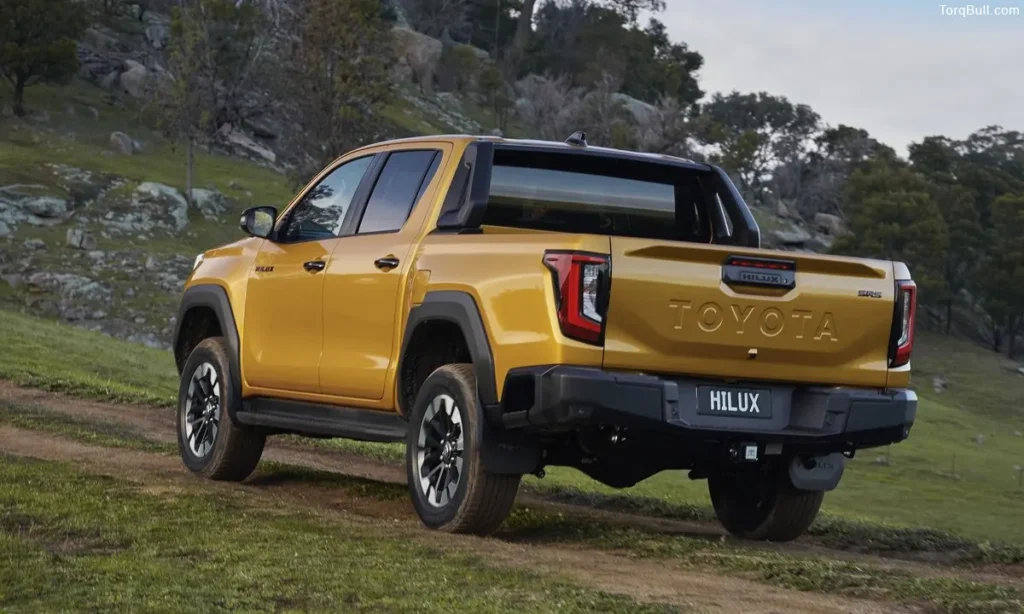
The Hilux is better for buyers who need maximum towing and payload capability for commercial or agricultural work, who operate in markets where diesel fuel infrastructure and pricing makes diesel the economically rational choice and who prioritise raw hauling utility over lifestyle refinement. It is also the choice for buyers outside North America who cannot access the Tacoma and who need a genuinely indestructible working tool that has built its global reputation across six decades of commercial operation in some of the world’s most demanding conditions.
Both are genuinely excellent trucks whose differences reflect the different problems they were engineered to solve. The Hilux’s legendary global durability reputation is real and well earned. The Tacoma’s North American market dominance — 274,638 units sold in 2025, more than two and a half times the second place midsize truck — is equally real and equally well earned. Neither is objectively superior. Each is better than the other specifically for the buyer whose priorities and market availability align with what that truck was designed to provide.