Used Electric Cars Under $20,000 in The USA
From the Steep Depreciation Curves That Have Delivered Genuinely Capable Electric Vehicles Into the Sub-$20,000 Used Market to the Critical Distinction Between a Battery That Has Aged Gracefully and One That Has Aged Badly — What Every American Buyer Needs to Understand About Reliability, Battery Health and Real-World Value Before Committing to a Used EV Purchase at This Price Point
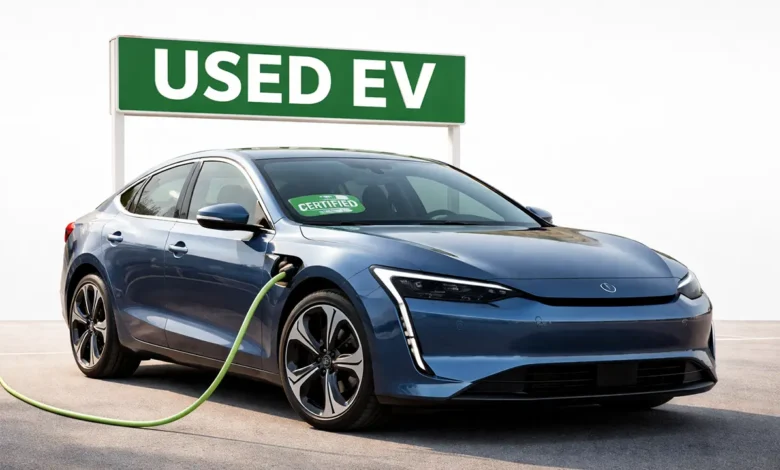
Used Electric Cars Under $20,000: There is a version of the used electric vehicle conversation that has not yet reached the mainstream car-buying audience with the clarity and directness it deserves. It is the version that begins not with range figures or technology features but with the single most consequential fact about the used EV market in 2025: that steep depreciation — some of the most dramatic value loss recorded in the modern automotive industry, with many mainstream electric vehicles shedding 55 to 65 percent of their original value over five years compared to roughly 40 to 50 percent for comparable gasoline cars — has delivered a category of vehicles into the sub-$20,000 price bracket whose original engineering ambition, technology content and real-world capability would have been unrecognisable at that price point even four years ago. The Chevrolet Bolt EV, the Nissan Leaf in its later and more capable iterations, the Kia Niro EV and select used examples of first-generation Hyundai Kona Electric models now regularly appear in American used car listings at or below the $20,000 threshold — not because they are worn-out, high-mileage econoboxes but because the pace of new EV development and the psychology of a market still uneasy about battery longevity has suppressed their residual values to levels that the underlying quality of the engineering frequently does not justify. The opportunity this creates for the informed American buyer is real and significant. The risks, however, are equally real — and distinguishing between the two requires a framework for evaluating used EV reliability that goes substantially beyond the standard used-car checklist.
Why the Used EV Market Under $20,000 Exists and What It Actually Contains
The structural forces that created the sub-$20,000 used EV market are worth understanding clearly, because they explain both the opportunity and the variability that a buyer at this price point will encounter. Electric vehicles depreciate faster than gasoline cars for a combination of reasons that have nothing to do with the durability of the vehicles themselves. Consumer uncertainty about battery longevity suppresses demand for older EVs, creating a buyer’s market whose pricing does not reflect the actual reliability record of the cars being offered. The rapid pace of EV development means that a four-year-old electric vehicle can appear technologically dated compared to a new model even when it delivers entirely adequate performance for the real-world commuting and errand-running that constitutes the overwhelming majority of American daily driving. Lease returns — a significant source of used EV supply — arrive at dealerships with relatively low mileage and documented service histories that make them meaningfully lower-risk than private-party sales of older, higher-mileage examples.
The practical consequence of these dynamics is that a buyer with a $20,000 budget in 2025 can realistically access used electric vehicles originally sold for $30,000 to $40,000 new — cars that were built to a specification reflecting their original purchase price rather than their current market value. The reliability implications of this value gap are largely positive for an informed buyer who understands what to look for, because the fundamental durability of a well-managed electric powertrain — with its absence of engine oil, transmission fluid, timing chains, spark plugs and the dozens of other wear items that make high-mileage gasoline cars increasingly expensive to maintain — means that an electric vehicle with 40,000 to 60,000 miles of documented normal use typically has a substantially larger proportion of its useful life remaining than a gasoline car with equivalent mileage.
Chevrolet Bolt EV: The Sub-$20,000 Segment’s Most Compelling Reliability Story
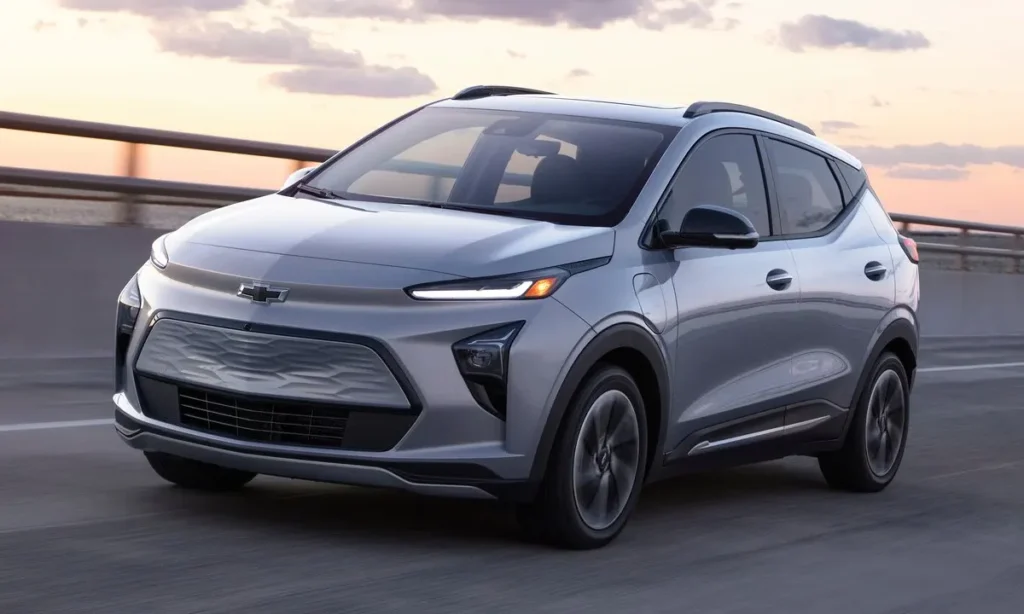
No vehicle in the sub-$20,000 used electric market makes a more nuanced or ultimately more positive reliability argument than the Chevrolet Bolt EV — nuanced because its history includes a significant and well-publicised battery recall that any prospective buyer must understand, and ultimately positive because that recall, for the majority of affected cars, resulted in the installation of entirely new battery packs that effectively reset the battery clock on vehicles that are chronologically several years old. General Motors recalled 2017 through 2022 Bolt EV and EUV models following the discovery that a manufacturing defect in a proportion of the LG Chem battery cells used in those packs could, under specific conditions, create a fire risk. The remedy was comprehensive: affected vehicles received complete battery pack replacements rather than software-only mitigations, meaning that a well-documented 2019 or 2020 Bolt whose recall was completed correctly and whose replacement pack has been confirmed by a GM dealer’s diagnostic is, from a battery perspective, closer to a recently manufactured car than its model year implies.
The Bolt’s liquid-cooled battery thermal management system — an engineering advantage over the passive air cooling used in equivalent-era Nissan Leaf models — gives its battery chemistry a meaningfully better degradation profile in warm American climates. Owner data collected across long-term Bolt communities consistently shows high-mileage examples retaining strong usable capacity when operated with moderate charging habits, and real-world range tests conducted by independent automotive evaluators have produced results at or above the EPA-rated figures for healthy examples. At typical used market pricing of $14,000 to $19,000 for 2019 to 2022 examples in good condition, with its EPA-rated range of 238 to 259 miles depending on model year, the Bolt EV represents the most straightforward value argument in the segment for a buyer willing to verify recall completion status and obtain a documented battery health assessment before purchase.
Nissan Leaf: The Accessible Entry Point That Demands the Most Careful Evaluation
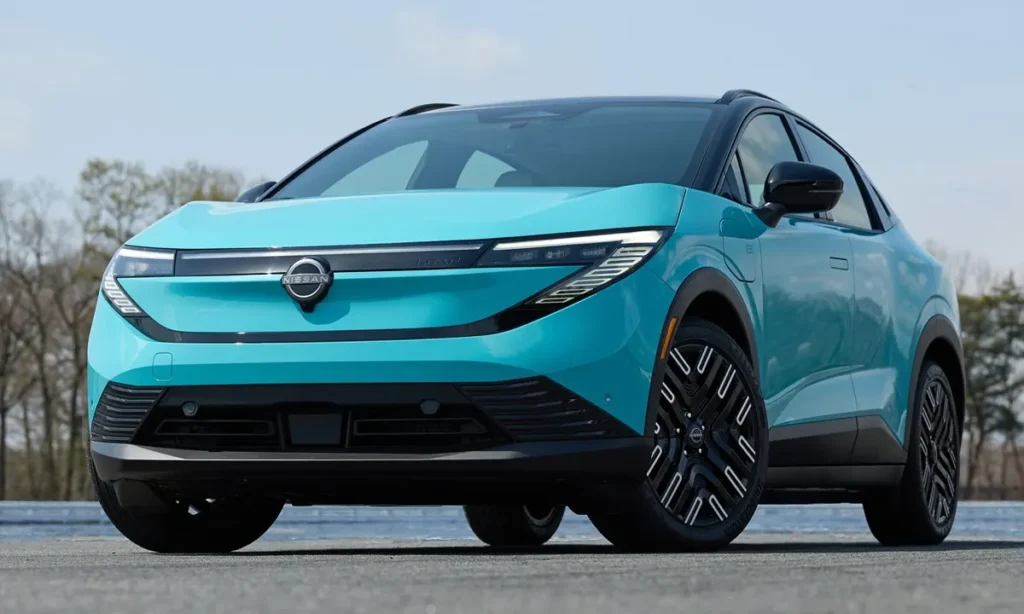
The Nissan Leaf occupies a distinctive and complicated position in the sub-$20,000 used EV market — one defined by the tension between its status as the most accessible electric vehicle in the segment by purchase price and the degree of buyer diligence that its battery technology requires before any example can be confidently recommended for purchase. Early Leaf models used passive air cooling for their battery packs, an engineering approach that produces acceptable degradation results in moderate American climates but accelerates capacity loss considerably in hot environments including Arizona, Texas, Nevada, inland California and other states where sustained high ambient temperatures stress the chemistry in ways that liquid-cooled systems actively prevent. A Leaf that has spent several years parked outdoors in a Phoenix summer or driven intensively in a warm climate with frequent DC fast charging may have lost a proportion of its original capacity that renders it unsuitable for daily use without the buyer’s awareness of that condition.
The practical tool for evaluating a used Leaf’s battery health is the battery capacity indicator — a dash-mounted display showing between one and 12 bars, each representing approximately a twelfth of the original capacity. A car showing 12 bars retains close to its original capacity; one showing nine or ten bars may deliver only 50 to 60 real-world miles on the earlier 24 kilowatt-hour pack, which is inadequate for anything beyond short urban commuting. The later 40 kilowatt-hour and 62 kilowatt-hour packs introduced from the 2018 and 2019 model years respectively offer substantially more initial capacity, more robust degradation characteristics and — for the 62 kilowatt-hour Plus variant — range that remains genuinely adequate for real-world American commuting even after several years of normal use. Used Leaf pricing at $10,000 to $18,000 depending on model year, pack size and condition makes it the lowest entry point in the segment, but that pricing advantage is meaningful only for a buyer who has correctly assessed the specific car’s battery health rather than relying on the model’s general reputation.
Kia Niro EV: The Most Versatile Used Electric Under $20,000 for Whole-Life Ownership
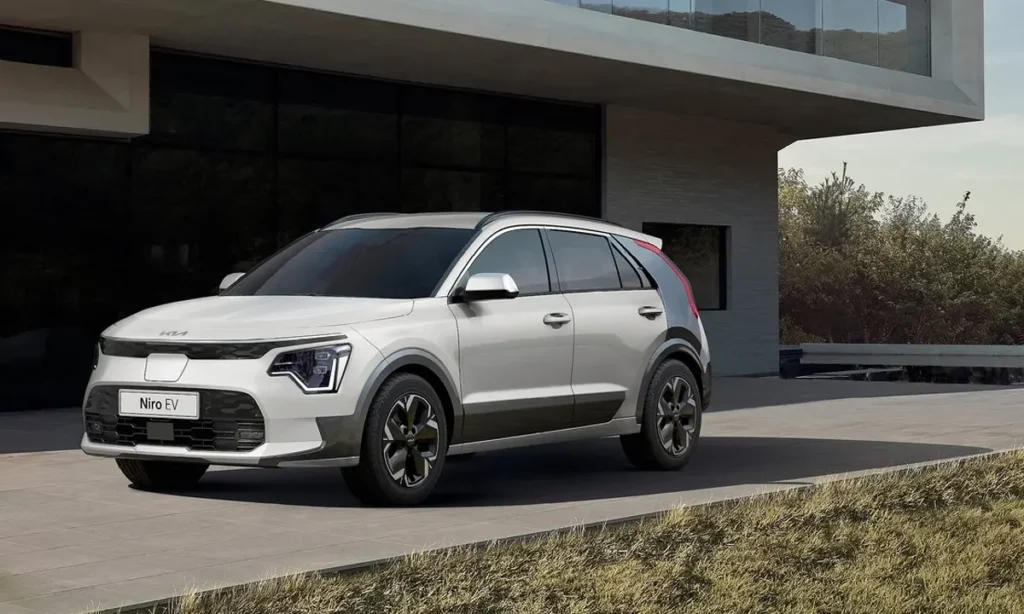
The Kia Niro EV makes the case for a different kind of reliability argument than either the Bolt or the Leaf — one rooted less in the drama of recalls and battery cooling architecture debates and more in the quiet, consistent competence that has characterised Kia’s approach to the electric vehicle market since the Niro EV’s introduction. Used examples of the 2019 through 2022 Niro EV, equipped with a 64 kilowatt-hour battery pack whose real-world range in healthy condition delivers approximately 200 to 230 miles under mixed driving conditions, regularly appear in the American used market at $16,000 to $20,000 — a price at which their crossover body, practical cargo space, DC fast-charging capability at up to 80 kilowatts via the CCS standard, comfortable five-seat interior and access to Kia’s competitive battery warranty coverage constitute a package whose versatility for primary vehicle duty substantially exceeds what either the Bolt or early Leaf can comfortably claim.
The Niro EV’s battery thermal management and chemistry have produced a degradation profile that long-term owners consistently describe as gentle and linear rather than sudden or dramatic. A well-maintained 2020 or 2021 example with 40,000 to 50,000 miles of documented normal use typically retains enough capacity for daily ranges that remain adequate for the vast majority of American commuting patterns, and its DC fast-charging support makes it more capable than the Nissan Leaf for the occasional longer journey that exceeds a single charge’s comfortable range. For the buyer whose $20,000 budget needs to fund a genuinely capable primary vehicle rather than a short-range urban runabout, the Niro EV is the most complete package in the segment.
Hyundai Kona Electric: Premium Engineering at Used Market Pricing
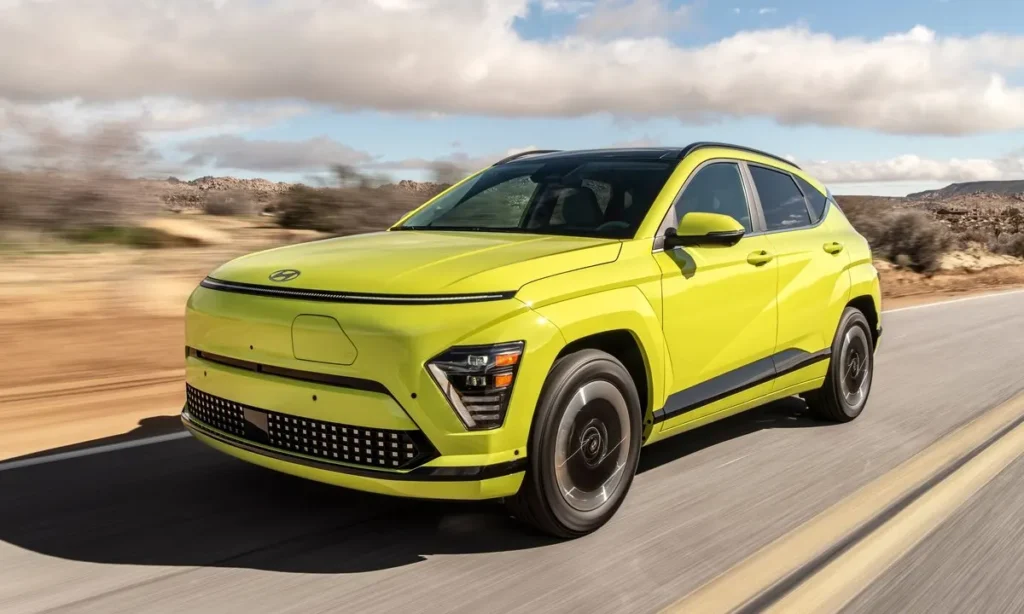
The first-generation Hyundai Kona Electric, produced from 2018 through 2022 in its original form, brings to the sub-$20,000 used market a combination of engineering quality and original purchase price that creates a value gap whose beneficiary is the informed used buyer. Originally priced at $37,000 to $45,000 new, used Kona Electric examples now appear in American listings at $15,000 to $20,000 — a depreciation-driven price reduction that delivers a car with up to 258 miles of original EPA-rated range, an active liquid thermal management system that protects battery longevity across a wide range of American climate conditions, and Hyundai’s group engineering quality that has consistently been validated by reliability metrics across both electric and hybrid vehicle categories. The Kona Electric’s battery warranty terms — matching the industry-leading 10-year, 100,000-mile coverage that Hyundai has offered across its electric lineup — provide a level of long-term financial protection that buyers of equivalently priced gasoline cars cannot access.
The Kona Electric’s smaller exterior dimensions make it best suited to buyers whose primary use case is urban and suburban commuting rather than regular long-distance travel, and its infotainment system on earlier examples reflects technology standards from its original model year that newer cars have since surpassed. Neither limitation diminishes the fundamental engineering quality of the powertrain and battery system, whose real-world durability record in American operation has been consistently positive across the ownership community.
What Battery Health Verification Actually Means in Practice
The single most important piece of advice for any buyer approaching the sub-$20,000 used EV market is also the most consistently underemphasised in mainstream used car guidance: a battery health assessment is not optional. It is the foundational purchase condition without which no other evaluation is meaningful, because the battery’s current state of health determines the car’s usable range, its day-to-day utility, its resale trajectory and its position on the continuum between excellent value and expensive regret. Battery health assessment for specific models takes different forms — the Nissan Leaf’s bar-based indicator provides a visible approximation, while the Bolt and Niro EV require OBD-II diagnostic tools or dealer-level software to produce accurate state-of-health percentages — but the principle is consistent across all of them: any used EV whose battery health has not been independently verified before purchase is a car whose most critical variable is unknown.
Independent analysts and EV-specialist used car platforms with dedicated battery diagnostic capabilities have developed the assessment infrastructure to provide this data as a standard component of the used vehicle evaluation process, and the modest cost of such an assessment — whether obtained through an EV-specialist retailer or through an independent pre-purchase inspection by a qualified electric vehicle technician — is the most reliable insurance a buyer can purchase against the segment’s primary risk. A battery retaining above 85 percent of its original capacity on a car with an original EPA range of 240 miles still delivers more than 200 real-world miles — a figure adequate for the overwhelming majority of American daily driving. A battery at 70 percent of original capacity on the same car delivers approximately 168 miles, which may or may not be adequate depending on the buyer’s specific circumstances and charging access.
Read: Audi Q8 e-tron vs. Porsche Cayenne Electric, Which German Electric SUV Is Better in 2026?
Used Electric Cars Under $20,000 — At a Glance
| Model | Typical Used Price | Original EPA Range | Battery Cooling | Key Reliability Consideration |
| Chevrolet Bolt EV (2019–2022) | $14,000–$19,000 | 238–259 miles | Liquid-cooled | Verify recall completion and pack replacement |
| Nissan Leaf (40/62 kWh, 2018–2022) | $10,000–$18,000 | 149–226 miles | Passive air-cooled | Check battery bars; avoid hot-climate cars |
| Kia Niro EV (2019–2022) | $16,000–$20,000 | 239 miles | Liquid-cooled | Consistent degradation; excellent versatility |
| Hyundai Kona Electric (2019–2022) | $15,000–$20,000 | 258 miles | Liquid-cooled | Strong battery warranty; confirm transfer terms |
The Reliability Verdict That the Data Supports
The used electric car market under $20,000 in America in 2025 is not the minefield of battery anxiety and hidden cost that mainstream perception has historically made it — but neither is it a uniformly risk-free proposition that any buyer can navigate without preparation. The reliable truth that the evidence supports is more precisely calibrated than either of those extremes: that specific models, purchased with verified battery health above a defensible threshold, with documented charging history and no outstanding recalls, in climates that have not imposed the thermal stress that accelerates degradation beyond the norm, represent some of the most compelling value in the entire American used car market. EV powertrain components — motors, inverters, onboard chargers — have demonstrated durability records across the highest-mileage examples in long-term ownership communities that outperform the equivalent gasoline components they replace. The maintenance cost advantage of electric ownership, with its elimination of oil changes, transmission service, spark plugs, timing belts and exhaust system repairs, compounds over the ownership period in ways that a straightforward purchase-price comparison does not capture. The buyer who approaches the sub-$20,000 used EV market with the diligence that battery health verification demands and the model-specific knowledge that distinguishes a liquid-cooled, actively managed pack from a passively cooled one whose climate history is unknown will find, in vehicles like the post-recall Bolt EV, the higher-capacity Nissan Leaf Plus, the Kia Niro EV and the Hyundai Kona Electric, a quality of transportation that the segment’s price points have never previously been able to deliver.