Motorcycle Maintenance Cost Comparison 2026. The True Price of Two Wheels
Annual Service Costs Across Sport, Cruiser, Adventure, Naked and Electric Motorcycle Categories, Real Owner Data From Across the United States and Europe, Parts Pricing Comparisons Between Japanese, European and American Manufacturers and the Honest Financial Picture That Every Prospective Motorcycle Owner Deserves Before Signing a Purchase Agreement — The Definitive Motorcycle Maintenance Cost Guide for 2026
Motorcycle Maintenance Cost: The purchase price of a motorcycle is the number that dominates the buying conversation — the figure on the showroom sticker, the monthly payment in the finance agreement, the amount that the buyer negotiates over and the dealer discounts against. It is also, across the realistic ownership lifetime of any motorcycle, frequently the least important financial figure in the entire ownership equation. The cost of keeping a motorcycle running — the service intervals, the consumable replacement frequency, the parts pricing when components wear or fail, the tyre costs whose motorcycle-specific pricing and accelerated wear rates surprise owners transitioning from automotive ownership, the insurance premiums whose calculation methodology differs fundamentally from car insurance across most markets — these are the figures that determine whether motorcycle ownership across a five or ten-year period is the financially liberating alternative to car ownership that its advocates describe or a more complex financial commitment than the purchase price alone suggests.
The 2026 motorcycle market offers extraordinary diversity — from sub-$5,000 commuter machines whose annual maintenance costs can be kept below $300 by owners willing to perform basic service tasks independently, to $30,000-plus adventure tourers and superbikes whose specialist service requirements, performance tyre costs and complex electronic system maintenance demands produce annual ownership costs that rival or exceed those of a modest family car. Understanding where the genuine cost differences lie between motorcycle categories, between manufacturer nationalities and between ownership approaches is the foundation of a purchase decision whose financial consequences extend across years of ownership rather than months of purchase excitement.
Japanese Motorcycles: The Reliability and Cost Benchmark
The four major Japanese motorcycle manufacturers — Honda, Yamaha, Kawasaki and Suzuki — established the global benchmark for motorcycle reliability and maintenance cost accessibility across decades of production volume, engineering conservatism and parts supply investment that their European and American competitors have never fully matched in the mass-market segments where cost of ownership matters most directly to buyer decisions.
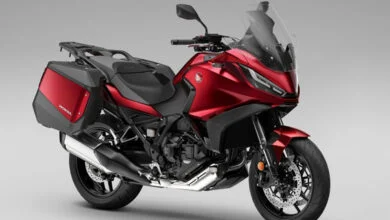
Honda’s CB series — whose CB500F, CB650R and CB1000R represent the naked motorcycle segment across three displacement and price tiers — exemplifies the Japanese reliability philosophy in practice. The CB500F’s annual maintenance cost, based on aggregated owner data from American and European markets, averages $200 to $350 for owners who perform basic tasks — air filter replacement, chain adjustment, brake pad inspection — independently and who visit a Honda dealer or independent mechanic for the more technical annual service items. Even for owners who delegate all maintenance to a professional service provider, the CB500F’s annual professional service cost rarely exceeds $400 to $600 — a figure that reflects Honda’s generous service intervals, the competitive parts pricing that volume production enables and the mechanical accessibility that Honda’s engineers have maintained as a design priority across the CB series despite increasing the models’ feature content and performance capability across successive generations.
The Yamaha MT series — whose MT-03, MT-07 and MT-09 dominate the naked motorcycle segment across their respective displacement categories — carries a similarly accessible maintenance cost profile. The MT-07’s annual service cost averages $300 to $500 in professional service, reflecting the parallel twin engine’s mechanical simplicity, the 10,000-kilometre service intervals that modern Yamaha engine designs support and the parts pricing whose competitive level reflects Yamaha’s manufacturing scale and the depth of the aftermarket parts ecosystem that the MT series’ enormous global popularity has generated. Yamaha’s CP2 parallel twin engine — shared across the MT-07, Tracer 7 and Ténéré 700 — represents one of the most cost-effective performance engines in the global motorcycle market from a total ownership perspective, combining genuine performance capability with maintenance requirements that neither frequency nor cost makes burdensome.
Sport Motorcycle Maintenance Costs: Performance Has a Price
The sport motorcycle category — whose litre-class superbikes, middleweight supersports and entry-level sport machines span an enormous range of performance capability and technical complexity — presents the motorcycle maintenance cost conversation’s most dramatic internal variation. The difference in annual maintenance cost between a Honda CBR500R and a Ducati Panigale V4 is not a difference of degree but of category — a gulf that reflects the engineering philosophy, parts pricing strategy and service interval approach of manufacturers whose target customers have historically accepted very different relationships between performance and ownership cost.
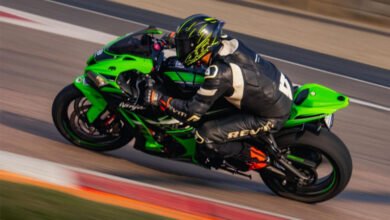
The Honda CBR500R’s annual maintenance cost of $250 to $450 reflects the parallel twin engine’s conservative engineering, the 12,000-kilometre valve inspection intervals that modern Honda manufacturing precision enables and the parts pricing whose accessibility makes even major service events financially manageable for owners on realistic budgets. The Kawasaki Ninja 650’s equivalent figure of $300 to $500 reflects the same Japanese engineering philosophy applied to a slightly larger displacement and more performance-oriented specification without materially altering the ownership cost profile.
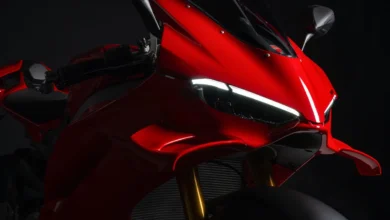
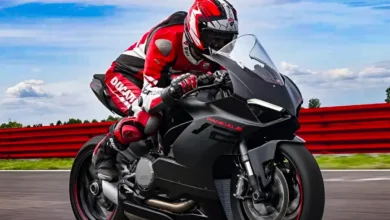
The Ducati Panigale V4’s annual maintenance cost represents the opposite end of the sport motorcycle cost spectrum — with the Desmodromic valve system’s service requirement arriving at 24,000-kilometre intervals but producing labour costs of $800 to $1,500 for the valve service alone, combined with performance tyre costs of $400 to $600 per set at replacement frequencies that track use accelerates dramatically, and with parts pricing that reflects Ducati’s premium positioning and the specialist knowledge that its mechanical architecture demands. Total annual ownership costs for a Panigale V4 owner who uses the bike primarily for road riding with occasional track days realistically range from $2,000 to $4,000 — a figure that the bike’s extraordinary performance justifies for its target buyer but that represents a fundamentally different ownership proposition from the Japanese sport motorcycle alternatives.
Cruiser Motorcycle Maintenance: Harley-Davidson vs Japanese Alternatives
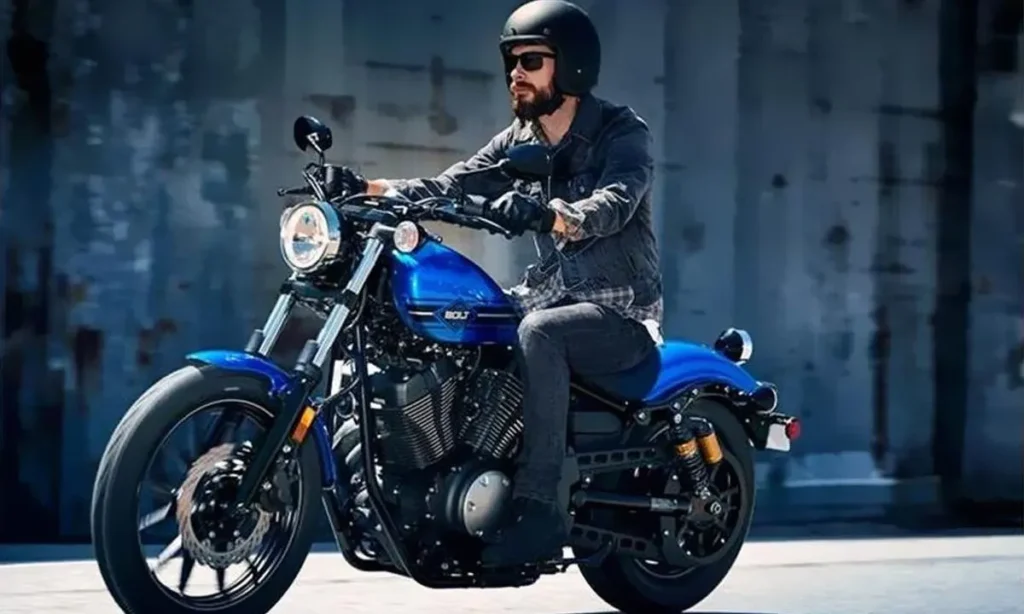
The cruiser motorcycle segment’s maintenance cost comparison is dominated by the contrast between Harley-Davidson’s ownership cost profile and the Japanese cruiser alternatives whose lower parts costs and more frequent dealer network competition produce meaningfully different annual ownership expense figures despite often comparable purchase prices.
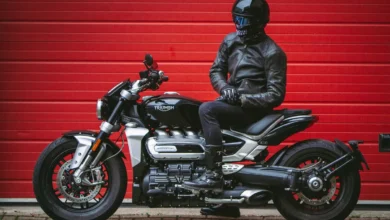
Harley-Davidson’s maintenance cost structure reflects the brand’s premium positioning, the specialist nature of its dealer network and the parts pricing strategy that both official and aftermarket suppliers apply to a brand whose ownership community’s loyalty and engagement create pricing power that equivalent Japanese motorcycle manufacturers cannot replicate. The Sportster S — Harley’s entry into the liquid-cooled Revolution Max engine era — carries annual maintenance costs of $600 to $1,000 for professional service, reflecting the Revolution Max engine’s more conventional modern engineering relative to the air-cooled Evo and Twin Cam engines of previous generations but still carrying parts pricing that exceeds Japanese equivalents. The Road Glide and Street Glide touring models — whose complexity, size and accessory integration produce the most involved maintenance requirements in the cruiser segment — carry annual costs of $800 to $1,500 for professional service excluding tyre replacement.
The Honda Gold Wing’s annual maintenance cost of $500 to $900 — for a motorcycle of considerably greater complexity, technology integration and outright specification than most Harley-Davidson models — contextualises the Japanese manufacturer’s cost efficiency advantage with particular clarity. The Gold Wing’s six-cylinder horizontally opposed engine, dual-clutch transmission option, airbag system and comprehensive electronics package create a maintenance requirement whose professional service cost remains accessible despite the engineering sophistication involved — a reflection of Honda’s parts pricing discipline and the service interval generosity that the Gold Wing’s engineering quality enables.
Adventure Motorcycle Maintenance: The Long-Distance Cost Reality
The adventure motorcycle segment — whose BMW GS series, KTM Adventure range, Honda Africa Twin and Yamaha Ténéré 700 represent the most geographically ambitious and most mechanically varied category in the global motorcycle market — presents maintenance cost comparisons whose real-world complexity reflects the diversity of environments and ownership patterns that adventure motorcycle use encompasses.
The BMW R 1300 GS — the segment’s prestige benchmark and its highest-volume premium entry — carries annual maintenance costs of $700 to $1,200 for professional service, reflecting the boxer twin engine’s accessible major service intervals, BMW Motorrad’s dealer network coverage across most major markets and the parts pricing that BMW’s premium positioning imposes but that the volume of R 1300 GS production keeps within bounds that dedicated GS owners accept as proportionate to the machine’s capability and refinement. The shaft drive’s elimination of chain maintenance costs — a recurring expense in chain-driven alternatives that BMW’s ownership community consistently cites as a meaningful total cost of ownership advantage — partially offsets the higher parts cost that BMW Motorrad’s premium catalogue pricing imposes relative to Japanese alternatives.
The KTM 890 Adventure R’s annual maintenance cost of $500 to $900 reflects the Austrian manufacturer’s performance-oriented engineering philosophy — tighter service intervals than the BMW equivalent on some components, higher parts costs than Japanese alternatives but lower than the BMW’s premium-positioned catalogue — producing an ownership cost profile that positions KTM between the Japanese accessibility benchmark and the European premium tier. The 890 Adventure R’s WP suspension components carry replacement costs that exceed the equivalent Honda Africa Twin items, while the KTM engine’s performance calibration produces a service interval approach whose frequency reflects the engineering priority toward performance rather than the extended service interval optimisation that Honda and Yamaha apply as a direct ownership cost consideration.
Electric Motorcycle Maintenance: The New Cost Equation
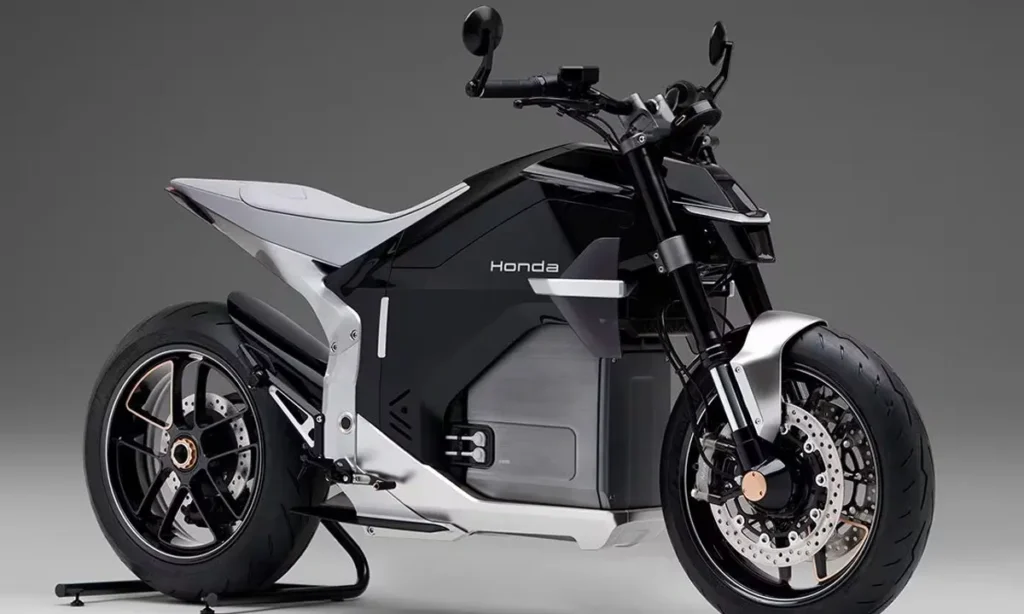
The electric motorcycle segment’s maintenance cost profile represents the most fundamental departure from the traditional motorcycle ownership cost structure — eliminating oil changes, valve services, chain maintenance on hub-drive configurations, exhaust system maintenance and the majority of the consumable replacement events that combustion motorcycle ownership involves as routine annual expenditure.
The Zero SR/F — the most established premium electric motorcycle in the American market — carries annual maintenance costs of $150 to $300 for professional service, reflecting the electric powertrain’s mechanical simplicity, the belt drive’s extended service life relative to chain alternatives and the regenerative braking system’s contribution to reduced brake pad wear rates. The primary remaining consumable costs are tyres — whose replacement frequency depends on riding style and surface rather than powertrain type — and the occasional software update whose over-the-air delivery on current Zero models eliminates the dealer visit that previous generation updates required.
The Energica Ego — the Italian electric superbike whose performance credentials challenge combustion litre-class alternatives — carries comparable annual maintenance costs of $200 to $400 despite its higher performance specification, reflecting the universal electric powertrain simplicity advantage that applies regardless of the power output level at which the electric motorcycle operates.
Read: 12 Affordable Motorcycles That Beat Harley-Davidson in Power and Price
Motorcycle Maintenance Cost Comparison — 2026 Summary
| Category | Model Example | Est. Annual Cost (Professional) | Key Cost Drivers |
| Japanese Naked | Honda CB650R | $300–$500 | Competitive parts / Long intervals |
| Japanese Sport | Kawasaki Ninja 650 | $300–$500 | Simple engine / Wide service network |
| European Sport | Ducati Panigale V4 | $2,000–$4,000 | Desmo service / Performance tyres |
| Japanese Cruiser | Honda Gold Wing | $500–$900 | Complex but affordable parts |
| American Cruiser | Harley-Davidson Road Glide | $800–$1,500 | Premium parts pricing |
| Premium Adventure | BMW R 1300 GS | $700–$1,200 | Shaft drive saves / Premium parts |
| Mid Adventure | KTM 890 Adventure R | $500–$900 | Performance intervals / WP suspension |
| Budget Adventure | Yamaha Ténéré 700 | $300–$550 | CP2 engine simplicity |
| Electric Premium | Zero SR/F | $150–$300 | No oil / Reduced consumables |
| Electric Performance | Energica Ego | $200–$400 | Electric simplicity at high performance |