Best Entry-Level Supercars Under $150,000 in 2026, Price That Does Not Require a Second Mortgage
Mid-Engine Architecture, Flat-Plane V8s, Rear-Engine Precision and Twin-Turbocharged Six-Cylinder Fury — These Are the Entry-Level Supercars of 2026 That Prove Exceptional Performance Has Never Been More Accessible to the Buyer Who Knows Exactly Where to Look
Best Entry-Level Supercars Under $150,000: The word supercar carries weight that most automotive terminology does not. It implies a machine engineered without apology to a singular purpose — performance — and designed to communicate that purpose through every visual, acoustic and tactile detail the driver encounters from the moment the door closes. It implies mid-engine architecture, or a rear-engine layout of exceptional pedigree, or a powertrain whose output figures belong on a racing circuit specification sheet rather than a road car brochure. And it implies, in the popular imagination at least, a price that removes it entirely from the consideration of any buyer whose wealth is merely substantial rather than truly extraordinary. That implication, in 2026, is demonstrably and comprehensively wrong. The entry-level supercar segment has matured to the point where one hundred and fifty thousand dollars — a figure that represented the price of a well-optioned family saloon to a previous generation — now accesses machinery of genuine, unqualified supercar capability. These are the best entry-level supercars under $150,000 available in 2026, ranked in ascending order of starting price.
Chevrolet Corvette Z06: American Supercar Engineering at a Price That Embarrasses Europe
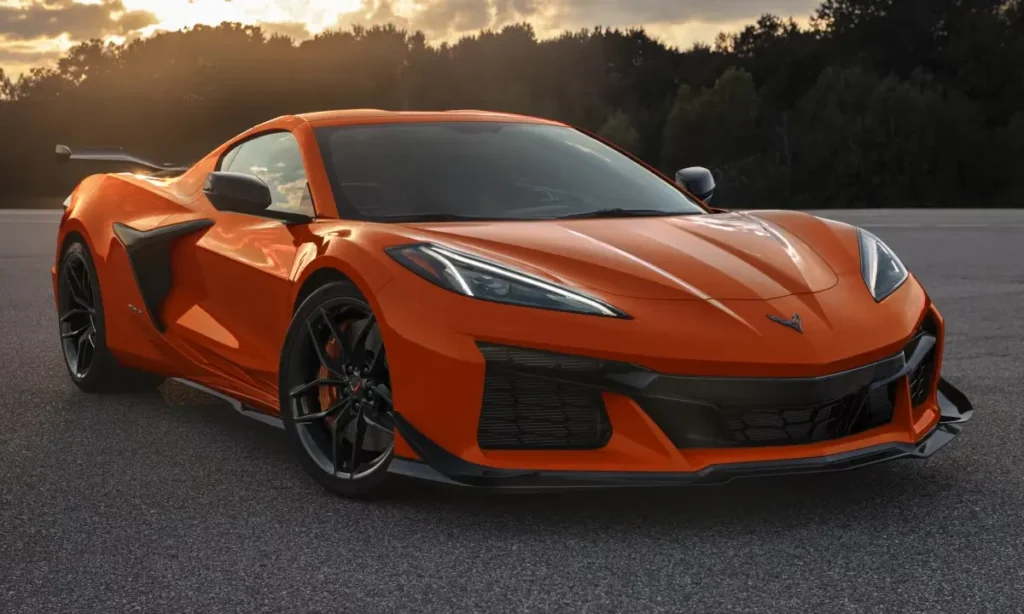
Starting Price: From $119,695
The Chevrolet Corvette Z06 occupies a position in the 2026 supercar landscape that no rival manufacturer has successfully addressed with a coherent response — a mid-engine supercar whose performance credentials, carbon-intensive engineering and visual drama belong categorically in the conversation with European machinery costing fifty to a hundred thousand dollars more, delivered at a starting price that the continent’s established supercar manufacturers cannot match without fundamentally compromising the product. The 5.5-litre naturally aspirated flat-plane-crank V8 engine — the most powerful naturally aspirated V8 ever installed in a production Chevrolet — produces 670 horsepower and 460 pound-feet of torque, spinning to a 8,600 rpm redline with a mechanical intensity and acoustic character that reminds every journalist who has driven it that the naturally aspirated high-revving V8 is among the most emotionally communicative powertrain architectures the automotive world has ever produced. The eight-speed dual-clutch automatic transmission delivers this output to the rear wheels with a precision and immediacy that eliminates the performance penalty that turbocharged alternatives would impose at the engine speeds where the Z06 is most rewarding. The resulting 0 to 60 miles per hour time of 2.7 seconds and the 195 miles per hour electronically limited top speed position the Z06 at a performance level that its transaction price makes almost implausible. For the buyer who measures supercar credibility in lap times and powertrain sophistication rather than country of origin and heritage, the Z06 remains the most disproportionate performance proposition in the world below two hundred thousand dollars.
Porsche 911 Carrera: The Benchmark That Refuses to Be Displaced
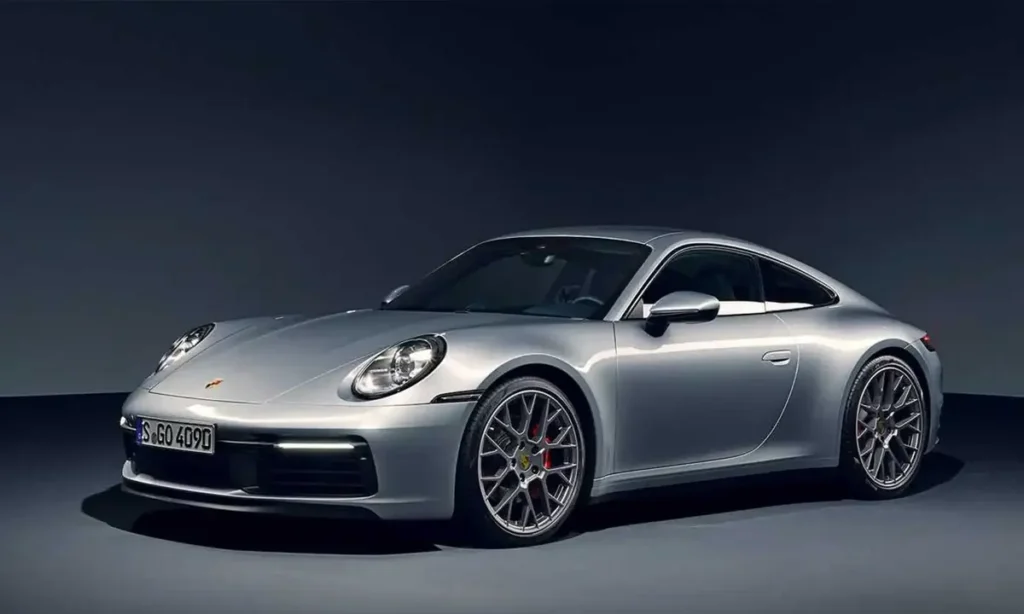
Starting Price: From $129,950
There is a reason that every other entry on this list is evaluated, at some point in its assessment, against the Porsche 911 — because the 911 is not merely a supercar, it is the reference point against which the supercar concept is measured, a car that has occupied the apex of the performance landscape across six decades of continuous development and which, in 2026 specification, remains as comprehensively capable and as comprehensively rewarding as any iteration in its extraordinary production history. The base 911 Carrera begins its 2026 model year with a 3.0-litre twin-turbocharged flat-six engine producing 388 horsepower — upgraded from the previous year’s output — driving the rear wheels through either an eight-speed PDK dual-clutch automatic or, for the purist, a seven-speed manual transmission. The 0 to 60 miles per hour time of 3.5 seconds belies the Carrera’s position as the entry point to the 911 range, because it is a figure that places it among the quickest cars available at any price in the segments below it. The rear-engine layout — unique among the cars on this list — produces a traction characteristic at corner exit that the mid-engine architecture of its rivals cannot replicate: the weight over the driven rear axle generates a grip and a stability that makes the 911 simultaneously the fastest and the most forgiving entry on this list in wet or challenging conditions. The 2026 model year introduces a revised infotainment architecture with extended third-party app compatibility and a ten-year complimentary connected services period, confirming that Porsche’s determination to combine cutting-edge technology with mechanical excellence has not diminished across the 911’s long and distinguished development history.
Porsche 911 Carrera S: The Sweet Spot of the World’s Greatest Sports Car
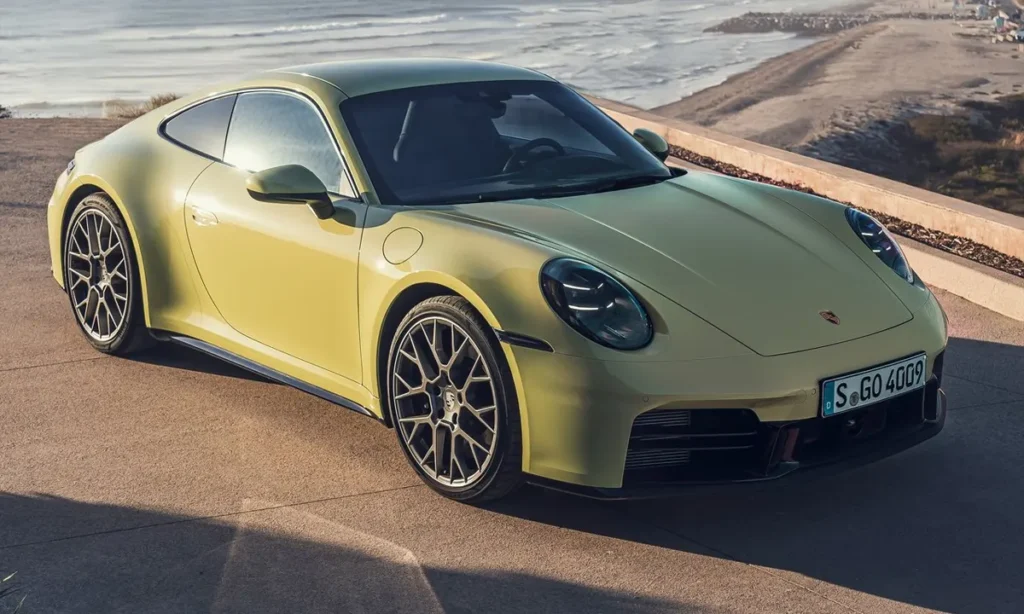
Starting Price: From $153,000
The Porsche 911 Carrera S represents, by the assessment of the majority of automotive journalists who have driven it, the point in the 911 range where the car’s dynamic character most completely and most satisfyingly expresses what the 911 exists to do. The additional 85 horsepower over the standard Carrera — the Carrera S produces 473 horsepower from a version of the same 3.0-litre twin-turbocharged flat-six — arrives alongside a standard sport exhaust system, an active rear differential, larger brakes with red calipers and a chassis calibration whose additional precision and composure at the limit separates it meaningfully from the base model rather than incrementally. The 0 to 60 miles per hour time of 3.3 seconds and the improved braking performance at high speed make the S the choice of buyers who intend to discover, rather than merely approach, the 911’s dynamic limits — at a track day, on a mountain road, or in any context where the additional capability translates into additional driver confidence rather than simply an additional line item on a specification sheet. The Carrera S Cabriolet, which adds open-air motoring to the S’s performance credentials, starts at $164,150 — still beneath the $150,000 ceiling when the coupe is the choice — and confirms that even the most aspirational version of the 911’s entry-level variant remains within reach of the budget this feature defines.
Read: 2027 Subaru Getaway Review: This Compact Adventure Wagon That Fills the Gap No Other Subaru Could
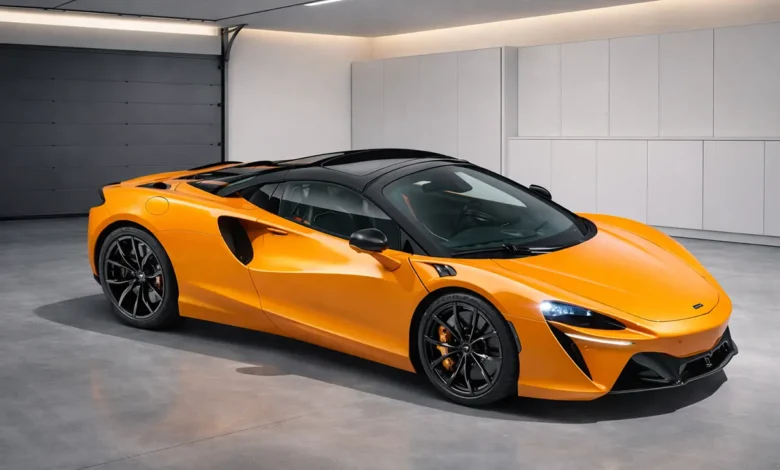
McLaren Artura: The Future of the Accessible Supercar
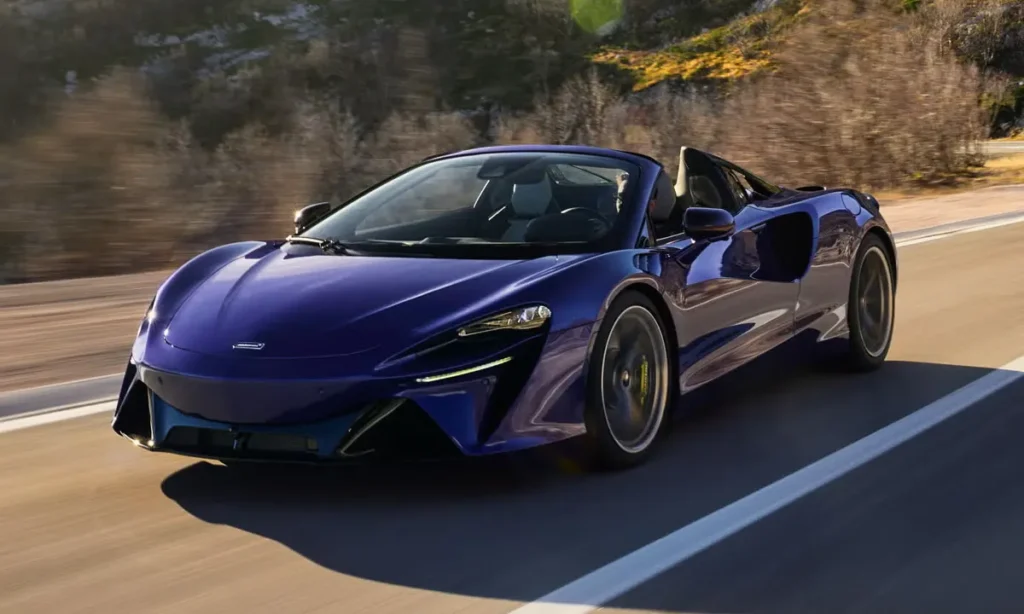
Starting Price: Approximately $143,000
The McLaren Artura arrived as the British manufacturer’s answer to a question the supercar segment had not previously asked with any serious conviction: what does a plug-in hybrid McLaren feel like? The answer, as delivered in 2026 specification, is considerably more compelling than the question might initially suggest. A twin-turbocharged 3.0-litre V6 — McLaren’s first departure from the twin-turbocharged V8 architecture that defined its road car range since the MP4-12C — combines with an integrated electric motor to produce 690 horsepower and 531 pound-feet of torque in 2026 specification, an increase over the car’s launch output that reflects McLaren’s commitment to continuous development of what it correctly identifies as the foundation of its next decade of road car engineering. The electric motor’s contribution eliminates the turbo lag that the V6’s forced induction would otherwise impose, producing the seamless, immediate throttle response that every driver who has experienced a naturally aspirated McLaren considers non-negotiable. Up to 21 miles of electric-only driving capability provides the urban usability that the car’s daily driver aspirations demand, while the carbon fibre MonoCell II-T chassis — the T denoting the thermoplastic carbon construction that reduces weight relative to the original MonoCell — provides the structural foundation for handling dynamics whose balance, steering communication and mid-corner adjustability remind every journalist who drives it that McLaren has not compromised the product’s fundamental character in the pursuit of electrification. The vertical touchscreen supporting wireless Apple CarPlay and the optional twelve-speaker Bowers & Wilkins audio system confirm that the Artura’s interior ambitions are as serious as its dynamic ones.
Read: Cheapest AWD SUVs In The USA 2026. All-Wheel Drive Without the Premium Price Tag
Best Entry-Level Supercars Under $150,000 in 2026 — Specifications at a Glance
| Model | Starting Price | Engine | Power | 0–60 mph | Top Speed |
| Chevrolet Corvette Z06 | From $119,695 | 5.5L NA Flat-Plane V8 | 670 hp | 2.7 sec | 195 mph |
| McLaren Artura | ~$143,000 | 3.0L Twin-Turbo V6 + Electric | 690 hp | 3.0 sec | 205 mph |
| Porsche 911 Carrera | From $129,950 | 3.0L Twin-Turbo Flat-Six | 388 hp | 3.5 sec | 182 mph |
| Porsche 911 Carrera S | From $153,000 | 3.0L Twin-Turbo Flat-Six | 473 hp | 3.3 sec | 191 mph |
Which Entry-Level Supercar Under $150,000 Is Right for You in 2026?
The answer to that question depends entirely on what the buyer values most in the supercar experience — because each of the cars on this list makes a coherent and well-evidenced argument for its own distinct version of what a supercar should be.
The buyer for whom powertrain character is the dominant criterion — the buyer who believes that the sound and texture of a naturally aspirated high-revving engine at full throttle constitutes the defining supercar experience — will find the Chevrolet Corvette Z06 the only rational choice at this price point, and possibly the most rational choice at any price point currently available. The buyer whose priority is an all-weather, all-season daily supercar whose dynamic capability is accessible rather than demanding and whose depreciation curve is the most favourable in the segment will find the Porsche 911 Carrera the answer that every other car on this list merely approximates. The buyer who has concluded that electrification and supercar performance are not contradictory terms — and that the future of the segment will be shaped by powertrains exactly like the Artura’s twin-turbocharged V6 and electric motor combination — will find the McLaren the most intellectually and dynamically compelling argument available below one hundred and fifty thousand dollars.
What all four share, beyond their price accessibility in supercar terms, is the capacity to deliver an experience that justifies the investment completely on every occasion the driver chooses to explore it. In 2026, the entry-level supercar segment has never offered this much, to this many buyers, at prices that have genuinely — not comparatively, not relatively, but genuinely — never been lower.