Why the Ford Ranger XL Is Dominating the Work Truck Segment
A Purpose-Built Pickup in an Era of Overcomplication
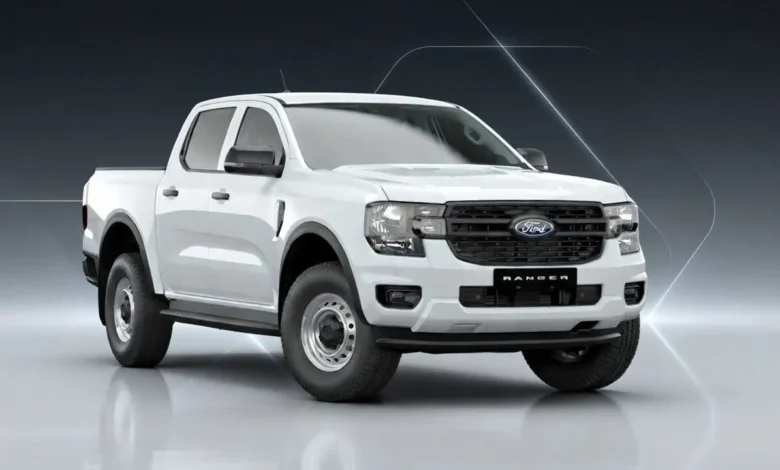
In today’s automotive market, where pickups are increasingly positioned as lifestyle vehicles loaded with premium materials, oversized touchscreens and luxury-oriented features, the traditional work truck has become something of a rarity. Yet, within industries that rely on durability, consistency and cost efficiency, the demand for a no-nonsense, purpose-built utility vehicle has not diminished. This is precisely the environment in which the Ford Ranger XL has emerged as a dominant force.
Rather than chasing trends or attempting to blur the line between workhorse and lifestyle product, the Ranger XL embraces a singular philosophy: function over form. It is engineered to perform under pressure, to endure harsh conditions and to deliver long-term value without unnecessary complexity. This clarity of purpose has positioned it as one of the most trusted and widely adopted work trucks across global markets.
Engineering Focused on Real-World Utility
The Ranger XL’s dominance begins with its engineering fundamentals. Built on a rugged ladder-frame chassis, the vehicle is designed to handle demanding workloads and uneven terrain without compromising structural integrity. This traditional construction method remains the backbone of serious work trucks, offering superior load-bearing capability compared to unibody designs.
The exterior design reflects this utilitarian philosophy. There is a deliberate absence of decorative elements or premium styling cues. Instead, the Ranger XL features durable components that are easier and more cost-effective to repair or replace. This is not a truck designed to impress in urban environments; it is built to survive construction sites, agricultural fields and industrial zones where durability is non-negotiable.
Inside the cabin, the same approach is evident. The materials are chosen for longevity rather than luxury, and the layout prioritizes ease of use. Controls are straightforward, and the absence of excessive electronic systems reduces both the likelihood of failure and the complexity of repairs. For operators who rely on their vehicles daily, this simplicity is a significant advantage.
Powertrain Performance That Prioritizes Torque
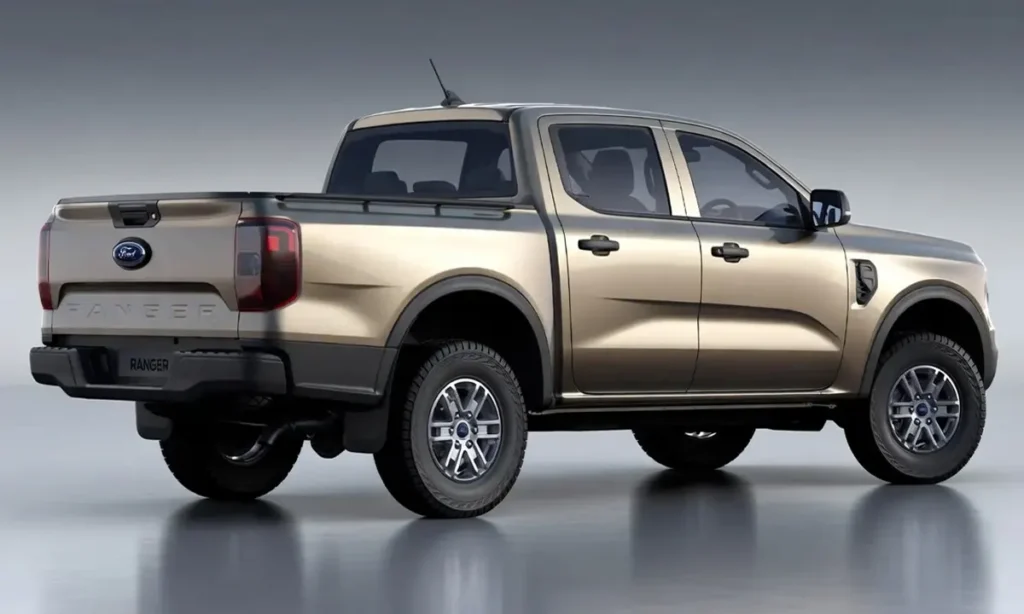
In the work truck segment, performance is measured not by acceleration figures but by the ability to deliver consistent torque under load. The Ford Ranger XL excels in this regard, particularly in markets where it is equipped with a 2.0-liter turbocharged diesel engine. This powertrain is engineered to provide strong low-end torque, enabling the vehicle to carry heavy payloads and tow substantial loads with confidence.
Diesel engines continue to dominate this segment for good reason. Their efficiency and torque characteristics make them ideally suited for sustained heavy-duty use. The Ranger XL’s engine is calibrated to deliver predictable performance across a wide range of conditions, ensuring that it remains dependable whether operating in urban delivery environments or remote off-road locations.
Even in regions where petrol engines are offered, the focus remains on balance rather than outright performance. The objective is to provide sufficient power while maintaining fuel efficiency and reliability, aligning with the practical needs of commercial users.
Capability That Translates Into Productivity
One of the most compelling aspects of the Ranger XL is its ability to convert engineering capability into tangible productivity gains. With payload capacities typically exceeding one tonne and towing capabilities approaching 3,500 kilograms in certain configurations, the truck is engineered to handle a wide range of operational demands.
This level of capability allows businesses to transport more materials in fewer trips, reducing time, fuel consumption and overall operational costs. It also provides flexibility, enabling the same vehicle to be used across multiple applications, from transporting equipment to towing trailers.
The Ranger XL’s size further enhances its practicality. It offers a balance between maneuverability and capacity, making it suitable for both urban environments and off-road conditions. This versatility is a key factor in its widespread adoption across industries.
Durability as a Core Attribute
Durability is not an added feature in the Ranger XL; it is a defining characteristic. The ladder-frame chassis, combined with a suspension system tuned for load stability, ensures that the vehicle can withstand prolonged use under demanding conditions.
Unlike vehicles that prioritize ride comfort at the expense of load-handling capability, the Ranger XL is engineered to remain stable and predictable even when fully loaded. This is critical in real-world scenarios, where work trucks rarely operate without cargo.
The durability of its components also contributes to reduced maintenance requirements. Fewer breakdowns and longer service intervals translate directly into increased uptime, which is essential for businesses that depend on their vehicles for daily operations.
Cost Efficiency That Drives Fleet Adoption
While performance and durability are essential, the Ranger XL’s true competitive advantage lies in its cost efficiency. From the initial purchase price to long-term ownership costs, the vehicle is designed to deliver value at every stage of its lifecycle.
The absence of complex electronic systems reduces the likelihood of expensive repairs, while the durability of its mechanical components extends service intervals. Fuel efficiency, particularly in diesel variants, further lowers operating costs. For fleet operators managing multiple vehicles, these savings become substantial over time.
Total cost of ownership is a critical metric in the commercial vehicle segment, and the Ranger XL consistently performs well in this regard. It offers a combination of affordability, reliability and efficiency that is difficult for competitors to match.
Simplicity That Enhances Reliability
In an era where vehicles are increasingly defined by their technological features, the Ranger XL stands out for its simplicity. This simplicity is not a compromise but a deliberate design choice that enhances reliability and usability.
By minimizing the number of electronic systems, Ford has reduced potential points of failure. This makes the vehicle easier to maintain and repair, particularly in regions where access to advanced service infrastructure may be limited. For users operating in remote or challenging environments, this reliability is invaluable.
The Ranger XL demonstrates that innovation in the work truck segment does not necessarily mean adding more features. Instead, it involves refining the fundamentals to create a vehicle that performs consistently under real-world conditions.
Adaptability Across Global Markets
Another factor contributing to the Ranger XL’s dominance is its adaptability. The vehicle is offered in multiple configurations, including single cab, extended cab and double cab variants, allowing it to meet a wide range of operational requirements.
This flexibility makes it suitable for diverse applications, from commercial fleets to small businesses and independent operators. Ford’s global presence further enhances its appeal, ensuring that parts and service support are widely available.
The ability to adapt to different markets and use cases has allowed the Ranger XL to establish a strong presence worldwide, reinforcing its position as a leading work truck.
Read: 2026 Hyundai Boulder Concept Signals a Bold Entry into Hardcore Off-Road Territory
Specification Overview
| Category | Details |
| Vehicle Type | Mid-size Pickup Truck |
| Chassis | Ladder Frame |
| Engine Options | 2.0L Turbo Diesel / Turbo Petrol |
| Drivetrain | RWD / 4WD |
| Payload Capacity | ~1,000+ kg |
| Towing Capacity | Up to ~3,500 kg |
| Transmission | Manual / Automatic |
| Primary Focus | Commercial Utility |
Competitive Positioning in a Crowded Segment
The Ranger XL operates in a segment that includes established competitors such as the Toyota Hilux and Isuzu D-Max. While these vehicles offer strong reliability and capability, the Ranger XL distinguishes itself through its balance of performance, cost efficiency and usability.
It avoids the extremes of being either overly basic or unnecessarily premium. Instead, it delivers a well-rounded package that meets the core requirements of its target audience without introducing unnecessary complexity or cost.
Ford’s continuous refinement of the Ranger platform has further strengthened its competitive position, ensuring that it remains relevant in an evolving market.
Read: Most Fuel Efficient Trucks In USA 2026. Real MPG Numbers, Real Rankings, No Compromises
Conclusion: Redefining What a Work Truck Should Be
The Ford Ranger XL’s dominance in the work truck segment is not the result of aggressive marketing or trend-driven design. It is the outcome of a clear understanding of what commercial users need and a commitment to delivering those requirements without compromise.
By focusing on durability, capability and cost efficiency, the Ranger XL has established itself as a benchmark in its category. It proves that, even in a rapidly changing automotive landscape, there is enduring value in simplicity, reliability and purpose-driven engineering.
For businesses and professionals who depend on their vehicles as essential tools, the Ranger XL is more than just a pickup truck. It is a solution designed to perform, endure and deliver value where it matters most.