Godzilla Lives! The Legend Prepares to Return. Everything We Know About the Next-Gen Nissan GT-R R36
A Brand-New Chassis, a Heavily Evolved VR38 Twin-Turbo V6 With Hybrid Electrical Assistance, a Nürburgring Lap Record in Its Sights, Concrete Announcements Promised by 2028 and a Launch Before the Decade Ends — Here Is the Complete Picture of What the Next Nissan GT-R R36 Will Be, What It Will Not Be, and Why the Wait Is Actually Justified
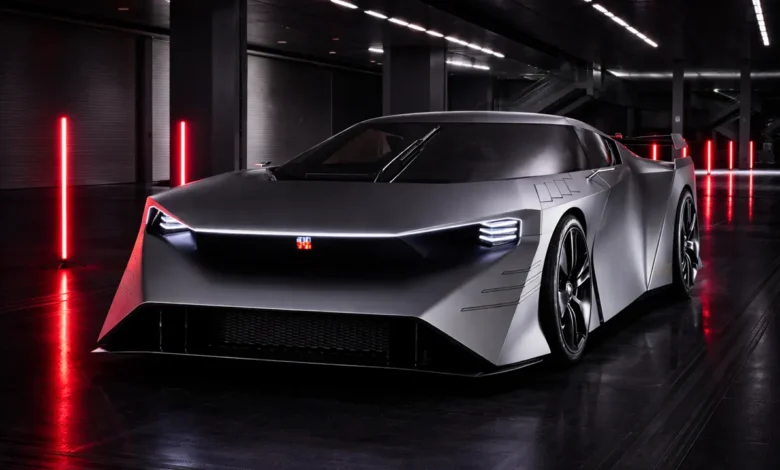
- Hybrid or fully electric powertrain possibility
- Turbocharged inline-six engine redefining GT-R performance
- Carbon-fibre body targeting sub-1,400 kg weight
- Advanced all-wheel-drive torque vectoring system
- Big question: Can Nissan create a true R35 successor in the electrified era?
Next-Gen Nissan GT-R R36: Few nameplates in the global performance car landscape carry the weight of expectation that the GT-R designation places on every vehicle unfortunate or fortunate enough to bear it. The R35 — which arrived in 2007 as a technological tour de force whose sub-$70,000 launch price and 3.8-litre twin-turbocharged V6 produced a Nürburgring lap time that humiliated supercars costing three times its purchase price — redefined the performance car value proposition so completely that its influence on the segment persists seventeen years after its introduction. The R35’s production conclusion after a remarkable production run created a void in the performance car market whose dimensions only became apparent once the car was gone — a void that no alternative from any manufacturer has quite managed to fill in the specific dimension of accessible, technologically sophisticated, all-weather supercar performance that the GT-R nameplate defined.
The R36 — whose development Nissan has neither confirmed with specifications nor denied with finality, occupying the productive ambiguity that manufacturers maintain when development programmes are genuine but announcement timing is undetermined — is the performance car world’s most discussed hypothetical. Piecing together the credible intelligence from industry sources, patent filings and the strategic logic of Nissan’s position in the electrified performance car market produces a picture that is more substantive than pure speculation and more uncertain than official confirmation.
The Powertrain: What the R36 Is Most Likely to Use
The powertrain question is where R36 speculation is most active and most divided — reflecting the genuine uncertainty about whether Nissan will commit the R36 to a hybrid architecture, a full battery-electric configuration or a combustion-primary approach whose electrification is supplementary rather than fundamental.
The most credible intelligence points toward a twin-turbocharged inline-six engine — a configuration that aligns with Nissan’s existing VR30DDTT inline-six used in the Infiniti Q50 Red Sport and Q60 Red Sport and whose development toward a more powerful, more performance-oriented application for a flagship GT-R would represent a logical engineering progression. In R36 specification, the inline-six is rumoured to produce between 600 and 700 horsepower from combustion alone — with a hybrid system adding electric motor contribution at both axles to produce a combined system output in the 800 to 1,000 horsepower range that the performance benchmark the R36 must establish against 2026 and beyond competition demands.
The electric motor architecture — whose configuration across front and rear axles enables the torque vectoring precision that GT-R’s all-wheel-drive performance identity requires — would provide not merely power supplementation but the millisecond-response torque distribution that mechanical all-wheel-drive systems whose physical component inertia limits response speed cannot approach. The combination of combustion-sourced mid-range power and electric-sourced instant torque fill at low engine speeds would address the R35’s most criticised dynamic characteristic — the turbocharger lag that the VR38DETT’s turbocharging architecture imposed at low engine speeds — with an engineering solution whose sophistication matches the performance ambition the R36 must demonstrate.
Chassis and Body: The Weight Reduction Mandate
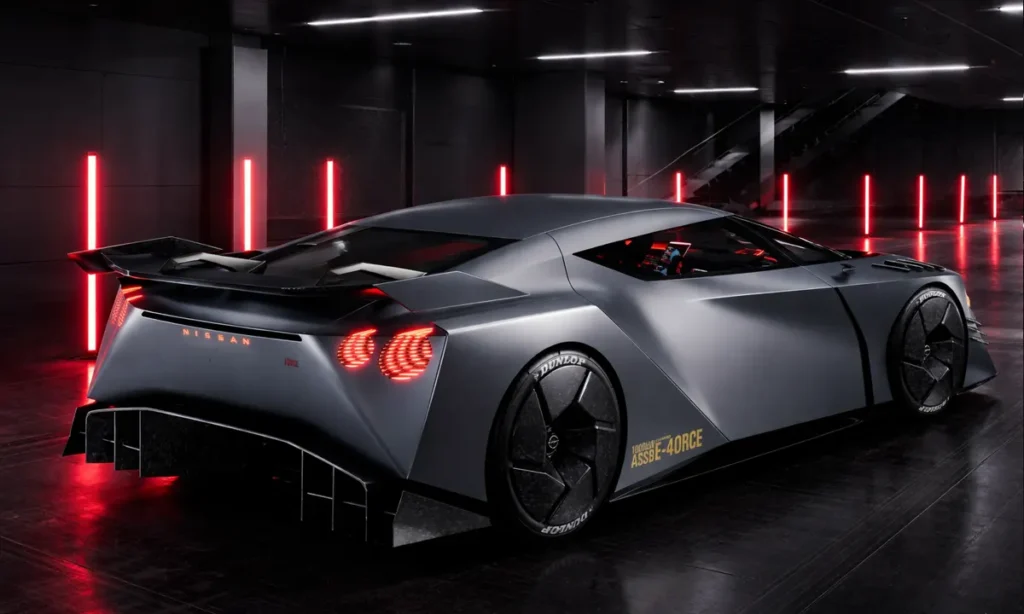
Every credible R36 speculation converges on a single chassis philosophy — that the next GT-R must be substantially lighter than the R35, whose 1,740-kilogram kerb weight was the price of the technology density that its performance required and whose mass became the primary limiting factor in the dynamic evolution that successive R35 variants pursued across its production life.
The R36’s target kerb weight of approximately 1,350 to 1,400 kilograms — achievable through the combination of carbon fibre monocoque construction, aluminium subframe architecture and the judicious application of lightweight materials to every component whose weight reduction justifies its cost premium — would transform the GT-R’s dynamic character from the technically impressive but physically substantial experience of the R35 to something more closely resembling the nimble, responsive and communicative hypercar that the GT-R’s Nürburgring performance suggested the underlying mechanical package was capable of delivering if the weight could be managed.
The carbon fibre construction investment — whose cost at R36’s anticipated production volume is substantial but whose structural weight reduction versus steel or aluminium construction is non-negotiable given the weight targets the performance brief demands — reflects Nissan’s understanding that the R36 cannot compete with contemporary hypercars on power alone. The McLaren Artura, Ferrari 296 GTB and Porsche 911 GT3 RS against which the R36 will inevitably be compared in performance car media are not merely powerful — they are light, and the R36’s competitive credibility depends on matching their power-to-weight ratios as much as their outright horsepower figures.
Technology: The GT-R’s Digital Evolution
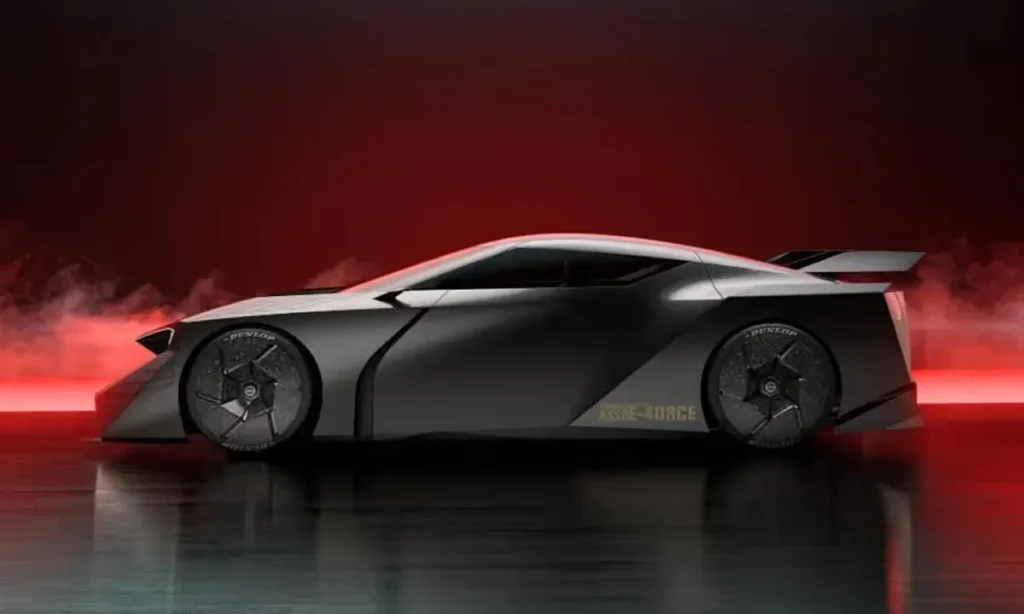
The R35’s most revolutionary contribution to the performance car landscape was its technology density — the Attesa ET-S Pro all-wheel-drive system, the DCCD transmission’s precision and the electronics package whose sophistication exceeded what any vehicle at its price point had previously offered. The R36’s technology brief must represent an equivalent leap forward relative to the contemporary performance car landscape — a considerably more demanding requirement in 2026 than it was in 2007.
The R36’s anticipated technology suite includes a torque vectoring system of four-wheel independence — individual motor control at each axle enabling the wheel-specific torque distribution that mechanical differentials cannot provide — alongside a driver assistance and dynamic stability architecture whose calibration philosophy mirrors the GT-R’s historical approach of electronic intelligence in service of driver performance rather than in substitution for it. The predictive chassis management system — integrating GPS track mapping, camera-based road surface analysis and the driver’s historical performance data to pre-configure the car’s dynamic settings before corner entry — represents the logical extension of the R35’s VDC system into the data-rich environment that modern vehicle electronics enable.
The infotainment and connectivity architecture will reflect the software investment that Nissan’s partnership with technology companies has been directed toward — providing the over-the-air update capability, the performance data logging sophistication and the connected services integration that the R36’s buyer demographic will consider baseline expectations rather than premium features.
Read: 2026 Porsche Macan Facelift: What Is New and What Is Improved?
Pricing and Positioning: Where the R36 Must Land
The R35’s democratisation of supercar performance at accessible pricing was both its greatest achievement and, in retrospect, a commercial miscalculation whose low launch price made the per-unit profitability that sustained development investment requires difficult to achieve across the production run. The R36 will not repeat that miscalculation — with anticipated starting pricing in the $150,000 to $200,000 range reflecting both the genuine manufacturing cost of carbon fibre construction and hybrid powertrain integration and the repositioning of the GT-R nameplate from accessible supercar to genuine hypercar competitor.
This pricing positions the R36 directly against the Porsche 911 Turbo S, the Ferrari Roma and the McLaren Artura — competitors whose brand heritage, dealer networks and performance credentials make them formidable rivals and against whose real-world performance the R36’s announcement specifications will be immediately and rigorously tested.
Read: Top 10 Cheapest Supercars to Maintain in 2026. Performance Without the Punishment
R36 GT-R — Rumoured Specifications Summary
| Category | Rumoured / Expected Specification |
| Engine | Twin-Turbo Inline-Six (Evolved VR30) |
| Combustion Output | 600–700 hp (Estimated) |
| Hybrid System | Dual Electric Motor AWD |
| Combined System Power | 800–1,000 hp (Estimated) |
| Transmission | 8-Speed Dual-Clutch (Estimated) |
| Drivetrain | All-Wheel Drive (Torque Vectoring) |
| Target Kerb Weight | 1,350–1,400 kg |
| Chassis | Carbon Fibre Monocoque |
| Subframes | Aluminium Front and Rear |
| 0–100 km/h | Sub-2.5 Seconds (Estimated) |
| Top Speed | 350+ km/h (Estimated) |
| Nürburgring Target | Sub-6:30 (Estimated) |
| Expected Starting Price | $150,000–$200,000 |
| Production Volume | Limited (Est. 500–1,000 Units/Year) |
| Anticipated Reveal | 2026–2027 |
| Production Start | 2027–2028 |