Buy a new car today and you’ll be handed a spec sheet bristling with three-letter acronyms, each one promising to watch the road, warn you of danger, and sometimes even grab the wheel or slam the brakes. It’s genuinely impressive technology. It’s also genuinely confusing, because nobody explains what half of it means, and every automaker calls the same feature something different.
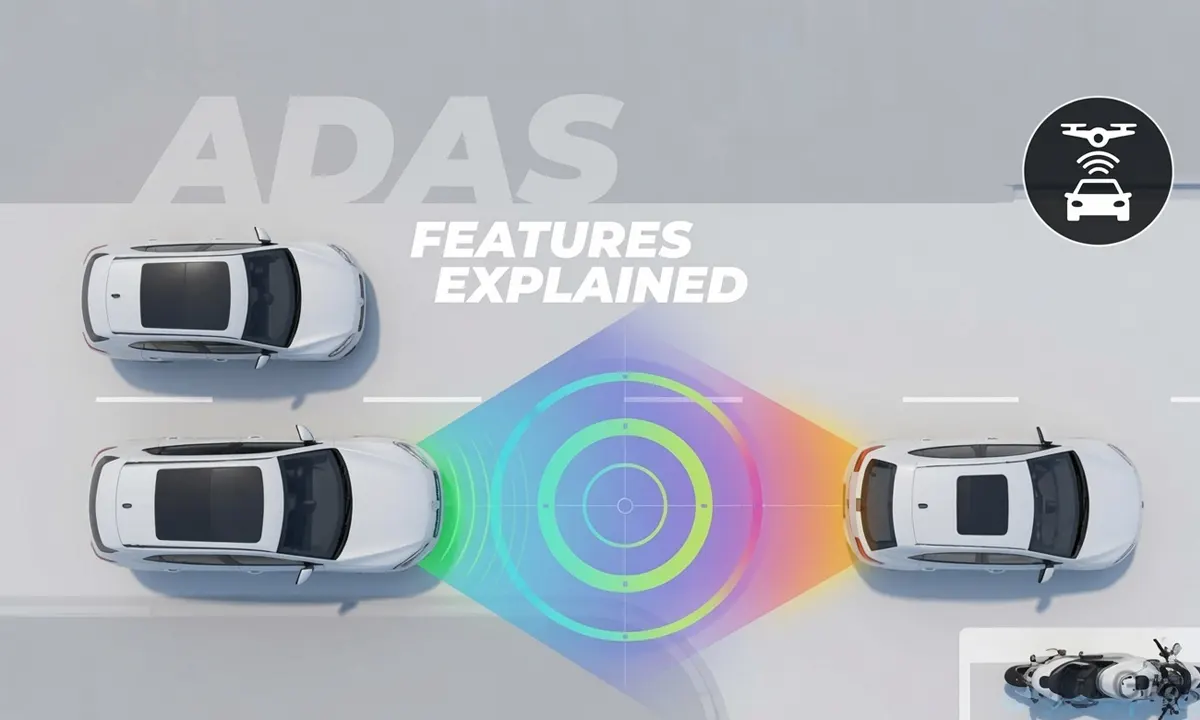
These systems fall under one umbrella term: ADAS, or Advanced Driver Assistance Systems. They’re the electronic safety and convenience features that have become standard equipment on modern vehicles, using a network of cameras, radar, ultrasonic sensors, and sometimes LiDAR to monitor your surroundings and assist, or intervene, in driving tasks. And they’re not just for luxury cars anymore, they’re becoming a bigger part of everyday driving for everyone.
So let me decode the whole alphabet soup for you: what each feature does, which sensors make it work, which ones actually prevent crashes, and the single most important thing you must understand before you trust any of them. Let’s dig in.
First, the Two Golden Rules of ADAS
Before the acronyms, burn two concepts into your brain, because they explain everything. First, ADAS features split into two camps: passive systems, like lane departure warnings and blind spot alerts, that notify you of a risk but take no action, and active systems, like automatic emergency braking and lane keeping assistance, that intervene directly to help prevent a collision. Warn versus intervene. That’s the fundamental divide.
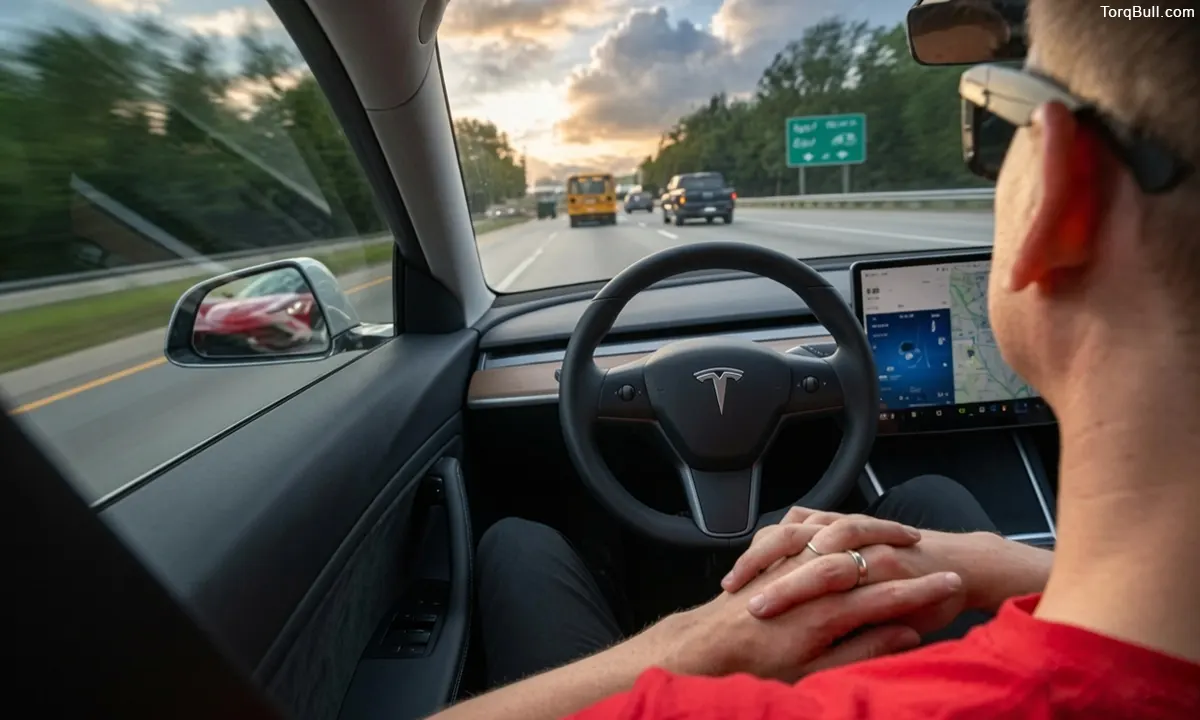
Second, and this is the big one: ADAS is not self-driving. These systems sit at Levels 1 to 2 on the automation scale, which means they assist the driver, but you remain fully responsible for steering, braking, and accelerating. Adaptive cruise control and lane keeping make driving easier, but you must stay engaged and ready to take over. Treating your car’s assistance features like a robot chauffeur is the dangerous mistake I mentioned, and it’s how people get hurt. ADAS is a co-pilot, never a replacement. Got it? Good. Now the fun part.
The Collision-Stopping Features
This is the group that saves lives, and it starts with a warning and ends with action. Forward Collision Warning, or FCW, alerts you when a crash with the vehicle ahead is imminent. If you don’t react, its active partner takes over: Automatic Emergency Braking, or AEB, applies the brakes automatically to avoid the crash or reduce its severity.
AEB is the superstar of the entire ADAS world, and the data proves it, because AEB alone cuts rear-end crashes by about half. That’s a staggering safety benefit, and it’s why the new 2026 vehicle safety standards make automatic emergency braking mandatory, moving it from optional luxury to standard equipment on every new car. The system has grown smarter too, with pedestrian detection that brakes for people in your path, and the 2026 rules specifically target detecting and braking for pedestrians in dark conditions, addressing rising nighttime pedestrian fatalities. There’s even reverse automatic braking that stops you if a crash is imminent while backing up.
The Lane and Steering Features
Next up, the systems that keep you between the lines, and they come in three escalating flavors. Lane Departure Warning, or LDW, is the passive one, alerting you through steering wheel or seat vibration, or an audible chime, when you start drifting out of your lane. Lane Keeping Assist, or LKA, is the active upgrade, gently steering the vehicle back into its lane if you drift. And the smoothest of all is Lane Centering Assist, which uses a camera to continuously apply small steering inputs to keep you centered, rather than only nudging you at the edges.
These matter, because lane keeping assistance can reduce crashes by around 19 percent. One honest note: lane keeping can occasionally feel disconcerting on a winding country road, or if it misreads faded lane markings, so know how to switch it off if it’s fighting you.
Adaptive Cruise Control and the “Level 2” Combo
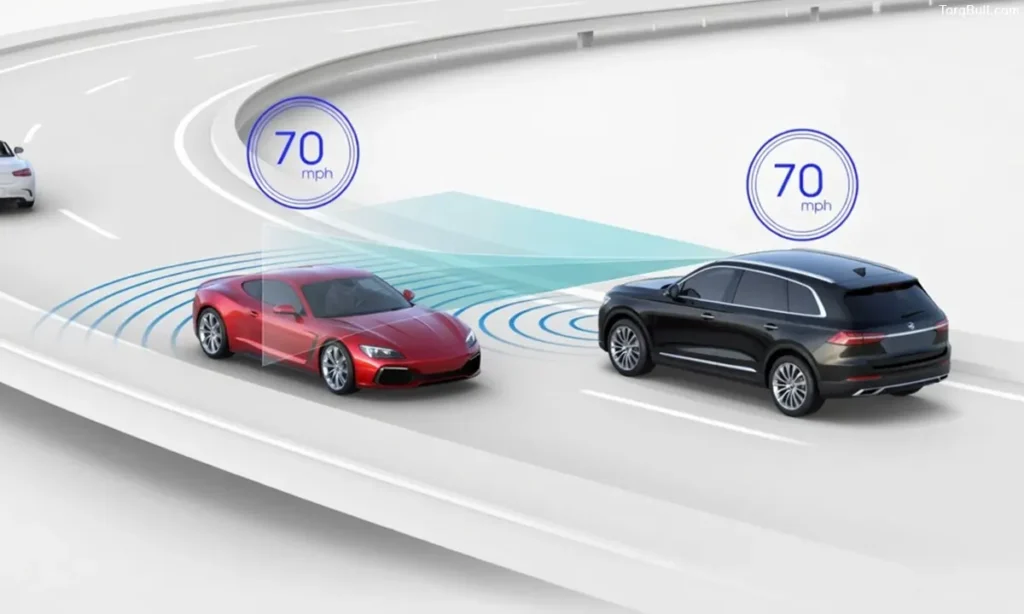
Regular cruise control holds one dumb speed no matter what. Adaptive Cruise Control, or ACC, is far cleverer, automatically adjusting your speed to maintain a set following distance from the car ahead, slowing and speeding up with traffic flow using radar. It’s a genuine fatigue-killer on long highway drives.
Combine adaptive cruise control with lane centering, and you get what marketers love to call a Level 2 automation or hands-on highway system, where the car manages both speed and steering on the freeway. It feels magical, but remember golden rule number two: you must keep your hands ready and your eyes on the road, because the bundled Level 2 experience has weaker evidence as a proven safety technology than the individual crash-avoidance features. It’s convenience, not autonomy.
The Blind Spot and Rear Features
Now the systems watching the spots you can’t see. Blind Spot Monitoring, or BSM, warns you of a vehicle lurking in your blind spot, usually with a light in your side mirror, and blind zone detection can decrease crashes by about 9 percent. Its active sibling, Blind Spot Intervention, goes further, applying light braking or steering input to guide you back if you start changing into an occupied lane.
Backing out of a parking spot is another danger zone, which is where Rear Cross-Traffic Alert, or RCTA, shines, using radar to warn you of approaching traffic from the sides when you’re in reverse, dramatically reducing back-over collisions in busy lots. And if you tow, trailer blind-spot assist extends that monitoring along the entire length of your trailer.
Parking, Visibility, and the Helpers
Rounding out the toolkit are the convenience and visibility aids. Beyond the now-standard backup camera, many cars offer a 360-degree surround-view camera and automatic park assist, which finds a suitable space and performs the parking maneuver itself, with the driver able to cancel at any time, and some even allow remote parking via a phone app. Traffic Sign Recognition, or TSR, uses cameras to read speed limit and no-passing signs and display them on your dashboard, with some versions adjusting your speed. Adaptive headlights and LED matrix systems automatically switch between high and low beams, or deactivate individual LEDs to avoid dazzling oncoming traffic while keeping maximum visibility. And driver drowsiness detection watches for signs of fatigue, while automatic crash notification alerts emergency responders with your location after a collision.
Read: Engine Overheating Causes and Solutions. Here Is Exactly What Is Wrong and How to Fix It
The ADAS Glossary at a Glance
Here’s your cheat sheet for the acronym soup.
| Feature | What It Does | Warns or Intervenes |
| FCW (Forward Collision Warning) | Alerts to imminent front crash | Warns |
| AEB (Automatic Emergency Braking) | Brakes automatically | Intervenes |
| LDW (Lane Departure Warning) | Alerts to lane drift | Warns |
| LKA (Lane Keeping Assist) | Steers back into lane | Intervenes |
| ACC (Adaptive Cruise Control) | Maintains speed and gap | Intervenes |
| BSM (Blind Spot Monitoring) | Flags cars in blind spot | Warns |
| RCTA (Rear Cross-Traffic Alert) | Warns of traffic when reversing | Warns |
| TSR (Traffic Sign Recognition) | Reads and displays road signs | Warns |
The Naming Chaos (and How to Beat It)
Here’s a genuine headache: the names aren’t standardized. Adaptive cruise control is called Adaptive Cruise Control by Ford, GM, and Volvo, but Intelligent Cruise Control by Nissan, Active Cruise Control by BMW, and DISTRONIC by Mercedes. Same feature, four names, and that’s just one example. Industry groups have pushed for standardized generic terminology, but the marketing labels persist.
My advice? Ignore the fancy brand name and focus on what the feature actually does. When a salesperson rattles off a proprietary name, just ask: does it warn me or does it brake and steer for me? That cuts through the noise instantly.
The Calibration Gotcha Nobody Mentions
Here’s a critical piece almost no one tells you. ADAS depends on precise sensor and camera alignment, and a camera that’s off by just one degree can misread lane positions by several feet at highway distances. The scary part: improperly calibrated ADAS is worse than no ADAS at all, because you trust systems that are feeding you incorrect information.
So after any event that shifts those sensors, a windshield replacement, collision repair, wheel alignment, or suspension work, your system needs recalibration, typically costing $150 to $500 per system at an independent shop. The forward camera lives behind your windshield, so this especially matters after glass work. If you ever replace your windshield, insist the shop recalibrate the camera, or your lane keeping and automatic braking may quietly misjudge the road.
Which Ones Are Actually Worth It?
The honest truth is that the safety benefits are real but feature-specific. The proven lifesavers are the crash-avoidance systems: automatic emergency braking cutting rear-end crashes in half, forward collision prevention reducing crashes 29 percent, lane keeping at 19 percent, and blind spot detection at 9 percent. Those are your must-haves on any car you buy, and now that AEB is mandatory, you’ll get at least that one automatically.
The convenience features, adaptive cruise, lane centering, and self-parking, are wonderful and reduce fatigue, but they’re more about ease than proven crash reduction, so don’t overpay chasing them or, worse, over-trust them. A nice bonus: insurance companies may reduce premiums for vehicles with ADAS, since they lower collision risk, so the tech can pay you back over time.
Verdict: A Brilliant Co-Pilot, Not a Chauffeur
So there’s the whole alphabet soup, translated. ADAS is arguably the biggest leap in car safety since the seatbelt, a suite of cameras, radar, and sensors that either warn you of danger or step in to prevent it, and the proven crash-avoiders like automatic emergency braking, blind spot monitoring, lane keeping, and rear cross-traffic alert genuinely save lives every single day. When you’re shopping for a car, prioritize those, because they deliver real, measurable protection, and the 2026 mandate means AEB is now standard across the board.
But keep those two golden rules front and center. First, understand the difference between the features that merely warn you and the ones that actively intervene, so you know what your specific car will and won’t do in an emergency. Second, and most important, never mistake this technology for self-driving. Every one of these systems, even the slick highway ones that steer and brake for you, operates at a level where you remain the responsible driver, hands ready and eyes up. The moment you treat your co-pilot like a chauffeur is the moment the technology stops protecting you.
Learn what your car’s systems are called and what they actually do, keep the sensors clean and properly calibrated after any repair, and let ADAS be the vigilant partner it was designed to be. Used that way, this alphabet soup isn’t just marketing jargon, it’s a genuine guardian angel riding along on every trip. Just remember who’s still holding the wheel. It’s you, and that’s exactly how it should be.