How AI Is Transforming Cars? AI In Cars Future Features Good or Bad Explained
- Predictive navigation that anticipates destinations
- Biometric health monitoring via seats and steering
- AI detecting driver fatigue and impairment early
- Personalization adapting vehicle settings automatically
- Cars evolving into intelligent, adaptive companions
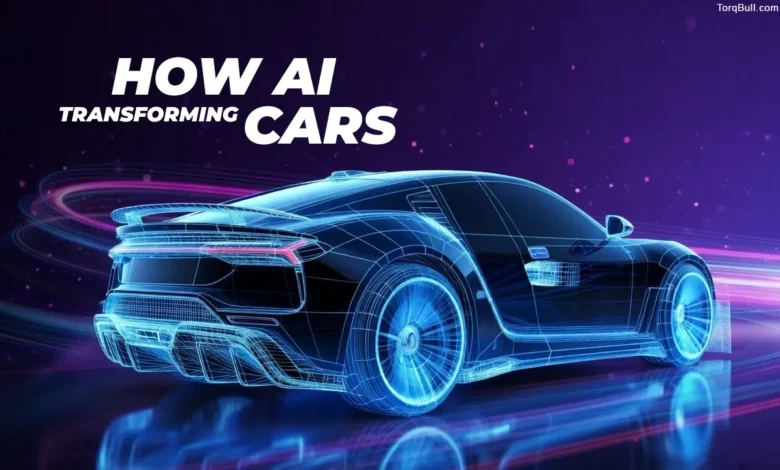
AI In Cars: Artificial intelligence’s integration into the production automobile has progressed from the novelty stage — where voice command recognition of predetermined phrases and simple predictive text in navigation search represented the technology’s visible frontier — into a transformative development phase whose current and near-future applications are reshaping every dimension of the vehicle experience from the moment of approach to the conclusion of the journey. The AI features arriving in production vehicles across 2026 and the immediately following years are not incremental improvements to existing systems — they are architectural changes whose implications extend through safety, comfort, energy management and the fundamental relationship between driver and vehicle in ways whose significance the incremental feature announcement format consistently undersells.
Understanding what AI in cars actually means — beyond the marketing language that applies the term to anything involving a microprocessor and a camera — requires examining the specific capabilities that genuine machine learning architectures deliver compared to the rule-based systems that preceded them, and the specific vehicle functions whose improvement the distinction between the two approaches makes most consequential for the driving and ownership experience.
Predictive Driver Assistance: Learning the Route Before You Drive It
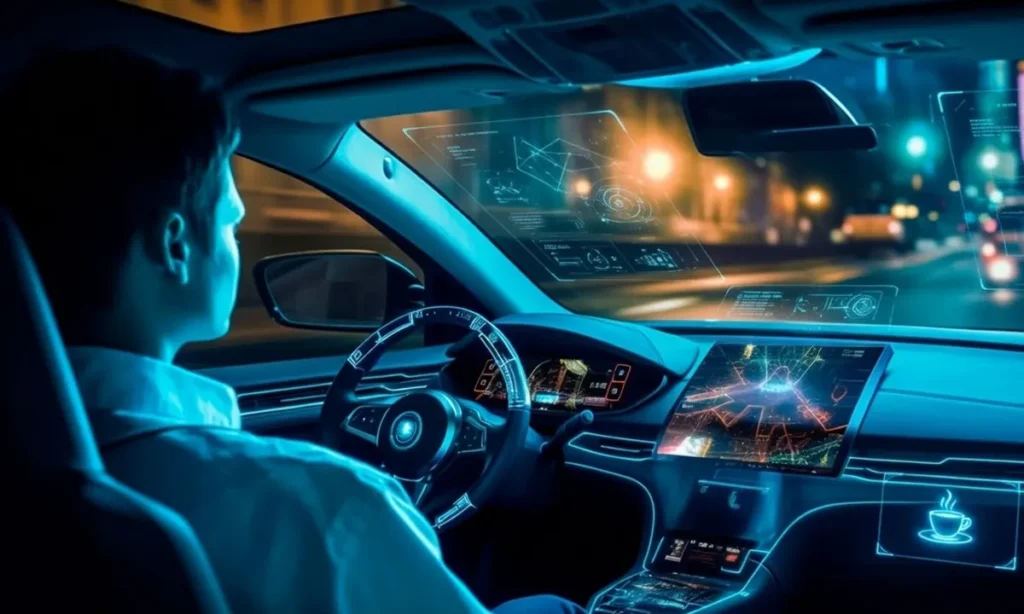
The most immediately impactful AI application in current and near-future production vehicles is the predictive driver assistance system — whose machine learning foundation enables genuine anticipation of the driver’s intentions and the road’s upcoming demands rather than the reactive response to conditions already encountered that rule-based systems provide.
Mercedes-Benz’s MBUX Hyperscreen’s predictive capabilities — whose machine learning engine analyses the driver’s historical behaviour patterns, calendar appointments, location history and the time-of-day correlations that routine driving produces — proactively suggests the navigation route, media preference and climate setting that the historical pattern predicts before the driver interacts with any control. The system’s ability to distinguish between the Monday morning commute pattern and the Saturday leisure drive pattern — presenting the appropriate interface configuration and route suggestion for each without requiring explicit driver input — represents the practical expression of genuine machine learning capability rather than the simpler if-then logic that superficially similar features in less sophisticated systems employ.
The next generation of predictive assistance — whose development programmes at BMW, Volvo and Waymo are converging on a capability whose production deployment timeline the current hardware generation’s computational capacity is approaching — anticipates road events before visual observation would normally prompt driver response. By fusing the vehicle’s forward camera, radar and LiDAR sensor data with the high-definition map database’s road geometry information, the AI system identifies the approaching sharp corner, the likely queue behind the blind hill and the pedestrian crossing pattern at the specific location whose historical data the fleet’s collective experience has populated — pre-conditioning the throttle, pre-charging the brakes and alerting the driver to the specific hazard whose nature the system’s prediction has characterised before the driver’s unaided perception would have identified it.
Health Monitoring and Driver State Detection: AI as Safety Guardian
The integration of biometric sensing into vehicle surfaces — whose development has progressed from the experimental stage to commercial production deployment across multiple manufacturers’ current model year introductions — creates AI health monitoring capabilities whose safety and wellness applications represent one of the most consequential developments in automotive AI’s current phase.
The steering wheel’s integrated heart rate sensor — deployed by Audi across current A-series models — captures the driver’s cardiac rhythm through capacitive contact with the gripping surface whose measurement quality the hands’ natural driving position provides continuously without the deliberate engagement that wearable health monitoring requires. The AI system processing this cardiac data applies the anomaly detection algorithms that distinguish the normal variation of a healthy driver’s heart rate response to driving demands from the arrhythmia signatures, the elevated resting rate that dehydration or illness produces and the gradual deterioration pattern that pre-syncope cardiac events generate before the driver’s conscious awareness of physical distress.
The seat pressure distribution sensor — whose matrix of pressure-sensitive elements beneath the seat cover maps the occupant’s weight distribution pattern across the sitting surface — provides the AI postural analysis system whose output identifies fatigue-related postural deterioration, the microsleep-associated muscle relaxation that produces characteristic pressure pattern changes before head nodding becomes visible and the attention restoration interventions whose timing the AI system optimises to address the specific fatigue state rather than applying the fixed-interval alerts that rule-based driver monitoring systems generate independently of the driver’s actual state.
Volvo’s research programme — whose steering wheel electrodermal activity sensor measures the skin conductance response that stress and physiological arousal produce — provides the AI system with the emotional state data whose integration with the cardiac and postural signals creates a multi-dimensional driver state model whose accuracy in distinguishing distraction, fatigue and impairment exceeds what single-modality monitoring achieves. The system’s ability to modulate the adaptive cruise control’s following distance, the lane keeping system’s intervention threshold and the navigation system’s route complexity in response to the detected driver state represents the genuine safety benefit whose deployment production approval will enable when the regulatory frameworks whose development is currently underway create the certification pathway.
Personalisation Engines: The Vehicle That Configures Itself
The AI personalisation engine — whose deep learning architecture creates the comprehensive driver profile that configures every adjustable vehicle parameter to the individual’s preference rather than the manufacturer’s default — represents the production application of personalisation technology whose capability has reached commercial deployment readiness across multiple premium vehicle platforms in the current model year.
BMW’s My Modes intelligent personalisation — whose machine learning layer analyses which driving mode, climate setting, steering weight, suspension mode and media preference the driver selects across successive journeys and uses this behavioural data to construct the individual preference model that pre-configures the vehicle before the driver makes explicit selections — reduces the interaction overhead that accessing preferred vehicle states previously required from a multi-step settings navigation exercise to the zero-input experience that the AI’s predictive configuration delivers. The system’s contextual intelligence — adjusting the pre-configuration based on weather conditions, time of day and journey type that the location and calendar data identifies — provides the context-appropriate personalisation that static user profiles cannot achieve.
The next frontier of AI personalisation — whose development across Mercedes-Benz, Hyundai and the Chinese manufacturers whose software-first architecture makes rapid AI feature deployment structurally easier than the legacy manufacturers’ hardware-defined alternatives — extends personalisation beyond the vehicle settings configuration into the driving assistance calibration. The AI system that learns the specific driver’s preferred following distance, their comfortable lateral acceleration limit and their tolerance for the adaptive cruise control’s speed modulation creates the personalised assistance experience whose behaviour matches the individual’s driving philosophy rather than the manufacturer’s population-average calibration.
Read: EV vs Hybrid Cost of Ownership In USA. Financial Comparison Must Make Before Choosing a Powertrain
Energy Management AI: Efficiency as Intelligence
The AI energy management system — whose application in both hybrid and battery-electric vehicles optimises the powertrain’s energy distribution, regenerative braking intensity and climate system load in response to the route prediction, historical energy consumption data and the real-time grid and weather information that connected vehicle architecture provides — represents one of the most financially significant AI applications in current production vehicles whose benefit is measured directly in fuel and energy cost reduction.
Toyota’s AI-enhanced hybrid system — deployed across the current RAV4 Hybrid and Crown Hybrid — uses the GPS-integrated route prediction to pre-position the battery’s state of charge for the downhill sections whose regenerative recovery the AI system identifies ahead of arrival, the urban sections whose electric operation the battery reserve enables and the motorway sections whose combustion efficiency the depleted battery avoids charging through during the highest efficiency operating point. The real-world efficiency improvement that predictive energy management delivers — typically 5 to 12 percent above the equivalent non-predictive hybrid system — represents a tangible financial benefit whose compounding value across the vehicle’s operational life exceeds the marginal cost of the AI system’s deployment.
Read: Charge While You Drive! Wireless EV Charging Roads – How It Works?
AI in Cars — Current and Future Features Overview
| AI Feature | Current Status | Capability | Manufacturer Examples |
| Predictive Navigation | Production (Premium) | Anticipates destination from behaviour | Mercedes MBUX / BMW iDrive |
| Driver State Monitoring | Production (Expanding) | Fatigue / Distraction Detection | Volvo / Audi / Mercedes |
| Heart Rate Monitoring | Production (Limited) | Cardiac Anomaly Detection | Audi A-Series |
| Seat Pressure Analysis | Development / Near-Production | Fatigue Pattern Recognition | BMW / Mercedes Research |
| AI Personalisation | Production (Premium) | Zero-Input Vehicle Configuration | BMW My Modes / Mercedes MBUX |
| Predictive Energy Management | Production (Hybrid / EV) | 5–12% Efficiency Improvement | Toyota / Hyundai / Tesla |
| Biometric Impairment Detection | Development | Pre-Symptomatic Alert | Volvo / Ford Research |
| Predictive Hazard Anticipation | Near-Production | Pre-Visual Road Event Warning | Waymo / BMW / Mercedes |
| AI Climate Personalisation | Production (Premium) | Individual Comfort Learning | Mercedes / BMW |
| Over-The-Air AI Updates | Production (Tesla / Rivian) | Continuous Capability Expansion | Tesla / Rivian / BMW |