EV Battery Swapping vs Fast Charging: Which Technology Will Power the Future of Electric Vehicles?
- Battery swapping enables full recharge in minutes
- Ultra-fast charging adds significant range in under five minutes
- Two competing solutions to EV range anxiety
- Infrastructure and scalability differences
- Key implications for buyers, fleets and investors
EV Battery Swapping vs Fast Charging: The single greatest obstacle to mainstream electric vehicle adoption — consistently ranked above purchase price, above charging cost and above any other concern in buyer surveys across every major automotive market — is charging time. The internal combustion engine’s killer advantage over the electric vehicle is not its performance, its technology or its driving character. It is the three minutes it takes to add 400 miles of range at any one of the hundreds of thousands of petrol stations distributed across the American road network. Every solution to the electric vehicle’s energy replenishment challenge — every technology, every business model, every infrastructure investment — is ultimately an attempt to close that three-minute gap. Two approaches dominate the conversation in 2026: battery swapping, which replaces a depleted battery with a charged one in approximately the same time it takes to fill a petrol tank, and extreme fast charging, which uses high-voltage DC power to add hundreds of miles of range in the time it takes to drink a coffee. This article examines both approaches with the technical, economic and practical honesty that the debate deserves.
What Battery Swapping Actually Is and How It Works

Battery swapping is the process of driving a vehicle into a specialised station where automated machinery removes the depleted battery pack from beneath the vehicle and replaces it with a fully charged unit — typically in three to five minutes for passenger cars and two to three minutes for motorcycles and scooters, where the batteries are small enough for manual exchange. The depleted battery remains at the station to be recharged at a controlled rate — typically using slower Level 2 AC charging that maximises battery longevity — while the driver continues their journey with a fully charged replacement.
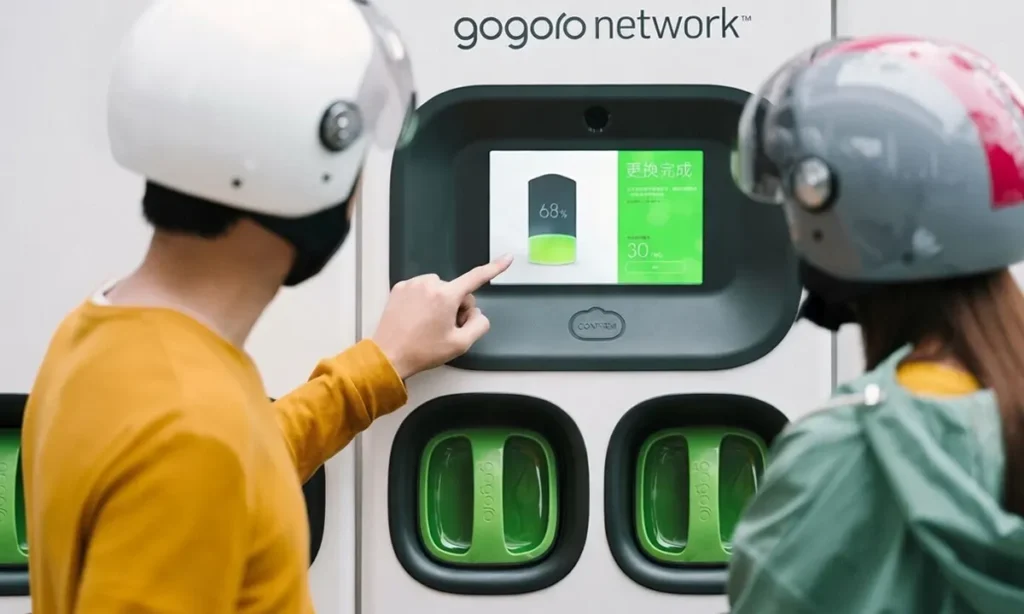
The concept is not new. Better Place attempted to commercialise battery swapping for passenger cars in Israel and Denmark between 2007 and 2013, spending approximately $850 million before declaring bankruptcy when insufficient vehicle adoption and the impracticality of maintaining a cross-manufacturer battery standard made the economics unworkable. What has changed in 2026 is the context. Chinese automaker Nio has built a network exceeding 2,400 battery swap stations across China, completed over 40 million battery swaps to date and expanded its swapping network into Europe through a partnership with Shell, demonstrating at commercial scale that the technology works when a single manufacturer controls both the vehicle design and the station infrastructure. Geely — the Chinese conglomerate that owns Volvo — has made parallel investments in swapping infrastructure. In the two-wheel and commercial vehicle segments, battery swapping has found particularly strong footing: Gogoro operates a dense network of swap kiosks across Taiwan integrated into metro stations and supermarkets, and commercial fleet operators running high-frequency taxi and delivery routes in China and India have adopted swapping as their primary energy replenishment model.
What Extreme Fast Charging Delivers in 2026
Fast charging — specifically DC fast charging at power levels above 150 kilowatts, increasingly referred to as extreme fast charging or XFC at 350 kilowatts and above — has advanced dramatically since the early generation of 50-kilowatt DC chargers that characterised the first decade of mainstream EV adoption. Tesla’s V4 Superchargers deliver up to 250 kilowatts to compatible vehicles. ABB’s Terra 360 delivers 360 kilowatts and can charge four vehicles simultaneously, adding 100 kilometres of range in under three minutes to compatible EVs. Multiple 350-kilowatt charger deployments from Electrify America, ChargePoint and the NACS-compatible network expanding rapidly across the United States are capable of adding 150 to 200 miles of range in 15 to 20 minutes to vehicles equipped with 800-volt electrical architectures — a technical standard that the Hyundai Ioniq 5 and 6, Kia EV6 and EV9, Porsche Taycan, Audi e-tron GT and Genesis GV60 all now support.
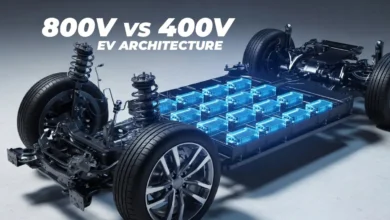
The 800-volt architecture is the critical technical enabler for extreme fast charging performance. Standard 400-volt EV platforms — including the majority of current-generation vehicles — face physical limitations on how rapidly power can be delivered without generating excessive heat, limiting practical charging rates to approximately 150 to 250 kilowatts regardless of the charger’s rated output. The transition to 800-volt platforms across the mainstream of the EV market — a transition well underway in 2026 but not yet complete — is the primary factor that will determine how quickly extreme fast charging can close the remaining gap with battery swapping’s time advantage.
The Standardisation Problem That Battery Swapping Cannot Escape
The fundamental structural challenge facing battery swapping as a mainstream passenger car technology is standardisation — and it is a challenge that the industry’s competitive dynamics make extremely difficult to resolve. A battery swap station can only service vehicles whose battery packs it is designed to accommodate. Battery packs vary between manufacturers in physical dimensions, mounting architecture, electrical interfaces, battery management system protocols and chemical composition. A Nio swap station cannot service a Tesla. A Tesla swap station — which Tesla itself operated briefly between 2013 and 2015 before abandoning the model — cannot service a BYD. Building a swap network that serves multiple manufacturers requires those manufacturers to agree on a common battery standard covering physical form factor, electrical interface and management system protocol — an agreement whose commercial implications are so significant that it has never been achieved at meaningful scale in the passenger car segment.
Fast charging sidesteps this problem entirely. The NACS connector standard — originally developed by Tesla and now adopted by Ford, General Motors, Rivian, Honda, Hyundai, Kia and virtually every major automaker selling vehicles in the American market — creates a single physical interface that allows any compatible EV to use any compatible charging station, regardless of manufacturer. The CCS standard performs the same function in European markets. A single fast charger installation can service every compatible EV that drives past it, producing a network utilisation efficiency that no swap station — whose infrastructure can only serve one model or one manufacturer’s fleet — can currently replicate.
Battery Health: The Unexpected Advantage of Swapping
One aspect of the battery swapping debate that receives insufficient attention in most comparisons is the potential battery health advantage that swapping provides. Extreme fast charging — particularly at 350-kilowatt rates on batteries that are already warm from driving, or at high state of charge above 80 percent — imposes thermal stress on lithium-ion cells that accelerates degradation over time. The relationship is not linear and modern thermal management systems have significantly reduced the practical impact of occasional fast charging on long-term battery health. Studies of heavy DC fast charging users indicate that even aggressive public charging users retain 75 to 80 percent of original capacity after 200,000 miles — a figure that suggests the degradation concern, while real, is less catastrophic than early EV skeptics predicted.
Battery swapping, by contrast, allows depleted packs to be recharged at the station at a slower, thermally optimised rate — typically Level 2 AC charging at 7 to 22 kilowatts — that imposes minimal thermal stress on the cells. The station operator can also manage the state of charge at which packs are stored and delivered, maintaining them within the 20 to 80 percent range that maximises long-term cell longevity. For commercial fleet operators whose vehicles charge multiple times daily and whose battery assets represent hundreds of thousands of dollars in capital, the cumulative health advantage of swapping over fast charging is commercially meaningful — and it is a primary driver of swap adoption in taxi and logistics fleet applications where battery replacement costs are a significant operational concern.
The Economics: Infrastructure Cost vs Operational Flexibility
The infrastructure economics of battery swapping versus fast charging diverge significantly and determine which technology is viable in which deployment context. A fast charging station at 350 kilowatts requires a grid connection capable of delivering that power, the charging hardware itself and civil works for installation — a total capital cost ranging from approximately $150,000 to $500,000 per multi-charger installation depending on grid upgrade requirements and site specifics. That investment serves every compatible EV in the market. A battery swap station requires the same grid connection, plus the automated swap machinery — costing $500,000 to over $1 million per station — plus an inventory of spare battery packs for the specific vehicle model it serves, at $15,000 to $30,000 per pack, requiring a stock of 10 to 20 packs per station to manage demand. Total swap station capital costs routinely exceed $2 million before operational expenses are considered.
For Nio, which owns both the vehicle and the station infrastructure and can therefore design them together from first principles, this economics works because the swap network is a differentiating product feature that justifies a premium subscription. For an independent operator attempting to build a multi-brand swap network, the capital requirements and the model-specificity problem combine to make the business case extremely challenging. Fast charging’s lower capital cost per unit, combined with its multi-brand compatibility, produces a fundamentally more scalable infrastructure investment that explains why the global charging station network has expanded from approximately 1 million public chargers in 2022 to over 3.5 million in 2026, while swap stations remain concentrated in China with limited meaningful presence in the American market.
Read: Regenerative Braking Efficiency Comparison In 2026 That Reveals Which Cars Waste the Least Energy
Battery Swapping vs Fast Charging — Complete Comparison Chart
| Category | Battery Swapping | Extreme Fast Charging (350kW+) |
| Time to Full Energy | 3–5 minutes | 15–25 minutes (80%) |
| Multi-Brand Compatibility | No — model specific | Yes — NACS/CCS standard |
| Infrastructure Cost per Site | $1M–$2M+ | $150K–$500K |
| Battery Health Impact | Minimal (slow recharge at station) | Moderate (managed by thermal systems) |
| Home Energy Option | No | Yes — Level 2 home charging |
| Grid Impact | Lower (slow, manageable charging) | Higher (peak demand spikes) |
| Best Use Case | High-frequency commercial fleets, taxis | Mainstream passenger cars, road trips |
| Range Anxiety Elimination | Complete (gas-station equivalent) | Near-complete (800V vehicles) |
| Current USA Network Scale | Minimal | 3.5M+ public chargers globally |
| Manufacturer Adoption | Nio, Geely (primarily China) | All major manufacturers |
| Battery as a Service Option | Yes — reduces purchase cost | No |
| Long-Term Scalability | Limited by standardisation | High — improving with NACS |
Read: Charge While You Drive! Wireless EV Charging Roads – How It Works?
Who Wins the Energy Replenishment Debate in 2026?
The honest answer to the battery swapping versus fast charging debate is that neither technology wins universally — because the question itself is incorrectly framed as a binary choice when the reality is a use-case-dependent spectrum.
Battery swapping wins decisively in high-frequency commercial fleet applications. A taxi operator running 18-hour shifts in a dense urban environment, a logistics company running continuous delivery routes, a ride-hailing fleet that cannot afford 20-minute charging interruptions — these are the use cases where swapping’s three-minute turnaround time, battery health advantages and battery-as-a-service financial model produce a compelling competitive case that fast charging cannot currently answer. In these contexts, the infrastructure cost and the model-specificity problem are manageable because the fleet operator controls both the vehicles and the stations, and the operational efficiency gains justify the capital investment.
Fast charging wins in the mainstream passenger car market — for the simple and decisive reason that it is already winning. The NACS standard has unified the American charging network behind a single connector. 800-volt vehicle architectures are extending the charging speeds that mainstream vehicles can absorb. The charger network is expanding at a pace that swap infrastructure cannot plausibly match without the kind of industry-wide standardisation agreement that commercial competition makes structurally unlikely. Home charging — the cheapest, most convenient and most battery-friendly charging option available, used by the majority of EV owners for the majority of their energy replenishment — has no swap equivalent whatsoever.
The future most likely produces both technologies in coexistence: fast charging as the dominant infrastructure for the mainstream passenger car market, and battery swapping as a specialised solution for the commercial fleet segment where its specific advantages — speed equivalent to petrol refuelling, managed battery health and a service-based financial model — address use cases that fast charging cannot serve as effectively. The five-minute charging battery, which multiple companies are developing using advanced cell chemistries, may eventually close the speed gap entirely and make the swap debate academic. Until that technology arrives at commercial scale, the informed answer is: for everyday EV ownership, fast charge; for fleet operations that cannot afford downtime, swap.