Regenerative Braking Efficiency Comparison In 2026 That Reveals Which Cars Waste the Least Energy
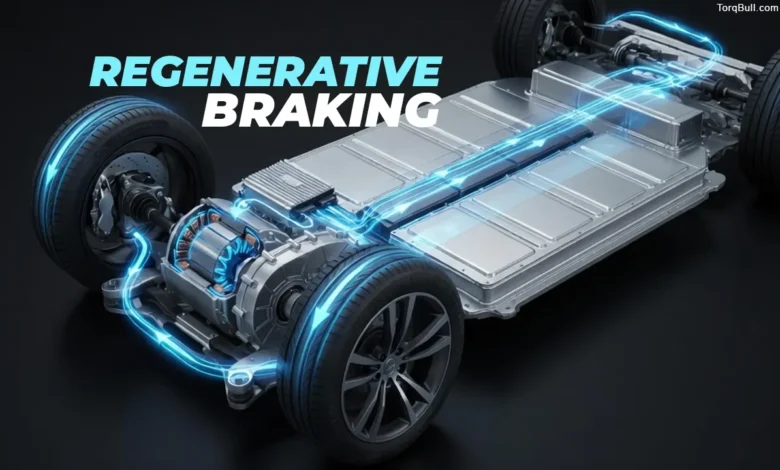
- Regenerative braking efficiency across EV and hybrid platforms
- Conditions maximizing energy recovery vs friction braking use
- Single-pedal driving capability comparison
- Vehicles ranked by highest energy recovery efficiency
- Regen braking vs traditional energy loss in ICE vehicles
Every time a conventional vehicle decelerates — whether through deliberate braking, engine braking or the natural deceleration of removing throttle input — the kinetic energy that the powertrain invested in accelerating the vehicle to its current speed is converted to heat through friction braking and discarded into the atmosphere. The energy loss is not marginal. A 2,000-kilogram vehicle decelerating from 60 miles per hour to a complete stop dissipates approximately 180 kilojoules of kinetic energy — equivalent to the energy content of approximately 0.05 litres of petrol — in a braking event that a typical urban journey repeats dozens of times daily. The cumulative energy that urban driving discards through friction braking represents 20 to 35 percent of the total energy that the powertrain consumed to generate the vehicle’s motion across the journey.
Regenerative braking’s fundamental promise is the recovery of this energy — using the electric motor as a generator during deceleration to convert kinetic energy back into electrical energy whose storage in the battery provides the recovered power that subsequent acceleration draws from rather than requiring the powertrain to generate fresh energy from fuel. The technology’s theoretical promise is straightforward physics. Its practical efficiency — the percentage of available kinetic energy that specific systems actually recover versus the percentage that friction braking still dissipates — varies significantly between implementations whose architecture, power electronics capability and calibration philosophy determine whether the regenerative system captures the majority of available energy or merely supplements the friction brakes with a modest electrical contribution.
How Regenerative Braking Efficiency Is Measured
The regenerative braking efficiency figure whose comparison between vehicles provides the most meaningful assessment of system performance is the recovered energy percentage — the proportion of the total kinetic energy available during a deceleration event that the system captures as electrical energy rather than discarding as heat. This figure varies between the ideal conditions that maximise regenerative capture and the real-world conditions that limit the electric motor’s generating capability below the friction brakes’ superior braking force capacity at high deceleration rates.
The maximum regenerative capture condition — gentle, gradual deceleration from moderate speeds on a flat road surface — allows the electric motor’s generating capacity to handle the complete braking load without friction brake supplementation, achieving the highest possible recovery percentage that the specific system’s motor sizing and power electronics allow. At these conditions, well-designed EV systems recover 70 to 85 percent of the available kinetic energy — with the remainder lost to motor winding resistance, power electronics conversion losses and the battery’s charging efficiency loss as it accepts the recovered energy.
The minimum regenerative capture condition — emergency braking from high speed — requires braking forces that exceed any current production electric motor’s generating capability, necessitating full friction brake deployment whose thermal energy dissipation cannot be recovered regardless of the regenerative system’s sophistication. At maximum deceleration rates, the regenerative contribution falls to zero as the ABS system’s hydraulic brake pressure management takes complete control of the deceleration event to maintain stability and prevent wheel lock.
Platform Architecture: How System Design Determines Maximum Recovery
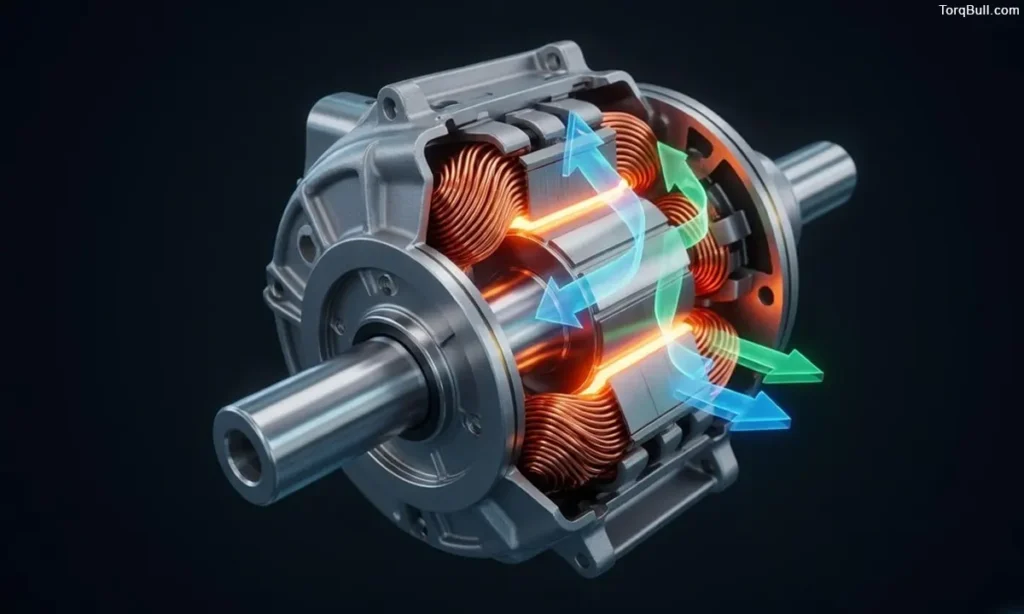
The regenerative braking efficiency ceiling that any specific vehicle can achieve is determined primarily by the electric motor’s power rating — because the motor’s generator mode output capability limits the maximum electrical power that the system can recover during deceleration, establishing the boundary above which friction brakes must supplement regardless of the driver’s braking gentleness.
The Tesla Model 3 Long Range’s dual-motor configuration — whose combined regenerative capability produces up to 60 kilowatts of recovered power during single-pedal driving deceleration — enables the aggressive regenerative deceleration that one-pedal driving requires without friction brake activation across the complete speed range from 60 mph to a complete stop in conditions that avoid the threshold braking rates that exceed the system’s generation capacity. At the 0.3g deceleration rate that urban one-pedal driving typically involves, the 60-kilowatt regenerative capability captures approximately 75 to 80 percent of the available kinetic energy — producing the efficiency contribution that Tesla’s highway efficiency figures partly reflect.
The Hyundai Ioniq 6’s 800-volt architecture enables significantly higher instantaneous power recovery than 400-volt alternatives — whose lower voltage requires higher current to achieve equivalent power, creating the thermal limitations in the motor windings and power electronics that constrain regenerative capability at high recovery rates. At the 350-kilowatt peak power electronics capacity that the Ioniq 6’s system supports, the regenerative braking’s power recovery ceiling substantially exceeds the 400-volt system’s equivalent — translating into higher real-world energy recovery particularly during the more aggressive deceleration events that approach but do not exceed the ABS intervention threshold.
The Porsche Taycan’s performance-oriented regenerative system — whose calibration reflects the performance driving context rather than pure efficiency optimisation — provides up to 290 kilowatts of regenerative recovery power during the high-performance deceleration events that the Taycan’s dynamic brief encompasses, capturing energy at rates that exceed most EV systems’ peak capabilities and providing the energy recovery contribution that the Taycan’s performance driving demands at circuit speeds where deceleration events are both more frequent and more energetic than urban driving produces.
Single-Pedal Driving Efficiency: Maximum Urban Recovery
The single-pedal driving capability — whose activation through the maximum regenerative mode setting applies the electric motor’s full generating resistance when the driver releases the accelerator, decelerating the vehicle without friction brake engagement — represents the regenerative system’s maximum efficiency expression in urban and suburban driving conditions where the frequent, predictable deceleration events that traffic flow management requires are exclusively managed through regenerative energy recovery.
The efficiency advantage that consistent single-pedal driving provides over conventional braking in urban conditions is documented across multiple independent studies — with real-world urban range improvements of 15 to 25 percent reported by drivers whose single-pedal technique is sufficiently refined to eliminate friction brake use across typical urban journeys. The BEV platforms whose single-pedal deceleration rate is aggressive enough to accommodate the urban speed-to-stop deceleration without friction brake supplementation — the Tesla Model 3, Hyundai Ioniq 5 and 6, Kia EV6 and Nissan Leaf with e-Pedal — provide the most complete single-pedal experience whose efficiency benefit is fully realisable without the friction brake intervention that less aggressive single-pedal implementations require for complete stops.
Read: Charge Smarter, Not Longer. EV Charging Time vs Battery Size Explained
Hybrid vs Full EV Regeneration: The Architecture Difference
The regenerative braking efficiency comparison between full battery-electric vehicles and hybrid powertrains reveals the architectural constraint that limits hybrid regeneration below the full EV’s equivalent capability — whose smaller electric motor sizing and reduced battery capacity for accepting recovered energy creates both a power recovery ceiling and a state-of-charge management challenge that full BEV architecture’s larger battery avoids.
The Toyota RAV4 Hybrid’s regenerative system — whose electric motor generates up to 40 kilowatts during deceleration into the relatively small hybrid battery whose state-of-charge management prioritises maintaining charge acceptance headroom — captures approximately 20 to 30 percent of the available kinetic energy in typical urban driving conditions. This figure’s apparently modest comparison with full BEV recovery percentages reflects the hybrid battery’s reduced capacity for accepting high-power regenerative input and the motor’s lower power rating rather than any fundamental efficiency limitation in the regenerative conversion process itself.
The Toyota RAV4 Prime’s expanded 18.1-kilowatt-hour plug-in hybrid battery — whose greater capacity provides the charge acceptance headroom that the standard hybrid’s smaller pack lacks — enables higher regenerative recovery rates whose urban efficiency contribution more closely approaches the full BEV’s equivalent, demonstrating that battery capacity rather than regenerative motor architecture is the primary efficiency differentiator between hybrid and full EV regenerative performance.
Read: Charge While You Drive! Wireless EV Charging Roads – How It Works?
Regenerative Braking Efficiency — 2026 Comparison Chart
| Vehicle | Architecture | Peak Regen Power | Urban Recovery Rate | Single-Pedal | Voltage |
| Porsche Taycan Turbo | Full BEV | 290 kW | 75–85% | Yes | 800V |
| Hyundai Ioniq 6 LR | Full BEV | 350 kW (System) | 78–85% | Yes | 800V |
| Kia EV6 GT | Full BEV | 320 kW (System) | 75–82% | Yes | 800V |
| Tesla Model 3 LR | Full BEV | 60 kW | 70–80% | Yes | 400V |
| BMW iX xDrive50 | Full BEV | 195 kW | 70–78% | Yes | 400V |
| Rivian R1T | Full BEV | 229 kW | 68–75% | Yes | 400V |
| Toyota RAV4 Prime | PHEV | 40 kW | 35–45% | Partial | 400V |
| Toyota RAV4 Hybrid | Full Hybrid | 40 kW | 20–30% | No | 400V |
| Honda CR-V Hybrid | Full Hybrid | 35 kW | 18–28% | No | 400V |
| Porsche Cayenne E-Hybrid | PHEV | 90 kW | 45–55% | Partial | 400V |