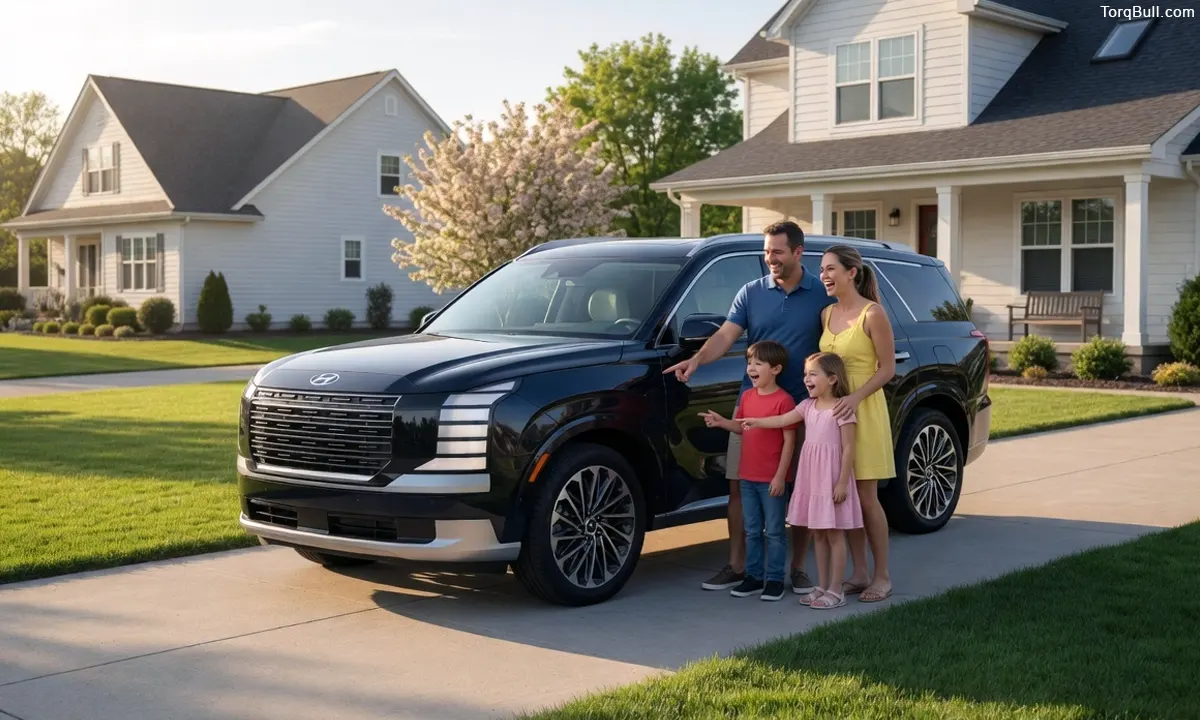
- The Hyundai Palisade sold more than 110,000 units in 2024, posting over 20% year-over-year growth and earning spots on multiple Best Family Car lists.
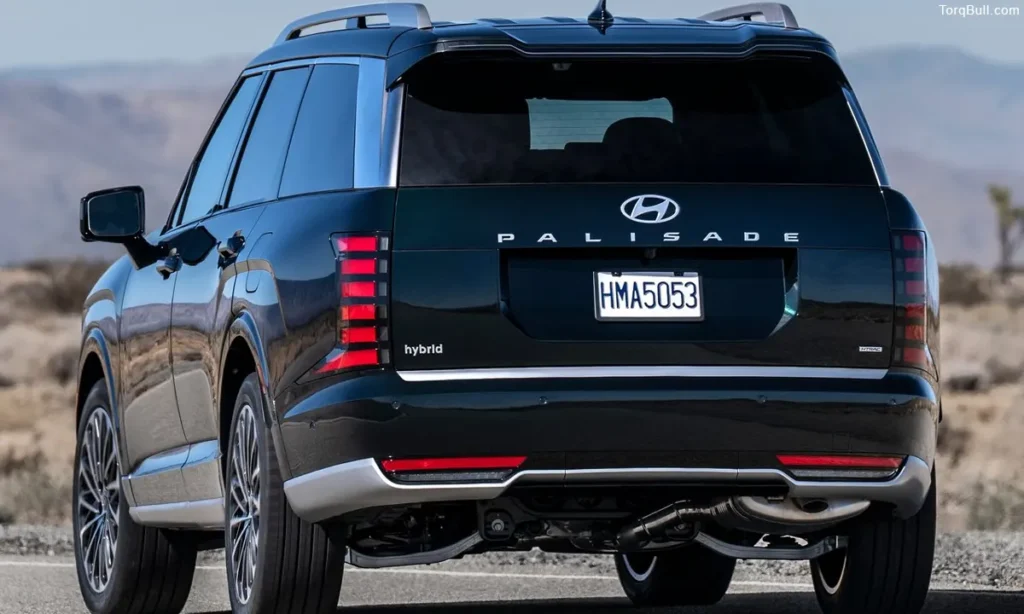
- The fully redesigned 2026 Palisade adds more third-row legroom, wider door openings, acoustic glass, and a new 329-hp hybrid powertrain.
- Families continue choosing the Palisade for its spacious interior, comfort-focused features, advanced safety tech, and strong overall value in the three-row SUV segment.
The Hyundai Palisade has accomplished something rare in the American automotive market — sustained, accelerating sales growth in a fiercely competitive three-row SUV segment while simultaneously moving upmarket in equipment and content rather than competing on price alone. More than 110,000 Palisades sold in 2024 represent a 20-plus percent increase over the prior year, driven by real purchasing decisions from real families who evaluated the Toyota Highlander, Honda Pilot, Kia Telluride and every competing alternative before choosing the Hyundai. The 2026 model — a comprehensive ground-up redesign rather than a year-to-year refresh — makes the ownership case more complete than at any previous point in the nameplate’s history. A longer, roomier body, a new hybrid powertrain, acoustic glass standard across the lineup, wider door openings for easier third-row access and a technology suite that draws comparison to luxury brands rather than mainstream alternatives collectively elevate the Palisade beyond what its starting price of $39,435 would suggest. These are the five reasons families specifically choose it — and why they recommend it to others at the rates that the owner satisfaction data consistently confirms.
Reason 1: Interior Space That Actually Works for Real Families in All Three Rows
Space is the most fundamental family SUV requirement — and the most frequently misrepresented, because stated cargo volumes and passenger counts do not communicate whether the space actually functions for the real family members who use it daily. The 2026 Palisade’s redesign specifically addressed this functional space distinction.
The second-generation Palisade’s longer body creates meaningfully more interior space than its predecessor — not cosmetically but in the dimensions that determine comfort for the passengers who occupy the second and third rows on every trip. Third-row passengers now have more than 32 inches of legroom, enabling adult accommodation for moderate-length journeys rather than restricting the third row exclusively to children on short errands. For families who regularly transport grandparents, older children or adult friends in the rearmost seats, this distinction defines whether the third row is genuinely usable or merely a nominal seat that everyone avoids.
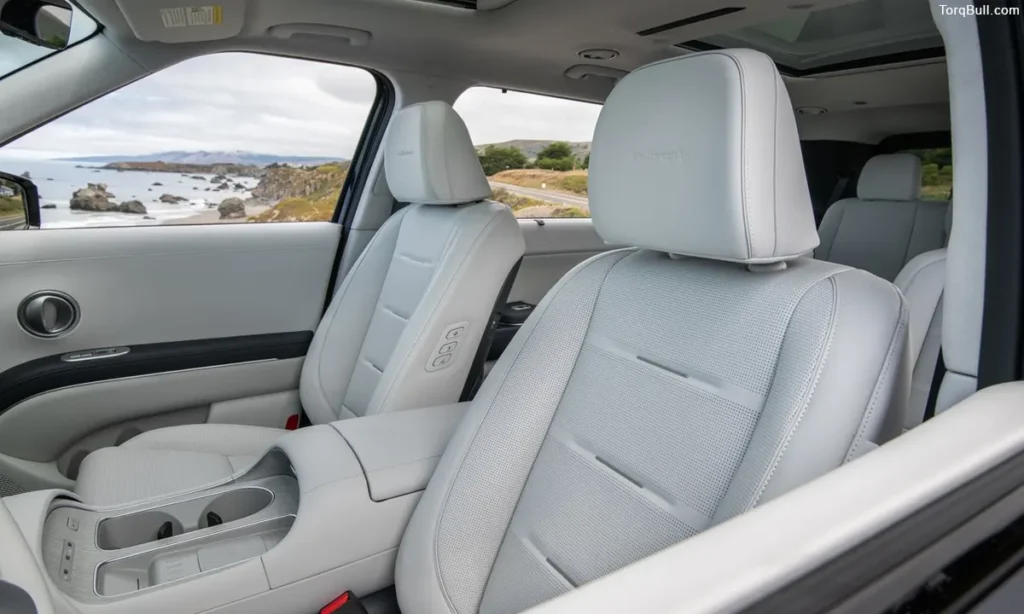
Second-row access is where the Palisade introduces a specific engineering detail that competing three-row SUVs do not replicate at comparable price points. A one-touch button on the second-row seat slides the seat forward, tilts the backrest and raises the seat base simultaneously — creating the widest possible access path to the third row with a single press that children can operate independently. Child safety seats remain in their positions throughout this movement, eliminating the disruptive repositioning that third-row access requires in most competing vehicles. In seven-passenger captain’s chair configuration, the aisle between the second-row seats allows walking directly to the third row without climbing over anything.
Cargo capability completes the space picture: 19.1 cubic feet with all seats occupied for everyday family grocery and errand use, 46.3 cubic feet with the third row folded for sports equipment and airport luggage, and 86.7 cubic feet with both rows folded for moving larger items or camping gear. The 2026’s body growth added incrementally to all three cargo measurements — modest individual improvements that collectively represent a more capable family cargo handler than the previous generation.
Read: Kia Sorento vs Hyundai Santa Fe: Which Is Better in 2026?
Reason 2: Safety Technology Standard on Every Trim — Not Reserved for Upper Configurations
The most family-relevant safety specification distinction is not which safety systems are available but on which trims those systems appear as standard equipment without additional cost. The Palisade’s approach — providing the full Hyundai SmartSense driver assistance suite across every trim from the base SE — is the specific structural decision that places it on Best Family Car lists consistently.
A family who chooses the base SE Palisade at $39,435 receives the same forward collision-avoidance assist with pedestrian and cyclist detection, blind-spot collision warning, lane keeping assist, driver attention warning and rear cross-traffic collision avoidance that the Calligraphy owner at $57,555 receives. The safety net that protects every family member in the vehicle is identical regardless of how much was spent on the vehicle’s trim level. This is not the case for most competing three-row SUVs, where specific safety features require selecting upper trims or option packages that carry meaningful additional cost.
The 2026 redesign added specific safety improvements beyond the standard SmartSense suite. Acoustic glass on the windshield and all four door windows is now standard across every Palisade trim — a specific material specification that reduces cabin noise during family road trips by absorbing high-frequency wind and road sound before it enters the passenger compartment. Quieter cabins reduce driver fatigue and allow easier communication across three rows — both functional safety benefits rather than merely comfort amenities.
The physical crash safety credentials support the active safety technology: five-star overall ratings from independent crash testing and Top Safety Pick recognition from the Insurance Institute for Highway Safety reflect the Palisade’s structural protection in the collision scenarios that the standard SmartSense suite works to prevent.
Reason 3: Technology That Keeps Every Passenger Satisfied and Every Driver Safe
Modern family SUV ownership is an exercise in managing competing passenger technology demands simultaneously — navigation for the driver, phone charging for the teenager, audio streaming for the back row and hands-free communication across three rows of passengers. The 2026 Palisade’s technology suite addresses each of these demands specifically rather than generally.
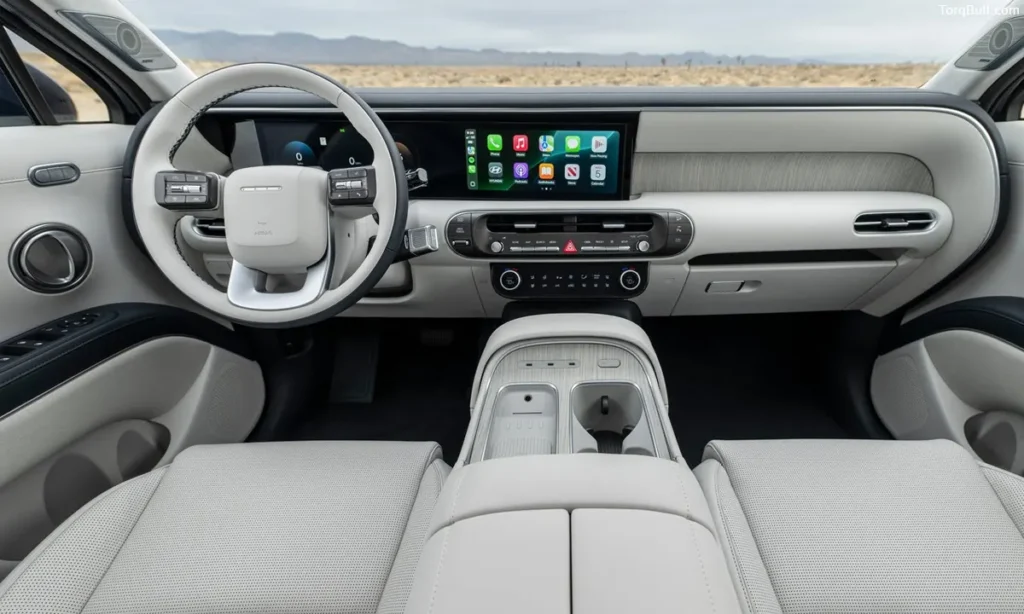
The centrepiece is a panoramic curved dual-display system under a single curved glass panel — pairing a 12.3-inch digital instrument cluster with a 12.3-inch infotainment touchscreen in a configuration that automotive reviewers consistently describe as approaching luxury vehicle presentation. Wireless Apple CarPlay and Android Auto are standard, eliminating cable management requirements in the front compartment. USB-C ports distributed throughout all three rows charge at rates up to 100 watts on upper trims — sufficient to charge a laptop or tablet at full speed, addressing the device charging demands that families with multiple teenagers generate on long journeys.
The gear selector relocation from the centre console to the steering column — following the design language of Hyundai’s electric vehicle lineup — opens the entire centre console for family use. Cup holders, a wireless charging pad and storage compartments replace the shifter mechanism, creating a more organised and more accessible front-compartment environment for the small items that family daily use accumulates.
Upper trims add specific family-oriented technology features that no competing vehicle at comparable pricing provides. An intercom system allows the driver and front passenger to speak to rear-seat passengers through the cabin speakers without turning around or raising voices — specifically addressing the third-row communication challenge that drivers of large family SUVs navigate on every longer trip. A UV-C sanitisation compartment uses ultraviolet light to sanitise small personal items — a detail that parents of young children find specifically relevant and that no competing three-row SUV includes at any price.
Read: 2026 Hyundai Boulder Concept Signals a Bold Entry into Hardcore Off-Road Territory
Reason 4: The Industry’s Best Warranty Provides Financial Confidence Across the Ownership Period
The Palisade’s warranty structure is the ownership feature that operates invisibly during normal vehicle function and becomes the most consequential benefit when any mechanical issue arises. It is also the feature that most fundamentally differentiates Hyundai’s ownership proposition from every competing manufacturer in the three-row SUV segment.
The complete Palisade warranty package covers five years or 60,000 miles for the basic bumper-to-bumper warranty, ten years or 100,000 miles for the powertrain including the engine and transmission, five years of unlimited-mileage 24/7 roadside assistance and three years or 36,000 miles of complimentary scheduled maintenance covering oil changes and tyre rotations at no additional cost. The hybrid battery and electric motor components carry the same 10-year, 100,000-mile powertrain coverage — providing identical financial protection for the hybrid system’s components that the Palisade Hybrid’s efficiency improvements make the most financially rewarding powertrain choice for high-mileage family drivers.
The competitive warranty context makes the Palisade’s coverage most meaningful. The Toyota Highlander’s powertrain warranty covers five years or 60,000 miles. The Honda Pilot’s powertrain warranty covers five years or 60,000 miles. The Kia Telluride matches the Palisade at 10 years or 100,000 miles but does not include the Palisade’s complimentary maintenance period. Every entry-level luxury alternative — Acura MDX, Volvo XC90, Infiniti QX60, Lincoln Aviator — provides four or five years of powertrain coverage at prices higher than the Palisade. At every price point in the three-row segment, the Palisade’s warranty coverage is the most comprehensive available.
For families planning five to seven-year or longer ownership — a common pattern for a vehicle purchased around the time children enter school — the 10-year powertrain coverage means the warranty remains active throughout the ownership period rather than expiring mid-ownership and creating financial exposure during the years when unexpected repair costs most affect family budgets.
Read: Hyundai Palisade Sets New Standards for Comfort in Three-Row SUVs
Reason 5: Value That Delivers More Standard Equipment at Lower Prices Than Direct Competitors
The final and most immediately actionable reason families choose the Palisade is the straightforward calculation of what the vehicle provides relative to its purchase price — a calculation that consistently produces results more favourable to the Palisade than equivalent analysis of competing three-row SUVs at comparable price points.
The base SE Palisade at $39,435 provides the complete SmartSense safety suite, wireless Apple CarPlay and Android Auto, the panoramic dual-screen infotainment system, one-touch second-row access, 100-watt USB-C ports, acoustic glass on all windows and complimentary scheduled maintenance — a standard equipment list that competing vehicles either price higher at entry or require option packages to reach. The Honda Pilot starts at $43,690 — $4,255 more — for comparable standard equipment content. The Toyota Highlander’s 2026 entry price exceeds the Palisade’s comparably equipped position.
At the top of the mainstream lineup, the Calligraphy at $57,555 provides Nappa leather, ventilated second and front seats, power-adjustable seating for all three rows, fingerprint authentication engine start, an integrated dash cam and a head-up display — at a price below the Acura MDX, Volvo XC90 and Infiniti QX60 configurations required to access comparable equipment in those vehicles.
The hybrid powertrain option — producing 329 combined horsepower and estimated fuel economy of 34 to 35 MPG combined — adds a powertrain efficiency dimension that the non-hybrid Palisade’s 19 to 21 MPG combined cannot approach, without the dramatic price premium that equivalent-efficiency alternatives carry. For families who cover 15,000 or more annual miles, the Palisade Hybrid’s fuel cost reduction relative to the gasoline model accumulates meaningfully across the ownership period and contributes to a total cost of ownership that reinforces the purchase price value argument.
2026 Hyundai Palisade: 5 Family Reasons Summary Chart
| Reason | Key Evidence | Competitive Context |
| Genuine three-row space | 32+ inches 3rd-row legroom; one-touch 2nd-row access; 86.7 cu ft max cargo | Adults accommodated; child seats stay in place during row access |
| Standard safety on all trims | Full SmartSense + 5-star crash rating + acoustic glass standard | Safety tech at $39,435 base identical to $57,555 Calligraphy |
| Comprehensive family technology | Dual 12.3″ screens, 100W USB-C, wireless CarPlay, intercom, UV-C compartment | Features competing vehicles reserve for upper trims included lower |
| Industry-best warranty | 10 yr/100K powertrain, 5 yr roadside, 3 yr free maintenance | Covers full family ownership period; best coverage in segment |
| Outstanding value per dollar | $39,435 base; more standard features than most competitors at higher prices | Calligraphy beats luxury alternatives on feature content below their price |