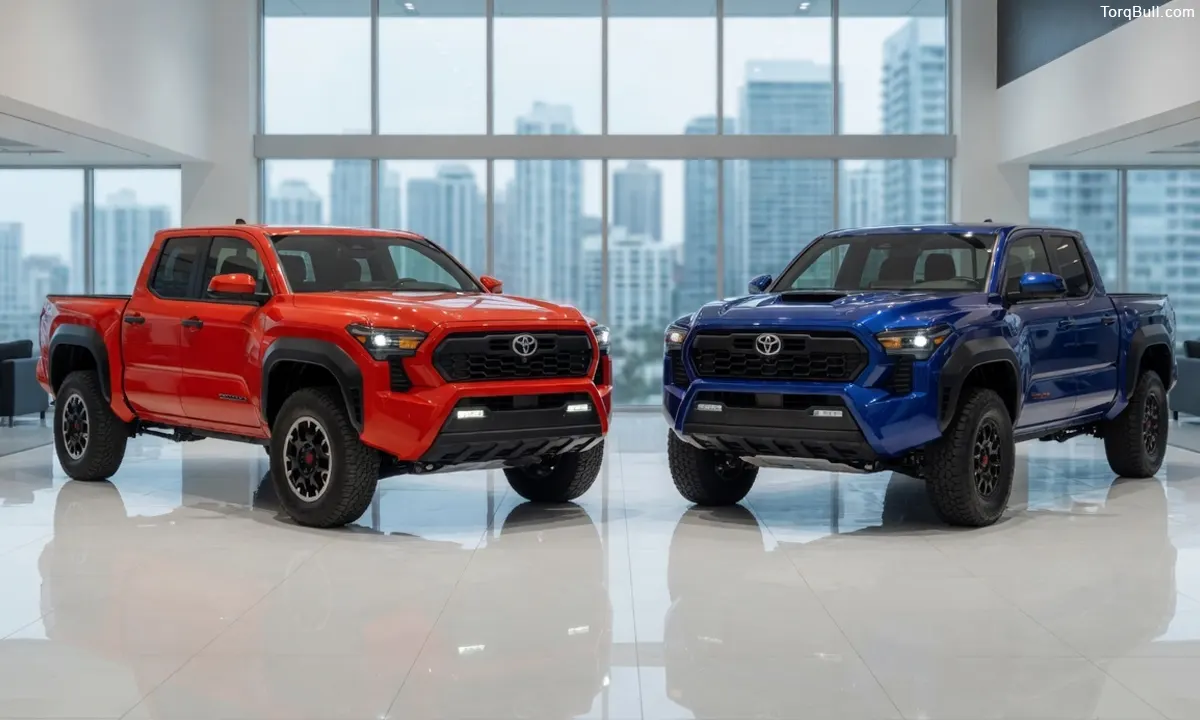
- The 2026 Toyota Tacoma TRD Off-Road adds Bilstein shocks, a locking rear differential and advanced terrain management features.
- The TRD Sport starts at $39,400 with rear-wheel drive, a brake-actuated limited-slip differential and a sport-tuned suspension.
- The TRD Off-Road focuses on trail capability, while the TRD Sport is tuned for better on-road performance.
The choice between the Toyota Tacoma TRD Sport and TRD Off Road is one of the most commonly debated purchase decisions in the midsize truck segment — because both trims wear the same TRD badge, share the same turbocharged engine, produce identical maximum horsepower figures and price within approximately $2,400 of each other. The similarity of these surface specifications misleads many buyers into treating this as a minor trim comparison when it is, in fact, a fundamental choice between two different vehicle philosophies: a sport tuned street truck optimised for confident road driving and a purpose built trail truck whose hardware is specifically engineered for challenging off pavement terrain. This guide explains every meaningful difference between these two configurations so that the purchase decision reflects actual intended use rather than badge preference.
The Starting Point: Price and Drivetrain Philosophy
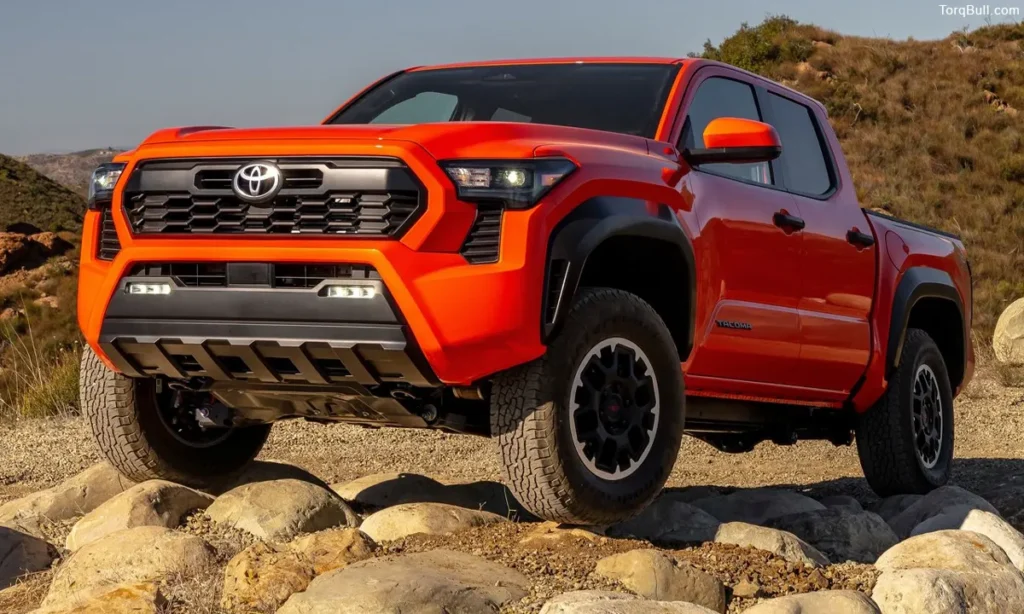
The TRD Sport starts at approximately $39,400 for the Double Cab 4WD configuration in the 2026 model year. The TRD Off Road starts at approximately $41,800 — a difference of approximately $2,400 that represents more than a price gap. It represents the cost of the hardware that the Off Road adds over the Sport and defines each truck’s intended operating environment.
The drivetrain configuration available to each trim reflects this philosophical difference directly. The TRD Sport is available in both rear wheel drive and four wheel drive configurations — rear wheel drive is the standard specification, making 4WD an upgrade that costs additional money. This reflects the Sport’s primary orientation toward on road performance, where rear wheel drive is the conventional and most efficient drivetrain configuration. The TRD Off Road comes with four wheel drive as standard across all configurations. Buyers who expect genuine off road capability in challenging terrain require four wheel drive, and the Off Road’s standard 4WD inclusion eliminates any ambiguity about its intended operating environment.
Both trims use the same 2.4 litre turbocharged four cylinder engine producing 278 horsepower and 317 pound feet of torque with the eight speed automatic transmission. The i Force MAX hybrid powertrain producing 326 horsepower and 465 pound feet of torque is available as an option on both trims — providing access to the hybrid’s instant low end torque advantage for both on road performance and off road traction applications.
Read: Toyota Tacoma TRD Pro Full Review 2026. The Off-Road Flagship Assessed
Suspension: The Most Consequential Difference
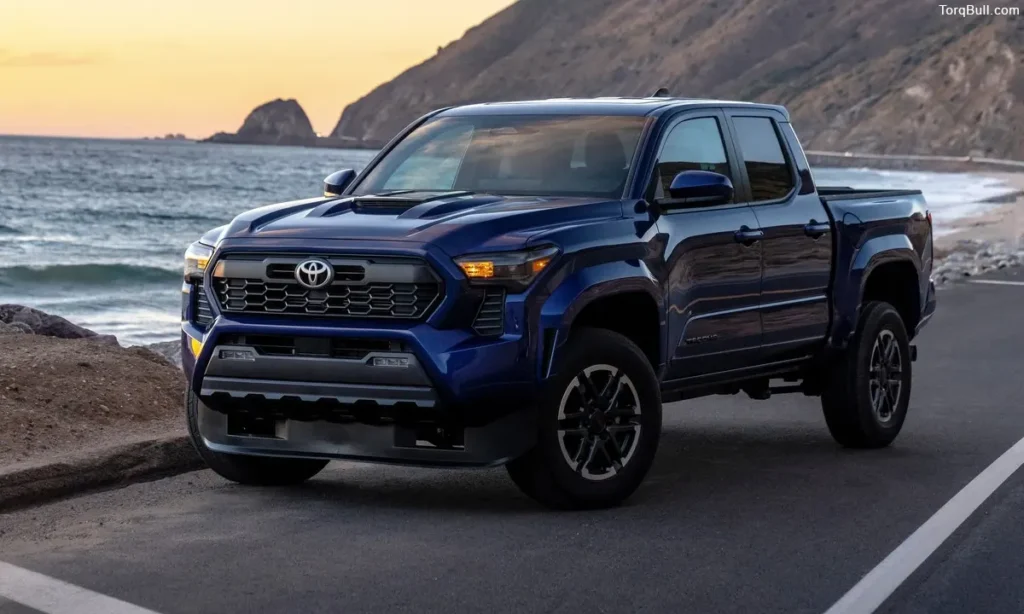
The suspension hardware difference between the TRD Sport and TRD Off Road is the single most practically significant specification distinction between these two trucks — and the one that most directly determines capability in the driving environments each trim prioritises.
The TRD Sport uses a sport tuned suspension specifically calibrated for on road performance. The tuning tightens body roll during cornering, improves road holding on paved surfaces and produces a more responsive steering feel that rewards confident driving on highways, winding roads and urban environments. The brake actuated limited slip differential included on the TRD Sport improves traction in low grip on road situations by detecting wheel spin and applying brake pressure to the spinning wheel, directing torque to the wheel with more grip. This system works effectively on wet roads, loose gravel and mild unpaved surfaces but does not provide the traction recovery capability of a mechanical locking differential in demanding off road scenarios.
The TRD Off Road replaces the sport tuned suspension with Bilstein remote reservoir monotube shocks — a meaningfully more capable suspension hardware specification. Remote reservoir shocks carry additional damper fluid in a separate canister connected to the main shock body, increasing the thermal capacity of the damping system and allowing it to maintain consistent performance during sustained off road use that generates heat in conventional shock absorbers. The remote reservoir design prevents the oil foaming and consistency loss that occurs when standard shocks overheat during repeated compression cycles on demanding terrain. An additional End Stop Control Valve increases damping resistance as the suspension approaches full compression, preventing the harsh bottoming impact that occurs when the suspension runs out of travel on large obstacles.
The practical consequence is that the TRD Off Road can absorb significantly larger road and trail inputs without the suspension feeling overwhelmed or transmitting harsh impacts into the cab — and it can sustain this performance across extended trail use rather than degrading as the suspension heats up.
Off Road Specific Hardware: What the Sport Does Not Include
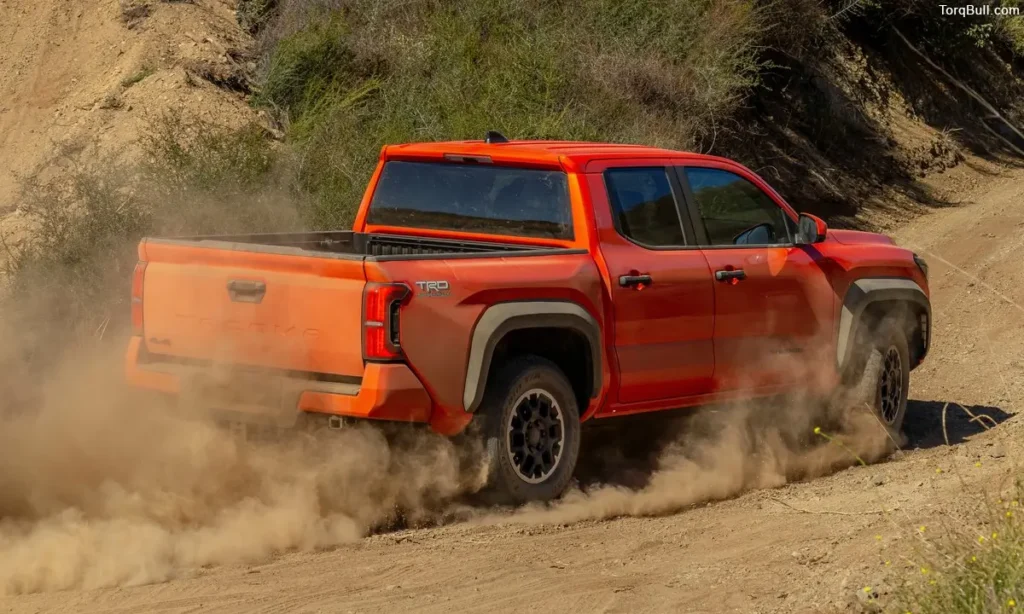
Beyond the suspension, the TRD Off Road adds a specific package of trail capability hardware that the TRD Sport does not carry — hardware that determines performance in the demanding terrain scenarios where the Off Road designation is most relevant.
The electronically controlled locking rear differential is the most mechanically significant addition. When engaged, the locking differential splits torque to the rear wheels in a fixed 50 to 50 ratio regardless of traction conditions at each wheel. In situations where one rear wheel is over mud, sand or has lost ground contact entirely, the locked differential ensures the other rear wheel continues to receive full torque rather than allowing all power to flow to the path of least resistance. This is the single most effective traction recovery tool available in any truck for escaping stuck situations on loose surfaces.
Crawl Control adds an automatic throttle and brake management system that functions as a trail cruise control. When engaged at a selected speed from five available settings, Crawl Control manages all throttle and braking inputs to maintain the selected pace over obstacles while the driver concentrates exclusively on steering. The TRD Sport does not include Crawl Control.
Multi Terrain Select provides five electronically managed surface modes — Mud, Sand, Loose Rock, Rock and Dirt — each calibrating traction control aggressiveness and throttle response for the specific surface conditions of that mode. The Sport does not include Multi Terrain Select.
Front and rear skid plates on the TRD Off Road provide physical protection for the engine, transmission and fuel tank from rock and obstacle impacts during trail use. The TRD Sport includes only a front skid plate.
All terrain tyres come standard on the TRD Off Road, providing genuine off road traction on mud, rock and sand that the highway oriented all season tyres standard on the TRD Sport cannot replicate.
Read: Toyota Tacoma Off-Road Capability Explained 2026. The Ultimate Off-Road Midsize Truck?
On Road Performance: Where the Sport Has the Advantage
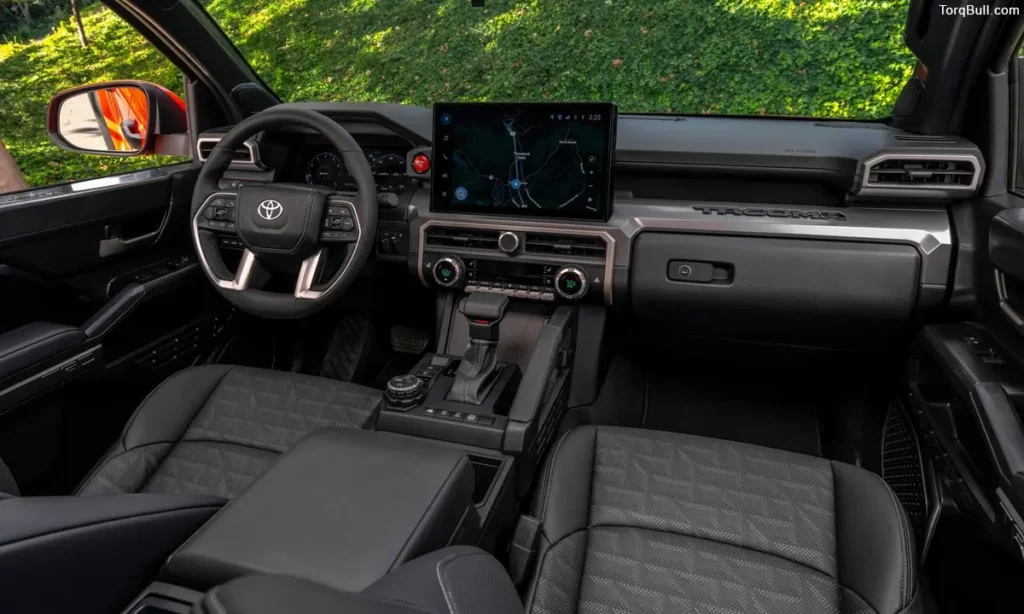
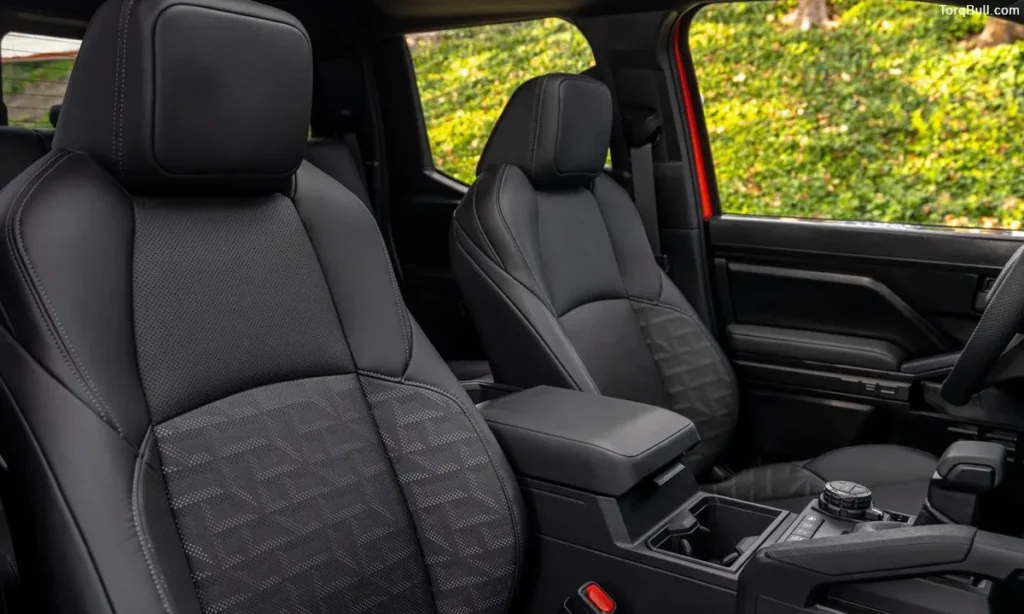
The TRD Sport’s advantages over the Off Road concentrate almost entirely in the on road driving experience — and for buyers whose primary use is daily commuting, highway driving and urban navigation, these advantages are genuinely felt on every drive.
The sport tuned suspension’s tighter calibration produces less body roll during highway lane changes, more stable tracking on long straight sections and a more connected feedback between the road surface and the steering wheel. Owners who drive the Sport predominantly on paved roads consistently describe the handling as more responsive and more satisfying than the Off Road’s more compliant suspension allows. The trade for this on road capability is reduced compliance over large road impacts — the Sport’s suspension is better tuned for moderate, consistent paved surface inputs than for the large, irregular impacts of serious off road terrain.
The Sport’s standard rear wheel drive configuration (before the optional 4WD upgrade) is lighter than the Off Road’s standard 4WD system, contributing marginally to better fuel economy in mixed driving conditions. The TRD Sport achieves slightly better fuel economy in configurations without the 4WD transfer case weight and drivetrain drag that the Off Road carries as standard.
Toyota Tacoma TRD Sport vs TRD Off Road — Complete Differences Chart
| Feature | TRD Sport | TRD Off Road | Advantage |
| Starting Price | approximately $39,400 | approximately $41,800 | TRD Sport |
| Standard Drivetrain | Rear Wheel Drive | 4WD Standard | TRD Off Road |
| Suspension Shocks | Sport Tuned Standard | Bilstein Remote Reservoir | TRD Off Road |
| Locking Rear Differential | Not available | Electronically Controlled Standard | TRD Off Road |
| Limited Slip Differential | Brake Actuated (on road) | Locking Differential instead | Depends on use |
| Crawl Control | Not included | Standard | TRD Off Road |
| Multi Terrain Select | Not included | Standard (5 modes) | TRD Off Road |
| Skid Plates | Front only | Front and rear | TRD Off Road |
| Standard Tyres | All Season Highway | All Terrain | TRD Off Road |
| On Road Handling | Sport Tuned Composure | More compliant | TRD Sport |
| Body Control at Speed | Tighter | More flexible | TRD Sport |
| i Force MAX Hybrid Option | Available | Available | Tie |
| Engine Output | 278 hp, 317 lb ft | 278 hp, 317 lb ft | Tie |
| Transmission Options | 8 speed auto, 6 speed manual | 8 speed automatic | TRD Sport (manual option) |
| Best For | Daily driving, highway, mild trails | Serious off road, trail use | Context dependent |
Which Trim Is Right for You: The Honest Decision Framework
The TRD Sport is the correct choice for buyers who cover the majority of their annual mileage on paved roads — commuting on highways, driving in urban environments and making occasional camping or recreation trips on gravel roads or well maintained dirt tracks. The Sport’s better on road composure, standard rear wheel drive with optional 4WD and lower starting price represent a more appropriate specification for this majority use case than the Off Road’s trail hardware that will rarely be fully engaged.
The TRD Off Road is the correct choice for buyers who regularly drive on genuine off road terrain — technical trails, mud, sand, rocky fire roads and surfaces where wheel articulation and traction management determine progress rather than road holding and cornering stability. The Bilstein shocks, locking rear differential, Crawl Control and Multi Terrain Select are not features that provide occasional benefits in casual use — they are purpose built tools whose advantage is most completely expressed in the specific terrain they were designed for.
An insight from the owner community that has emerged in 2026 is that buyers are increasingly choosing the TRD Sport even when they intend some off road use — because the Sport’s standard rear wheel drive starting price, combined with the optional 4WD upgrade, produces a truck that handles well on the daily road driving that constitutes the majority of most owners’ actual use. Serious trail enthusiasts and overlanding buyers remain firmly in the TRD Off Road camp where the locking differential and Bilstein hardware represent genuine daily trail advantages that the Sport’s brake actuated system cannot replicate.