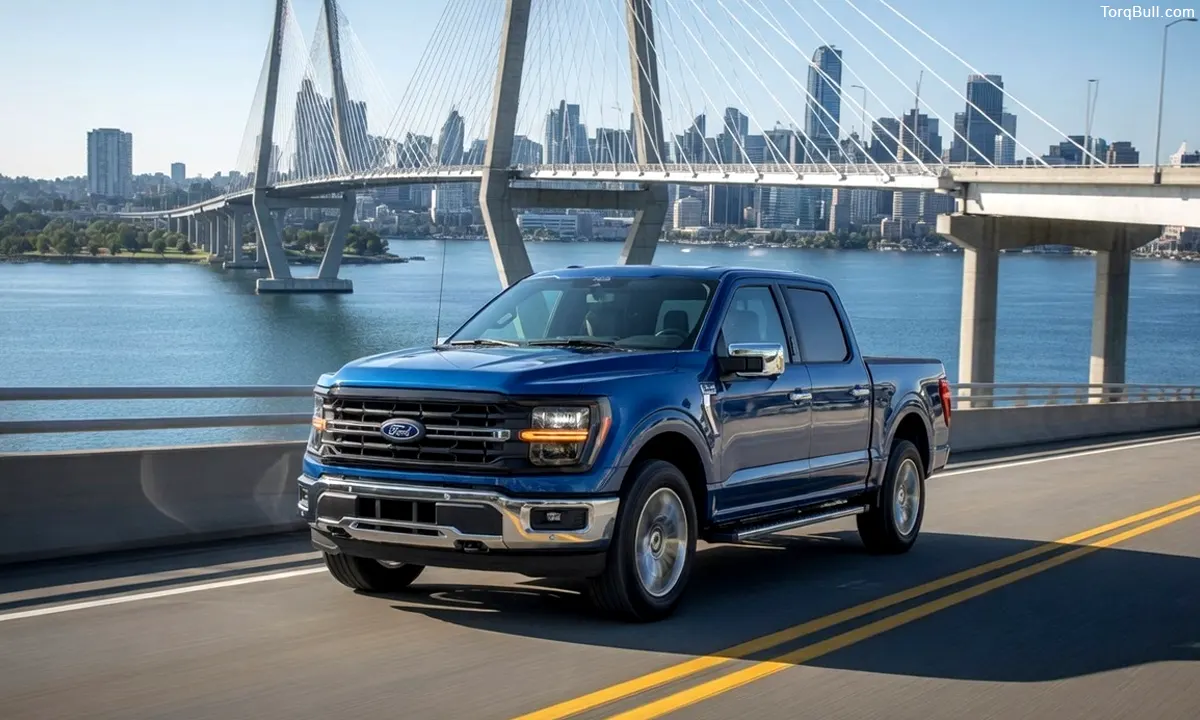
- The 2026 Ford F-150 delivers a maximum payload capacity of 2,440 pounds when properly configured with the 3.5-liter EcoBoost V6.
- Ford leads the segment in advertised maximum payload ahead of the Ram 1500 and Chevrolet Silverado 1500.
- The payload figure listed on the yellow door-jamb sticker is the only legally valid rating for an individual truck.
Payload capacity is the most frequently misunderstood specification in full size truck ownership — and the misunderstanding costs buyers money, creates unsafe loading conditions and occasionally voids warranties when the consequences become serious enough to generate an insurance or liability dispute. The Ford F-150’s maximum payload figures of up to 2,440 pounds appear prominently in Ford’s marketing materials, but these maximums apply only to specific and precisely defined configurations that a buyer must specifically order to receive. Any deviation from those configurations — a different cab size, a different engine, an added option package or a four wheel drive system where the maximum payload was achieved with rear wheel drive — changes the payload rating. This guide explains every dimension of F-150 payload: what it means, how it is calculated, why it changes by configuration and how to find the number that applies to the specific truck you own or plan to purchase.
What Payload Capacity Actually Means: The Legal and Physical Definition
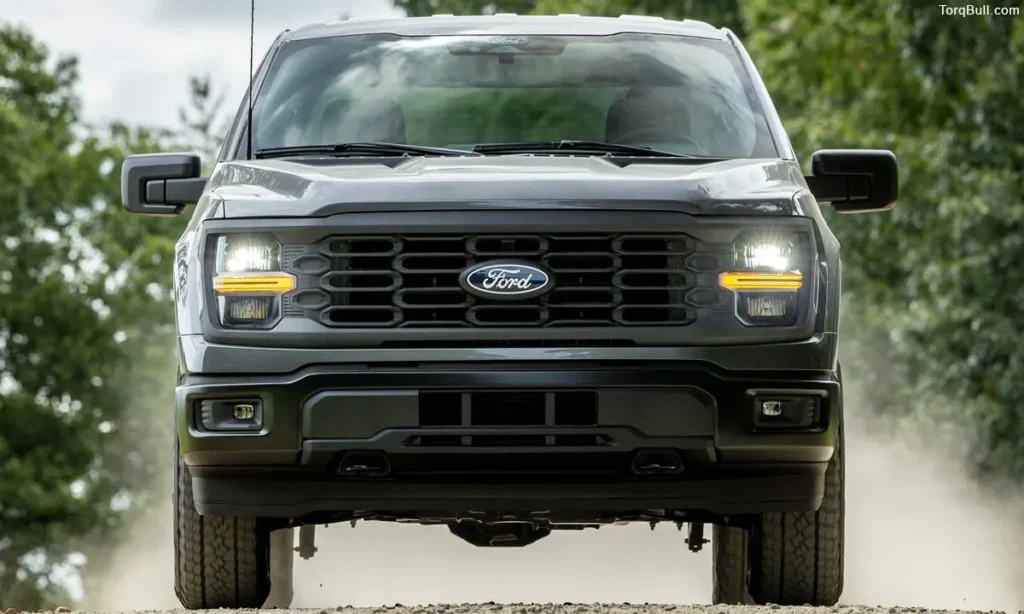
Payload capacity is the maximum weight the F-150 can carry in its cab and bed combined — including every passenger, every piece of cargo in the bed and everything stored inside the cab beyond the truck itself. It is not the weight of cargo placed in the bed alone. It is the total additional weight the truck can legally and safely support above its own kerb weight.
The calculation that produces payload rating begins with the Gross Vehicle Weight Rating — the maximum allowable total weight of the truck including itself and everything it carries. Subtract the truck’s kerb weight — the weight of the vehicle as delivered, with standard fluids and a full fuel tank — and the remainder is the payload capacity. A truck with a Gross Vehicle Weight Rating of 7,050 pounds and a kerb weight of 4,610 pounds has a payload capacity of 2,440 pounds. Every pound added to the truck before it leaves the factory — a heavier engine, a four wheel drive transfer case, an additional battery for the PowerBoost hybrid system, a sunroof, a heavier cab configuration with additional seating — increases the kerb weight and reduces the payload capacity proportionally.
This is why Ford’s maximum payload of 2,440 pounds cannot appear on every F-150. It can only appear on the specific configuration where the kerb weight is low enough and the Gross Vehicle Weight Rating is high enough to produce that difference. Buyers who purchase a different configuration receive a different payload rating, printed on a specific yellow sticker positioned inside the driver’s door jamb or on the doorframe. That sticker number — not the marketing maximum — is the legally binding payload capacity for that specific vehicle.
Read: Ford F-150 Raptor Full Review 2026. The Complete Performance Truck Assessment
How Engine Choice Affects Payload: The Complete F-150 Engine Breakdown
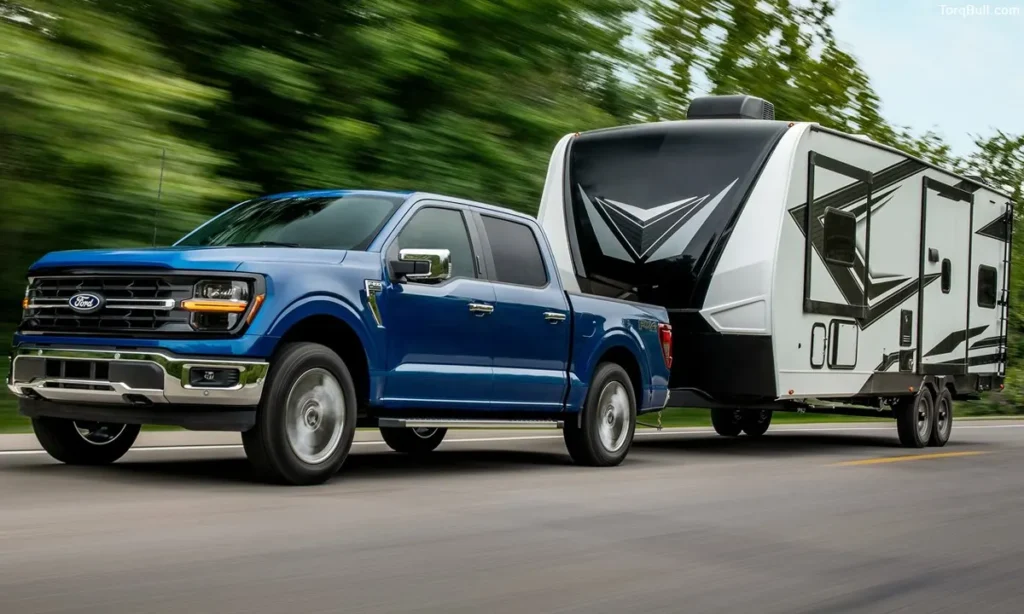
The engine selected at purchase is one of the most significant variables in the F-150’s final payload capacity, because different engines have meaningfully different weights and produce different Gross Vehicle Weight Ratings from Ford’s engineering assessment.
The 2.7 litre EcoBoost V6 produces some of the highest payload ratings in the F-150 lineup — up to approximately 2,400 pounds in specific configurations — because the smaller displacement turbocharged engine is lighter than the larger V6 and V8 alternatives, keeping kerb weight lower and payload capacity correspondingly higher. This engine’s combination of strong torque output with relatively low weight makes it a preferred choice for buyers who specifically prioritise payload capacity alongside efficient daily fuel economy.
The 3.5 litre EcoBoost V6 is the engine associated with the F-150’s class leading maximum payload of 2,440 pounds when equipped with the specific configuration that produces this peak rating. The 3.5 litre V6 also delivers the highest towing capacity in the lineup at 13,500 pounds, making it the most comprehensively capable engine for buyers who need to maximise both hauling and towing simultaneously.
The 3.5 litre PowerBoost Full Hybrid V6 carries the hybrid battery pack and additional hybrid system components that add weight relative to the non-hybrid 3.5 litre engine. This additional weight reduces payload capacity to approximately 2,120 pounds in most configurations — a meaningful reduction from the non-hybrid maximum that represents the tradeoff buyers accept for the PowerBoost’s superior fuel economy, approximately 20 MPG in combined driving, and the Pro Power Onboard generator capability that provides up to 7.2 kilowatts of on site electrical power.
The 5.0 litre naturally aspirated V8 produces consistent power delivery with a payload rating of approximately 2,000 pounds in most configurations. The V8 is heavier than the turbocharged four and six cylinder alternatives, which reduces its available payload margin below the peak numbers associated with lighter engines. Buyers who specifically want the V8’s naturally aspirated character and traditional V8 sound accept this payload reduction as part of the V8 ownership experience.
The 3.5 litre High Output EcoBoost V6 in the Raptor prioritises off road performance hardware — FOX Live Valve shocks, heavy front and rear bumpers, wider track and additional suspension components — that significantly increases kerb weight and reduces payload to approximately 1,410 pounds. The Raptor is not a work truck. Its engineering priorities are high speed desert running and trail capability, and its payload rating reflects those priorities rather than maximum hauling utility.
How Cab Style and Bed Length Affect Payload
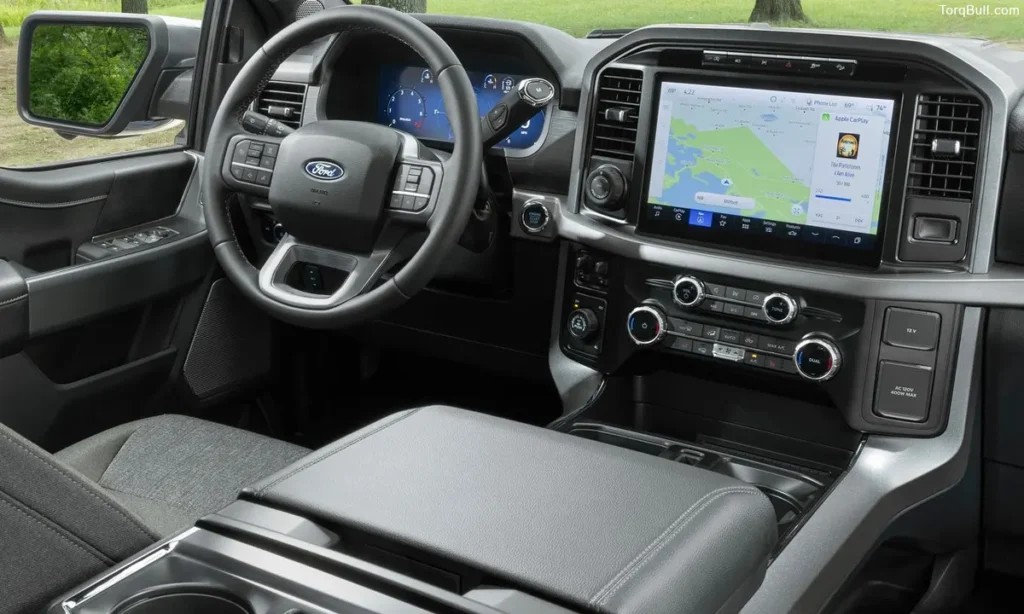

Beyond the engine choice, the cab configuration selected at purchase is the second most significant variable in determining the F-150’s specific payload rating.
The Regular Cab configuration — a two door truck with no extended or crew cab rear seating — is the lightest cab option available and generally produces the highest payload ratings for any given engine and drivetrain combination. The configuration that consistently delivers the highest payload is the Regular Cab four wheel rear drive with the eight foot bed, because this combination minimises the cab weight while maximising the Gross Vehicle Weight Rating Ford assigns to this configuration.
The SuperCab adds two rear access doors and a rear seating area, increasing cab weight and reducing available payload relative to the Regular Cab at comparable engine and drivetrain specifications. The SuperCrew cab — the four door full size rear seat configuration — adds the most weight of any cab option, producing lower payload ratings than either the Regular Cab or SuperCab at identical engine specifications.
Bed length also interacts with payload through its effect on Gross Vehicle Weight Rating in some configurations. The eight foot bed produces the largest cargo volume — 77.4 cubic feet — while the 5.5 foot bed produces 52.8 cubic feet. The six foot bed represents the middle option. Cargo volume does not directly equal payload capacity — a longer bed is not inherently rated for more weight than a shorter bed — but the configuration that produces peak payload often involves a specific bed length as part of the required specification.
Read: Should I Buy Ford F-150 or Ram 1500? Here Is Which Truck Wins For Your Life
How Drivetrain Choice Affects Payload: 4WD vs RWD
Four wheel drive adds meaningful weight to the F-150 through the transfer case, front axle differential, front drive shafts and additional components that rear wheel drive configurations do not carry. This weight increase reduces the available payload relative to an equivalent rear wheel drive configuration with the same engine and cab.
A 4×2 Regular Cab F-150 with the 3.5 litre EcoBoost V6 reaches the maximum advertised 2,440 pounds of payload capacity in its most capable configuration. Switching to a 4×4 drivetrain with otherwise identical specifications reduces this figure by approximately 200 to 300 pounds depending on specific equipment. For buyers in northern states, mountain regions or areas where four wheel drive is a genuine daily necessity, this payload reduction is the accepted cost of the traction capability that four wheel drive provides.
Ford F-150 2026 Payload Capacity by Engine and Configuration — Complete Reference Chart
| Engine | Drivetrain | Approximate Max Payload | Notes |
| 2.7L EcoBoost V6 | 4×2 (RWD) | approximately 2,400 lbs | Lightweight engine; excellent payload per pound |
| 3.5L EcoBoost V6 | 4×2 (RWD) | 2,440 lbs (class maximum) | Class leader; requires Max Trailer Tow Package configuration |
| 3.5L EcoBoost V6 | 4×4 | approximately 2,100 to 2,200 lbs | 4WD system weight reduces payload |
| 3.5L PowerBoost Hybrid V6 | 4×2 or 4×4 | approximately 2,120 lbs | Battery weight reduces vs non-hybrid; best for fuel economy |
| 5.0L Ti VCT V8 | 4×2 or 4×4 | approximately 2,000 lbs | Heavier engine reduces payload margin |
| 3.5L High Output V6 (Raptor) | 4×4 | approximately 1,410 lbs | Off road hardware dominates; not a work truck specification |
| Any engine (SuperCrew cab) | Either | Lower than Regular Cab equivalent | Additional cab weight reduces payload proportionally |
| Any engine (Regular Cab, 8ft bed) | 4×2 | Highest for given engine | Configuration most favourable to peak payload rating |
All figures are approximate. The yellow door jamb sticker on the specific vehicle is the binding legal payload specification for that truck.
Read: Ford F-150 Off-Road Capability Review: FX4, Tremor and Raptor Compared
The Yellow Door Jamb Sticker: The Only Number That Legally Matters
Every F-150 delivered to every buyer carries a certification label — typically yellow, positioned inside the driver’s door jamb or on the door frame edge — that states the specific Gross Vehicle Weight Rating and the resulting payload capacity for that exact vehicle as configured. This number is calculated from the actual kerb weight of that truck’s specific combination of options, equipment and configuration. It is not the marketing maximum. It is not the engine family average. It is the number specific to that vehicle and only that vehicle.
Exceeding the payload capacity printed on this sticker creates a legally unsafe and potentially uninsured condition. In the event of an accident while overloaded, insurance coverage may be disputed on the basis that the vehicle was being operated outside its certified safe operating parameters. More immediately, exceeding payload capacity stresses the F-150’s suspension, brakes and frame beyond their engineered limits — reducing braking effectiveness, destabilising the vehicle’s handling and accelerating wear on components designed for the rated maximum rather than above it.
Before any significant haul — job site materials, a load of landscaping supplies, equipment for a farm or construction site — verify your specific truck’s payload rating from the door jamb sticker and weigh or estimate the total load including passengers and in cab cargo before departing. For loads approaching or exceeding the F-150’s payload limit, the F-250 Super Duty is the appropriate tool.