- Ford F-150 leads in capability: lower starting price, up to 13,500 lbs towing, and best-in-class 2,440 lbs payload
- Ram 1500 excels in comfort: smoother ride, air suspension, and available massaging seats with a powerful Hurricane I-6
- Overall verdict: F-150 wins narrowly with stronger versatility, while Ram 1500 dominates in ride quality and luxury
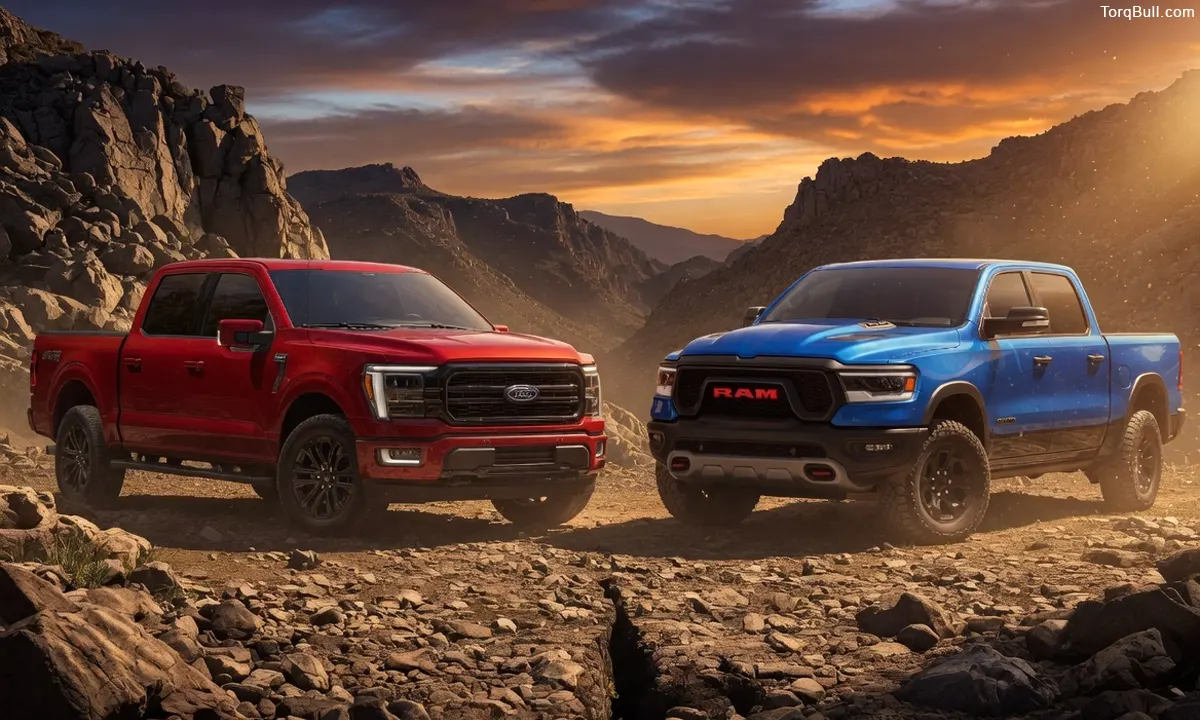
The Ford F-150 versus Ram 1500 is the most enduring and most genuinely contested rivalry in the American automotive market — two trucks that have competed at the top of the full-size pickup segment for decades, each refining its specific strengths while closing the gap in the other’s traditional advantages. In 2026, the debate is closer than it has ever been: the Ram 1500 returns the HEMI V8 after a controversial year of exclusion, the F-150 continues with its most comprehensive engine lineup and BlueCruise technology, and both trucks offer genuine luxury at their upper trim levels. JD Power’s comprehensive head-to-head comparison concludes that Ford highlights broad range and commercial capability while Ram focuses on comfort and specialisation — a philosophical distinction that explains why both trucks maintain loyal buyer communities rather than one vehicle having definitively won the argument. The choice between them ultimately resolves to one question: what matters most in your specific truck use?
Price: F-150 Starts Lower, Ram Reaches Higher in Luxury
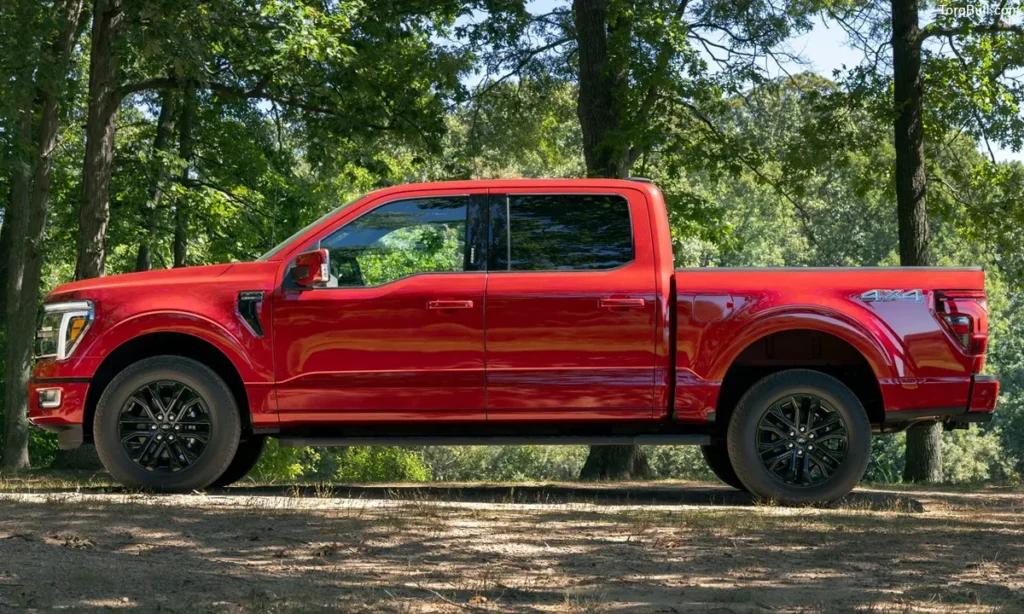
The opening price comparison between these two trucks is the most straightforward category in the entire comparison — and one of the clearest F-150 advantages.
The Ford F-150 starts at $37,350 for the base XL trim — the entry point into the segment’s best-selling vehicle. The Ram 1500 starts at $40,275 — approximately $2,900 more than the comparable F-150 entry level. U.S. News identifies the F-150 as handily winning the price category with lower pricing at almost every level from the most basic trim to the top models. This pricing advantage is meaningful for fleet buyers, budget-conscious personal-use buyers and anyone for whom the absolute entry cost determines which vehicle makes financial sense.
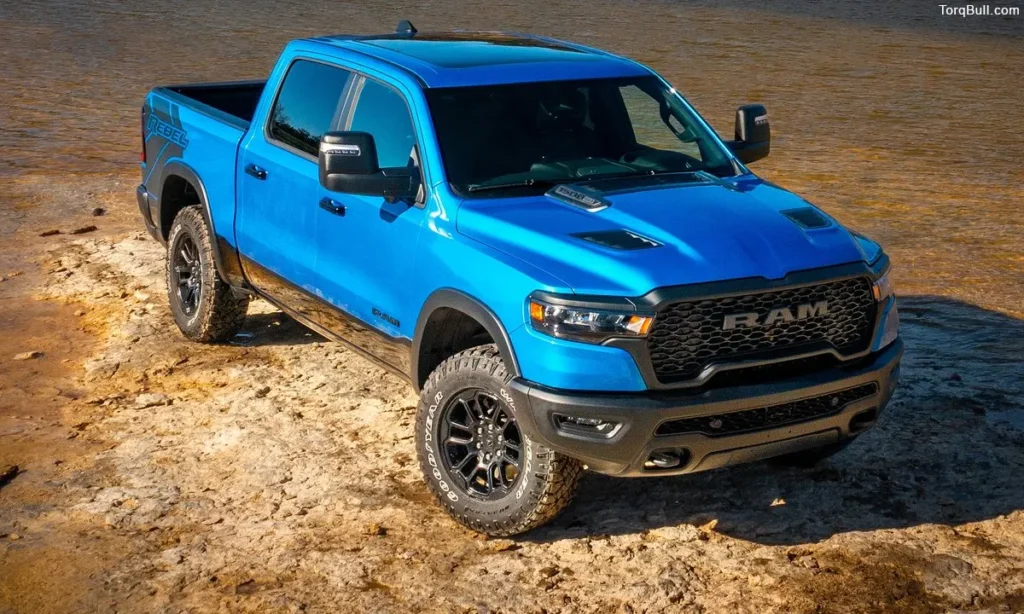
At the upper end of both lineups, the pricing gap narrows and in some configurations reverses. The F-150 Raptor reaches $78,905 at its top specification. The Ram 1500 Tungsten — the pinnacle of the 1500’s luxury positioning with quilted leather seats, massaging front seats, available Hands-Free Active Driving Assist and the most refined interior Ram has ever produced — reaches $87,075. The Tungsten’s luxury content at that price point genuinely competes with entry-level luxury truck alternatives from Lincoln and GMC.
Towing and Payload: F-150’s Most Decisive Advantage
Maximum towing capacity is the category where the F-150 holds its clearest and most consistently documented objective advantage over the Ram 1500 — and for buyers who use their truck for serious towing, this advantage is the most practically significant specification in the comparison.
The 2026 F-150 achieves a maximum towing rating of 13,500 pounds when properly equipped with the 3.5-litre EcoBoost V6 and appropriate axle configuration — a figure that U.S. News confirms as approximately 2,000 pounds above the Ram 1500’s maximum. The Ram 1500’s maximum towing rating is 11,610 pounds with the Hurricane Inline-Six in its highest configuration — genuinely impressive for most real-world towing applications but measurably below the F-150’s ceiling.
Payload capacity follows the same pattern. The F-150 achieves maximum payload of 2,440 pounds — best-in-class for the light-duty segment. The Ram 1500 reaches 2,360 pounds maximum payload. For buyers who regularly tow boats, fifth-wheel trailers, car haulers or heavy equipment trailers approaching the rated maximums, the F-150’s advantage is directly relevant to how much flexibility the truck provides. For buyers whose typical tow is a camper, jet ski trailer or utility trailer well below 10,000 pounds, neither truck’s maximum rating will ever be meaningfully tested.
Read: Ford F-150 Off-Road Capability Review: FX4, Tremor and Raptor Compared
Engines: F-150 Offers More Choices, Ram Returns the V8
The powertrain comparison between these trucks in 2026 involves a notable development: Ram’s return of the HEMI V8 after its controversial removal in favour of the Hurricane Inline-Six in 2025.
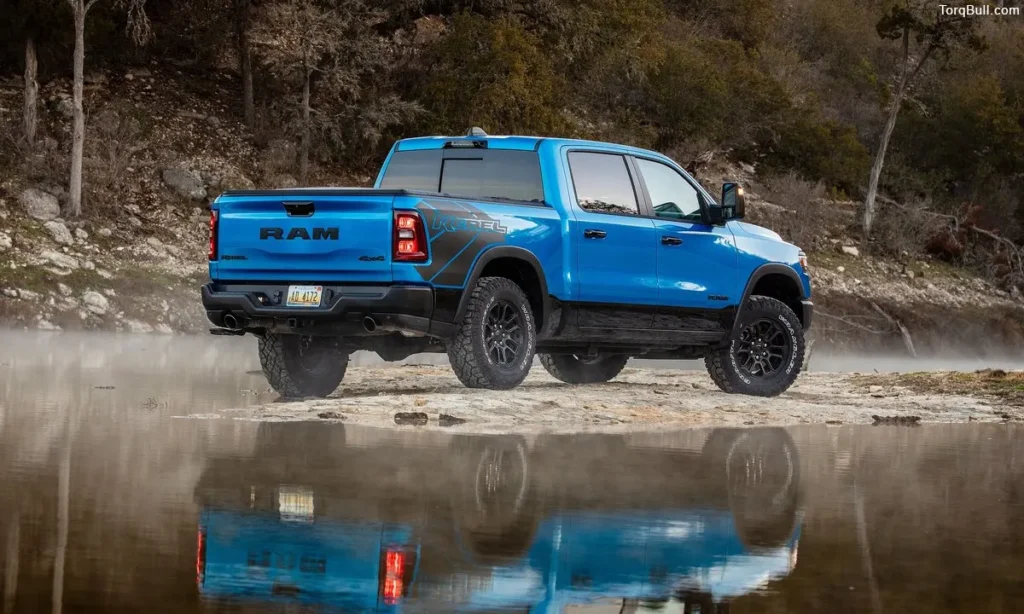
The 2026 Ram 1500 lineup includes the returning 5.7-litre HEMI V8 — a truck buyer favourite for its characterful V8 exhaust note and proven long-term durability record — alongside the 3.0-litre Hurricane Twin-Turbo Inline-Six in standard and high-output configurations producing up to 540 horsepower and 521 pound-feet of torque, and the familiar 3.6-litre Pentastar V6 as the entry-level choice. The HEMI’s return addresses the single most consistent buyer complaint about the 2025 Ram 1500 — the loss of a traditional V8 option that many buyers specifically sought.
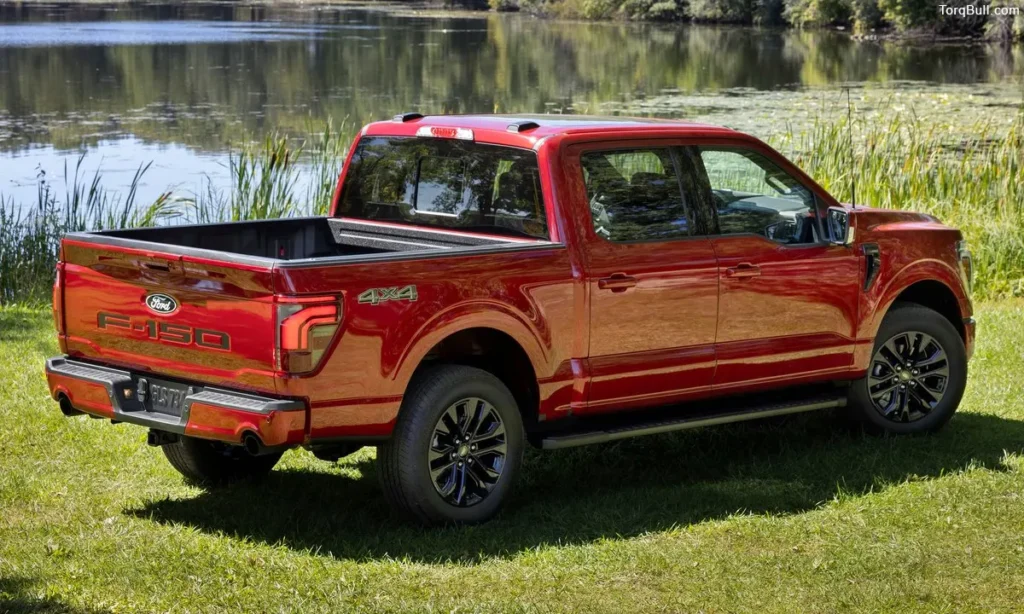
The 2026 F-150 continues its six-engine approach: the 2.7-litre EcoBoost V6 at 325 horsepower as the entry option, the naturally aspirated 5.0-litre V8 at 400 horsepower for V8 traditionalists, the 3.5-litre EcoBoost V6 at 400 horsepower for maximum towing, the 3.5-litre PowerBoost Full Hybrid at 430 horsepower for efficiency-plus-capability buyers, the High-Output 3.5-litre EcoBoost at 450 horsepower for performance applications and the 5.2-litre Supercharged V8 at 720 horsepower for Raptor R buyers. This breadth means any F-150 buyer can find the exact engine matching their priority — a flexibility the Ram’s three-engine lineup cannot match.
The PowerBoost Hybrid’s unique advantage — 7.2 kilowatts of Pro Power Onboard electrical generation that powers tools, appliances and equipment directly from the truck bed — is available exclusively in the F-150 lineup. For job site users and overlanders who need a mobile power source, this capability has no Ram 1500 equivalent.
Ride Comfort and Interior: Ram’s Most Compelling Argument
Ride comfort is where the Ram 1500 has built its most loyal buyer base — and where the F-150, despite genuine improvements across recent generations, continues to yield the advantage.
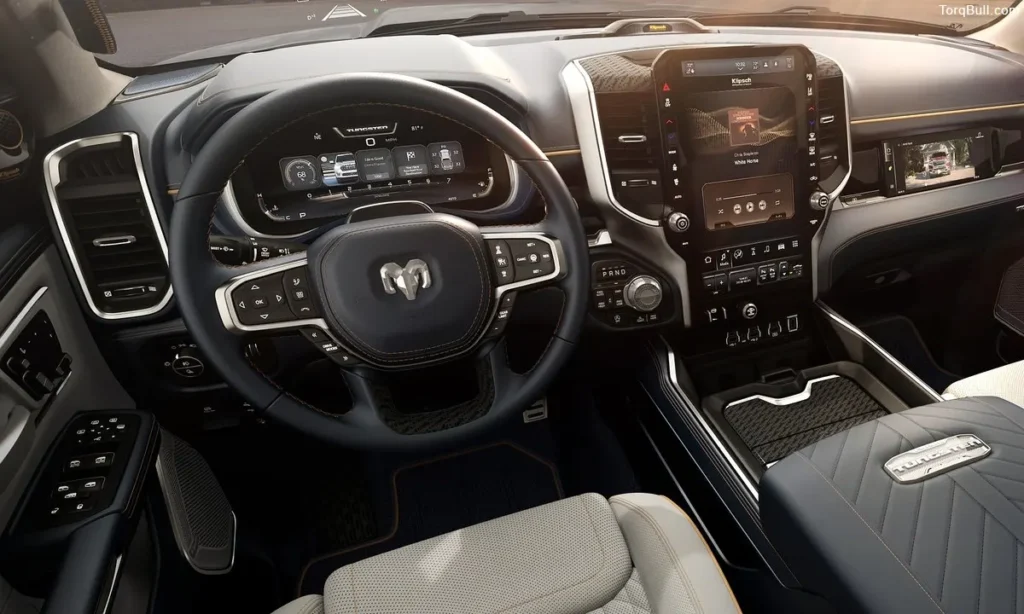
The Ram 1500’s available air suspension is the centrepiece of its comfort advantage. Buyers who select the optional Quadra-Lift air suspension receive a truck that adjusts its ride height and damper tuning automatically based on load, speed and driver selection — delivering the smoothest, most car-like highway ride available in any full-size pickup truck. JD Power’s 2026 comparison specifically identifies the Ram 1500 as emphasising its reputation as the most comfortable and smoothest-riding full-size pickup. U.S. News confirms the Ram excels in ride comfort. For buyers who cover long highway miles with the truck serving as a primary commuter vehicle as much as a work tool, the Ram’s suspension refinement provides a daily comfort advantage that the F-150’s more conventional suspension — despite its genuine improvements — does not fully match.
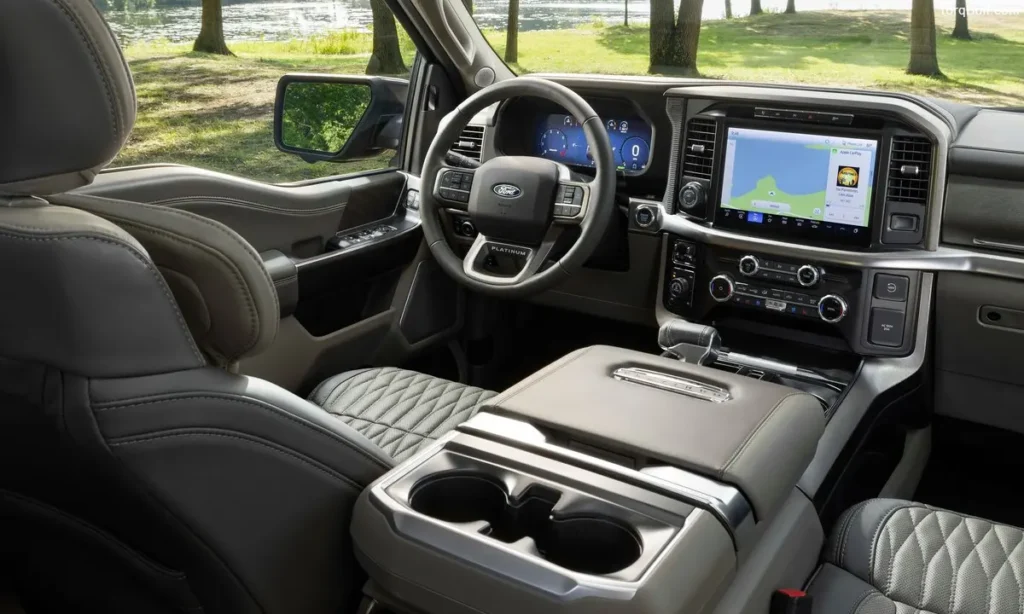
Interior quality at the upper trim levels is the Ram’s second major comfort advantage. The Tungsten’s quilted leather upholstery, massaging front seats, panoramic sunroof and premium materials throughout produce an interior experience that U.S. News notes is leagues ahead of the F-150 in terms of luxury. The Ram 1500 also integrates a 12-inch digital cluster paired with an available 12-inch infotainment screen — and the Uconnect 5 infotainment system consistently earns high praise from automotive media for its responsiveness and intuitive layout. Massaging seats, in particular, are a Ram exclusive in the full-size pickup segment — a feature that differentiates the upper Ram trims for buyers who spend hours per day in the vehicle.
Read: Ford Bronco Engine Performance Real Test. The Complete 2026 Analysis
Ford F-150 vs Ram 1500: Complete Comparison Chart 2026
| Category | Ford F-150 (2026) | Ram 1500 (2026) | Winner |
| Starting Price | $37,350 | $40,275 | F-150 |
| Max Towing Capacity | 13,500 lbs | 11,610 lbs | F-150 |
| Max Payload | 2,440 lbs | 2,360 lbs | F-150 |
| Engine Options | 6 (incl. hybrid + supercharged V8) | 3 (V6, Hurricane I-6, HEMI V8) | F-150 |
| PowerBoost Hybrid (onboard power) | Yes (7.2 kW Pro Power Onboard) | No | F-150 |
| Ride Comfort (air suspension) | Standard passive | Available Quadra-Lift air suspension | Ram 1500 |
| Interior Luxury (top trim) | Platinum / King Ranch | Tungsten (massaging seats, quilted leather) | Ram 1500 |
| Infotainment System | SYNC 4 (12-inch available) | Uconnect 5 (12-inch standard) | Ram 1500 |
| BlueCruise Hands-Free Driving | Available | Available (Hands-Free Active Driving Assist) | Tie |
| V8 Engine Available | Yes (5.0L, 5.2L Raptor R) | Yes (5.7L HEMI returns 2026) | Tie |
| Off-Road Variants | Tremor, Raptor, Raptor R | Rebel (1 dedicated off-road trim) | F-150 |
| U.S. News Safety Score | Higher | Slightly lower | F-150 |
| Warranty | 3 yr / 36K basic; 5 yr / 60K powertrain | 3 yr / 36K basic; 5 yr / 60K powertrain | Tie |
| Fuel Economy (best config) | PowerBoost Hybrid: ~25/26 MPG | 3.0L Hurricane I-6: ~23 MPG | F-150 |
Reliability and Ownership: The Historical Context
JD Power’s 2026 manufacturer rankings place Toyota second overall and Ford 23rd overall — a significant disparity that places both Ford and Ram (Stellantis) in the mid-to-lower tier of manufacturer reliability rankings rather than at the top. Consumer Reports’ manufacturer reliability data similarly places both brands below Toyota and Honda in the full-size truck space. The practical implication is that neither the F-150 nor the Ram 1500 carries a reliability premium over the other at the manufacturer level — both are positioned comparably in independent reliability surveys, and the long-term ownership experience for both trucks is broadly similar when averaged across the full production run.
KBB owner reviews for the F-150 document a specific 10-speed automatic transmission complaint in lower gears — the clunky shifting in gears one through four that appears consistently enough across verified owner accounts to represent a documented pattern. Ram owners on similar platforms document some software reliability concerns with the Uconnect system across certain production periods. Both trucks have active recalls — the F-150’s 2026 recall addresses the integrated trailer module affecting trailer brake lights; the Ram’s recall landscape similarly reflects the software and electrical complexity of modern full-size trucks.
For buyers who specifically value reliability above capability and comfort, neither truck is the segment’s reliability leader — that honour belongs to the Toyota Tundra, which consistently outperforms both in independent reliability rankings at the cost of lower maximum towing ratings.
Read: Ford F-150 Pros and Cons: Real Owner Review for 2026
The Buyer Profile Verdict: Who Should Choose Which Truck
Choose the Ford F-150 if: maximum towing capacity is a regular need and you approach or exceed 11,000 pounds; you want the broadest engine selection including the PowerBoost Hybrid’s unique job-site electrical generation capability; you need the widest configuration variety including three cab styles, three bed lengths and the eight-foot bed option that Ram no longer offers; you want the most comprehensive off-road lineup including the Raptor and Raptor R for genuine high-speed desert running; or your budget starts below $40,000 where the F-150 offers more truck per dollar.
Choose the Ram 1500 if: daily highway comfort is a primary use case and the air suspension’s smoothest-in-class ride quality provides a meaningful quality-of-life improvement on a long commute; you want the most premium interior experience in the segment at the Tungsten’s level including massaging seats and quilted leather; the HEMI V8’s return for 2026 specifically matters to you as a V8 traditionalist; or you prioritise ride refinement and interior quality over the last 2,000 pounds of maximum towing capacity that the F-150 provides beyond the Ram’s own impressive rating.
U.S. News’ conclusion — recommending test drives of both before deciding — is the most practical guidance available for any buyer between these vehicles. The capability argument favours the F-150. The comfort and luxury argument favours the Ram. The price argument favours the F-150. For the specific buyer who maximises towing and wants the most engine choices, the F-150 is a clear recommendation. For the specific buyer who maximises daily comfort and interior refinement, the Ram is. Every buyer who fits neither extreme should drive both.