- The 2026 Toyota Highlander Hybrid delivers 35–36 MPG combined, about 11 MPG better than the gas-powered model.
- The gasoline Highlander offers more power, a higher towing capacity and a lower purchase price.
- Buyers who keep their Highlander for three years or longer can typically recover the hybrid’s higher upfront cost through fuel savings.
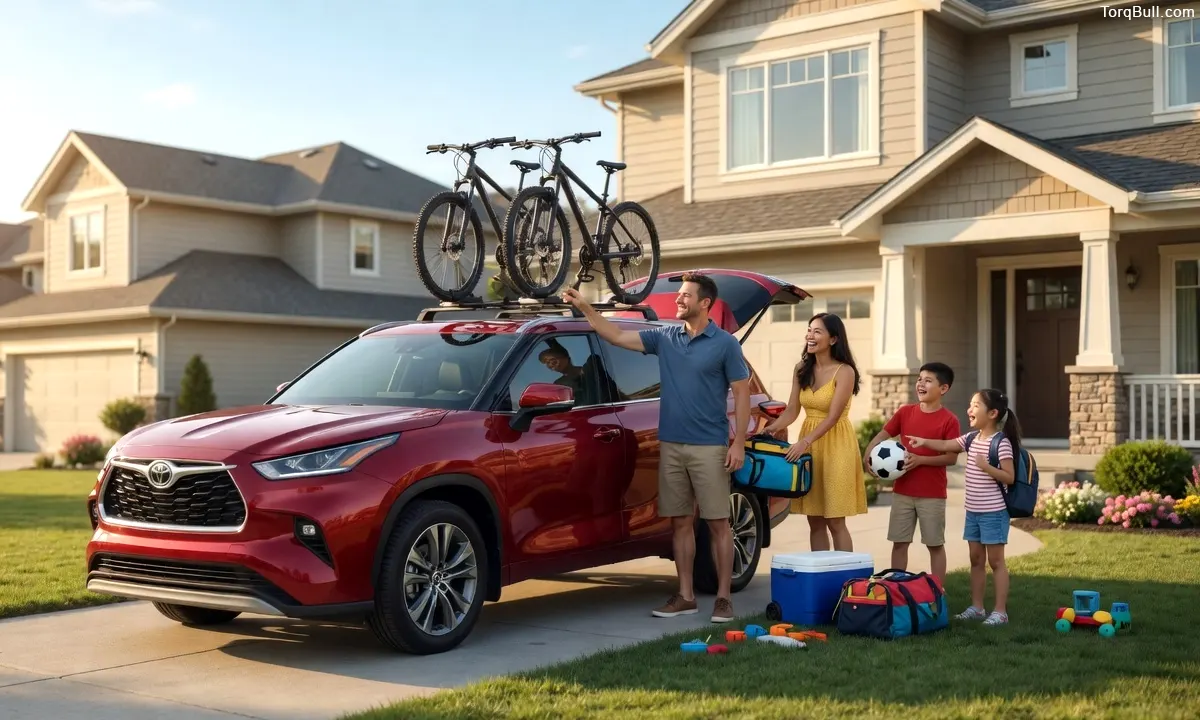
The Toyota Highlander’s two powertrain options represent one of the most practically consequential purchase decisions available within any single SUV nameplate — because the choice between gas and hybrid produces different vehicles in fuel cost, performance character, towing capability, maintenance profile and purchase price simultaneously. Both share the same three row body, the same Toyota Safety Sense 3.0 safety suite, the same interior dimensions and the same fundamental family SUV purpose. But the powertrain underneath each configuration produces meaningfully different ownership economics and daily driving experiences that make the comparison more nuanced than a simple efficiency question. This complete guide addresses every dimension of the gas versus hybrid decision to produce the most practically useful verdict available for 2026 Highlander buyers.
The Powertrain Difference: Architecture and Output
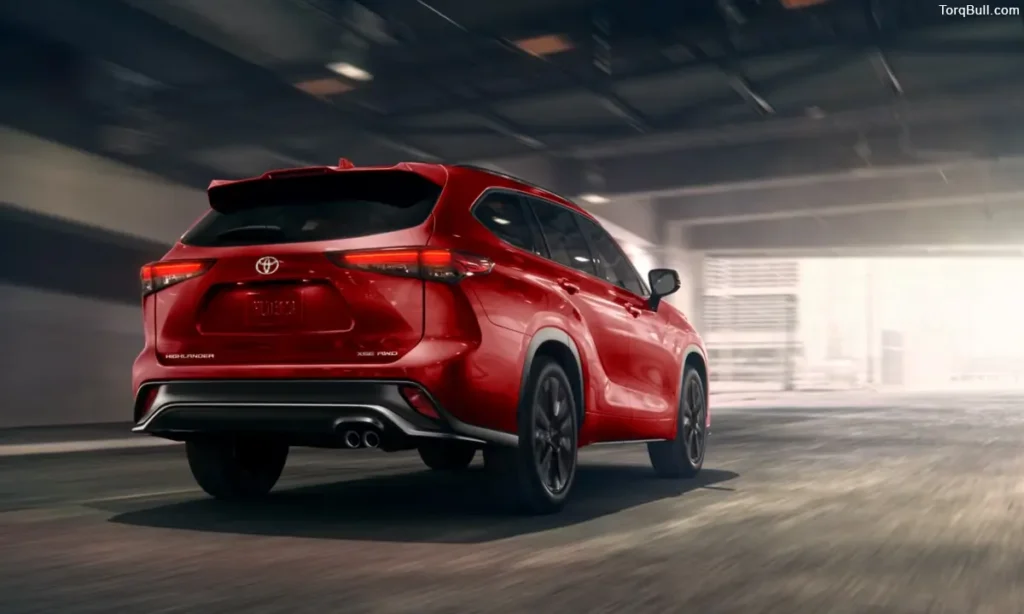
Understanding what separates these two powertrains begins with their fundamental architecture — because the gas and hybrid Highlanders use entirely different engine families, not the same engine with a battery added.
The 2026 Toyota Highlander gas model uses a turbocharged 2.4 litre four cylinder engine producing 265 horsepower and 310 pound feet of torque through an eight speed automatic transmission. Standard AWD is included across all 2026 Highlander trims following the elimination of the front wheel drive base option. The turbocharged engine’s peak torque of 310 pound feet arrives lower in the rev range than naturally aspirated alternatives, providing confident low speed acceleration and strong highway passing power.
The 2026 Toyota Highlander Hybrid uses a naturally aspirated 2.5 litre four cylinder engine combined with three electric motors through Toyota’s Hybrid Synergy Drive system — two electric motors at the front axle and one at the rear, with the rear motor providing electronic AWD without a mechanical connection to the front differential. Combined system output is 243 horsepower and 175 pound feet of torque through a continuously variable transmission. The electric motor’s instant torque delivery at low speeds partially compensates for the lower peak torque figure, making the hybrid feel more responsive from a standstill than the torque comparison alone suggests.
The 22 horsepower difference between the gas and hybrid models — 265 versus 243 — is real and noticeable in specific high demand scenarios including highway entry ramps, sustained passing on two lane roads and towing near maximum capacity. In typical daily suburban and urban driving where moderate acceleration is the norm, the hybrid’s performance difference from the gas model is less pronounced because the electric motor’s instant low speed torque produces an adequate and sometimes surprisingly responsive initial surge.
Read: Toyota Highlander vs Hyundai Palisade Features Comparison. Which SUV Offers Better Value?
Fuel Economy: The Hybrid’s Most Decisive Advantage
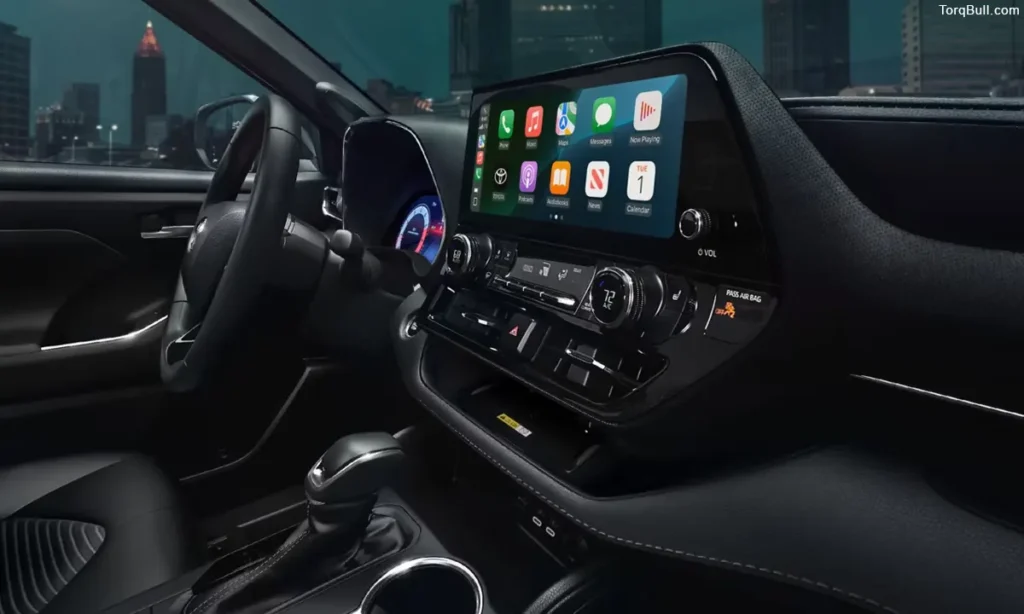
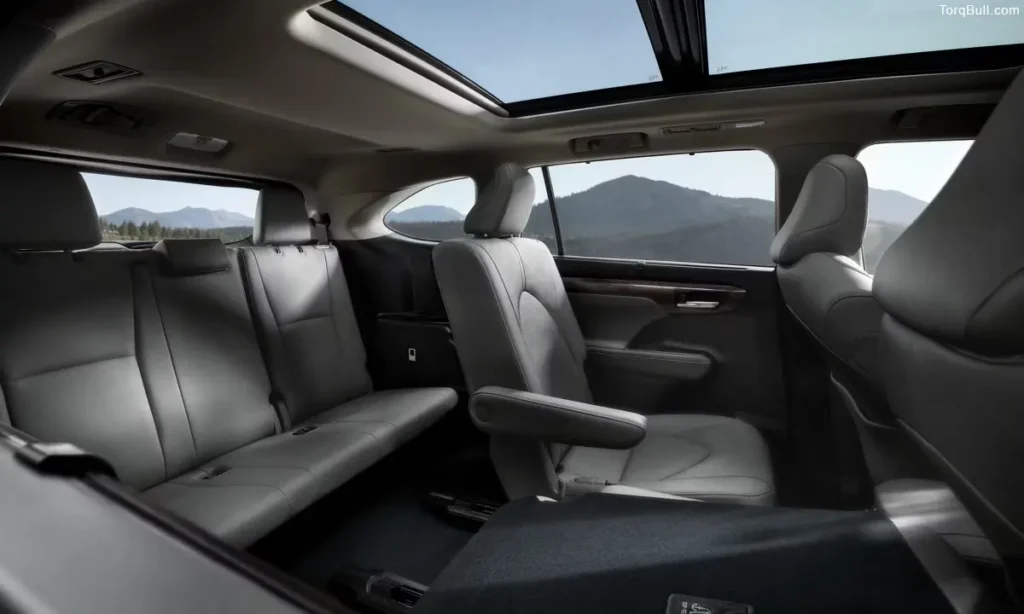
Fuel economy is the category where the Highlander Hybrid holds its most comprehensively documented and most financially significant advantage — and the gap between these two powertrains is among the largest available within any single SUV nameplate in the American market.
The 2026 Highlander Hybrid achieves EPA estimates of 35 to 36 MPG combined across its trim configurations, with city figures reaching 36 MPG and highway reaching 35 MPG. This city efficiency leadership reflects the hybrid system’s specific advantage in stop and go driving where regenerative braking recovers energy that the gas model dissipates as heat. The hybrid’s city and highway efficiency figures are essentially equal — one of the rare vehicles where city and highway fuel economy are nearly identical — reflecting the electric motor’s efficiency in both environments.
The 2026 Highlander gas model achieves 21 MPG city and 28 MPG highway with AWD standard across all trims — producing a combined estimate of approximately 24 to 25 MPG. The 7 MPG city gap and 7 MPG highway gap between the two powertrains are consistent and significant in annual financial terms.
At 15,000 annual miles and $3.08 per gallon, the Highlander Hybrid’s 35 MPG combined produces an annual fuel cost of approximately $1,323. The gas model at 24 MPG combined produces approximately $1,925 per year. The annual fuel saving of approximately $602 accumulates to approximately $3,010 over five years and approximately $6,020 over ten years — figures that progressively justify the hybrid’s purchase price premium for buyers who plan extended ownership.
Independent analysis confirms that buyers who plan three or more years of ownership will make up the difference in purchase cost given the hybrid’s better fuel economy — a finding that makes the break even calculation most relevant for buyers deciding between short and long ownership horizons rather than for committed long term owners who benefit more clearly.
Towing Capacity: Gas Model’s Specific Advantage
Towing capability is the category where the gas Highlander holds a meaningful and specific advantage over the hybrid that affects buyers who regularly tow trailers, boats or recreational equipment.
The 2026 Highlander gas model is rated to tow 5,000 pounds when properly equipped — the maximum towing rating available in the standard Highlander configuration. The Highlander Hybrid’s maximum towing rating is 3,500 pounds — 1,500 pounds less than the gas model. This 30 percent towing capacity reduction reflects the hybrid system’s additional weight from the battery pack and electric motors, which reduces the Gross Combined Weight Rating available for trailer tongue weight.
For buyers who own a typical travel trailer, a moderate sized boat, a pair of personal watercraft or a loaded utility trailer — loads that commonly range from 2,500 to 4,500 pounds — the 1,500 pound towing capacity difference determines whether specific trailer weights fall within or outside the hybrid’s safe operating parameters. A buyer whose trailer weighs 4,200 pounds can safely tow with the gas model but exceeds the hybrid’s rated capacity. This is not a theoretical difference — it is a practical operational constraint that eliminates the hybrid from consideration for buyers whose towing regularly approaches the 3,500 pound limit.
For buyers whose towing is rare, occasional and involves loads well below 3,500 pounds — small utility trailers, light cargo and similar applications — the hybrid’s lower towing rating is irrelevant to their ownership experience.
Read: Toyota Highlander Pros and Cons. Real Owner Review for 2026
Maintenance Cost: Hybrid’s Long Term Advantage
The 2026 Highlander Hybrid provides specific maintenance cost advantages over the gas model that add to the annual fuel savings in the long term ownership cost calculation.
Regenerative braking — the process by which the hybrid’s electric motor recovers energy during deceleration rather than converting it to brake heat — significantly reduces how often the friction brake pads contact the rotors in normal daily driving. The result is extended brake service intervals, with Highlander Hybrid owners typically reporting brake pad replacement at 60,000 to 80,000 miles compared to 35,000 to 45,000 miles for the gas model equivalent. The annualised brake service cost saving of approximately $75 to $130 per year adds meaningfully to the hybrid’s total ownership cost advantage over the gas model.
The Toyota hybrid battery warranty in states following California emissions standards covers the hybrid battery and electric motors for 10 years or 150,000 miles — providing financial protection against the most expensive potential hybrid system failure across the full first decade of ownership. In other states, the coverage is 8 years or 100,000 miles. This warranty coverage makes the hybrid’s complex additional components financially managed risk rather than open-ended financial exposure during the primary ownership period.
Toyota Highlander Hybrid vs Gas — Complete 2026 Comparison Chart
| Category | Highlander Gas (2026) | Highlander Hybrid (2026) | Winner |
| Starting Price (XLE AWD) | Lower | Approximately $2,000 to $4,000 higher | Gas (lower cost) |
| Engine Output | 265 hp, 310 lb ft | 243 hp combined, 175 lb ft | Gas (more power) |
| EPA City MPG | 21 MPG | 36 MPG | Hybrid |
| EPA Highway MPG | 28 MPG | 35 MPG | Hybrid |
| EPA Combined MPG | 24 to 25 MPG | 35 to 36 MPG | Hybrid |
| Annual Fuel Cost (15K miles) | approximately $1,925 | approximately $1,323 | Hybrid ($602 savings) |
| 5-Year Fuel Savings | Baseline | approximately $3,010 | Hybrid |
| Maximum Towing | 5,000 lbs | 3,500 lbs | Gas |
| AWD Configuration | Mechanical AWD | Electronic AWD (no mechanical link) | Both capable; different systems |
| Transmission | 8-speed automatic | CVT with electric drive | Gas (more conventional feel) |
| Brake Service Interval | 35,000 to 45,000 miles | 60,000 to 80,000 miles | Hybrid |
| Hybrid Battery Warranty | N/A | 8 to 10 years, 100,000 to 150,000 miles | Hybrid |
| Driving Character | More traditional, responsive | Quieter, smoother, efficient | Depends on preference |
| City Driving Economy | Below average | Exceptional | Hybrid |
| Highway Driving Economy | Adequate | Very good | Hybrid |
| 3-Year Payback | Below average | Confirmed by independent analysis | Hybrid (for long owners) |
Read: Toyota Highlander Ride Quality vs Competitors. Is It More Comfortable Than Its Rivals?
Which Highlander Should You Buy?
The Highlander Hybrid is the better choice for the majority of family buyers in 2026 — not because the gas model is inadequate, but because the hybrid’s 11 MPG efficiency advantage, extended brake service intervals and lower annual operating cost produce a financial and practical ownership case that the gas model cannot match for buyers planning three or more years of ownership.
For the urban and suburban commuter who covers the majority of annual mileage in stop and go conditions where regenerative braking is most active and city fuel economy most relevant, the hybrid’s 36 MPG city figure versus the gas model’s 21 MPG city represents the comparison’s most extreme practical difference — and the most financially rewarding ownership scenario for the hybrid.
The gas model is the better choice when towing 3,500 to 5,000 pounds is a regular and important use case, when the $2,000 to $4,000 additional purchase price of the hybrid exceeds budget flexibility and the ownership horizon is short enough that the payback calculation does not favour the hybrid’s premium, or when the turbocharged engine’s traditional power delivery and more conventional transmission feel produce a driving character that the buyer specifically prefers over the hybrid’s smoother, quieter CVT operation.
The 2026 Highlander is the final model year of the gas powered generation before Toyota transitions to an all electric Highlander for 2027 — making this the last opportunity to purchase a gas powered Highlander new. For buyers who specifically want a gas powered version of this nameplate, the 2026 model year represents the definitive last chance. For buyers whose decision is driven purely by ownership economics and efficiency, the Hybrid’s case is clear and well supported by every analytical perspective available.