- More than 75% of Toyota Tacomas sold over the past two decades remain on the road, highlighting the truck’s strong durability.
- Many owners report reaching 150,000 miles or more with only routine maintenance requirements.
- The fourth-generation Tacoma introduces new powertrain and electronic systems, making its long-term reliability beyond 100,000 miles less proven than earlier generations.
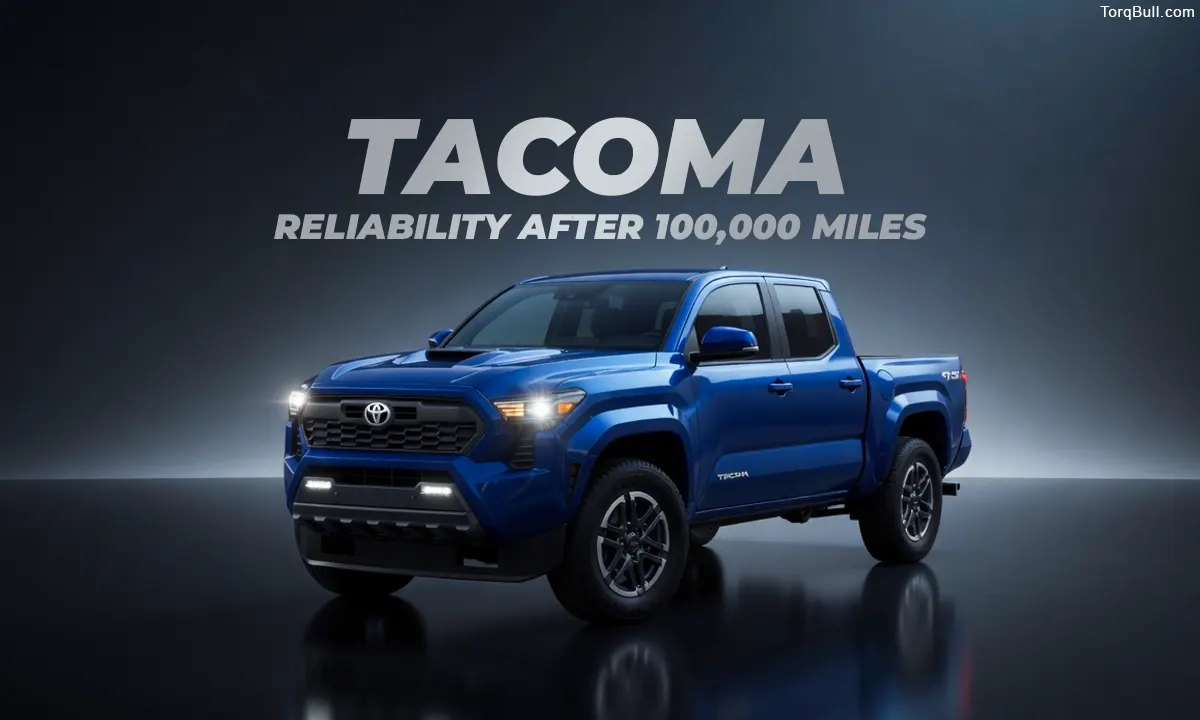
The Toyota Tacoma’s long term reliability reputation is the most consistently validated in the midsize truck segment — a claim supported not by marketing language but by documented ownership data showing that more than 75 percent of all Tacomas sold over the past two decades are still operating today. This retention rate is extraordinary in a vehicle category where competing brands’ trucks accumulate wear, rust and powertrain fatigue that forces retirement at far lower mileage. Owners across multiple Tacoma generations regularly report reaching 150,000, 200,000 and in many documented cases 300,000 miles with nothing more expensive than routine maintenance required. The JD Power Most Reliable Midsize Pickup designation for 2026, awarded for the second consecutive year, adds professional validation to this owner community consensus. But the fourth generation Tacoma — introduced for model year 2024 with an entirely new platform, entirely new powertrains and entirely new electronics — changes the long term reliability picture in ways that the previous generation’s track record cannot fully address. This complete guide separates the established from the emerging in the Tacoma’s post-100,000 mile reliability story.
The Previous Generation’s 100,000 Mile Track Record: The Gold Standard
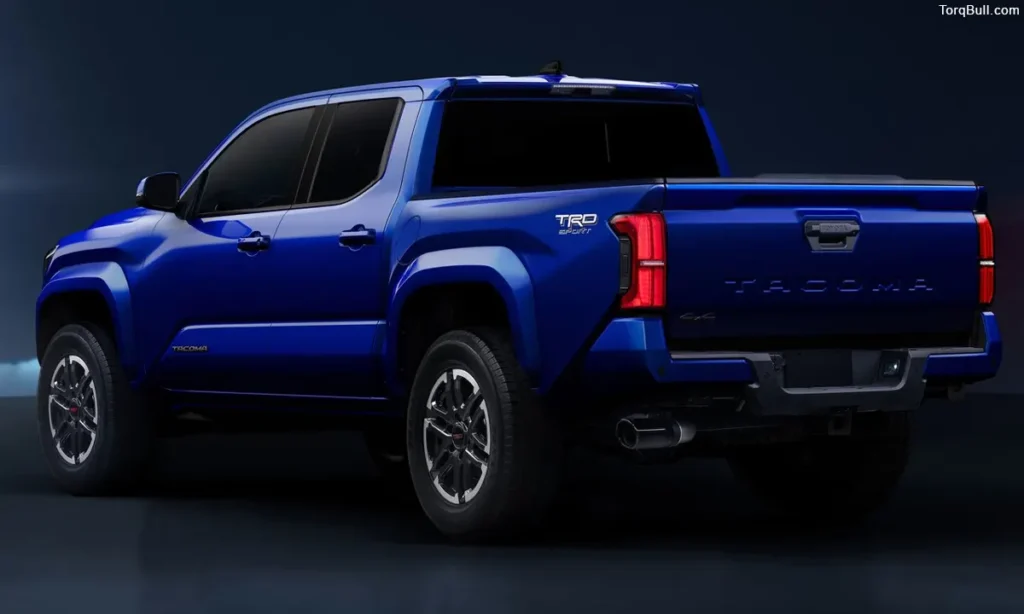
The third generation Toyota Tacoma, produced from 2016 through 2023, accumulated more real world long term reliability data than any other midsize truck — because it ran unchanged long enough for owner experiences at 100,000, 150,000 and 200,000 miles to be extensively documented across verified platforms.
The 3.5 litre naturally aspirated V6 that powered third generation Tacomas through its production run established the benchmark for midsize truck powertrain durability. The naturally aspirated architecture — no turbocharger, no intercooler, no boost pressure system — eliminated the primary mechanical complexity that creates most long term powertrain failure risks in turbocharged alternatives. Owners who maintained oil changes at or before the recommended interval, kept the cooling system serviced and addressed minor issues promptly before they developed into major failures consistently report V6 third generation Tacomas running without major powertrain expense through 200,000 miles.
The specific wear items that owners consistently encounter in the 100,000 to 200,000 mile range of third generation Tacoma ownership are informative for setting realistic long term expectations:
Suspension components — shock absorbers, struts, bushings and ball joints — typically reach the end of their service life between 80,000 and 120,000 miles depending on road surface exposure and off road use frequency. For Tacomas used primarily on paved roads, this range extends toward the higher end. For trucks used regularly on rough terrain, suspension wear can appear earlier. A complete suspension refresh at 100,000 miles costs approximately $800 to $1,500 at independent shops and is the most predictable major expense in the 100,000-plus mile ownership window.
Wheel bearings are the second most consistently reported wear item in the 100,000 to 150,000 mile range — particularly in northern states with salt road exposure and in off road use environments where water intrusion accelerates bearing degradation. A single wheel bearing replacement costs approximately $250 to $400 at an independent shop. Most long term Tacoma owners replace at least one wheel bearing between 100,000 and 150,000 miles.
Timing chain components, while not a consumable in the same way as suspension bushings, can develop noise and slack beyond 150,000 miles if oil change intervals were consistently extended rather than maintained. Third generation Tacoma owners who used the full 10,000-mile oil change interval without reducing it for high mileage driving or severe duty conditions occasionally documented timing chain concerns. Regular full synthetic oil changes at 7,500 miles or fewer remain the most important single maintenance decision affecting long term internal engine health.
Read: Toyota Tacoma vs Toyota Hilux: The Ultimate Pickup Truck Showdown 2026
The Fourth Generation’s Post 100,000 Mile Unknowns: The Honest Uncertainty
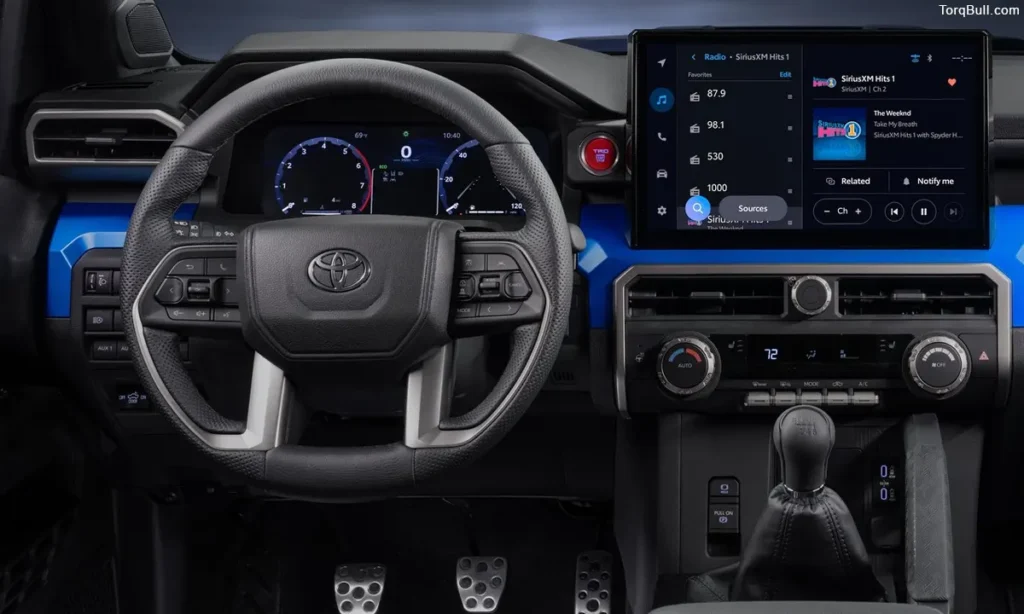
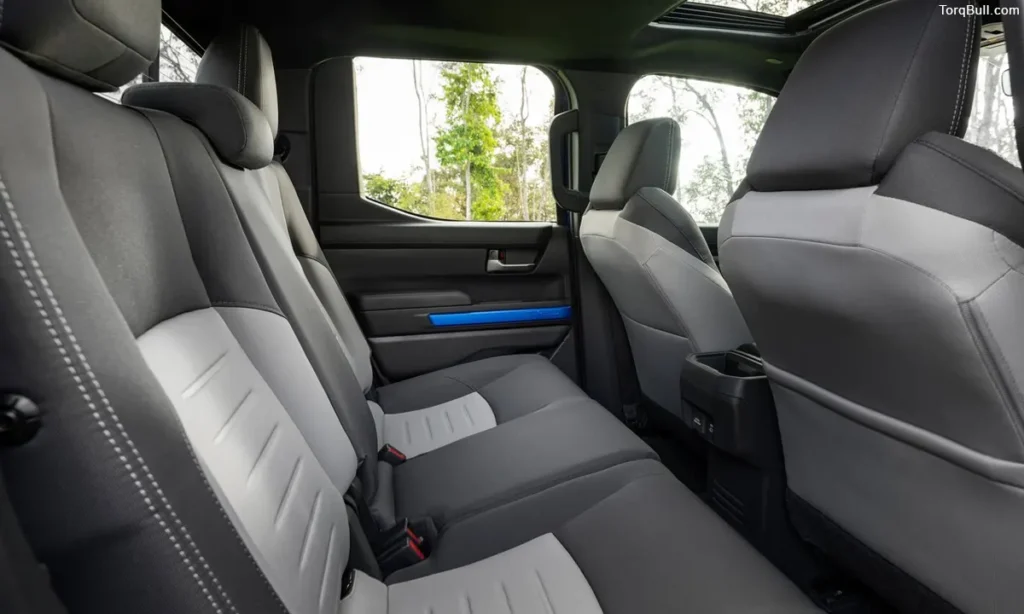
The 2024 through 2026 Toyota Tacoma is built on an entirely new TNGA-F platform with an entirely new turbocharged 2.4-litre four cylinder engine, an entirely new i-Force MAX hybrid powertrain option and entirely new electronic systems — making the third generation’s long term reliability history informative in philosophy but non-transferable in specifics to the fourth generation’s post-100,000 mile performance.
The most specific long term reliability uncertainty of the fourth generation centres on the turbocharged 2.4-litre engine. Turbocharging fundamentally changes the long term reliability equation compared to natural aspiration — the turbocharger is a mechanical component operating under sustained heat and pressure that requires meticulous oil maintenance to avoid premature failure. Independent technical analysis of the 2024 Tacoma’s powertrain notes that early reliability of the 2.4-litre turbo is typically solid but long term heat and boost-related wear is an unknown until 80,000 to 150,000 miles. This honest uncertainty is not an indictment of the engine — it is the appropriate acknowledgment that no long term data yet exists for a relatively new turbocharged application in this vehicle.
The 2024 model year specifically is rated as the worst Toyota Tacoma year in reliability scoring databases at 55 out of 100 — primarily due to powertrain concerns at 50 out of 100 in that category. These early production complaints are concentrated in the 0 to 20,000 mile range typical of first year redesign quality refinement rather than representing fundamental long term reliability failures. The 2025 model improves to 70 out of 100 — the best of the current generation — as Toyota addressed the transmission concerns and software issues that generated most of the 2024 complaint volume.
The 2026 model carries a predicted reliability score of 64 out of 100, with zero recalls and zero owner complaints on record at the time of assessment — a genuinely positive early indicator that manufacturing quality has stabilised following the fourth generation’s launch year quality refinement period.
What the 8 Speed Automatic Changes for Long Term Ownership
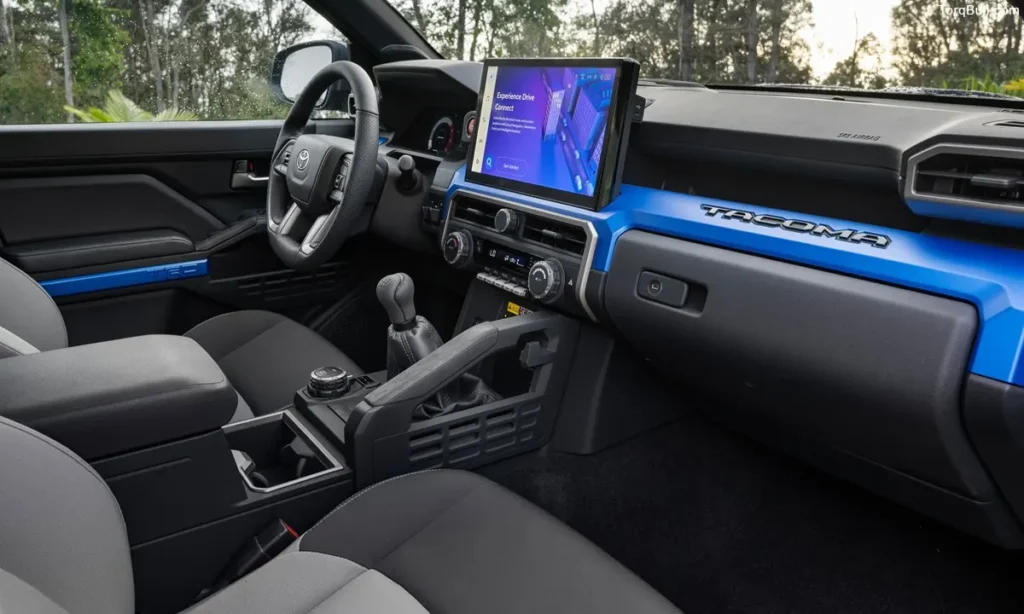
The fourth generation Tacoma’s 8-speed automatic transmission is one of the specific components whose long term reliability beyond 100,000 miles carries the most uncertainty — and the most documented early concern from fourth generation owners.
Owners across Facebook groups and forums reported 8-speed automatic transmission issues very early in their 2024 ownership experience — both in normal driving and off road conditions. The concerns were concentrated in the 2024 production year, with Toyota issuing technical service bulletins addressing specific transmission behaviour. For 2025 and 2026 production, the transmission behaviour has been refined through software updates and hardware adjustments that have reduced the volume of transmission complaints in verified owner accounts.
For owners of 2025 and 2026 fourth generation Tacomas specifically, the transmission fluid change at 60,000 miles — regardless of Toyota’s extended drain interval recommendation under normal conditions — is the single most important preventive maintenance decision affecting transmission longevity beyond 100,000 miles. Independent technical opinion consistently recommends 60,000-mile maximum fluid change intervals for any turbocharged powertrain application regardless of manufacturer specification, because turbocharged engines produce more heat that accelerates transmission fluid degradation.
Read: Toyota Tacoma Maintenance Cost Per Year. Reliable Pickup or Hidden Expense?
The i-Force MAX Hybrid Beyond 100,000 Miles: The Battery Question
For owners of Tacoma variants equipped with the i-Force MAX hybrid powertrain, the post-100,000 mile reliability picture introduces the hybrid battery as the most significant and most expensive potential failure. The hybrid battery carries Toyota’s warranty coverage — either 8 years or 100,000 miles in most states, or 10 years or 150,000 miles in California emissions states — providing financial protection through the period where early capacity degradation is most likely to appear.
Hybrid battery replacement outside warranty costs approximately $3,500 to $6,000 for the Tacoma’s specific battery application — the single most expensive post-warranty repair scenario outside catastrophic engine failure. Owners planning to keep i-Force MAX Tacomas beyond the warranty period should monitor battery capacity annually through Toyota’s diagnostic system and budget accordingly for the eventual battery service event.
The electric motor and hybrid system components other than the battery carry the same warranty protection and Toyota’s established hybrid drivetrain durability across its broader hybrid fleet — the Prius, Highlander Hybrid and RAV4 Hybrid all demonstrate the Toyota hybrid system’s ability to operate well beyond 150,000 miles with consistent maintenance.
Toyota Tacoma Long Term Reliability Assessment — Complete Chart
| Mileage Range | Common Events | Cost Estimate | Generation Difference |
| 0 to 60,000 miles | Oil changes, tyre rotations, filters | $2,500 to $4,000 cumulative | 4th gen: watch software issues |
| 60,000 to 100,000 miles | Brakes, suspension inspection, major fluid services | $3,500 to $6,000 cumulative | 4th gen: transmission fluid change recommended at 60K |
| 100,000 to 150,000 miles | Shock and strut replacement, wheel bearings, potential timing chain | $1,500 to $4,000 additional | 4th gen turbo wear data emerging |
| 150,000 to 200,000 miles | Potential suspension refresh, cooling system, ongoing consumables | $2,000 to $5,000 additional | 3rd gen: well documented. 4th gen: unknown |
| 200,000 miles plus | Frame and body condition, engine seals, ongoing consumables | Variable | 3rd gen documented at 200K plus |
| Hybrid battery (i-Force MAX) | Capacity monitoring; potential replacement | $3,500 to $6,000 | Beyond warranty window planning |
Read: Toyota Tacoma TRD Off Road vs Sport Differences. Which Trim Matches Your Real Driving Life 2026
The Honest Long Term Verdict: What Owning a Tacoma Beyond 100,000 Miles Actually Looks Like
For owners of the third generation Tacoma from 2016 through 2023, the post-100,000 mile ownership picture is the most clearly validated in the midsize truck segment. Routine suspension maintenance, wheel bearing replacement and consistent oil change discipline produce trucks that reach 200,000 miles and beyond without major powertrain expense — a track record that no competing midsize truck matches with comparable documentation.
For owners of the fourth generation 2024 through 2026 Tacoma, the post-100,000 mile picture requires more patience before definitive assessment is possible. The turbocharged engine’s heat and boost-related wear beyond 80,000 to 150,000 miles will become the data point that determines whether the fourth generation earns the same long term standing as its predecessor. Early indicators — the 2025 reliability improvement to 70 out of 100 and the 2026 model’s zero recall status — suggest the fourth generation is establishing a positive trajectory. The maintenance decisions that determine long term outcome remain the same regardless of generation: consistent full synthetic oil changes, proactive fluid services and prompt resolution of any technical service bulletin items through the dealer network before issues develop from minor into major.