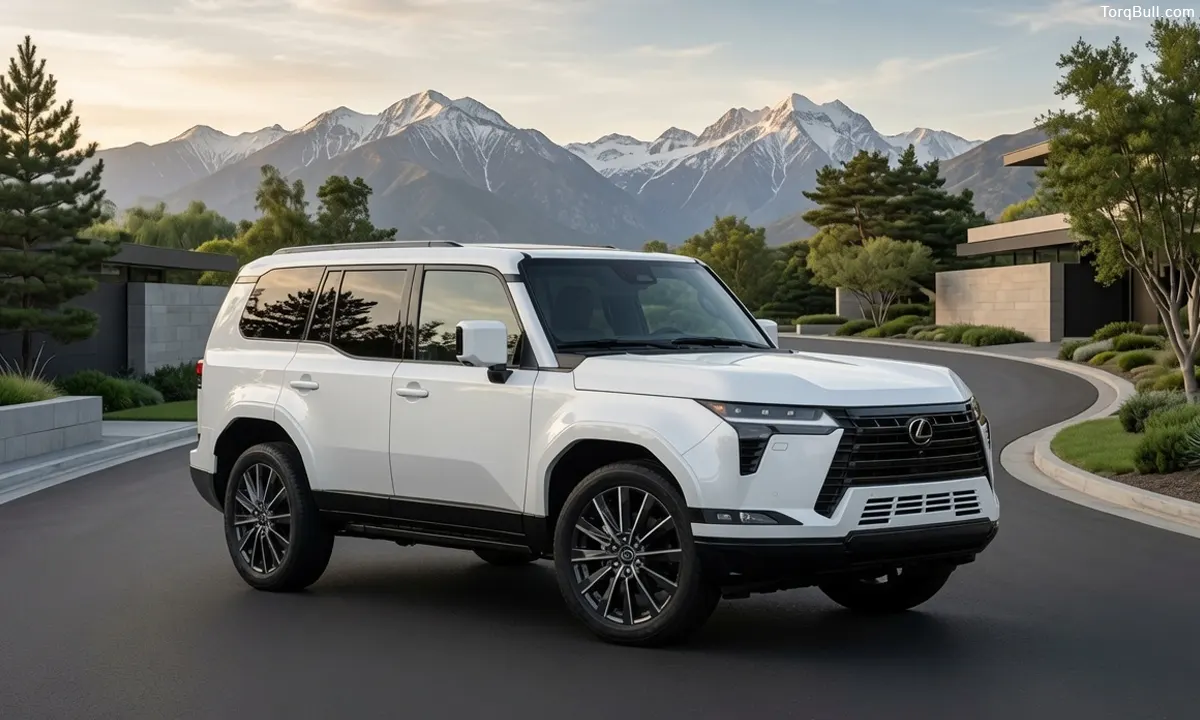
- The 2025 Lexus GX has an estimated five-year ownership cost of $78,149, including depreciation and operating expenses.
- Major ownership costs include approximately $13,640 for insurance, $9,133 for maintenance and $8,236 for fuel over five years.
- Strong resale value helps offset costs, with the GX 550 retaining a significant portion of its value after five years.
The Lexus GX’s ownership cost profile reflects two competing financial realities that determine where this vehicle lands in the total ownership cost ranking within the luxury midsize SUV segment. The first is strong depreciation retention — the GX’s body-on-frame reliability heritage, sustained enthusiast demand and Toyota’s brand residual value strength produce used-market desirability that limits the percentage of value lost relative to competing luxury alternatives. The second is the elevated operating cost profile that premium badge ownership consistently produces across insurance, maintenance, fuel and financing categories — costs that emerge from the vehicle’s purchase price tier, turbocharged twin-V6 fuel consumption and Lexus dealer service pricing rather than from any specific quality failure. This complete guide assembles every cost category into the most practically useful financial picture for anyone evaluating the GX as a five-year or longer ownership decision.
The Five Year Total: $78,149 and What That Number Means
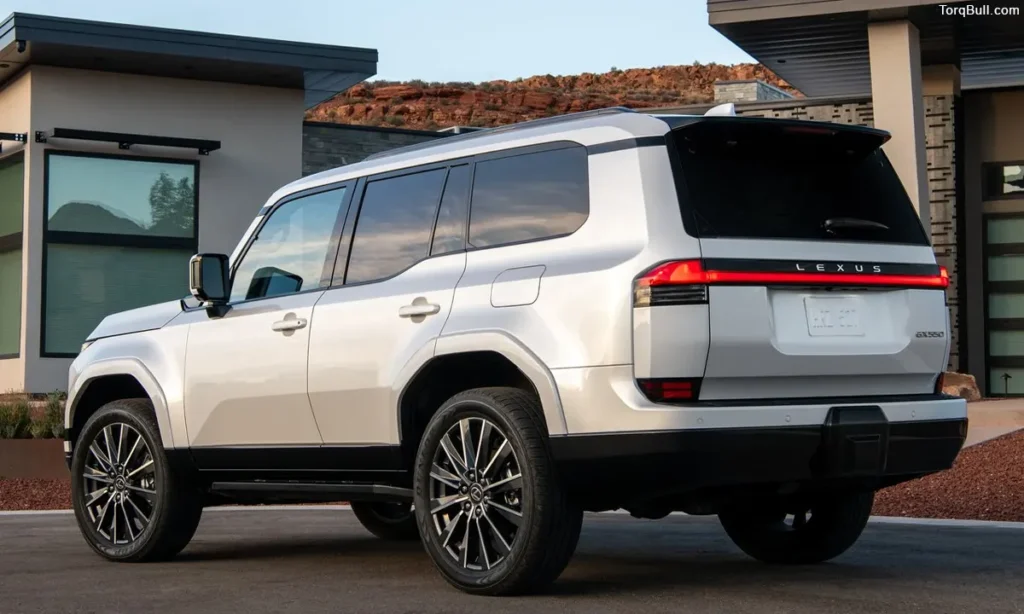
The 2025 Lexus GX’s five-year total cost of ownership of $78,149 is composed of two fundamental components whose separate understanding is more useful than the combined figure alone.
Out-of-pocket expenses of $47,227 represent the cash that leaves the owner’s wallet across five years — fuel, insurance, maintenance, repairs, financing interest and state fees. This is the money that must be budgeted and spent regardless of what the vehicle is worth at the end of the ownership period.
Depreciation of $30,922 represents the loss in vehicle value from the purchase date through the five-year point — the difference between what was paid for the GX and what it can be sold or traded for after five years of ownership and approximately 75,000 miles. The GX’s projected five-year residual value of $34,663 from a starting MSRP of $65,585 represents a retention of approximately 53 percent — a strong result for a luxury body-on-frame SUV that reflects the GX’s specific enthusiast market demand.
For buyers who trade every three to five years, this combined number is the most complete cost of ownership figure available. For buyers who keep vehicles eight to ten years and beyond — which the GX’s mechanical durability specifically supports — the depreciation component shrinks in annual impact as the remaining value decline from years six through ten is smaller than the steeper early depreciation, making the total annual cost of long-term GX ownership more competitive with alternatives whose higher depreciation is already fully absorbed.
Depreciation: The GX’s Financial Strength Relative to Luxury Peers
The Lexus GX 550’s documented five-year depreciation of $25,410 from a $76,420 average transaction price to a $51,010 residual value represents approximately 33 percent of original value lost over five years — a strong retention rate for a luxury body-on-frame SUV in a segment where European luxury alternatives often depreciate 45 to 55 percent over the same period.
The GX’s depreciation advantage stems from the specific combination of Lexus brand reliability reputation — which sustains used-market demand from buyers who specifically seek a used Lexus GX for its known durability track record — and the body-on-frame architecture’s association with off-road capability that produces sustained demand from the outdoor enthusiast buyer community. This enthusiast demand floors the GX’s residual value above what a comparably priced conventional luxury crossover would retain, because the GX occupies a specific capability niche that has limited competition in the used market.
The 2025 GX’s higher starting price relative to the GX 550 produces a larger absolute depreciation figure of $30,922 — reflecting the higher purchase price from which depreciation is calculated while the percentage retention rate remains broadly competitive. For buyers comparing total ownership cost across different GX configurations, this absolute depreciation difference means higher-trim GX buyers absorb a larger dollar loss over five years even when the percentage retention is equivalent.
Read: Lexus GX Family SUV Review 2026. Can It Justify Its Luxury Price Tag?
Insurance: The Largest Single Out-of-Pocket Expense

Insurance is the single largest out-of-pocket expense category in the GX ownership cost structure — exceeding both maintenance and fuel across the five-year ownership window and representing the cost category with the highest individual variability based on driver profile, location and coverage choices.
The five-year insurance cost of $13,640 — averaging approximately $2,728 per year — reflects the national average for a 40-year-old driver with full coverage, a clean driving record and good credit on a single-car policy. The Lexus GX 550’s separate insurance tracking places average annual insurance at approximately $3,282 per year — totalling $16,410 over five years. These figures position the GX in the expected territory for a luxury midsize SUV at its purchase price tier — more expensive to insure than mainstream alternatives and below the most premium luxury performance vehicles.
Insurance cost variability for the GX is among the highest of any cost category — a driver in a high-theft urban area with a recent driving incident may pay double the national average, while an older driver with decades of clean history in a low-cost rural market may pay 40 to 50 percent below the national average. Shopping competitive insurance quotes specifically using the GX’s actual safety ratings — which benefit from Toyota’s and Lexus’s strong crash test performance — is the most immediately actionable cost-reduction opportunity available after purchase.
Maintenance: Where Lexus Premium Service Pricing Is Most Felt
The GX’s five-year maintenance cost of $9,133 — averaging approximately $1,827 per year — is the cost category most directly influenced by the Lexus dealer service network’s premium labour rates and the twin-turbocharged V6 engine’s specific service requirements.
The Lexus complimentary maintenance programme covers the first two years or 25,000 miles of scheduled maintenance — oil changes, tyre rotations, multi-point inspections and fluid checks — at no additional cost. This coverage reduces the effective first-two-year maintenance spending to zero for buyers who use the programme, improving the early ownership financial picture relative to vehicles without complimentary maintenance.
After the Lexus maintenance programme expires, the GX’s service schedule includes the twin-turbocharged engine’s full-synthetic oil change requirements at $200 to $280 per service at a Lexus dealer, tyre rotations at $65 to $90 per service, brake service at $600 to $1,000 for a complete front and rear service and spark plug replacement at 60,000 miles for the twin-turbocharged V6 at approximately $400 to $600 including labour.
The engine oil change’s premium pricing relative to standard V6 alternatives reflects the larger oil capacity, the premium full-synthetic specification the twin-turbo requires and the Lexus dealer labour rate. Independent specialist shops familiar with the GX platform charge approximately 25 to 35 percent less for equivalent service — a meaningful cost reduction for high-mileage owners who are comfortable with non-dealer service.
Read: Five Reasons the Lexus GX Beats the Toyota Land Cruiser
Fuel: The Turbocharged V6’s Consumption Reality
The five-year fuel cost of $8,236 — approximately $1,647 per year — reflects the GX’s EPA-rated fuel economy of 17 MPG city, 22 MPG highway and 19 MPG combined and the national average gasoline price pattern. At 15,000 annual miles and $3.08 per gallon, the 19 MPG combined figure produces approximately $2,432 per year in fuel costs for most owners — somewhat higher than the five-year tracking figure, suggesting that real-world Lexus GX owners average closer to 21 to 22 MPG in their actual mixed driving conditions.
This fuel consumption profile reflects the body-on-frame construction’s aerodynamic and weight disadvantages relative to unibody crossover alternatives and the twin-turbocharged V6’s specific power delivery requirements. Buyers who compare the GX’s fuel costs against a hybrid alternative — such as the Toyota Highlander Hybrid at 35 MPG combined — face approximately $1,100 more in annual fuel spending for equivalent mileage, a real ongoing cost that compounds into $5,500 over five years.
Lexus GX Five Year Ownership Cost — Complete Breakdown Chart
| Cost Category | Annual Average | Five Year Total | Notes |
| Depreciation | approximately $6,184 | $30,922 | Residual value $34,663 from $65,585 MSRP |
| Insurance | approximately $2,728 | $13,640 | National average; varies significantly by profile |
| Maintenance | approximately $1,827 | $9,133 | Lexus complimentary coverage first 2 years |
| Fuel | approximately $1,647 | $8,236 | Based on 19 MPG combined EPA estimate |
| Financing (at 6% on $65,585) | approximately $1,698 | $8,488 | Varies by rate and term |
| State Fees | approximately $1,293 | $6,467 | Highly variable by state and registration costs |
| Repairs | approximately $253 | $1,263 | Below luxury SUV average; Lexus reliability |
| Total Out of Pocket | approximately $9,446 | $47,227 | Excludes depreciation |
| Total Five Year Cost to Own | approximately $15,630 | $78,149 | Including depreciation |
How the GX Compares Within the Luxury Midsize SUV Segment
The GX’s position in the middle range for cost to own among luxury midsize SUVs reflects its specific competitive positioning — stronger depreciation retention than most European luxury alternatives, higher maintenance and insurance costs than mainstream Toyota alternatives and a fuel consumption profile that is honest about the body-on-frame architecture’s efficiency limitations.
European luxury body-on-frame SUVs at comparable purchase prices — specifically the Land Rover Defender and Range Rover Sport — typically produce five-year depreciation of $35,000 to $55,000 from higher purchase prices, making the GX’s $30,922 depreciation a significant ownership cost advantage when the comparison is made on equivalent premium ground.
The GX’s out-of-pocket expenses compare favourably against these European alternatives whose maintenance costs at equivalent mileage typically run $2,500 to $4,000 annually — 40 to 120 percent above the GX’s $1,827 annual average — reflecting both higher labour rates and more frequent service intervals for European turbocharged powertrains.
Read: Lexus RZ Charging Time at Home. Real-World Charging Time Breakdown
The Long Term Ownership Argument: Beyond Five Years
The GX’s most financially compelling case is made by buyers who plan ownership of eight years or more — the ownership horizon that its body-on-frame durability and proven Toyota-Lexus reliability platform most specifically supports and rewards.
Beyond the five-year point where depreciation has already claimed the steepest portion of its total impact, annual depreciation slows substantially while the operating costs — insurance, maintenance, fuel — continue at broadly similar levels. An owner who carries the GX from year five through year ten is typically spending $8,000 to $10,000 annually in total costs during this period, including all maintenance, insurance and modest ongoing depreciation, while driving a vehicle whose remaining mechanical life — properly maintained — extends comfortably to 200,000-plus miles on the proven Lexus platform.
This long-term ownership efficiency is the financial argument that justifies the GX’s higher initial ownership cost relative to less durable alternatives whose lower depreciation masks higher ongoing repair costs at high mileage.