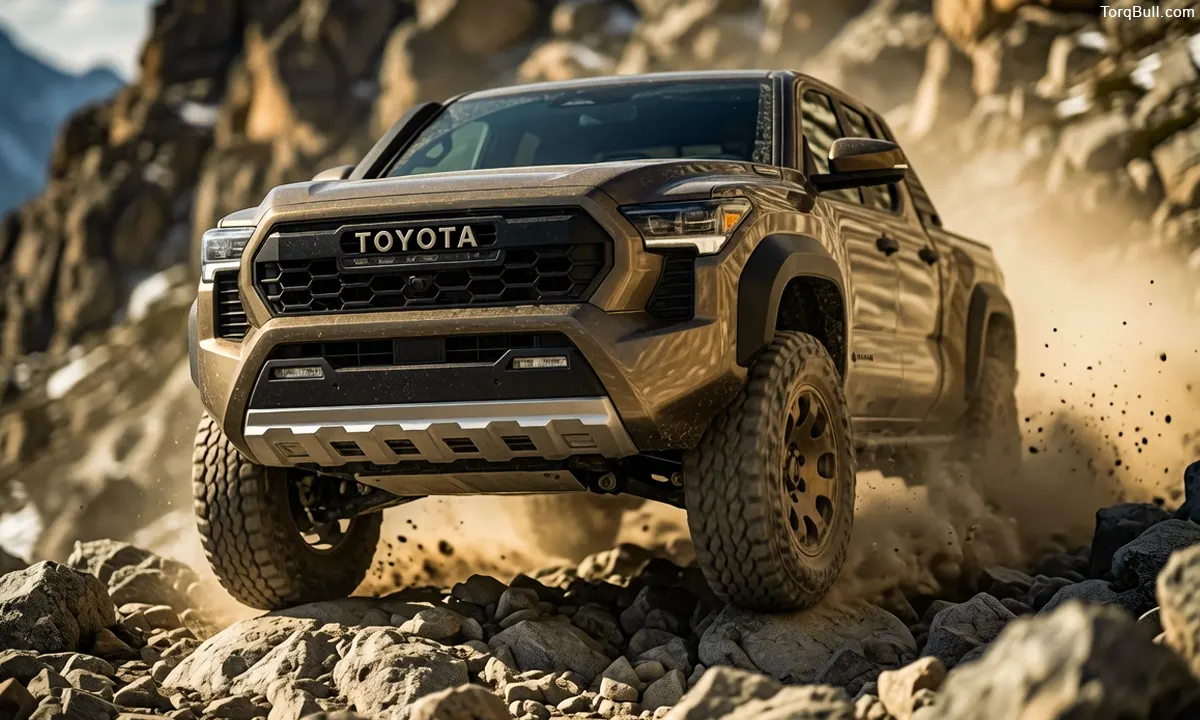
- The 2026 Toyota Tacoma Trailhunter comes standard with the i-Force MAX hybrid powertrain, producing 326 horsepower and 465 pound-feet of torque.
- It features overlanding-focused hardware including Old Man Emu shocks, 33-inch all-terrain tires, steel skid plates and frame-mounted rock rails.
- Factory-installed upgrades such as ARB accessories and an onboard air compressor make the Trailhunter one of the most adventure-ready Tacomas ever built.
The Toyota Tacoma Trailhunter is a specific answer to a specific problem — one that every serious overlanding buyer has faced regardless of the truck they drive: the gap between purchasing a capable midsize truck and having a properly equipped overlanding rig is typically measured in thousands of dollars and weeks of sourcing, installing and calibrating aftermarket equipment from multiple suppliers. The Trailhunter eliminates this gap by delivering, at the factory level and at a single purchase price, the ARB-partnered bumpers, the Old Man Emu suspension, the RIGID Industries lighting, the high-output air compressor, the MOLLE panel storage system and the steel underbody protection that serious overlanders typically spend $8,000 to $15,000 building into a truck after purchase. For buyers who want to spend more time exploring and less time building, the Trailhunter hits the sweet spot. This complete review examines every system.
The Powertrain: i-Force MAX Standard, Not Optional
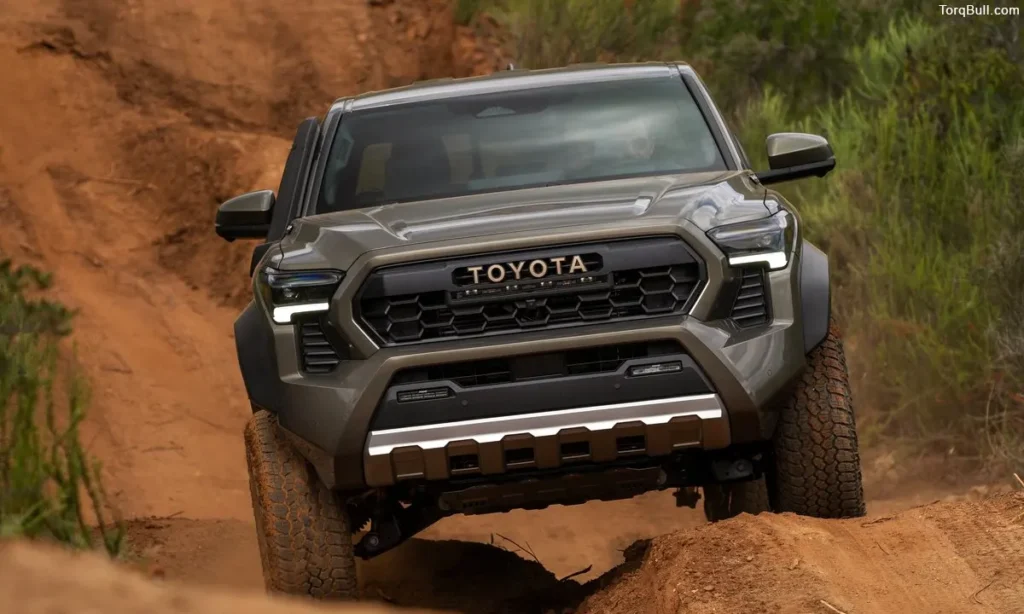
The most significant specification difference between the Trailhunter and the lower-tier TRD Off-Road is not the suspension or the bumpers — it is the powertrain. The i-Force MAX hybrid is standard on every Trailhunter configuration, while it is a paid option on the TRD Off-Road and unavailable on lower Tacoma trims. This standardisation means every Trailhunter buyer receives 326 combined horsepower and 465 pound feet of torque from the twin-turbocharged 2.4-litre four-cylinder combined with the electric motor — without paying the upgrade cost that hybrid access requires on other trims.
The i-Force MAX’s specific value for overlanding use is the electric motor’s instant torque delivery at zero RPM. On technical trails where crawl speed management determines obstacle success or failure, the electric motor provides the precise, immediately available torque that allows millimetre-accurate wheel placement without the power surge that a turbocharger’s spool-up produces in a gasoline-only application. The motor fills the gap between initial throttle application and full boost pressure instantaneously — producing a more linear and more controllable torque delivery at the slow speeds where rock crawling, river crossing and steep grade navigation require maximum control precision.
The 2026 Trailhunter’s ground clearance reaches 11.2 to 11.5 inches — achieved through the combination of the lifted suspension system and the 33-inch all-terrain tyre diameter — providing genuine obstacle clearance that standard-height Tacoma configurations at 9 to 10 inches cannot match. The high-clearance front bumper and high-clearance rear bumper improve approach and departure angles by eliminating the low-hanging factory bumper sections that contact terrain before the tyres have exhausted their approach geometry.
Read: Best Toyota Tacoma Trim to Buy 2026. Which One Should You Choose?
The Suspension: Old Man Emu Tuned for Loaded Overlanding
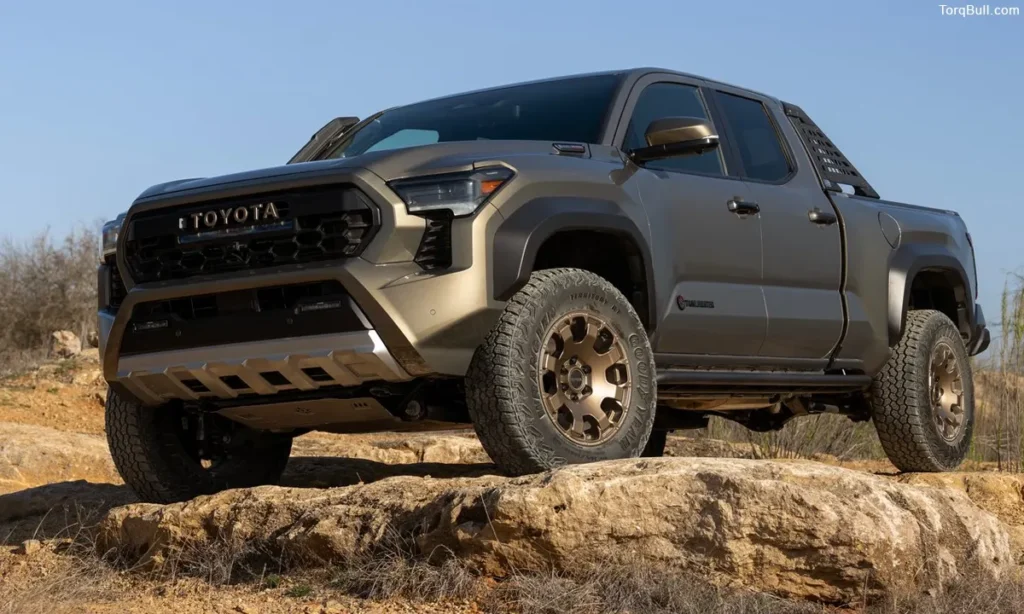
The suspension system is the component where the Trailhunter’s specific purpose most clearly distinguishes it from the TRD Pro — the other i-Force MAX standard Tacoma configuration — because the two trucks’ suspension systems are tuned for fundamentally different off-road use cases.
The TRD Pro uses FOX QS3 adjustable shocks specifically tuned for high-speed desert running — the sustained, rapid off-road travel at speeds where shock fade, sustained heat generation and high-frequency input management determine performance. The FOX QS3’s three-position external adjustment allows the driver to tune compression characteristics for the specific terrain encountered.
The Trailhunter uses Old Man Emu 2.5-inch forged monotube shocks with rear piggyback-style remote reservoirs — specifically tuned for carrying the heavy loads associated with overlanding rather than for maximum speed desert running. This tuning distinction reflects the Trailhunter’s intended use: an overlanding rig loaded with recovery equipment, camping gear, water storage, food supplies and overlanding accessories that collectively add 200 to 500 pounds of payload to the truck bed. The Old Man Emu shocks’ calibration accounts for this loaded weight — maintaining appropriate suspension response under load rather than producing the harsh, overloaded character that shocks tuned for unloaded performance produce when the bed is full.
The rear piggyback reservoirs provide additional shock fluid capacity that extends the thermal endurance of the suspension during prolonged trail use — preventing the fade that occurs when conventional shock absorbers overheat during sustained technical driving. This fade resistance is specifically relevant for overlanding use where a single trail session may span many hours of continuous technical driving rather than the brief, intense desert blasts that the TRD Pro’s suspension was calibrated to sustain.
The ARB Equipment Package: Factory-Fitted Premium Hardware
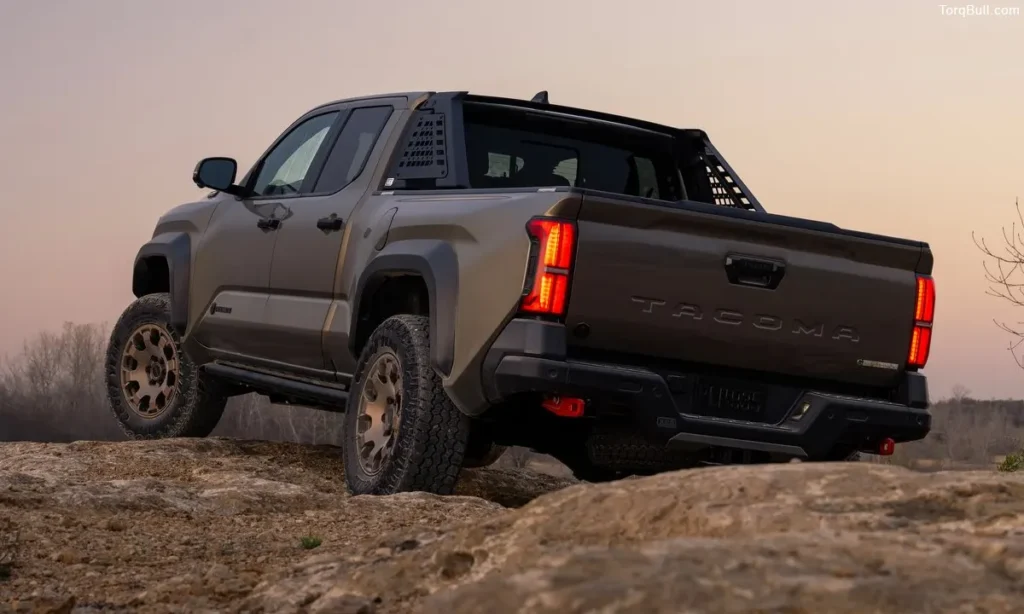
The Trailhunter’s ARB-partnered equipment is the hardware that most dramatically separates the purchase decision from an equivalent TRD Off-Road with aftermarket modifications — because ARB is the overlanding equipment manufacturer whose products most serious overlanders independently choose when building a rig without factory guidance.
The ARB steel rear bumper provides a dedicated recovery point reinforced to handle full-vehicle pulling loads — the loads that a stuck vehicle generates when recovery straps, snatch blocks and winch systems are applied. Factory plastic rear bumpers are not engineered for this load, and recovery attempts using them risk bumper failure at the worst possible moment. The ARB steel unit’s rated recovery loads are a specific and practically essential capability for self-sufficient overlanding in remote terrain.
The ARB Sport Bar provides a rigid, load-rated structure above the bed for mounting accessories — roof tents, awnings, solar panels, additional lighting and gear — that the factory bed structure cannot safely support as a rigid mounting point without reinforcement. The Sport Bar’s inclusion at the factory level eliminates the first and largest aftermarket accessory installation that most overlanders address after purchase.
The RIGID Industries lighting is the third partnership component — and specifically relevant to overlanding’s reality of frequent night driving on unlit trails, setting up camp in darkness and navigating environments where factory headlight illumination is inadequate for the speed and terrain complexity involved.
Read: Toyota Tacoma vs Toyota Hilux: The Ultimate Pickup Truck Showdown 2026
The Integrated Overlanding Features: What Makes the Trailhunter Unique
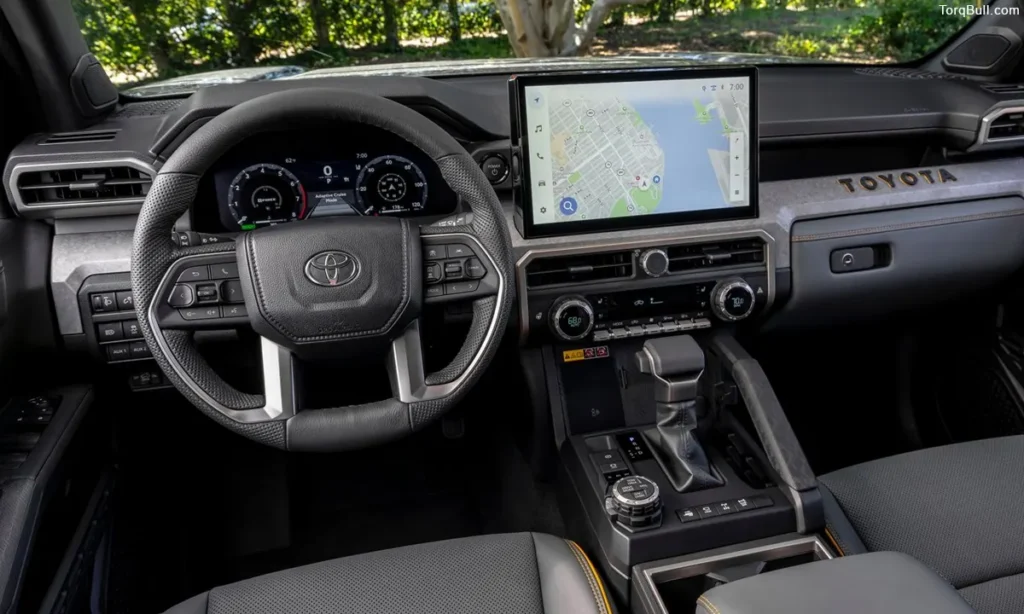
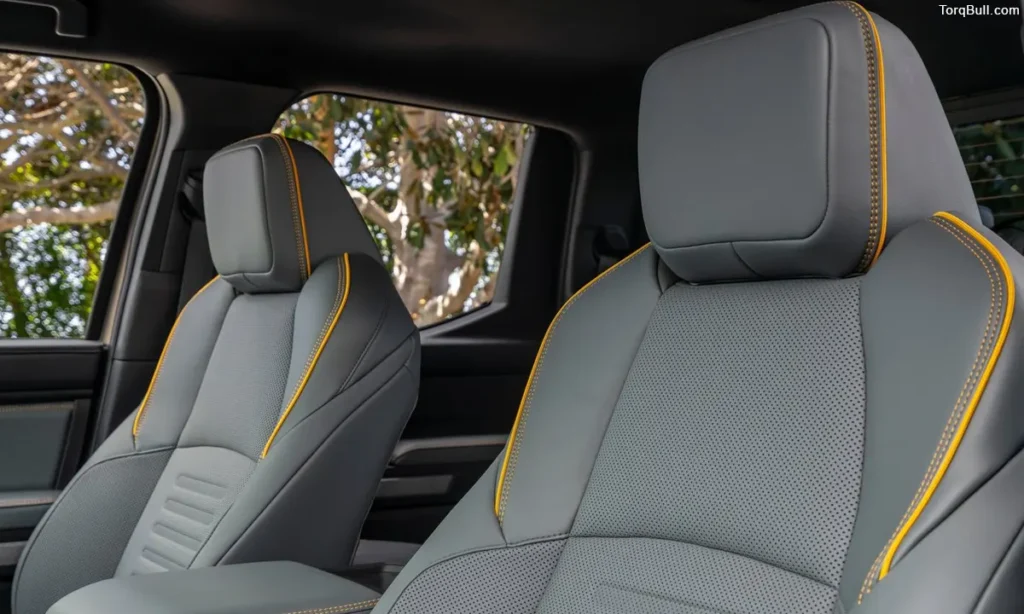
Beyond the suspension, bumpers and lighting that most serious off-road trucks provide in some form, the Trailhunter includes factory-integrated features that most competing trucks cannot replicate regardless of aftermarket investment.
The integrated high-output air compressor mounted in the bed or body is the most practically essential of these features. Overlanding best practice requires airing down tyres to 15 to 20 PSI for soft sand and 20 to 25 PSI for loose rock — lower pressures that dramatically increase the tyre’s contact patch and conformability to uneven surfaces. After completing the terrain section, tyres must be re-inflated to highway pressures before public road travel. Without a compressor, this requires carrying a separate portable unit and running it from a 12-volt socket or battery connection. The Trailhunter’s integrated compressor is permanently mounted, always available and specifically sized for the flow rate that 33-inch tyres require for prompt inflation from trail pressures to highway pressures.
The bed utility bar with removable MOLLE panels provides a customisable storage organisation system compatible with the MOLLE-mounted pouches, tool holders and accessory mounts that the overlanding equipment ecosystem has standardised around. Integrated bed scene lighting allows camp setup in complete darkness without requiring separate lanterns or headlamps for basic bed organisation tasks.
The high-mounted air intake — extending the engine’s air intake path to a higher position above the hood surface — allows the Trailhunter to ford rivers and cross streams at greater water depth than a standard intake position allows. Water ingestion into a running engine produces immediate and catastrophic failure. The elevated intake provides meaningful additional crossing depth that trail water obstacles regularly require.
2026 Toyota Tacoma Trailhunter — Complete Specification and Equipment Chart
| Feature | Specification | Notes |
| Powertrain | 2.4L Twin Turbo + Electric Motor (i-Force MAX) | Standard, not optional |
| Combined Horsepower | 326 hp | Best Tacoma payload-to-power ratio |
| Combined Torque | 465 lb ft | Electric instant torque for trail control |
| Suspension Front | Old Man Emu 2.5-inch forged monotube shocks | Tuned for loaded overlanding |
| Suspension Rear | Old Man Emu with piggyback remote reservoirs | Extended thermal endurance under load |
| Ground Clearance | 11.2 to 11.5 inches | Lifted suspension and 33-inch tyres |
| Standard Tyres | 33-inch Goodyear Territory R/T all-terrain | On 18-inch bronze-finished wheels |
| Front Bumper | High-clearance design | Improved approach angle |
| Rear Bumper | ARB steel recovery-rated | Factory-fitted partnership accessory |
| Sport Bar | ARB Sport Bar | Load-rated accessory mounting |
| Underbody Protection | Steel skid plates (front, mid, rear) | Full drivetrain coverage |
| Rock Rails | Frame-mounted steel units | Side body and sill protection |
| Lighting | RIGID Industries LED | Factory integrated upgrade lighting |
| Air Compressor | Integrated high-output | Tyre inflation and trail recovery |
| Bed Features | MOLLE panels and utility bar | Customisable storage organisation |
| Water Crossing | High-mounted air intake | Extended river fording depth |
| Off-Road Tech | Crawl Control, Multi-Terrain Select, locking differentials | Standard Tacoma off-road suite |
| Bed Options | 5-foot or 6-foot available | Both lengths available on Trailhunter |
| Starting Price | approximately $66,000 | i-Force MAX standard included |
Read: Toyota Tacoma Maintenance Cost Per Year. Reliable Pickup or Hidden Expense?
Trailhunter vs TRD Pro: The Honest Comparison
The Trailhunter and TRD Pro are the two Tacoma configurations with i-Force MAX as standard, starting at comparable price points, and their comparison is the most common deliberation among serious Tacoma buyers who have already decided they want the hybrid powertrain.
The TRD Pro is the better choice for buyers who specifically want high-speed desert running capability — the FOX QS3 three-position adjustable shocks, the more aggressive suspension tune for rapid off-road travel and the IsoDynamic Performance seats that absorb impact during sustained high-speed desert use. The TRD Pro prioritises the dynamic off-road performance envelope that desert racing and rapid trail access demands.
The Trailhunter is the better choice for buyers who are planning loaded, self-sufficient multi-day expeditions — the Old Man Emu suspension’s loaded-weight tuning, the ARB rear bumper’s recovery rating, the integrated air compressor’s immediate availability and the MOLLE bed organisation system collectively address the overlanding-specific requirements that the TRD Pro does not specifically prioritise. The Trailhunter has removed the barrier between dreaming about overlanding and actually doing it — and for buyers who specifically plan to use their truck as a self-sufficient expedition vehicle, this factory-integrated capability represents the most complete and most immediately deployable overlanding package available from any truck manufacturer at any price.