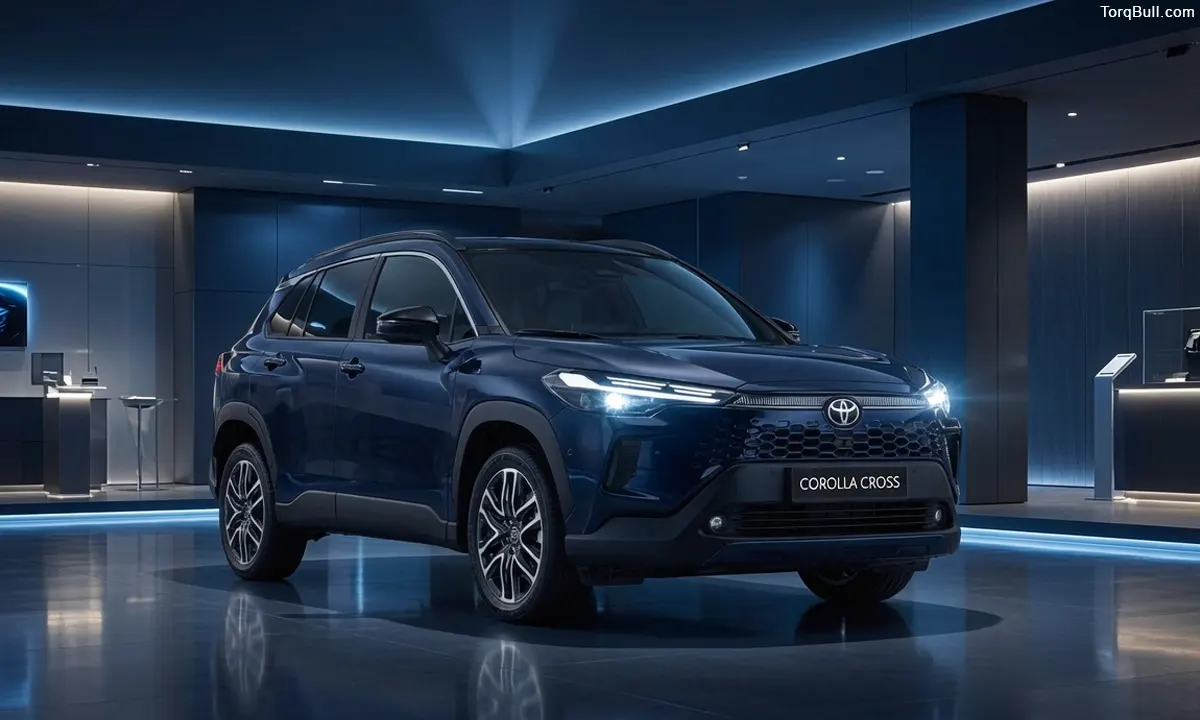
- Toyota backs the Corolla Cross Hybrid battery with a 10-year/150,000-mile warranty, among the strongest in the compact crossover segment.
- Toyota’s fifth-generation hybrid system has a proven track record of lasting 150,000–200,000+ miles in real-world use.
- The 2026 Corolla Cross Hybrid is expected to deliver above-average reliability and strong long-term ownership confidence.
The Toyota Corolla Cross Hybrid battery life question is the one that most prospective buyers ask before committing to a hybrid crossover purchase — and for the Corolla Cross specifically, the answer draws on two distinct bodies of evidence: the specific Toyota hybrid battery warranty that covers this vehicle, and the broader Toyota hybrid system track record accumulated across millions of hybrid vehicles on the same or similar powertrain platforms over more than two decades. Both sources point to the same conclusion: the Corolla Cross Hybrid’s battery is among the best-covered and most proven compact crossover hybrid systems available in 2026. This complete guide covers everything from the warranty specifics through real-world longevity expectations, the factors that most determine battery health and the costs and considerations for eventual battery service.
The Toyota Hybrid Battery Warranty: The Most Comprehensive Coverage in the Segment
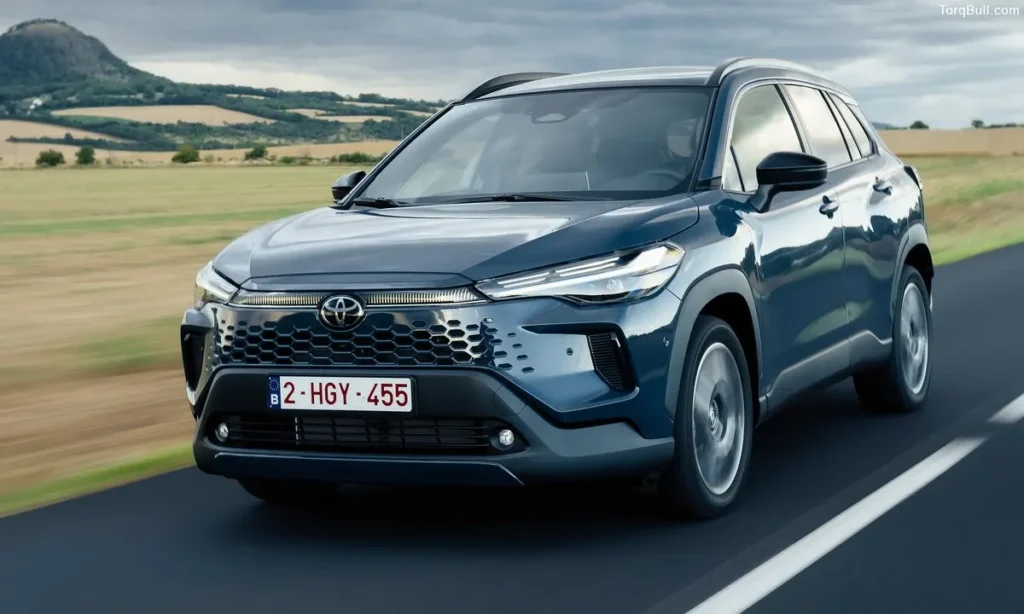
The 2026 Toyota Corolla Cross Hybrid’s hybrid battery is covered under Toyota’s hybrid battery warranty for 10 years or 150,000 miles — whichever comes first from the original sale date. This warranty coverage is the single most immediately relevant battery life specification for new buyers, because it defines the financial protection window across the first decade of typical family ownership.
Toyota’s 10-year, 150,000-mile hybrid battery warranty represents the most comprehensive factory warranty coverage for a hybrid battery available in the compact crossover segment — substantially exceeding the Honda CR-V Hybrid’s 8-year, 80,000-mile coverage in most states and matching the most extended coverage available from any mainstream manufacturer. The warranty covers the hybrid battery pack against defects in materials and workmanship — meaning any battery failure that occurs within the coverage window is repaired or replaced at no cost to the owner at any authorised Toyota dealer.
This warranty applies to both the high-voltage hybrid battery — the large lithium-ion pack that stores the electrical energy the hybrid system uses — and the electric motor components that form the integrated hybrid drivetrain. The 10-year coverage window encompasses the full primary ownership period for the majority of family buyers who plan five to eight years of typical ownership before trading or selling.
The practical significance of this warranty for resale planning is equally important: a 2026 Corolla Cross Hybrid purchased new and sold after five years carries five years of remaining hybrid battery warranty coverage that transfers to the next owner — a specific resale advantage that both supports the used market transaction price and provides the used buyer with meaningful financial protection against hybrid system failure events.
Read: Toyota Corolla Cross Hybrid vs Gas. Which SUV Saves You More Money Over Time?
Toyota’s Hybrid Track Record: The Best Evidence of Battery Longevity
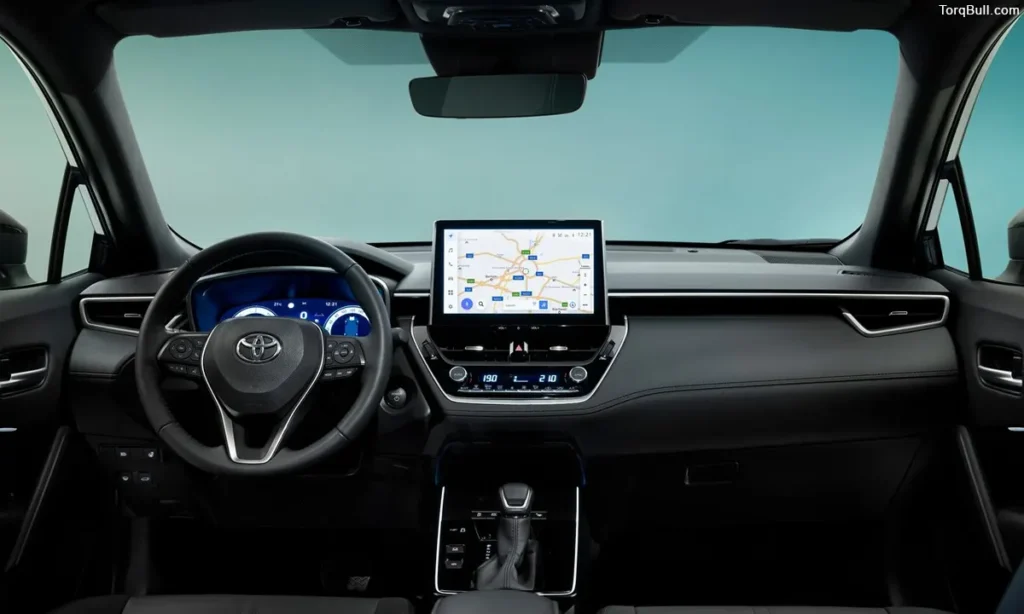
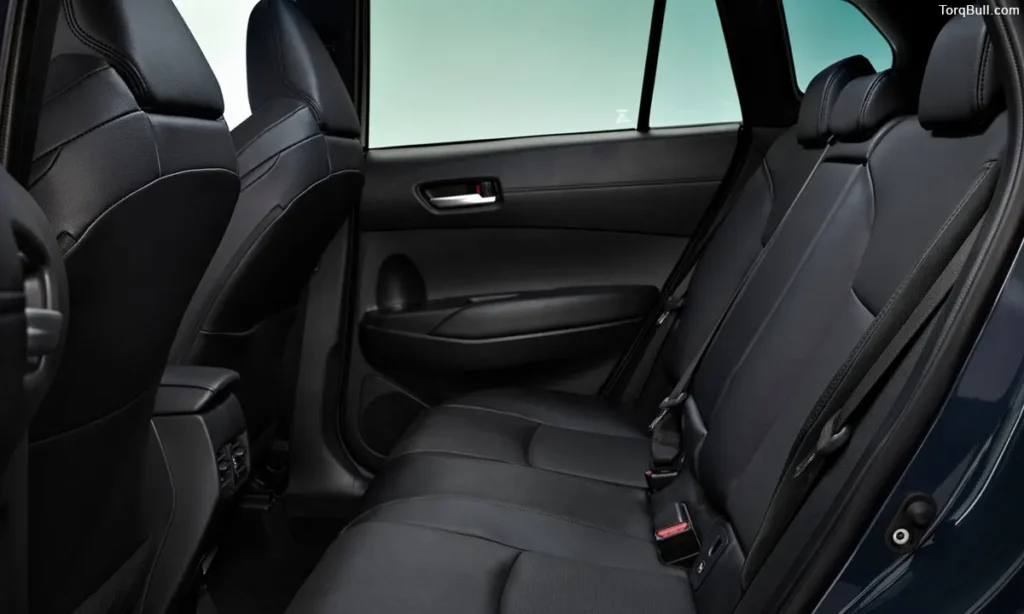
The most credible battery longevity evidence available for the Corolla Cross Hybrid does not come from this specific model — which has only been in production since 2022 and therefore has limited high-mileage owner data — but from the broader Toyota hybrid system platform that shares core engineering principles with the Prius, Camry Hybrid, RAV4 Hybrid, Corolla Hybrid and Highlander Hybrid across more than two decades of production.
Toyota’s fifth-generation hybrid electric vehicle system — which the Corolla Cross Hybrid uses — is engineered around the same fundamental battery management principles that have produced the multi-generational Toyota hybrid longevity record. The system’s battery management actively maintains the battery’s state of charge within an optimal range of approximately 40 to 80 percent — deliberately avoiding the electrochemical stress that occurs at the extreme ends of the charge cycle. This controlled cycling is the engineering decision that most directly extends lithium-ion battery life relative to systems that allow deeper charge and discharge cycles.
Toyota hybrid owners across the Prius, Camry Hybrid and RAV4 Hybrid nameplates consistently document hybrid batteries lasting 150,000 to 200,000 miles and beyond with original battery packs maintaining functional capacity — the real-world evidence that validates the engineering approach without requiring the Corolla Cross Hybrid specifically to have accumulated equivalent mileage data. The shared platform principle means the Corolla Cross Hybrid battery’s expected longevity is informed by this multi-model, multi-decade evidence base rather than starting from zero.
The active liquid cooling system that manages the Corolla Cross Hybrid battery’s thermal environment is the specific hardware difference between this system and air-cooled alternatives — maintaining battery temperature within the range that minimises degradation regardless of external temperature extremes. Buyers in hot-climate states where sustained high temperatures are the most significant battery longevity challenge benefit specifically from active liquid cooling’s ability to maintain optimal battery temperature even when ambient temperatures would otherwise stress an air-cooled system.
What the 2024 Owner Data Reveals About Real-World Battery Performance
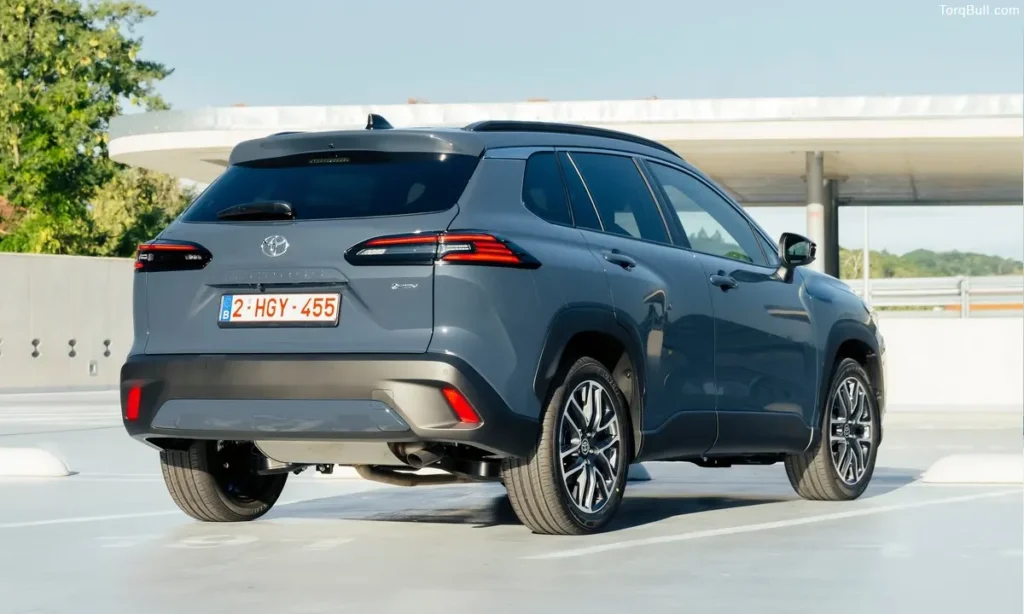
The 2024 Corolla Cross Hybrid — the production year with sufficient ownership time to generate meaningful owner reliability data — provides the most current real-world battery and hybrid system performance signal available. Overall reliability of the 2024 Corolla Cross Hybrid is characterised as about average reliability compared to other cars from the same model year, with the most commonly documented trouble spot being the climate system rather than the hybrid battery or electric motor.
The specific climate system concerns documented by 2024 Corolla Cross Hybrid owners — air conditioning compressor issues, refrigerant leakage from a condenser positioned directly behind the front grille with limited road debris protection — are conventional automotive HVAC concerns rather than hybrid-specific battery or electric motor issues. The absence of significant hybrid battery complaints in the 2024 owner data is the most relevant finding for battery life assessment: no systematic hybrid battery degradation pattern has emerged from early production owners whose vehicles have accumulated meaningful mileage.
The 2025 Corolla Cross Hybrid is rated more reliable than other cars from the same model year in independent survey data — a significant step above the 2024 model’s average rating — with the hybrid system’s reliability specifically contributing to this improved assessment. The 2026 model is predicted to be more reliable than the average new car based on the accumulated 2024 and 2025 data.
Read: Toyota Corolla Cross Reliability Review 2026. What Makes This SUV a Smart Buy?
The 12-Volt Auxiliary Battery: The Battery Most Likely to Need Attention First
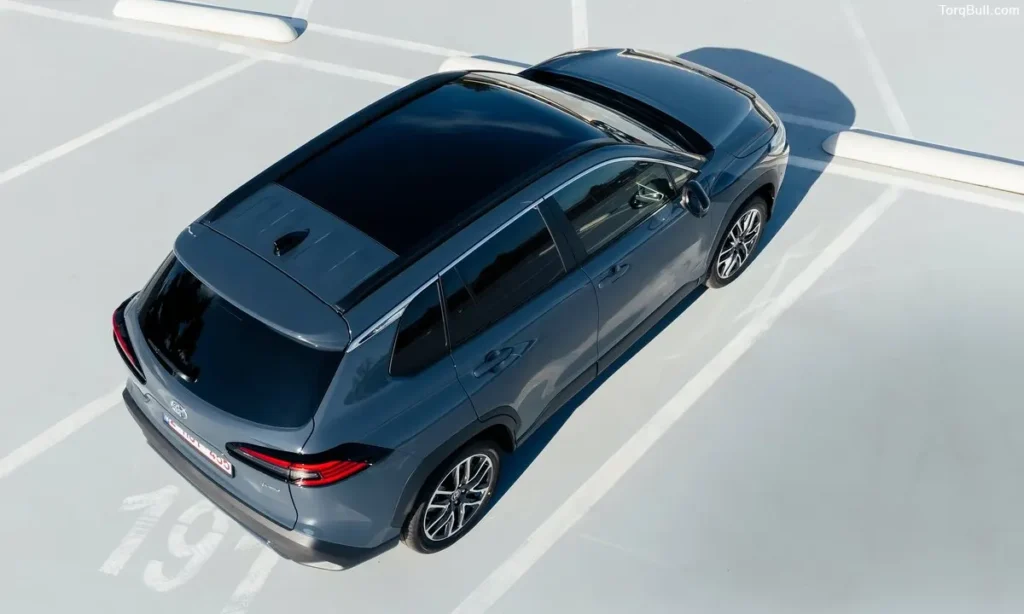
While the high-voltage hybrid battery is the component that generates the most buyer concern, the 12-volt lead-acid auxiliary battery that starts the Corolla Cross Hybrid’s conventional electronics is the battery that most typically requires replacement first — and at a far more modest cost than the high-voltage system.
The 12-volt auxiliary battery powers the conventional electrical accessories, start-up sequencing and control electronics of the hybrid system — separate from the high-voltage propulsion battery. In Toyota hybrids, the 12-volt battery receives charge from the high-voltage system during driving rather than from a conventional alternator, which changes its charge cycle characteristics relative to conventional vehicles.
The 12-volt auxiliary battery in Toyota hybrids typically requires replacement at 5 to 7 years of age or when symptoms including slow start-up sequence, electrical accessory anomalies or dashboard warnings appear. The cost at a Toyota dealer for the 12-volt replacement is approximately $150 to $300 including labour — manageable and substantially below the high-voltage battery replacement cost. One owner community discussion specifically documents concern about the 12-volt battery when an OBD2 diagnostic device was found to create a 0.081-amp parasitic drain — highlighting that both the 12-volt battery and its management require attention in hybrid ownership, particularly when aftermarket devices are connected to the vehicle’s electrical system.
Toyota Corolla Cross Hybrid Battery Life — Complete Reference Chart
| Battery Specification | High-Voltage Hybrid Battery | 12-Volt Auxiliary Battery |
| Battery Type | Lithium-ion high-voltage pack | Lead-acid conventional |
| Capacity | Approximately 1.5 kWh | 12V standard capacity |
| Warranty Coverage | 10 years or 150,000 miles | Standard 36-month warranty |
| Expected Lifespan | 150,000 to 200,000-plus miles | 5 to 7 years |
| Real-World Owner Evidence | No systematic failure documented in 2024 or 2025 data | Requires monitoring; drain risk from aftermarket devices |
| Thermal Management | Active liquid cooling system | Conventional |
| Charge Range Management | 40 to 80 percent SOC maintained automatically | Charged by high-voltage system during driving |
| Replacement Cost (dealer) | Approximately $3,000 to $5,000 | Approximately $150 to $300 |
| Replacement Cost (third party) | Approximately $1,500 to $2,500 | Approximately $100 to $180 |
| 2026 Reliability Prediction | More reliable than average | Standard lead-acid reliability |
| Platform Track Record | Multi-model Toyota hybrid; 20-plus years of data | Standard automotive battery |
| Warranty Transferable | Yes to subsequent owners within coverage window | Standard warranty |
Read: Toyota Corolla LE vs SE. Is the Sportier Trim Worth The Extra Cost?
Factors That Influence Corolla Cross Hybrid Battery Health
Understanding the specific conditions that most support or most stress the Corolla Cross Hybrid battery helps owners make the driving and maintenance decisions that maximise battery longevity within the ownership period.
Moderate temperature environments are the most consistently supportive condition for lithium-ion longevity — the active liquid cooling system manages extremes, but moderate climates reduce the system’s thermal management workload and extend battery service life. Buyers in consistently hot climates should ensure the battery cooling system is in full working order and that cabin ventilation is not compromised, because the battery cooling system uses cabin air in some configurations.
Consistent driving frequency is more beneficial for hybrid battery health than extended parking periods — regular driving maintains the battery’s thermal management system in active operation and prevents the deep self-discharge that extended storage produces in battery chemistry. Buyers who plan to park the Corolla Cross Hybrid for weeks at a time should ensure the 12-volt auxiliary battery is fully charged before extended storage and consider using a maintenance charger during very long storage periods.
Avoiding aftermarket OBD2 devices, dashcams and accessories that create continuous parasitic drain on the 12-volt system protects the auxiliary battery’s charge state and ensures the hybrid system starts and operates normally — as the documented community concern about OBD2 device drain specifically illustrates.