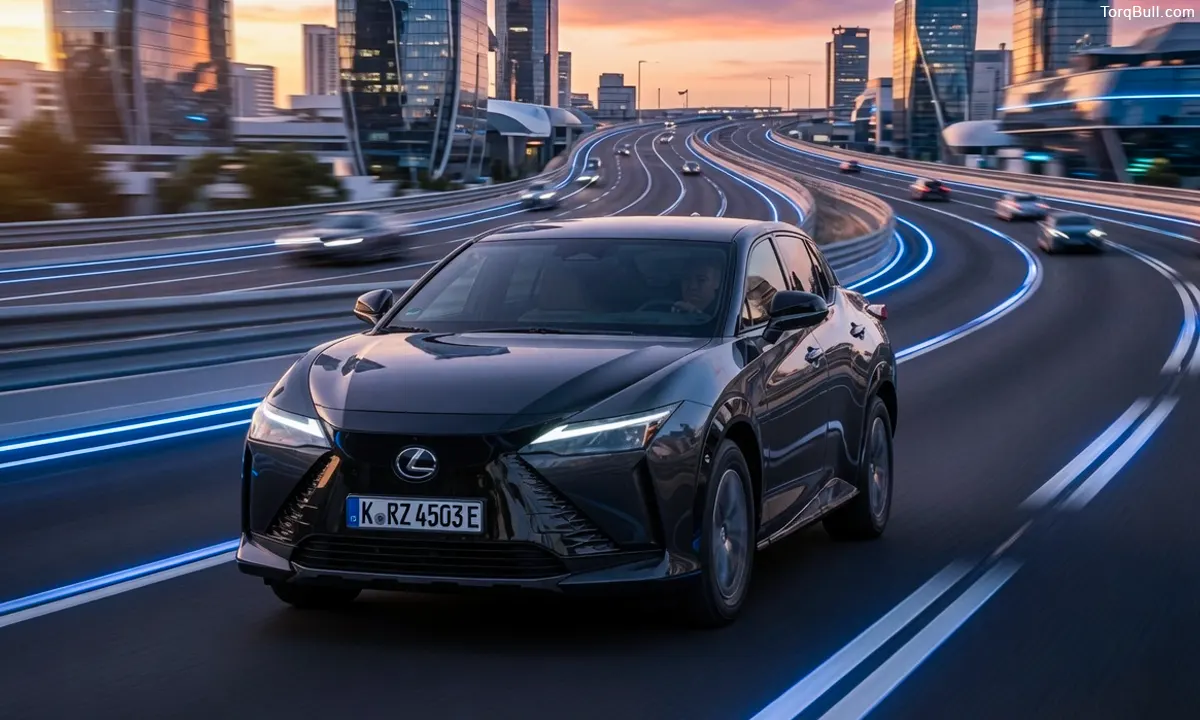
- The 2026 Lexus RZ 350e FWD is EPA-rated for up to 300 miles of driving range with 18-inch wheels.
- Independent highway testing of the AWD RZ 450e achieved about 202 miles at a constant 75 MPH.
- For road trips, owners should plan for roughly 190–210 miles between charging stops, while the new NACS port adds access to more than 25,000 Tesla Superchargers.
The 2026 Lexus RZ represents the most significant range and charging upgrade in the nameplate’s production history — addressing the two most specifically criticised limitations of the 2023 through 2025 generation that both independent testers and owner communities consistently documented: a range that trailed the luxury EV segment and a charging speed that was among the slowest available in any modern premium electric vehicle. The 2026 update delivers expanded battery capacity across all trims, improved EPA range estimates from 220 miles on the best earlier AWD configuration to 260 miles on the new 450e AWD and 300 miles on the new 350e FWD, a 22 kW standard onboard AC charger replacing the previous generation’s inadequate 6.6 kW unit and a NACS port that opens the entire Tesla Supercharger network. Whether these improvements make the RZ a competent highway road trip vehicle depends on what the real-world range tests show — and those results are more nuanced than the EPA estimates alone communicate.
The Critical Gap: EPA Range vs Highway Test Reality
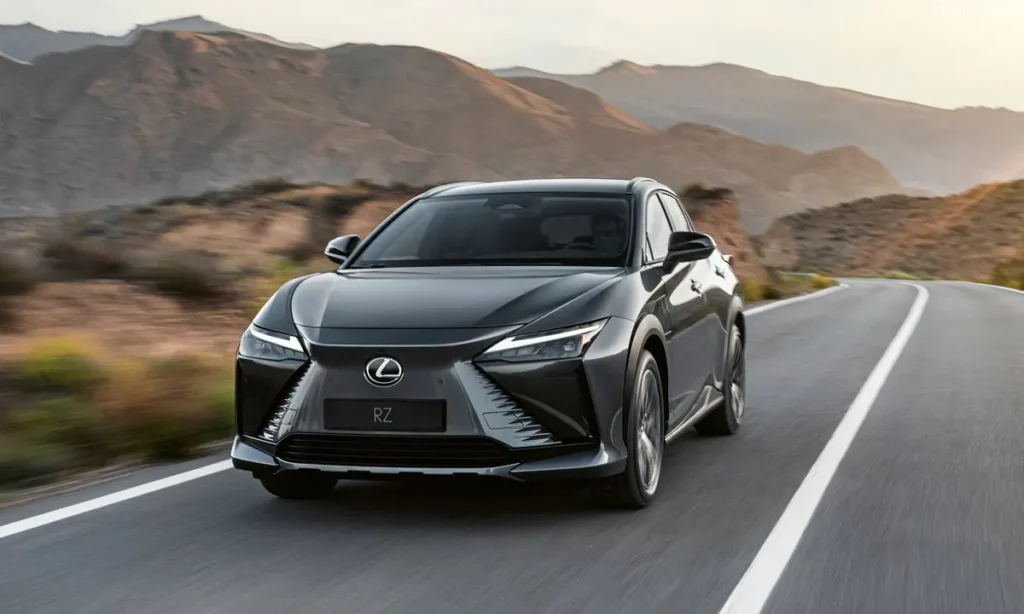
Independent highway range testing of the Lexus RZ 450e AWD Premium — equipped with the 71.4 kWh battery pack and standard 18-inch wheels — at a constant 75 MPH achieved 202 miles before the battery was effectively depleted. Against the vehicle’s EPA-rated 220-mile range, this represents a 92 percent EPA estimate achievement at real highway testing conditions — a result that would be considered above average for most EVs tested on a 75 MPH highway loop.
The practical translation of this 202-mile result for road trip planning requires a further reduction from the tested maximum to the comfortable usable range — accounting for the buffer required to arrive at each charging stop with adequate remaining charge to avoid range anxiety and ensure access to charging before the battery is critically depleted. Operating an EV to its maximum range on a highway trip means arriving at each charging stop with minimal buffer — an approach that experienced EV road trippers and efficiency experts consistently recommend against due to the unpredictability of highway speeds, traffic, wind conditions and climate effects on real-world consumption.
A conservative planning approach for the 450e AWD — comfortable usage of 60 to 65 percent of indicated battery between fast-charge stops — produces a practical highway range of 120 to 130 miles per charge from a full 200-mile indicated starting range. This conservative figure is the most practically useful number for 450e AWD owners planning multi-state highway driving rather than the EPA maximum or the tested 202-mile absolute range.
Read: Lexus RZ Luxury Features Review 2026. Does This Electric SUV Feel Truly Premium?
The 350e FWD: The Range Leader That Changes Road Trip Planning
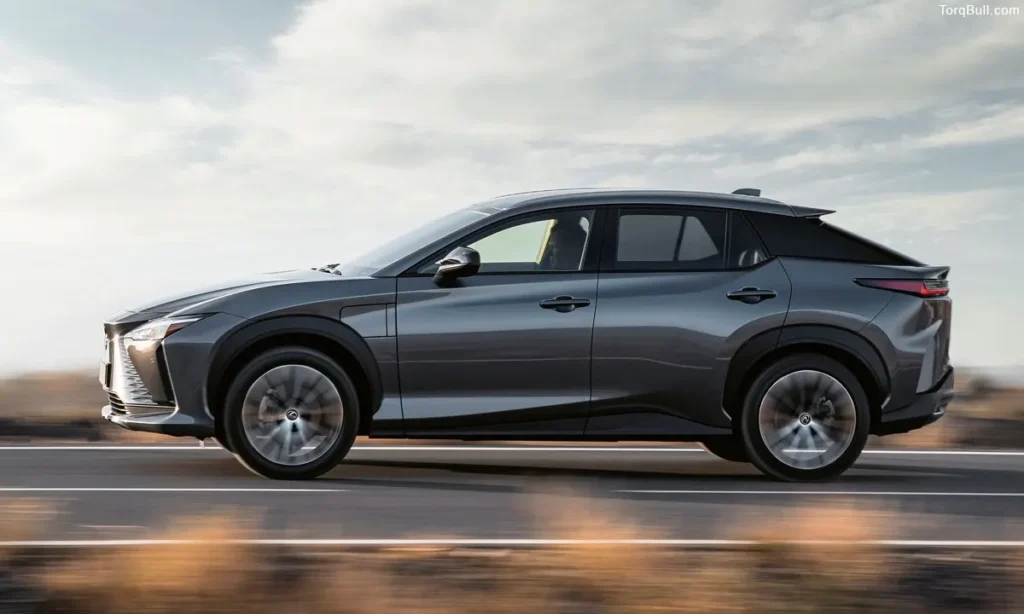
The 2026 Lexus RZ 350e FWD is the configuration where the range story becomes substantially more positive — with 300 miles of EPA-rated range from its 74.69 kWh battery pack and 201 horsepower front-wheel-drive powertrain that benefits from both higher battery capacity and the efficiency advantage of single-motor FWD over dual-motor AWD operation.
At 300 miles EPA-rated, the 350e FWD provides comfortable highway range between fast-charge stops of approximately 190 to 210 miles in good conditions — the estimate derived from extrapolating earlier RZ highway test data alongside the improved battery capacity and efficiency of the 2026 update. This 190 to 210 mile comfortable range per stop makes the 350e FWD viable for the majority of multi-day road trips where 200-mile legs between charging stops represent a reasonable and achievable daily driving segment.
The 550e F Sport AWD — the new high-performance variant with 402 combined horsepower — maintains a 225-mile EPA-rated range from its performance-oriented configuration. The additional electric motor’s energy consumption and the larger wheel and tyre specification reduce range below the 350e’s 300-mile figure but provide a practical highway range that is meaningfully improved from the earliest generation RZ 450e’s 202-mile tested result.
The Wheel Size Variable: The Most Impactful Range Decision Available to Buyers
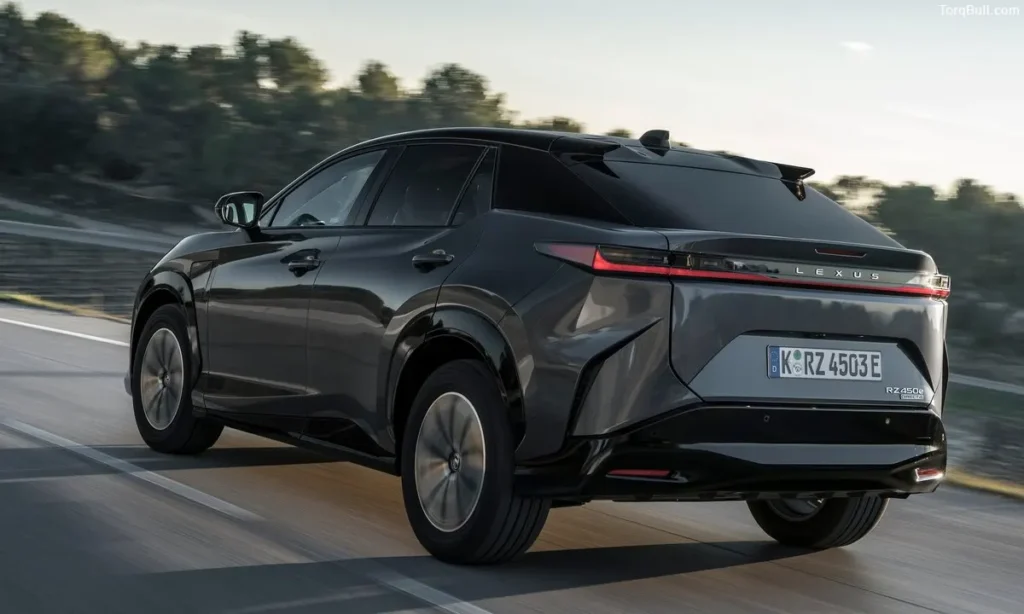
The wheel and tyre selection is the single most controllable range variable available to RZ buyers at the point of purchase — and understanding its effect on EPA-rated range is essential for buyers who specifically prioritise maximum highway range.
The 18-inch wheel specification consistently produces higher EPA range figures across all RZ configurations — approximately 10 to 24 miles of additional EPA range compared to the 20-inch specification on equivalent powertrains. The 450e AWD drops from 220 miles on 18-inch wheels to 196 miles on 20-inch wheels — a 24-mile EPA range reduction that translates to a real-world practical range reduction of approximately 15 to 20 miles per charge on highway trips.
The independent test evaluation specifically recommends staying with the Premium trim for its longer driving range and avoiding the Luxury model that comes with 20-inch tyres that reduce range — a direct recommendation that prioritises the most practically impactful specification over the premium visual appearance and handling characteristics that larger wheels provide.
For buyers who specifically purchase the RZ as a primary vehicle and plan occasional long-distance highway trips, the 18-inch wheel selection is the most financially rational decision — providing meaningful range improvement over the 20-inch alternative at no additional purchase cost on the trims where both specifications are available.
Read: Lexus RZ Charging Time at Home. Real-World Charging Time Breakdown
The Charging Evolution: From 48 kW Peak to Competitive Speeds
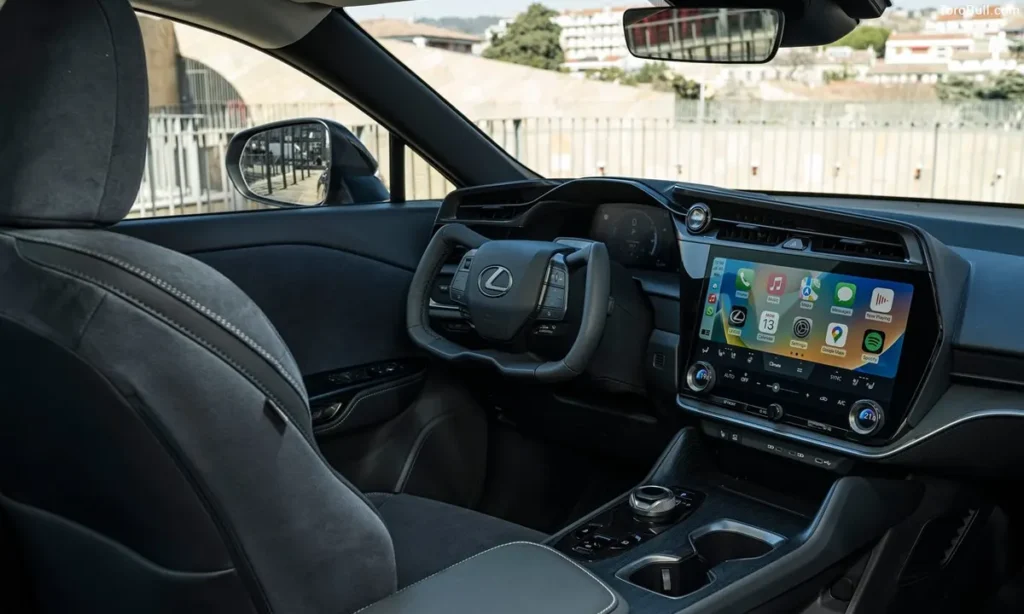
The early Lexus RZ’s DC fast charging speed was the generation’s most criticised operational limitation — with independent testing documenting only 48 kilowatts of peak charging power during a 20-minute charging stop that produced only 40 miles of range added. Other EVs in the same category typically add well over 100 miles during equivalent 20-minute sessions.
This charging speed deficiency was functionally more limiting than the range figure alone suggests — because a slower-charging EV requires longer stops to recover equivalent range, increasing the total journey time beyond what the number of required stops alone implies.
The 2026 RZ introduces a significantly improved charging curve alongside the higher-capacity battery — with actual charging times meaningfully faster than the old model’s numbers would suggest. The specific peak charging power for the 2026 upgrade has not been officially confirmed at the time of this assessment, but early reviews indicate a solid bump in charging speed that meaningfully addresses the previous generation’s most criticised operational limitation.
The NACS port addition is the complementary charging improvement that most directly affects road trip practicality — providing access to over 25,000 Tesla Supercharger stations without an adapter, at the charging network that the independent reliability assessments consistently rate as the most dependable public fast-charging infrastructure in the United States. For RZ 350e and 450e buyers who previously relied on CCS charging networks with higher documented failure rates, the NACS port’s reliability improvement is an operational benefit that range figures alone do not capture.
2026 Lexus RZ Highway Range — Complete Specification and Planning Chart
| Configuration | EPA Range | Wheel Size | Highway Test | Comfortable Road Trip Range | Charging Port | Notes |
| RZ 350e FWD | 300 miles | 18-inch standard | Not separately tested; extrapolated | 190 to 210 miles per stop | NACS standard | Best range in lineup |
| RZ 350e FWD | Reduced | 20-inch (if available) | Not tested | Approximately 175 to 190 miles | NACS standard | Wheel size reduces range |
| RZ 450e AWD | 260 miles | 18-inch standard | 202 miles tested (equivalent generation) | 155 to 170 miles per stop | NACS standard | AWD reduces efficiency |
| RZ 450e AWD | 220 to 225 miles | 20-inch | Below 202 miles | 130 to 145 miles per stop | NACS standard | Luxury trim spec |
| RZ 550e F Sport AWD | 225 miles | 20-inch standard | Not separately tested | 135 to 150 miles per stop | NACS standard | Performance variant |
| Early RZ 450e (2023 to 2025) | 196 to 220 miles | 18 or 20-inch | 202 miles (18-inch) | 120 to 130 miles per stop | CCS | Upgrade to NACS for 2026 |
Read: Lexus GX Ownership Cost 2026. Is This Luxury SUV Worth The Money?
The Competitor Context: Where the RZ Stands Among Luxury EVs
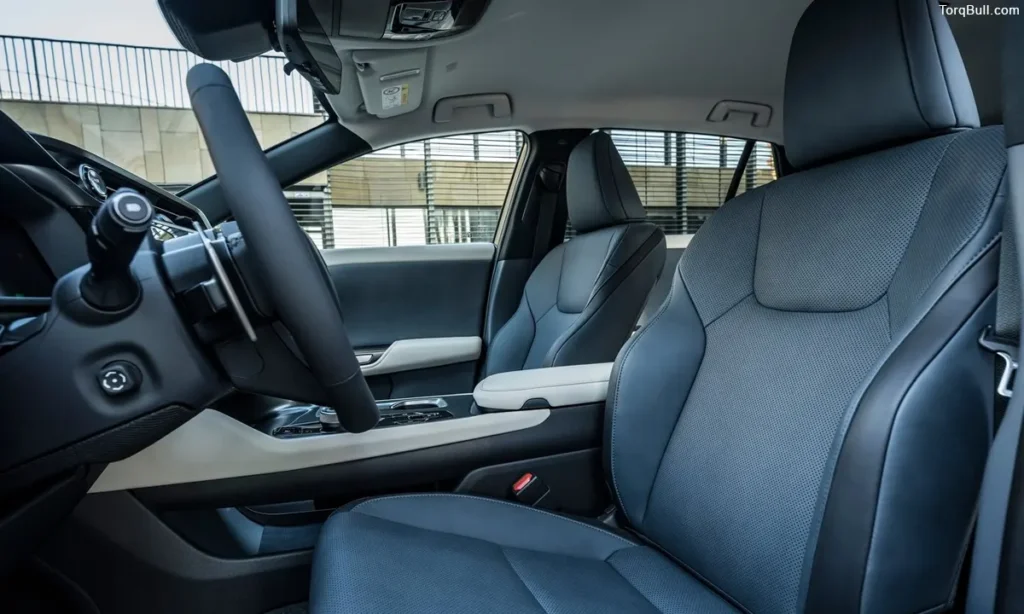
The Lexus RZ’s highway range position within the luxury compact electric SUV segment is the comparison that most directly contextualises its real-world adequacy for road trip buyers.
The Tesla Model Y — the most directly comparable luxury electric crossover by size and price — achieved 277 miles in equivalent independent highway range testing, substantially more than the Lexus RZ 450e’s 202 miles in comparable conditions. The Hyundai Ioniq 5, Kia EV6 and Audi Q4 e-tron similarly outperform the RZ on highway range in independent testing. The 2026 RZ’s expanded battery — particularly the 350e’s 300-mile EPA estimate — narrows but does not eliminate this gap in the direct segment comparison.
What the RZ specifically provides that higher-range competitors do not uniformly replicate is the Lexus interior quality, build standard and ownership experience character that makes the miles the vehicle does cover — whether 200 or 300 — quieter, calmer and better composed than most competing electric crossovers manage in equivalent highway conditions. This is the Lexus answer to range competition: making the miles available feel uniquely good rather than simply maximising the number of miles available.