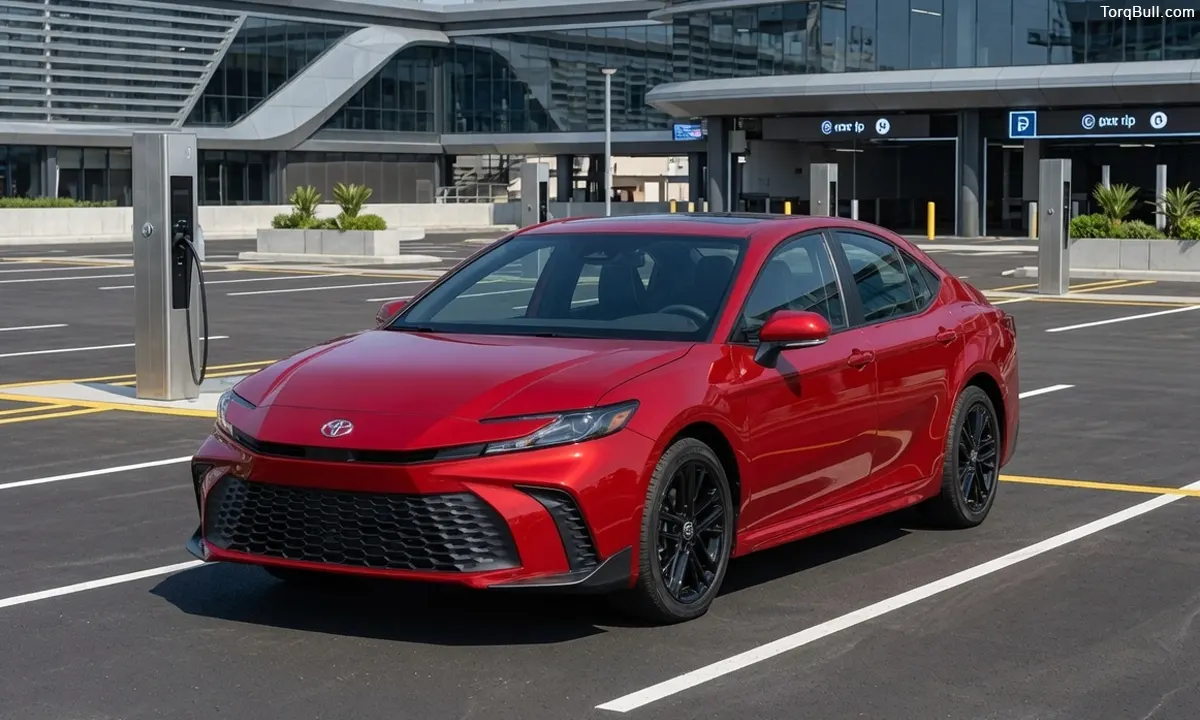
- The 2026 Toyota Camry AWD increases output to 232 horsepower and provides quicker acceleration than the front-wheel-drive model.
- AWD is available on every trim and costs approximately $1,525 more than FWD.
- The FWD Camry delivers the best fuel economy at up to 51 MPG combined, while AWD reduces efficiency by about 4–5 MPG.
The Toyota Camry’s AWD versus FWD comparison is a genuinely novel buying decision in the midsize sedan segment — because Toyota’s fifth-generation hybrid system delivers all-wheel drive through a completely different architecture than traditional AWD vehicles use, and the driving character difference between FWD and AWD Camry is more meaningful than seven additional horsepower alone would suggest. For buyers in northern states where all-weather traction is a daily winter safety consideration, the $1,525 AWD addition is among the most straightforward value decisions in any car comparison. For buyers in mild-climate states who prioritise maximum fuel economy, the FWD’s efficiency advantage is real and annually meaningful. This complete guide provides every comparison dimension.
The AWD System Architecture: A Third Electric Motor, Not a Transfer Case
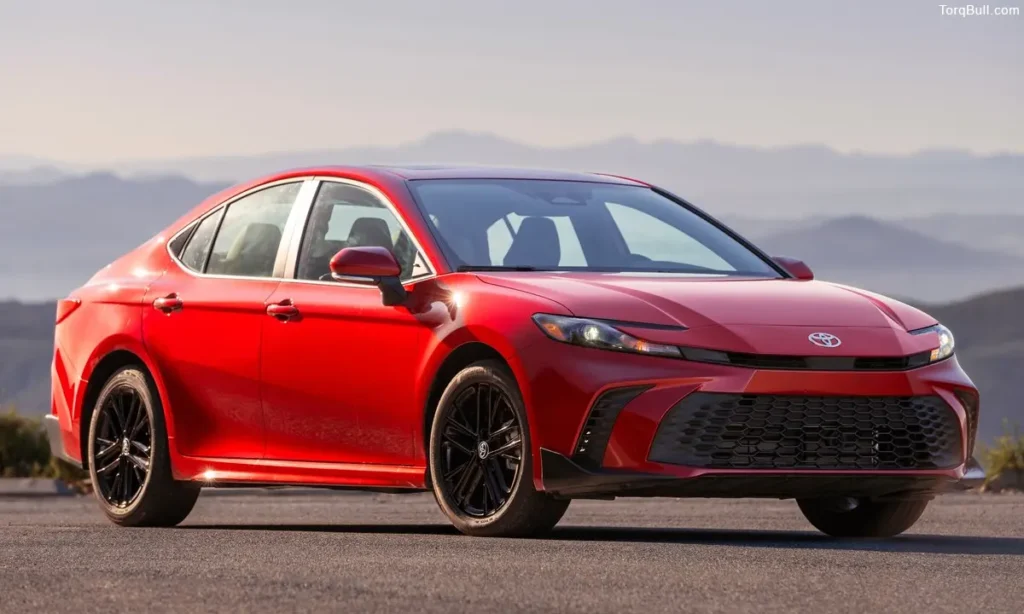
The 2026 Toyota Camry’s Electronic On-Demand AWD system is fundamentally different from the mechanical AWD systems in SUVs and crossovers — and understanding this difference explains both its advantages and its specific limitations.
The FWD Camry uses Toyota’s fifth-generation hybrid system with two electric motors mounted at the front axle — one for electric propulsion assistance and one for regenerative braking recovery — combined with the 2.5-litre naturally aspirated four-cylinder engine. This two-motor system produces 225 combined horsepower.
The AWD Camry retains exactly the same front axle configuration and adds a third electric motor mounted independently at the rear axle — an electric motor with no mechanical connection to the engine, the front motors or the transmission. This third rear motor drives the rear wheels entirely through electric power, activating on demand when the system’s electronics detect front wheel slip, when acceleration from a standstill would benefit from additional traction or during spirited driving where rear wheel contribution improves dynamic stability. The combined output with the rear motor active is 232 horsepower — the net difference of seven horsepower reflecting the system’s overall power management rather than the rear motor’s isolated contribution.
This electronic on-demand architecture means the AWD Camry operates as a FWD vehicle during the vast majority of normal highway cruising and moderate city driving — the rear motor only activating when the control system determines its contribution improves traction, acceleration or stability. Most of the time, you are driving a FWD car with the potential for rear wheel assistance available whenever conditions demand it.
Read: Toyota Camry Ownership Cost Breakdown 2026. A Detailed Cost and Value Analysis
The Performance Difference: Sportier Character Beyond the Numbers
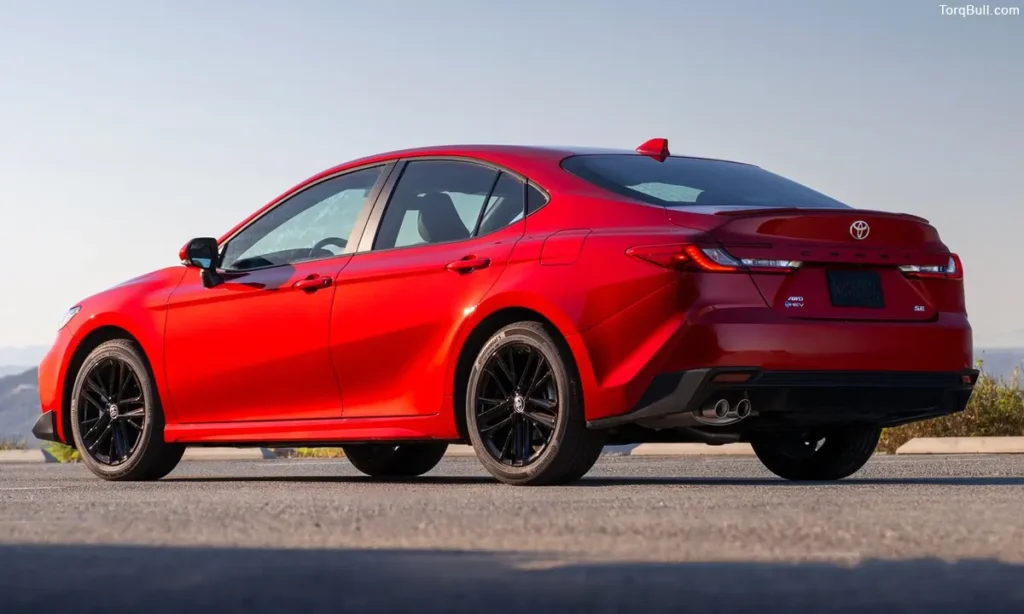
Professional evaluation of the AWD Camry against the FWD model produces a specific and consistent finding: the AWD has a much sportier character despite only offering seven more horsepower. This character difference is real and perceptible in daily driving — and it is the result of the rear motor’s contribution to off-the-line acceleration rather than peak power figures.
The AWD system’s rear motor engagement during initial acceleration from a standstill provides additional drive force at the moment when the FWD model must manage the full engine and motor output through the front wheels alone. This initial traction advantage produces a more assured, less wheel-spinning launch that makes the AWD Camry feel more confident and more capable from every traffic light — a daily driving quality difference that the seven horsepower net figure substantially understates.
Tested acceleration times confirm this driving impression: the AWD Camry achieved 0 to 60 MPH in just under seven seconds in professional evaluation — a specific and competitive result for a midsize family sedan. The FWD model is slightly more mellow off the line, taking a beat for the CVT and gasoline engine to spool up to the optimum RPM for passing. Former V6 Camry owners will notice this characteristic in the FWD model specifically.
The AWD’s steering is described as direct and responsive — the rear motor’s contribution to dynamic stability reducing the understeer that FWD vehicles exhibit during harder cornering by providing some rear wheel drive contribution that balances the handling toward a more neutral character. The SE and XSE trims with sport-tuned suspension on both AWD and FWD configurations provide the sharpest handling, while the LE and XLE comfort-tuned setups prioritise ride quality regardless of drivetrain.
Fuel Economy: The FWD’s Most Clearly Measurable Advantage
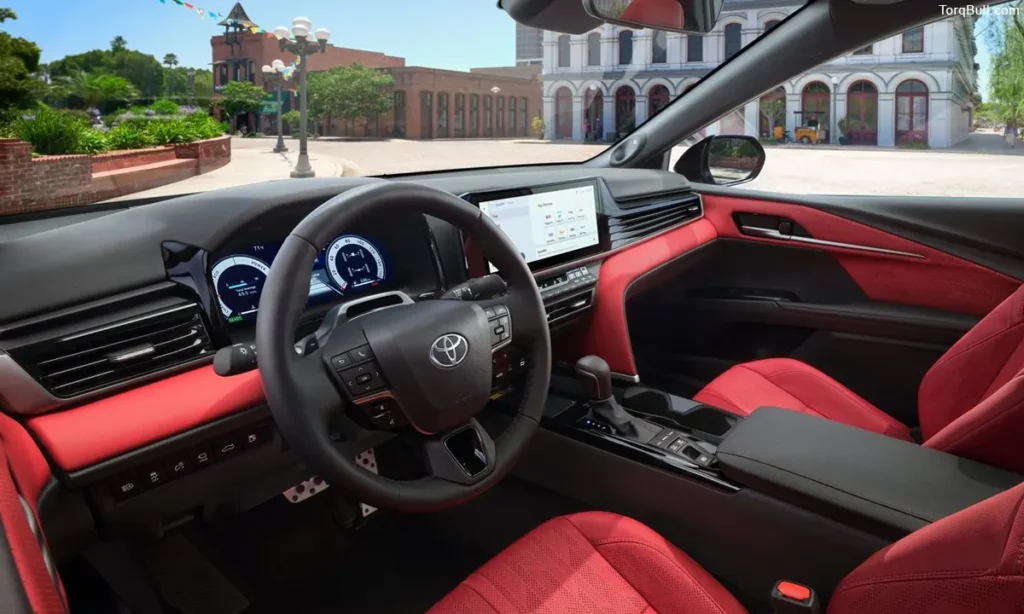
The fuel economy comparison between AWD and FWD is where the FWD’s objective advantage is most clearly documented — and for buyers who prioritise annual fuel cost above all other ownership considerations, the FWD’s efficiency leadership is the primary purchase argument.
The LE FWD achieves the highest fuel economy in the 2026 Camry lineup at 51 MPG combined — the figure that represents Toyota’s most efficient expression of the fifth-generation hybrid system in this application. The LE AWD achieves approximately 46 to 47 MPG combined — a 4 to 5 MPG combined reduction from adding the rear motor’s weight and occasional engagement.
At 15,000 annual miles and $3.08 per gallon, the LE FWD at 51 MPG combined costs approximately $906 per year in fuel. The LE AWD at 46 MPG combined costs approximately $1,004 per year — an annual difference of approximately $98. Over five years, the FWD saves approximately $490 in fuel costs compared to the AWD configuration at equivalent mileage and fuel price assumptions.
The XSE trim’s fuel economy figures show the same pattern at a lower absolute level — the sport-tuned suspension and larger 19-inch wheels producing lower combined efficiency than the LE regardless of drivetrain. The SE, Nightshade and XLE trims fall between the LE’s efficiency peak and the XSE’s lower figure, with AWD producing a consistent 4 to 5 MPG reduction from FWD across all comparable configurations.
Read: Toyota Camry Hybrid Real World Mileage . Does It Live Up To The Hype?
The AWD Cost Premium: $1,525 and Its Financial Justification

The $1,525 AWD premium is available across every 2026 Toyota Camry trim — from the base LE through the XSE — providing AWD access without requiring buyers to select a specific trim level to access the drivetrain.
The financial justification for the $1,525 AWD premium depends on the specific buyer profile and annual mileage. For buyers in northern states who encounter winter precipitation, ice and snow regularly throughout a five to six month winter season, the AWD system’s traction contribution during the most challenging daily driving conditions provides a safety and confidence benefit that the $1,525 investment represents genuinely good value against. The AWD’s traction advantage during slippery conditions — front wheel slip detected and rear motor engaged within milliseconds — produces more assured acceleration from stops, more stable lane changes and more confident hill climbing in winter conditions that FWD cannot replicate at any price.
For buyers in mild-climate states — consistently dry and warm conditions throughout the year — the annual fuel cost difference of approximately $98 accumulates to $490 over five years, meaning the FWD recovers its $1,525 cost advantage over the AWD in approximately 15.6 years of fuel savings alone. This extended payback period makes the FWD the straightforward financial choice for buyers who will never exercise the AWD’s traction capability in meaningful winter conditions.
2026 Toyota Camry AWD vs FWD — Complete Comparison Chart
| Category | LE FWD | LE AWD | XSE FWD | XSE AWD | Notes |
| Starting Price | $29,000 | $30,525 | $35,200 | $36,725 | AWD adds $1,525 to every trim |
| Combined Horsepower | 225 hp | 232 hp | 225 hp | 232 hp | 7 hp addition from rear motor |
| Electric Motors | 2 (front) | 3 (front 2 plus rear 1) | 2 (front) | 3 (front 2 plus rear 1) | No mechanical AWD coupling |
| EPA City MPG | 53 MPG | 49 MPG | 48 MPG | 43 MPG | FWD leads across all trims |
| EPA Highway MPG | 50 MPG | 47 MPG | 47 MPG | 43 MPG | Highway difference smaller |
| EPA Combined MPG | 51 MPG | 47 MPG | 47 MPG | 43 MPG | 4 to 5 MPG combined penalty |
| Annual Fuel Cost | approximately $906 | approximately $1,004 | approximately $985 | approximately $1,074 | At $3.08 per gallon, 15K miles |
| 0-60 MPH | Slightly above 7 sec | Under 7 sec | Slightly above 7 sec | Under 7 sec | AWD more assured off the line |
| Normal Operation | FWD only | Mostly FWD, rear on demand | FWD only | Mostly FWD, rear on demand | Rear motor activates automatically |
| Winter Advantage | None | Significant | None | Significant | AWD specific value for winter buyers |
| Suspension | Comfort-tuned (LE) | Comfort-tuned (LE) | Sport-tuned (XSE) | Sport-tuned (XSE) | Suspension independent of drivetrain |
| 5-Year Fuel Saving (FWD vs AWD) | Baseline | approximately $490 more | Baseline | approximately $445 more | FWD saves fuel over AWD each year |
Read: Hyundai Sonata vs Toyota Camry Which Is Better in 2026?
Who Should Choose AWD: The Clear Recommendation for Specific Buyers
The AWD Camry is the correct choice for buyers in northern states, mountain regions and anywhere that winter precipitation, ice and slippery road surfaces are regular seasonal occurrences. The $1,525 premium provides a traction advantage that FWD cannot replicate and that positively affects safety during the specific daily driving conditions where the investment is most consistently exercised.
The AWD’s sportier character — confirmed by professional evaluation as a meaningfully different driving experience beyond the numerical horsepower difference — is additionally attractive for buyers who specifically value the confidence of a more capable launch and the improved dynamic balance that the rear motor’s contribution to handling provides. The AWD Camry is described as an uber driver’s dream in any climate precisely because this all-weather traction confidence transforms the driving experience from adequate to genuinely confident.
The FWD Camry is the correct choice for buyers in mild-climate states where the AWD system would rarely if ever activate in its traction assistance role, and for buyers whose annual mileage is high enough that the approximately $98 annual fuel cost saving accumulates into meaningful long-term ownership benefit that the AWD’s capabilities never offset through use.