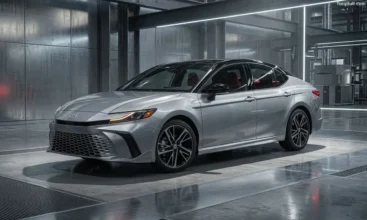
- The 2026 Toyota Camry has an estimated five-year ownership cost of $44,458.
- Depreciation totals just $12,759 over five years, making the Camry one of the strongest value-retaining midsize sedans.
- Insurance is the largest ownership expense, while hybrid fuel economy keeps five-year fuel costs to approximately $2,938.
The Toyota Camry’s financial case has never been stronger than in 2026. The nameplate’s transition to exclusively hybrid powertrains for this model year produces a vehicle whose fuel economy reaches 51 MPG combined in the LE FWD configuration — among the best available from any midsize sedan regardless of powertrain type — while maintaining the Toyota reliability platform and residual value strength that have consistently produced the Camry’s segment-leading depreciation retention across multiple decades of production. The five-year total ownership cost of $44,458 reflects these advantages across every cost category: the lowest depreciation among most midsize sedan alternatives, industry-average insurance costs, below-average maintenance spending and fuel costs that trail the class average by approximately 35 to 45 percent. This complete guide assembles every cost category into the most practically useful financial portrait of 2026 Toyota Camry ownership available.
The Five Year Total: $44,458 and What Each Component Means
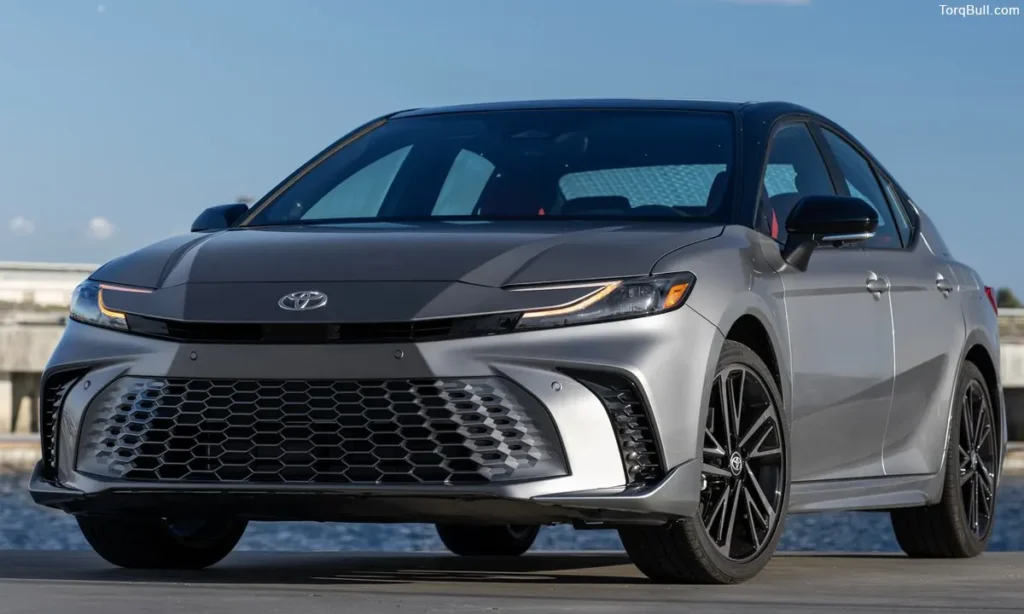
The Toyota Camry’s five-year total cost of ownership of $44,458 divides into two fundamental components whose separate understanding is more useful than the combined figure alone.
Out-of-pocket expenses of $31,699 represent every dollar that leaves the owner’s wallet across five years — fuel, insurance, maintenance, repairs, financing interest and state fees. This is the cash component of ownership that must be budgeted monthly and annually regardless of what the Camry is worth at the five-year ownership conclusion.
Depreciation of $12,759 represents the loss in vehicle value between the purchase date and the five-year residual value of $17,536. This is the largest single contributor to total ownership cost — exceeding the five-year insurance total — and yet represents the Camry’s most impressive competitive achievement: a 37.7 percent five-year depreciation rate that is well below the overall vehicle average of 41.5 percent and dramatically below the 55 to 60 percent that most electric sedans lose over the same period.
For buyers who plan to sell or trade after five years, this depreciation retention means more money at the point of sale compared to most midsize sedan alternatives — a financial benefit that partially offsets the Camry’s purchase price premium over less well-retained competitors. For buyers who plan ownership of eight years or more, the depreciation benefit compounds further as the remaining value decline from years six through ten is smaller than the front-loaded depreciation already absorbed.
Read: Toyota Camry Hybrid Real World Mileage . Does It Live Up To The Hype?
Depreciation: The Camry’s Most Consistent Financial Strength
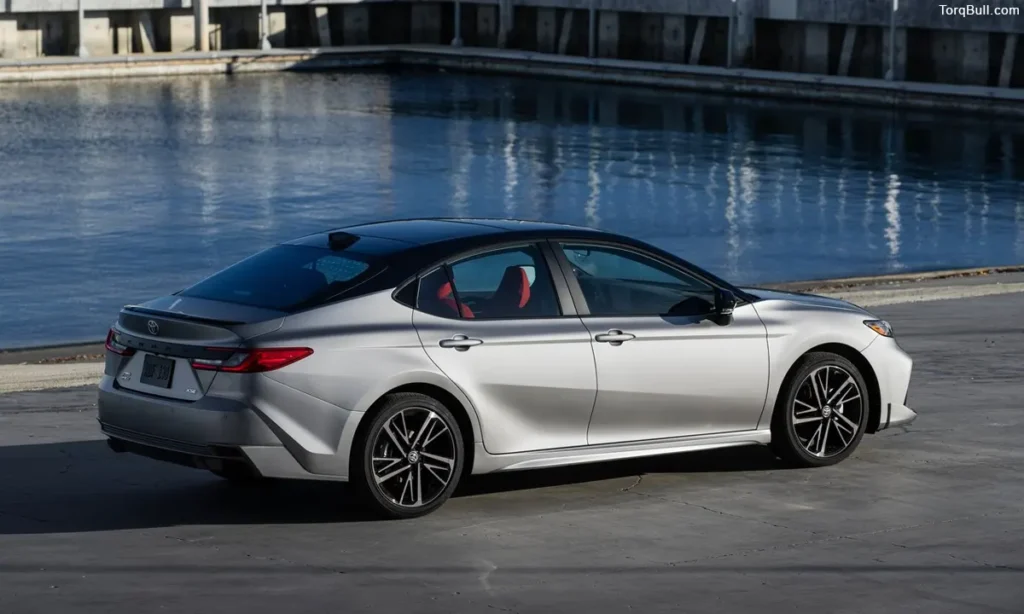
The 2026 Toyota Camry’s five-year depreciation of $12,759 from a typically equipped sale price of approximately $30,295 produces a residual value of $17,536 — representing retention of approximately 58 percent of original value after five years at the configurations most commonly purchased.
The 37.7 percent five-year depreciation rate places the Camry substantially below the overall vehicle average of 41.5 percent and at a level that most competing midsize sedans — including the Hyundai Sonata and Honda Accord — cannot consistently match. The iSeeCars overall score for the Camry of 8.6 out of 10 includes a 9.0 rating for safety and an 8.8 rating specifically for retained value — the category most directly expressed in the depreciation figure.
This depreciation advantage is the Toyota brand’s most durable competitive financial credential — built on decades of reliability documentation that sustains used-market demand for Camry examples at high mileage and advanced age where competing brands’ used vehicles face steeper discounting. A buyer who sells a five-year-old Camry with 75,000 miles competes in a market where Toyota’s reliability reputation actively supports the transaction price at a level competing brands cannot match without equivalent documented reliability.
The year-by-year depreciation distribution reveals the front-loading pattern characteristic of new vehicle ownership: Year 1 produces $4,027 in depreciation — the steepest single year — declining through Year 2 at $2,552 and Year 3 at $2,052 before gradually tapering. Buyers who specifically want to minimise depreciation exposure can purchase a one or two year old Camry that has already absorbed the steepest first-year decline while retaining the majority of practical life and Toyota’s reliability advantages intact.
Insurance: The Largest Out-of-Pocket Expense Category
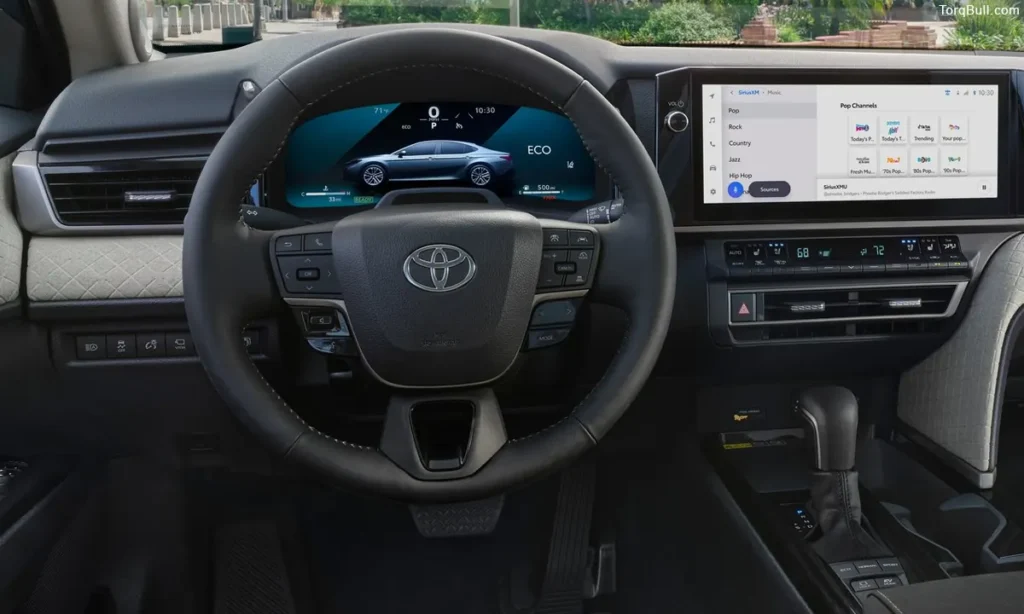
Insurance is the single largest out-of-pocket expense in five-year Camry ownership — producing $14,240 in total insurance costs across five years at $2,848 per year. This annual figure represents the national average for a 35 to 55-year-old driver with full coverage, a clean driving record and good credit, and is consistent across both the 2025 and 2026 Camry model years.
The Camry’s insurance cost of $2,848 annually compares favourably within the midsize sedan segment — below the national average for all vehicles and below the typical insurance cost for performance-oriented alternatives at comparable purchase prices. Toyota’s strong safety ratings, including the IIHS Top Safety Pick Plus designation for the current Camry, contribute to below-average actuarial risk assessment that produces competitive insurance rates.
The per-mile insurance cost for a typical Camry SE FWD owner covering 13,500 annual miles works out to approximately 15 cents per mile — the largest single per-mile cost category, exceeding both fuel and depreciation on a per-mile basis for this mileage scenario.
Read: Hyundai Sonata vs Toyota Camry Which Is Better in 2026?
Fuel: The Hybrid’s Most Dramatic Ownership Cost Advantage
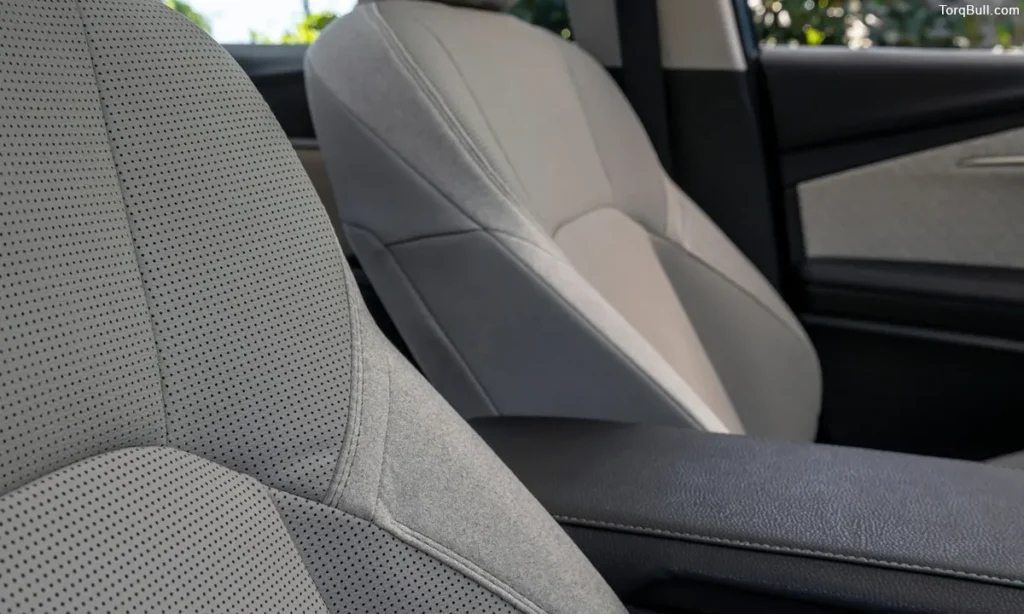
Fuel is the cost category where the 2026 Camry’s exclusive hybrid lineup produces its most financially dramatic and most immediately felt advantage over both the previous generation’s gas models and the majority of competing midsize sedans.
The five-year fuel cost of $2,938 — averaging approximately $588 per year — reflects the LE FWD’s 51 MPG combined efficiency at 13,500 annual miles and $3.08 per gallon national average gasoline pricing. This $588 annual fuel cost compares against the average American sedan’s approximately $1,400 to $1,800 per year in fuel spending — producing an annual saving of approximately $800 to $1,200 compared to the segment’s non-hybrid alternatives that the 2026 Camry now entirely replaces in its lineup.
At the per-mile level, the base LE’s 51 MPG combined produces a fuel cost of approximately 6 cents per mile — dramatically below the 9 to 11 cents that average American sedans on gasoline cost per mile and approaching the 4 to 5 cents that home EV charging produces. The Camry positions itself specifically between gasoline and electric vehicle fuel cost profiles, capturing a large portion of the EV’s fuel cost advantage without requiring charging infrastructure or accepting EV range anxiety.
The SE and XSE trims at 47 MPG combined produce 6.6 cents per mile — marginally higher than the LE but still substantially below the segment average. Even the highest fuel cost configuration — the XSE AWD at 44 MPG combined — produces approximately 7 cents per mile, maintaining the Camry’s fuel cost leadership relative to most midsize sedan alternatives.
Maintenance: Below Average With Dataset Variation
The Toyota Camry’s maintenance cost is consistently identified as below the midsize car segment average — but the specific annual figure varies across different data sources in a way that reflects different methodology assumptions rather than contradictory real-world data.
One comprehensive ownership cost dataset places five-year maintenance at $6,631 — averaging approximately $1,326 per year — incorporating the full range of scheduled and unscheduled maintenance events including tyre replacements that some narrower datasets exclude. A second dataset focused on scheduled maintenance only places the five-year figure at $1,512 to $3,567 — averaging $302 to $713 per year — reflecting routine oil changes, tyre rotations and inspections without the tyre and brake service costs that the broader dataset includes.
For practical annual budgeting purposes, $800 to $900 per year represents a realistic maintenance budget for a Camry covering 13,500 to 15,000 annual miles — incorporating scheduled maintenance, tyre rotation and the minor unscheduled items that typical ownership produces without the major service events that concentrate in specific high-mileage years.
The five-year repair cost of $1,667 — averaging approximately $333 per year — is among the lowest available in the midsize car segment, reflecting both Toyota’s documented reliability platform and the specific reduction in brake-related repair frequency that the Camry’s regenerative braking system enables in hybrid operation.
Toyota Camry Five Year Ownership Cost — Complete Breakdown Chart
| Cost Category | Year 1 | Year 2 | Year 3 | Year 4 | Year 5 | Five Year Total |
| Depreciation | $4,027 | $2,552 | $2,052 | $2,174 | $1,954 | $12,759 |
| Insurance | $2,848 | $2,848 | $2,848 | $2,848 | $2,848 | $14,240 |
| Maintenance | $0 (ToyotaCare) | $1,664 | $965 | $3,037 | $965 | $6,631 |
| Fuel | $584 | $588 | $584 | $588 | $594 | $2,938 |
| Financing (at 6%) | $1,345 | $1,075 | $790 | $491 | $177 | $3,878 |
| State Fees | $2,221 | $31 | $31 | $31 | $31 | $2,345 |
| Repairs | $0 | $0 | $385 | $641 | $641 | $1,667 |
| Annual Total | $11,025 | $8,758 | $7,655 | $9,810 | $7,210 | $44,458 |
How the Camry’s Ownership Cost Compares to Key Competitors
The five-year total cost of ownership comparison reveals the Camry’s strongest competitive financial positioning:
The Hyundai Sonata carries similar out-of-pocket expenses but modestly higher depreciation from lower used-market residual values — producing a five-year total that typically exceeds the Camry’s by approximately $3,000 to $5,000 when depreciation retention differences are fully incorporated. The Sonata’s 10-year warranty provides better coverage than the Camry’s five-year powertrain warranty, partially compensating for this ownership cost gap.
The Honda Accord carries broadly comparable ownership costs to the Camry across most categories — both benefiting from strong reliability records and competitive depreciation retention. The primary Accord-versus-Camry ownership cost differentiation comes from specific model year quality and the Accord’s lower starting price in some configurations producing lower depreciation absolute losses.
The Toyota Camry Hybrid’s closest electric vehicle alternative — Tesla Model Y — shows dramatically higher five-year depreciation of 55 to 60 percent versus the Camry’s 37.7 percent, producing absolute depreciation losses of $15,000 to $25,000 more over five years depending on the specific Model Y configuration and market conditions. The EV’s fuel savings of approximately $3,000 to $4,000 compared to a gasoline sedan over five years does not offset this depreciation disadvantage for most buyers who purchase new and sell after five years.