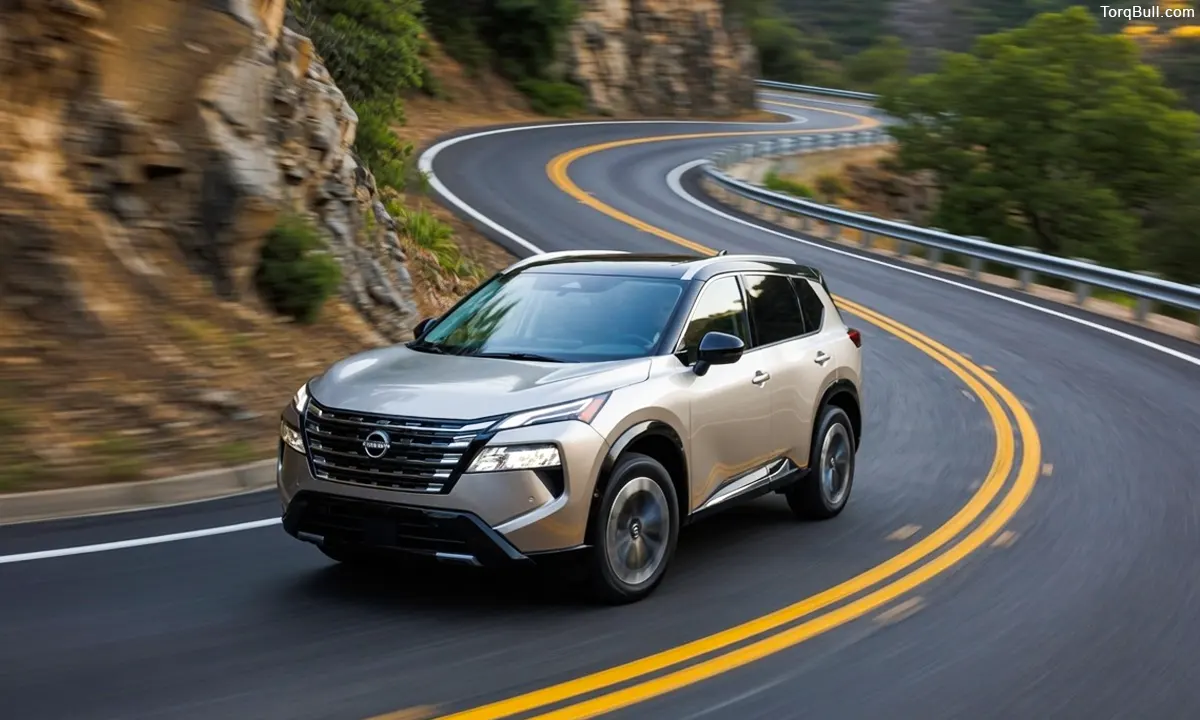
- The 2025 and 2026 Nissan Rogue achieve strong reliability ratings, marking some of the best scores in the model’s recent history.
- With proper maintenance, many Rogues can exceed 150,000 miles, and some owners have reported reaching 300,000 miles.
- Long-term concerns include CVT-related issues, certain 2023 engine complaints and electrical problems reported in some early 2026 models.
The Nissan Rogue has spent years oscillating between being one of the most recommended compact crossovers in the segment and one of the most cautiously recommended — a nameplate whose long-term ownership story is inseparable from which model year is under consideration. The 2021 redesign that introduced the VC-Turbo engine, redesigned CVT and updated platform represents the most significant reliability dividing line in the Rogue’s production history. Earlier generations — particularly 2014 through 2020 — earned a specific and well-documented CVT reliability reputation that the third-generation 2021 onward platform substantially addressed. The 2025 and 2026 models’ 84 out of 100 JD Power reliability scores confirm that this improvement has stabilised — producing the most reliable Rogue production years in the nameplate’s history. But specific ongoing concerns remain honest considerations for buyers planning extended high-mileage ownership. This complete assessment provides both the positive trajectory and the specific concerns with equal honesty.
The Reliability Improvement Trajectory: From 2023 Struggles to 2025 and 2026 Excellence
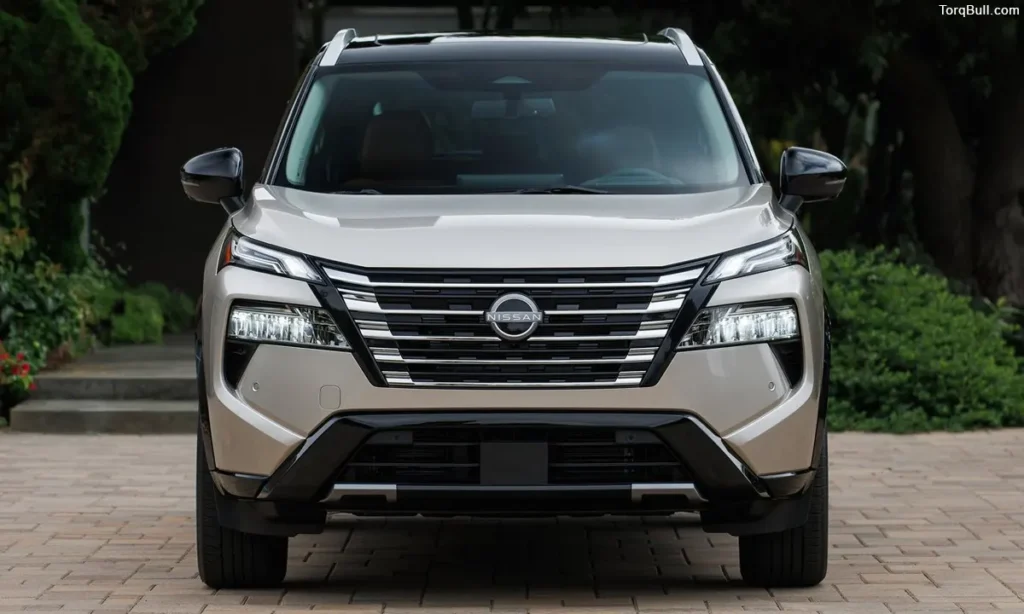
The Nissan Rogue’s reliability trajectory across the third generation’s production is the most important single piece of context for any long-term ownership evaluation — because the trajectory determines which model years represent safe long-term ownership choices and which require specific caution.
The 2023 Rogue is the most problematic year in the third generation’s production history — scoring 68 out of 100 from independent reliability assessment data, carrying 5 NHTSA recalls and accumulating 519 owner complaints including 123 engine-specific complaints. This score represents the VC-Turbo engine’s most active quality concern period, with the NHTSA investigation into the 1.5-litre turbocharged three-cylinder engine producing the most formal regulatory scrutiny the Rogue nameplate has faced in recent memory.
The 2024 Rogue improved substantially — earning 84 out of 100 from independent assessment, reflecting Nissan’s engineering responses to the 2023 concerns through component revisions, calibration updates and quality control improvements in the production process. The 2025 Rogue achieved the same 84 out of 100 score with fewer complaints than 2024 — confirming the upward trajectory rather than representing a plateau.
The 2026 Rogue continues at 84 out of 100 for JD Power Quality and Reliability — matching the 2025 score with early owner feedback skewing away from the CVT concerns that dominated earlier generation complaints. The 2026 model is a Consumer Reports Recommended compact SUV and earned the IIHS Top Safety Pick designation and a five-star NHTSA overall safety rating — the most comprehensive safety accolade package the Rogue has achieved in its production history.
Read: Nissan Rogue Fuel Cost Per Year. The Real Cost of Daily Driving
The CVT Transmission: The Most Important Long Term Variable
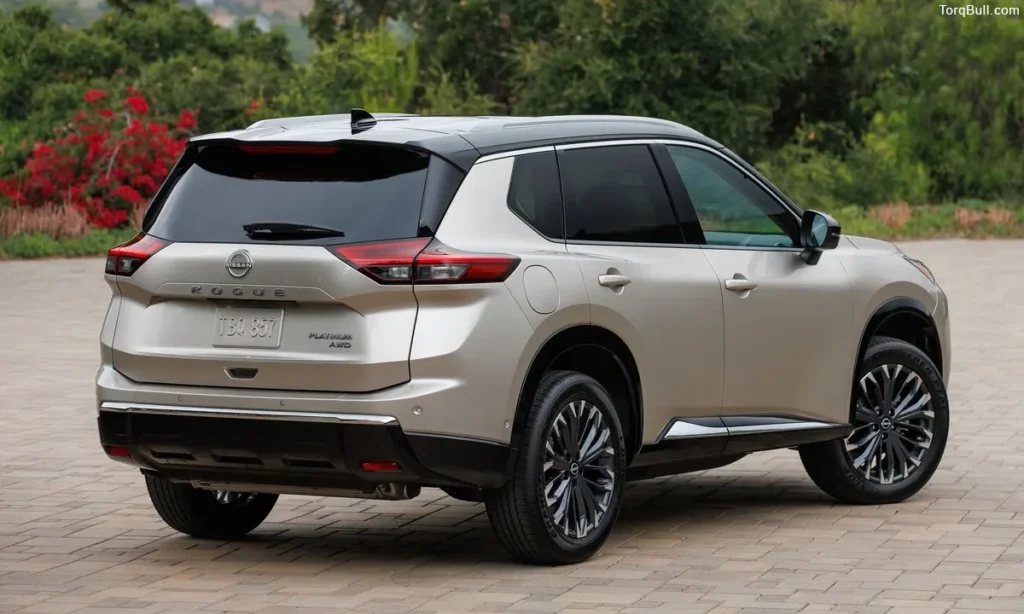
The CVT transmission is the component that most consistently defines the Rogue ownership conversation — because it is the system that produced the most severe reliability outcomes in earlier generation examples and remains the most maintenance-sensitive component in the current generation’s long term health.
A documented 2025 Rogue owner account describes consistent transmission slippage within the first three months of ownership — the vehicle stalling without accelerating after coming to a stop, RPMs revving past 4,000 to 5,000 without the vehicle moving, requiring engine restart in a dangerous roadside situation. This specific account describes the experience as making the car a liability and represents the most severe end of the CVT concern spectrum in current generation production.
This specific account is not representative of the majority of 2025 Rogue CVT experiences — but it is specific enough and recent enough to represent a real tail-risk that long-term ownership planning must incorporate. The 2021 redesign fixed the CVT problems that defined 2014 to 2020 generation ownership, and model years 2021 through 2025 earned above-average reliability ratings from major assessment bodies for the CVT specifically. But transmission complaints at early mileage — even if infrequent — represent the specific failure mode that Rogue long-term ownership must monitor.
The CVT fluid change at 60,000 miles is the single most important preventive maintenance decision for any Rogue owner planning ownership beyond 80,000 miles. CVT fluid degrades under the heat and load cycling of daily driving, and degraded fluid accelerates the belt and pulley wear that produces the progressive transmission deterioration that the most severe long-term CVT complaint accounts document. At $250 to $450 per CVT fluid service, this represents the highest-value preventive maintenance investment available for Rogue long-term ownership. Early 2026 complaints skew away from the CVT — a positive early signal that vigilance should still support rather than replace.
The VC-Turbo Engine: Maintenance-Sensitive and Rewarding When Maintained

The 1.5-litre Variable Compression Turbo three-cylinder engine that powers every 2021 and newer Rogue is the powertrain whose long-term durability is most directly determined by the quality and consistency of oil change maintenance — more so than most competing naturally aspirated alternatives.
The turbocharger operates under sustained heat and boost pressure that accelerates oil degradation relative to naturally aspirated alternatives — making oil change interval adherence more critical, not less, as mileage accumulates. Oil that has degraded beyond its protective capacity produces turbocharger bearing wear that accumulates silently until it manifests as performance reduction, oil consumption or eventual turbocharger failure. Owners who maintain 5,000-mile full-synthetic oil changes with the manufacturer’s specified viscosity consistently document smooth engine operation at 80,000 to 100,000 miles and beyond.
The NHTSA investigation into the VC-Turbo engine that emerged from 2023 production concerns has continued into 2026 without producing a comprehensive recall that would suggest a systematic unresolved failure mode in current production. Nissan’s engineering improvements between 2023 and 2025 specifically addressed the engine cooling and fuel management concerns that the investigation scrutinised — producing the dramatic complaint reduction from 519 in 2023 to the far lower complaint volumes in 2024 and 2025 production.
A verified owner account that has hit over 100,000 miles describes the Rogue as still working perfectly at this milestone — confirming that disciplined maintenance produces the high-mileage reliability outcomes that the VC-Turbo engine is capable of when treated appropriately.
Read: Nissan Rogue Common Problems. What Long-Term Owners Report
Long Term Cost Reality: $8,000 Over Ten Years

Ten-year ownership of a well-maintained Nissan Rogue costs approximately $8,000 in maintenance and repairs — an annual average of approximately $800 per year across the decade when all service categories are included alongside the smaller more frequent annual costs.
This $8,000 ten-year figure encompasses scheduled maintenance items — oil changes at $70 to $130 per service, tyre rotations, CVT fluid service at $250 to $450 per event, brake service, air and cabin filter replacements and periodic inspection costs — alongside the statistical expectation of minor unscheduled repair events that occur across any ten-year ownership period. The annual maintenance and repair budget of $500 to $900 per year provides a realistic planning range that accommodates the variability between low-cost scheduled maintenance years and higher-cost major service interval years.
Tyres are a specific Rogue ownership cost that the annual average figure underrepresents when considered independently — the Rogue’s competitive fuel economy is partly enabled by low rolling-resistance tyre specifications that wear at rates consistent with their efficiency optimisation rather than with maximum longevity. Tyre replacement at 40,000 to 50,000 miles adds $600 to $1,000 per replacement event that long-term ownership planning should incorporate as a recurring cost rather than an unexpected expense.
Nissan Rogue Long Term Ownership — Complete Assessment Chart
| Category | 2023 Model | 2024 to 2025 Models | 2026 Model | Long Term Notes |
| Reliability Score | 68 out of 100 (avoid) | 84 out of 100 (Excellent) | 84 out of 100 (Excellent) | Most dramatic single-year improvement in recent nameplate history |
| NHTSA Recalls | 5 | 2 | 1 | Improving rapidly |
| Owner Complaints | 519 | 116 to 103 | Early data | Dramatic complaint reduction from 2023 to 2025 |
| CVT Concern | High | Lower | Early complaints skew away from CVT | 60K fluid change essential |
| Engine Concern | 123 complaints | Substantially reduced | Ongoing vigilance warranted | VC-Turbo maintenance-sensitive |
| Annual Maintenance | $500 to $700 | $500 to $900 | $500 to $900 | Oil changes most frequent cost |
| CVT Fluid Service | $250 to $450 | $250 to $450 | $250 to $450 | Critical at 60K; prevents major repair |
| 10-Year Total Cost | Approximately $8,000 | Approximately $8,000 | Estimated similar | Well-maintained examples reach 150,000 to 300,000 miles |
| High-Mileage Documented | 100,000 miles+ owner verified | Same | Same | Maintenance discipline determines outcome |
| JD Power Quality Score | Lower | 84 out of 100 | 84 out of 100 | Best in nameplate history |
| Consumer Reports | Not Recommended | Recommended (2025 onward) | Recommended | Model year selection critical |
Read: Nissan Rogue Ownership Cost Breakdown 2026. Is It an Affordable Compact SUV to Own?
The Year Matters More Than Most Compact SUVs
The Nissan Rogue’s long-term ownership quality is more sensitive to model year selection than most competing compact crossovers — a statement that the gap between the 2023 model’s 68 out of 100 score and 519 complaints against the 2025 model’s 84 out of 100 score and 103 complaints specifically validates. This is not a modest variation within a broadly consistent reliability profile — it is a fundamental quality difference between production years that separates two genuinely different long-term ownership experiences.
For used buyers specifically, this model year sensitivity produces the most practically important purchasing guidance available: 2020 is the most reliable traditional generation option with only 2 recalls and 185 owner complaints. Any model from 2021 onward is a reasonable choice with the 2023 specifically avoided. The 2024 and 2025 models represent the recommended used Rogue purchase range — providing the third generation’s most refined reliability performance at prices that reflect appropriate used-market depreciation.
The 2026 Rogue’s early indicators — JD Power 84 out of 100, Consumer Reports Recommended, IIHS Top Safety Pick, five-star NHTSA safety, early complaint volume skewing away from CVT concerns — collectively represent the most comprehensive positive ownership confidence package the Rogue has delivered in recent production history. For buyers who select 2024 through 2026 model years and maintain the CVT fluid, oil change and related service discipline that the VC-Turbo engine’s maintenance sensitivity requires, the long-term Rogue ownership story is one of competent, efficient family transportation that rewards consistent care with reliable high-mileage operation.