- The 2026 Toyota Grand Highlander offers a genuinely usable third row, with 33.5 inches of legroom and 37.2 inches of headroom.
- Its longer 116.1-inch wheelbase creates significantly more passenger space than the standard Highlander.
- The third row is designed for real-world family use, accommodating most adults comfortably while providing amenities such as USB ports, cup holders and easy-access grab handles.
The single most important competitive advantage that the Toyota Grand Highlander holds over the standard Toyota Highlander — and over most competing three-row midsize SUVs — is the third-row seat that professional evaluation describes as legitimately adult-friendly and that Toyota specifically engineered as a genuine seating position rather than an occasional-use bench. Where many midsize rivals treat the third row as an afterthought, Toyota delivers genuine adult comfort in the Grand Highlander through a combination of the longer wheelbase, the elevated seat mounting position and the specific interior packaging decisions that produce the 33.5 inches of legroom and 37.2 inches of headroom that distinguish the Grand Highlander’s third row from alternatives in its price range. This complete assessment examines every dimension of the Grand Highlander’s third row — from the specifications that define its comfort envelope through the access experience, the amenities and the honest adult passenger verdict.
The 116.1-Inch Wheelbase: The Engineering Foundation of Third Row Comfort
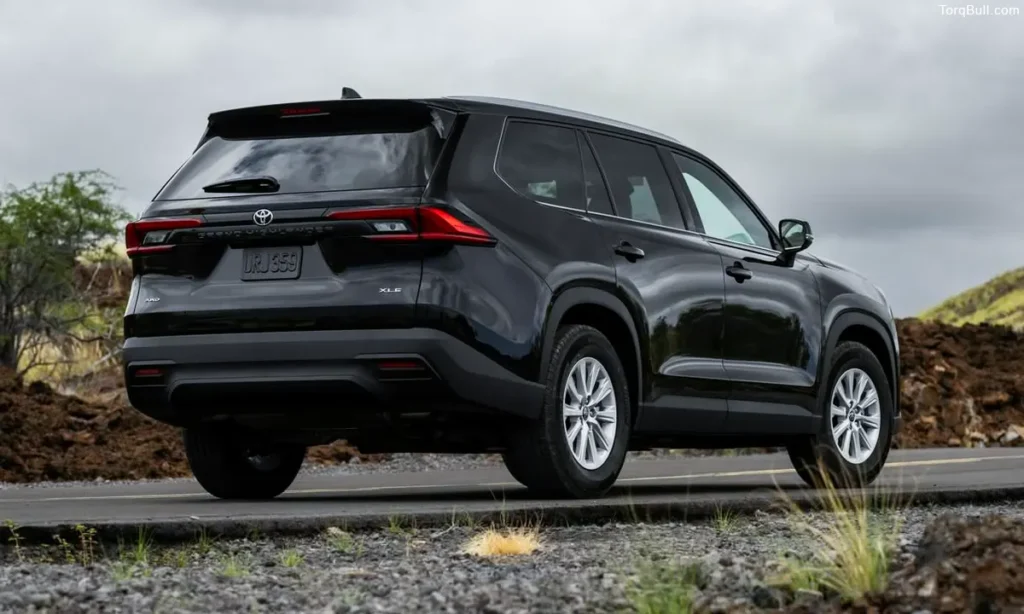
The Toyota Grand Highlander’s third row comfort begins not with the seat itself but with the wheelbase decision that gives the Grand Highlander its name-justifying additional space. The 116.1-inch wheelbase — extended compared to the standard Highlander — is the reason the third row works for adults and the dimension that separates the Grand Highlander from most of the midsize SUV segment that uses shorter wheelbases insufficient to create genuine adult rear accommodation.
A longer wheelbase provides more distance between the front and rear axles — and more importantly for third-row comfort, more distance between the second-row seat’s forward position and the vehicle’s rear boundary. This additional interior length allows Toyota to provide the second-row seat with enough rearward travel to give second-row occupants generous legroom while simultaneously providing the third-row passengers with enough space ahead of them for genuine legroom rather than knees-against-the-seat-back accommodation.
The standard Toyota Highlander’s third row provides 28 inches of legroom — a measurement that experienced three-row buyers recognise as suitable for younger children and appropriate for occasional very short adult use. The Grand Highlander’s 33.5 inches represents a 5.5-inch improvement that professional evaluation characterises as the one thing that kept the standard Highlander from achieving greatness. This 5.5-inch legroom advantage is the largest single dimension difference between the two nameplates and the most consequential daily family ownership specification in the entire Grand Highlander value proposition.
Read: Toyota Grand Highlander Hybrid vs Gas. Which One Delivers Better Long-Term Value?
The Third Row Dimensions: Every Specification That Defines the Comfort Envelope
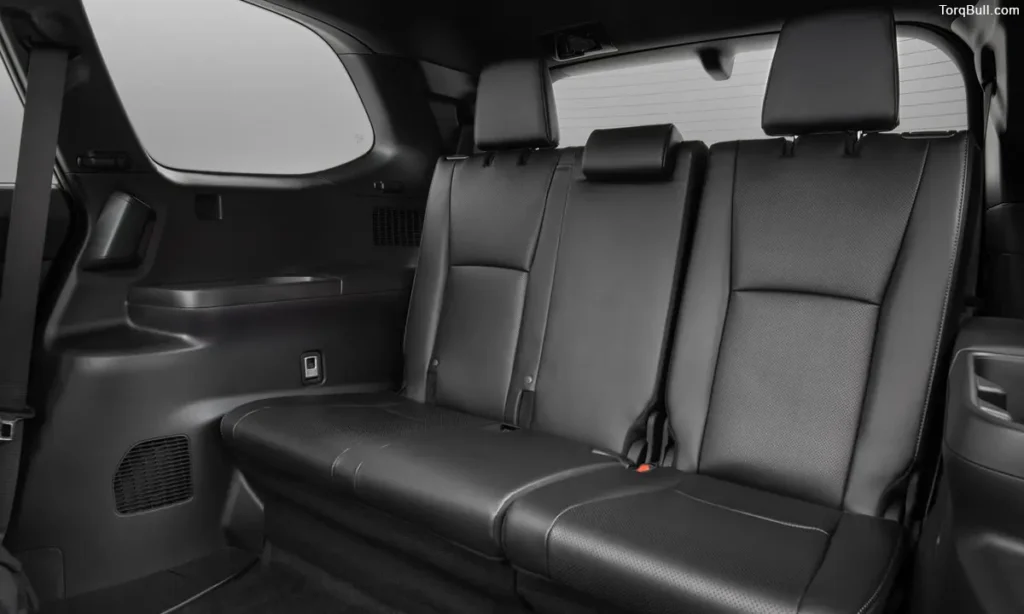
The Grand Highlander’s third row provides 33.5 inches of legroom — the distance from the seatback in front to the seatback the third-row occupant is sitting against. At 33.5 inches, this measurement is specifically described as engineered for adult passengers on real trips rather than just short hops. Most adults under six feet tall can sit comfortably for genuine road trip distances rather than requiring the position adjustment that shorter legroom measurements force on adult passengers within the first 30 minutes of extended travel.
The 37.2 inches of headroom is the complementary dimension that determines whether tall occupants must slouch or can maintain natural upright posture. At 37.2 inches, the headroom accommodates adults up to approximately 6 feet 2 inches in natural seated posture — the specific measurement that makes the third row viable for the adult passengers that family carpooling, sports team transport and extended family travel regularly require.
The third-row seat sits higher off the floor than the seat positions in competing three-row SUVs that mount the third row low to accommodate cargo floor space — a specific packaging decision that improves comfort by raising the knee angle rather than forcing knees into an elevated, cramped position. The elevated seat mounting position produces the more natural sitting posture that allows occupants to maintain comfort across the extended distances that family road trips require.
Third Row Access: How Passengers Get In and Out
The 2026 Grand Highlander’s second-row seat slides forward to ease entry and exit from the third row — the specific mechanism that determines how easily passengers can access the rearmost seating position in practical family loading scenarios. Wide door openings and accommodating floor step-in height make the physical act of entering the third row manageable for adults without the contortion that narrower door openings or higher floor heights require.
Toyota includes a support grip and a designated hand support space specifically for ingress and egress — hardware that provides the stable physical reference point that adults specifically use when lowering themselves into or rising from the third row. These supports are particularly relevant for older adult passengers whose balance and flexibility specifically benefit from a stable hand hold during the entry and exit sequence.
With second-row captain’s chairs configured — available on XLE, Limited and Platinum trims — the central aisle between the captain’s chairs provides walk-through access to the third row without requiring the front seat-folding sequence that bench-seated alternatives require. This captain’s chair configuration is specifically described as providing easier walk-through access for third-row passengers and is the recommended configuration for families who regularly use the third row for adult passengers.
Read: Toyota Grand Highlander Reliability Review. What Makes This Family SUV a Smart Buy?
Third Row Amenities: What Rear Passengers Actually Receive
The Grand Highlander’s third-row design includes dedicated amenities that specifically address the passenger experience requirements of adults on extended journeys rather than treating the third row as a functional seating position without supporting infrastructure.
Two individual USB charging ports — positioned left and right for individual third-row passenger access — provide powered device charging that the multiple screens, phones and tablets that third-row passengers carry during family travel specifically require. Smartphone and tablet storage space provides the physical accommodation that these devices need when not actively in use. Two cup and bottle holders serve the hydration needs of third-row passengers across journey durations that family road trips produce.
The three-zone automatic climate control system that equipped Grand Highlander trims provide includes dedicated rear climate management — meaning third-row passengers can request temperature adjustment through the rear climate controls rather than relying exclusively on the front zone settings to address their specific comfort needs. This three-zone capability is particularly relevant for the temperature preference differences between front-seat adults, second-row children and third-row teen or adult passengers that typical family loading produces.
Standard acoustic glass on the windshield and front windows — combined with noise-reducing materials throughout the cabin — contributes to the quiet interior character that makes the Grand Highlander’s cabin feel like a sanctuary according to Toyota’s official description. This acoustic treatment reduces the road noise, wind noise and engine noise that accumulates into fatigue for all occupants across extended driving, including third-row passengers whose position behind the acoustic glass is furthest from the front noise sources.
Cargo Behind the Third Row: The Practical Family Reality
The 20.6 cubic feet of cargo space available behind the third row when all three rows are occupied — sufficient for seven carry-on suitcases according to Toyota’s packaging assessment — addresses the practical concern that three-row families raise most frequently about eight-passenger vehicles: whether any usable cargo space remains when the third row is in use.
This 20.6 cubic feet compares favourably against competing three-row midsize SUVs that sacrifice cargo volume to achieve their third-row seating positions. For family travel that requires both full eight-passenger capacity and luggage accommodation, the Grand Highlander’s combination of 33.5-inch third-row legroom alongside 20.6 cubic feet of cargo volume represents the most complete solution available in the midsize three-row segment at this price point.
When the third row is folded, cargo volume expands to 57.9 cubic feet — providing the equipment and gear accommodation that weekend outdoor activities, sports team equipment and home improvement project transport require. The maximum 97.5 cubic feet with both second and third rows folded flat provides a cargo volume competitive with crossover alternatives specifically marketed for cargo capability.
Read: Best Toyota Grand Highlander Trim to Buy. A Complete Buyer’s Guide 2026
Toyota Grand Highlander Third Row — Complete Specification and Comfort Chart
| Dimension | Third Row Grand Highlander | Standard Highlander Third Row | Competitor Average | Notes |
| Third Row Legroom | 33.5 inches | 28 inches | approximately 30 to 31 inches | 5.5-inch advantage over standard Highlander |
| Third Row Headroom | 37.2 inches | Lower | approximately 36 to 37 inches | Accommodates adults to approximately 6 ft 2 in |
| Wheelbase | 116.1 inches | Shorter | varies | Longer wheelbase enables third row space |
| Passenger Capacity | 7 (captain chairs) or 8 (bench) | 7 to 8 | 7 to 8 | LE standard bench; XLE and above have captain option |
| Cargo Behind Third Row | 20.6 cu ft | 16.2 cu ft | approximately 15 to 20 cu ft | 4.4 cu ft more than standard Highlander |
| Cargo Third Row Folded | 57.9 cu ft | 42.1 cu ft | approximately 45 to 55 cu ft | Significant advantage |
| Maximum Cargo | 97.5 cu ft | Lower | varies | Both rear rows folded flat |
| Third Row USB Ports | 2 individual | Limited | varies | Left and right individual charging |
| Third Row Cup Holders | 2 | Limited | 1 to 2 | Plus tablet and phone storage |
| Support Grip | Standard | Standard | varies | Specifically for ingress and egress |
| Third Row Access | Second row slides forward | Second row slides forward | varies | Captain chairs add walk-through aisle |
| Adult Suitability | Most adults under 6 ft 2 in | Short trips only | varies | Professional assessment confirmed |
The Honest Third Row Verdict: For Whom Does It Work
The Grand Highlander’s third row is legitimately adult-friendly for most adults under approximately 6 feet 2 inches on real trips of typical family duration — the honest and specific characterisation that emerges from both the dimensional specifications and the professional evaluation testimony. Adults at this height can maintain comfortable upright seated posture for the road trip distances that family travel requires rather than the brief, uncomfortable accommodation that many three-row SUV third rows provide.
The third row that sits higher off the floor, making for much-improved legroom suitable for adults compared to the standard Highlander’s low-mounted rear bench, is the specific improvement that professional evaluation identifies as the Grand Highlander’s decisive advantage. For families whose regular transport needs include adult passengers in all three rows — extended family visits, carpool arrangements with adult participants, or regular sports or event transport of seven or eight people — the Grand Highlander’s third row is the feature that makes this vehicle the correct choice where the standard Highlander is specifically inadequate.