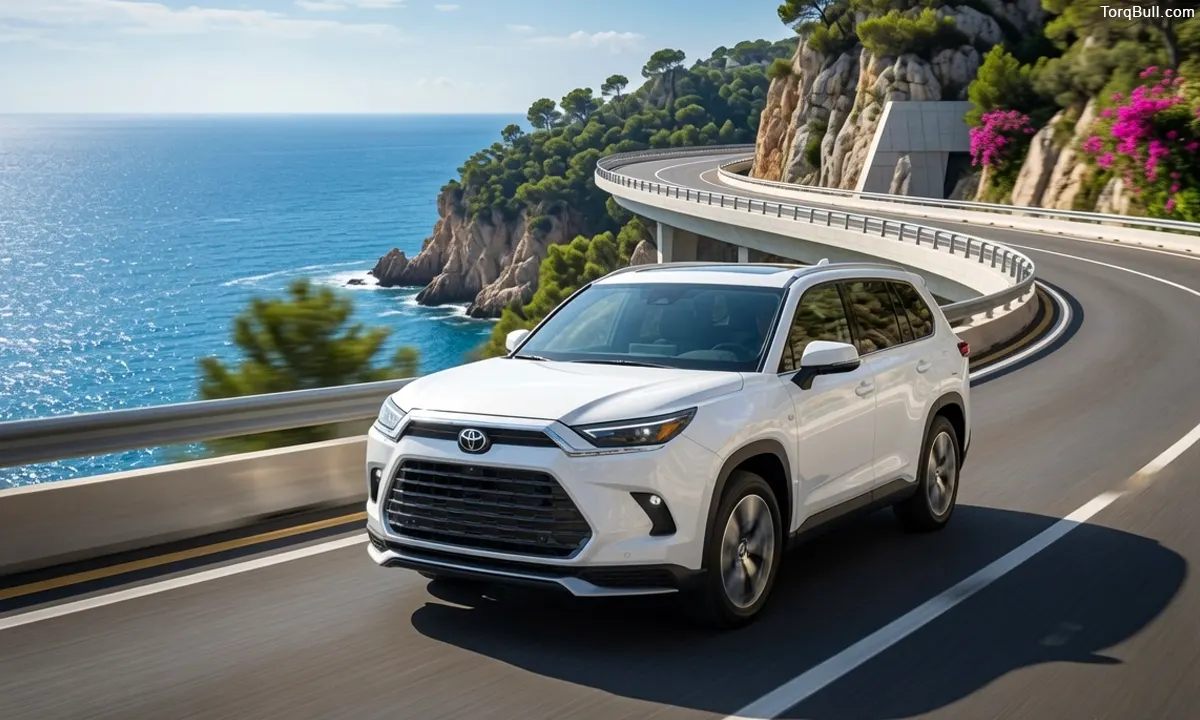
- The 2026 Toyota Grand Highlander Hybrid delivers 36 MPG combined, saving approximately $730 per year in fuel compared with the gas model.
- The gas-powered Grand Highlander offers a lower starting price and a higher 5,000-pound towing capacity versus the Hybrid’s 3,500-pound rating.
- Families seeking stronger performance should consider the Hybrid MAX, which produces 362 horsepower and 400 pound-feet of torque.
The Toyota Grand Highlander’s three-powertrain lineup — gas-only, standard hybrid and Hybrid MAX — offers a range of ownership characters that requires a genuinely different buyer profile for each choice rather than a simple efficiency-versus-cost trade-off. The standard hybrid’s 36 MPG combined leadership among large three-row SUVs, the gas model’s 5,000-pound towing advantage and lower starting price and the Hybrid MAX’s 362-horsepower performance package collectively serve buyers whose priorities differ meaningfully enough to justify Toyota’s investment in all three configurations. This complete guide examines every relevant comparison dimension to produce the most practically useful decision framework for each buyer profile.
The Powertrain Lineup: Three Distinct Approaches
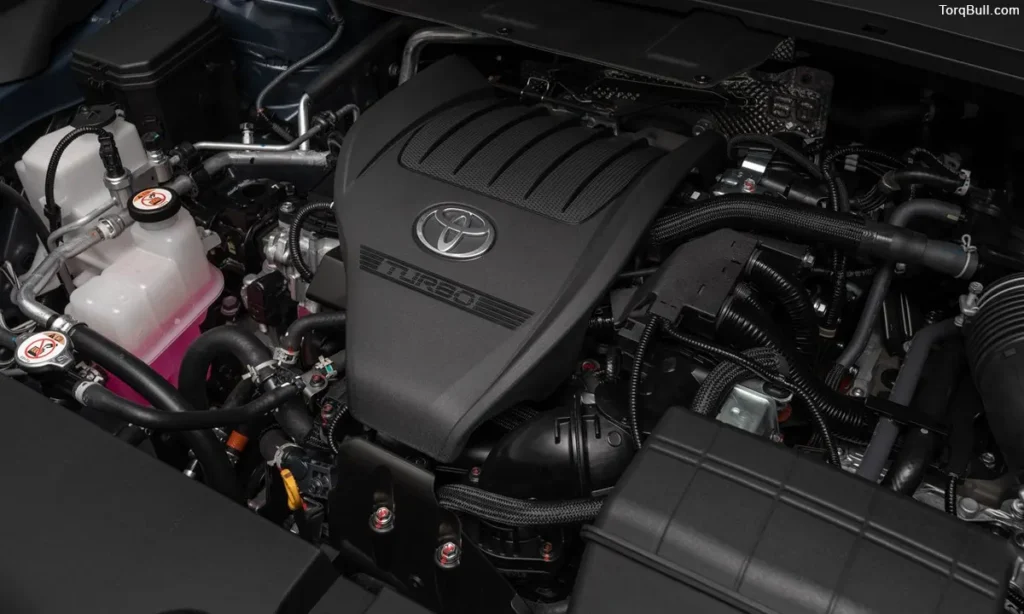
Before comparing the hybrid and gas models, understanding all three Grand Highlander powertrain configurations is essential because the Hybrid MAX occupies a third position that is meaningfully different from the standard hybrid rather than simply being a more powerful version of it.
The gas-only Grand Highlander uses a 2.4-litre turbocharged four-cylinder engine producing 265 horsepower through an 8-speed automatic transmission. Front-wheel drive is standard with all-wheel drive available as a paid option. Maximum towing is 5,000 pounds. EPA combined fuel economy is 24 MPG for the FWD configuration and approximately 22 MPG for AWD.
The Grand Highlander Hybrid uses a naturally aspirated 2.5-litre four-cylinder engine combined with electric motors through Toyota’s Hybrid Synergy Drive for 245 combined horsepower. AWD is standard on all but the XLE trim where it is a $1,600 option. Maximum towing is 3,500 pounds. EPA combined fuel economy is 36 MPG for FWD and 35 MPG for AWD.
The Grand Highlander Hybrid MAX uses a turbocharged 2.4-litre four-cylinder combined with electric motors for 362 combined horsepower and 400 pound feet of torque. AWD is standard across all Hybrid MAX configurations. Maximum towing is listed at 5,000 pounds — matching the gas model’s towing capability while adding hybrid efficiency. Starting price is $56,685 for the Hybrid MAX Limited.
Read: Toyota Grand Highlander Reliability Review. What Makes This Family SUV a Smart Buy?
Fuel Economy: The Hybrid’s Most Decisive Advantage
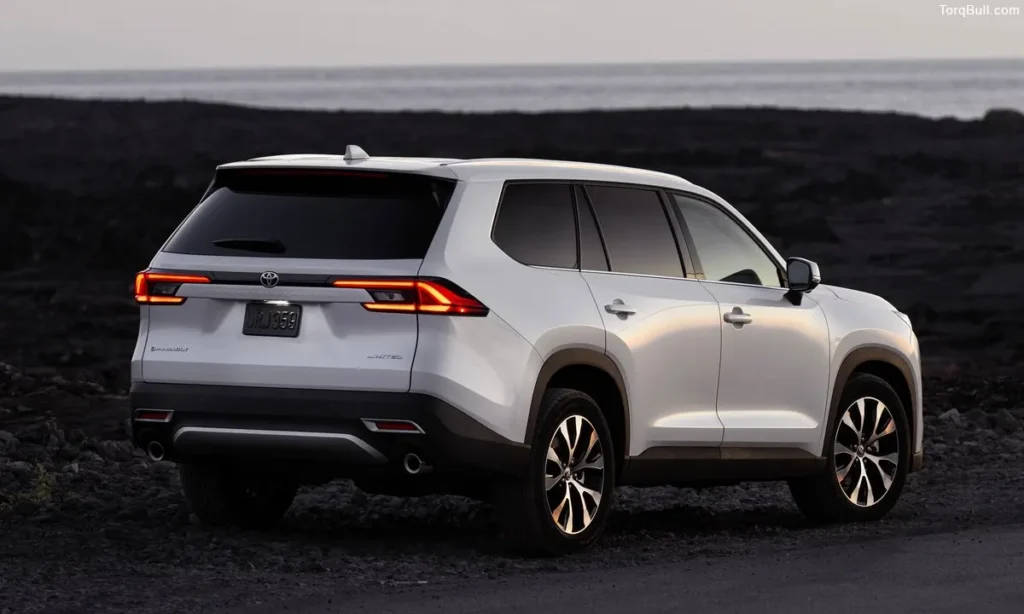
The 12 MPG combined fuel economy advantage of the standard Hybrid over the gas model — 36 versus 24 MPG combined — is the largest efficiency gap available within any single three-row midsize SUV nameplate’s powertrain lineup and one of the most financially significant specification differences in the entire large crossover segment.
At 15,000 annual miles and $3.08 per gallon, the gas model at 24 MPG combined costs approximately $1,925 per year in fuel. The standard Hybrid at 36 MPG combined costs approximately $1,283 per year — an annual saving of approximately $642. The Hybrid MAX at its combined efficiency figure of approximately 27 MPG combined produces an annual fuel cost of approximately $1,711 — saving approximately $214 per year over the gas model while delivering substantially more power.
Over five years, the standard Hybrid saves approximately $3,210 in fuel costs compared to the gas model at equivalent mileage and fuel price assumptions. This five-year fuel saving substantially offsets the approximately $4,845 price premium of the Hybrid LE over the gas LE — reaching fuel-cost-only break even at approximately 7.5 years for average mileage buyers and approximately 5 years for buyers covering 20,000 or more annual miles.
The hybrid’s city fuel economy advantage is the most dramatic dimension of the efficiency comparison — the naturally aspirated 2.5-litre hybrid achieves 37 MPG city against the gas model’s 21 MPG city, a 16 MPG city gap that produces the hybrid’s largest real-world advantage for urban commuter families who spend the majority of their mileage in stop-and-go conditions where regenerative braking recovery is most active.
Towing Capacity: The Gas Model’s Most Practically Significant Advantage
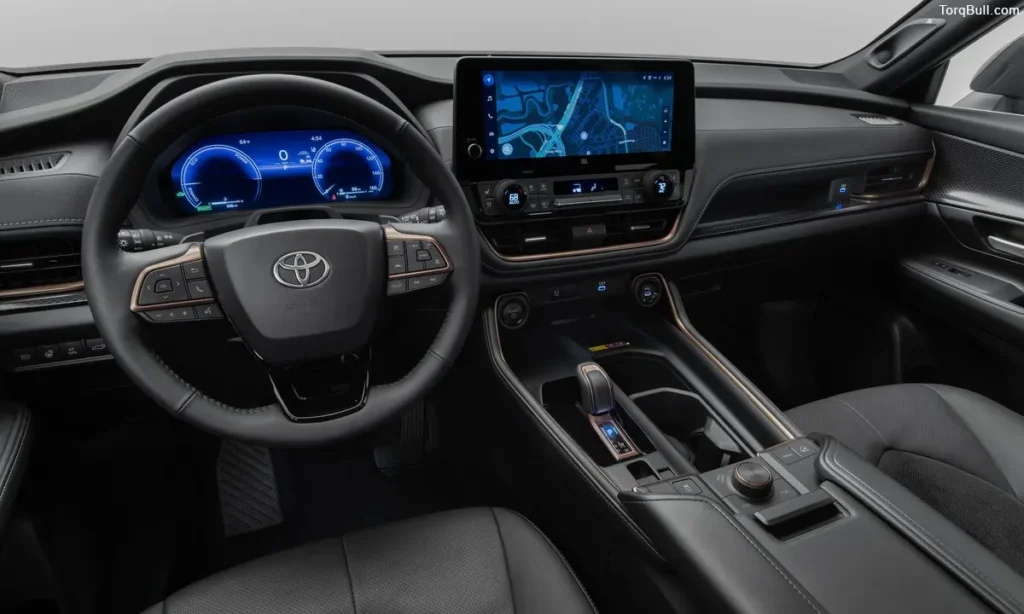
The towing comparison is the clearest case where the gas Grand Highlander holds a specific and operationally meaningful advantage over the standard hybrid — 5,000 pounds versus 3,500 pounds, a 1,500-pound difference that determines whether specific trailer configurations fall within or outside each powertrain’s safe operating parameters.
The gas model’s 5,000-pound maximum covers virtually every family recreational towing application — small to moderate travel trailers, pontoon boats, personal watercraft trailers, utility trailers loaded with landscaping or construction material and enclosed cargo trailers. The hybrid’s 3,500-pound limit covers lighter recreational applications confidently but leaves a specific gap for families whose trailer weights fall in the 3,500 to 5,000-pound range.
A small travel trailer at 3,200 pounds sits comfortably within both powertrains’ ratings. A moderate pontoon boat at 4,000 pounds exceeds the hybrid’s limit but falls within the gas model’s capability. For families who tow regularly in the 3,500 to 5,000-pound range, the gas model is the only Grand Highlander powertrain that provides this capability without operating outside the manufacturer’s rated parameters.
The Hybrid MAX exception is worth specific note: at 5,000 pounds maximum towing, the Hybrid MAX matches the gas model’s towing capability while providing hybrid powertrain technology and 362 horsepower. For families who need both 5,000-pound towing and hybrid technology — and who can accept the Hybrid MAX’s higher starting price and slightly lower efficiency than the standard hybrid — the Hybrid MAX eliminates the towing disadvantage entirely.
Read: Best Toyota Grand Highlander Trim to Buy. A Complete Buyer’s Guide 2026
Price: The Gas Model’s Purchase Cost Advantage
The starting price comparison between the gas and hybrid Grand Highlander reflects a clear and consistent premium for hybrid technology across every equivalent trim level.
The gas Grand Highlander LE starts at $41,360 in FWD configuration. The Hybrid LE starts at $46,205 — a $4,845 price premium that represents the hybrid technology cost before any fuel savings are accumulated. The standard Hybrid XLE starts at $47,375 versus the gas XLE’s comparable positioning, maintaining approximately $4,500 to $5,000 price gap across the mainstream trim range.
For buyers whose budget specifically constrains the available purchase price and for whom the $4,845 hybrid premium exceeds their financial flexibility, the gas model’s lower starting price is the determining factor. For buyers who plan three or more years of average mileage ownership and who can finance the additional upfront cost, the fuel savings accumulation progressively offsets the purchase price premium across the ownership period.
AWD pricing further affects the total purchase price comparison. The gas model’s AWD option costs $2,000 above the FWD price on most trims, bringing the AWD gas Grand Highlander’s starting price closer to the Hybrid’s standard AWD configurations. For buyers in northern states who need AWD for winter driving, the effective price gap between an AWD gas Grand Highlander and an AWD Hybrid LE narrows to approximately $2,845 — reaching break-even through fuel savings in approximately 4.5 years at average mileage.
Toyota Grand Highlander Hybrid vs Gas vs Hybrid MAX — Complete Comparison Chart
| Category | Gas (2.4L Turbo) | Standard Hybrid (2.5L) | Hybrid MAX (2.4L Turbo Hybrid) |
| Starting Price (base trim) | $41,360 (FWD LE) | $46,205 (Hybrid LE) | $56,685 (MAX Limited) |
| Combined Horsepower | 265 hp | 245 hp | 362 hp |
| Peak Torque | 310 lb ft | Not separately listed | 400 lb ft |
| EPA Combined MPG (FWD) | 24 MPG | 36 MPG | approximately 27 MPG |
| EPA Combined MPG (AWD) | approximately 22 MPG | 35 MPG | approximately 27 MPG |
| Annual Fuel Cost (15K miles) | approximately $1,925 | approximately $1,283 | approximately $1,711 |
| 5-Year Fuel Saving vs Gas | Baseline | approximately $3,210 | approximately $1,070 |
| Maximum Towing | 5,000 lbs | 3,500 lbs | 5,000 lbs |
| Standard Drivetrain | FWD (AWD optional $2,000) | AWD standard (XLE optional $1,600) | AWD standard |
| Brake Maintenance | Standard intervals | Extended (regenerative braking) | Extended (regenerative braking) |
| Acceleration Character | Conventional turbo | Smooth electric-assisted | Most dynamic in lineup |
| Best For | Towing and lowest upfront cost | Maximum efficiency and smooth commuting | Performance and capability balance |
Read: Toyota Grand Highlander Long Term Ownership 2026. True Cost of Owning Toyota’s Three-Row SUV
Who Should Choose Each Powertrain: The Honest Recommendation
The standard Hybrid is the best choice for the majority of Grand Highlander buyers — specifically families whose primary daily driving involves urban and suburban commuting where the 37 MPG city figure provides daily fuel savings that accumulate meaningfully, whose towing needs fall below 3,500 pounds, who value the quieter and smoother driving character that electric motor assistance provides in daily stop-and-go traffic and who plan three or more years of ownership during which the fuel savings offset the hybrid premium.
The gas model is the better choice for buyers who regularly tow trailers in the 3,500 to 5,000-pound range and for whom this towing capability is a genuine and frequent operational requirement, buyers whose upfront budget specifically cannot accommodate the approximately $4,845 to $5,000 hybrid premium and buyers whose annual mileage is low enough that the fuel saving accumulation takes many years to recover the premium.
The Hybrid MAX is the performance enthusiast’s Grand Highlander choice — delivering the most dynamic acceleration in the lineup, matching the gas model’s towing capability and providing hybrid efficiency that improves on the gas model by approximately 3 MPG combined. For families who specifically want the most powerful Grand Highlander and who plan heavy towing alongside daily family use, the Hybrid MAX’s combination of 362 horsepower, 400 pound feet of torque and 5,000-pound towing is the only Grand Highlander configuration that simultaneously delivers all three capabilities.