Yamaha MOTOROiD:Λ – The Bike That Stands Up for Itself
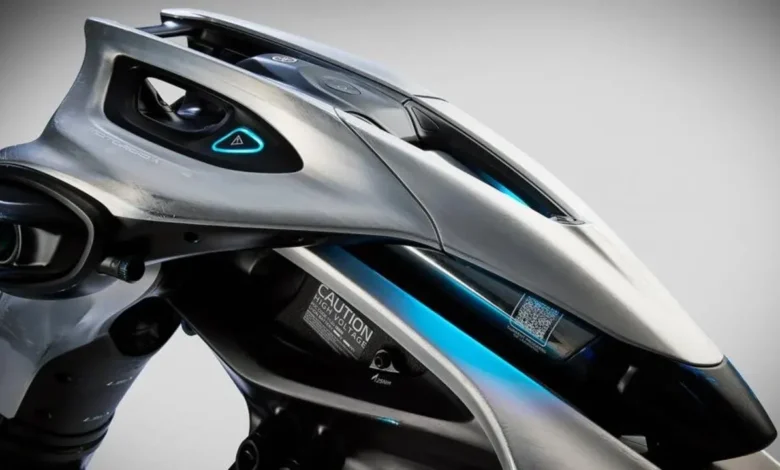
Yamaha MOTOROiD:Λ – The future of motorcycling just took a bold step forward — and it’s balancing itself. At the 2025 Japan Mobility Show, Yamaha stunned the world with a new concept prototype that feels straight out of science fiction: the MOTOROiD:Λ (Lambda). This radical electric motorcycle doesn’t just stay upright on its own — it can literally pick itself up after falling over.
In an industry obsessed with power and performance, Yamaha is exploring something deeper — the very relationship between humans and machines. The MOTOROiD:Λ is not simply a motorcycle; it’s a glimpse into a future where technology, emotion, and motion coexist harmoniously.
Gallery: Yamaha MOTOROiD:Λ
The Concept Behind MOTOROiD:Λ
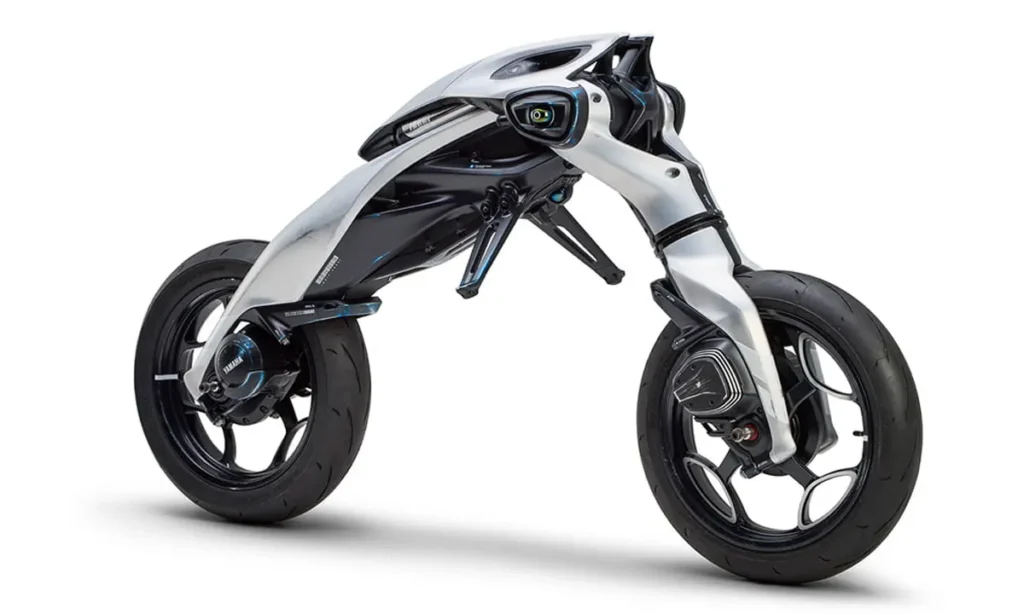
Yamaha’s MOTOROiD project began as a bold experiment in 2017, exploring autonomous balance and AI interaction in motorcycles. The word MOTOROiD is derived from motor and android — symbolizing a machine that behaves almost like a living being.
The MOTOROiD:Λ (Lambda) represents the second phase of that evolution. It’s not just about building a self-balancing bike; it’s about creating a machine that recognizes its rider, learns their behavior, and physically interacts in meaningful ways.
Yamaha calls it the pursuit of “Kando” — a Japanese philosophy meaning the simultaneous feeling of deep satisfaction and excitement when encountering something truly exceptional.
With the MOTOROiD:Λ, Yamaha is striving to create not just a motorcycle — but a living companion on two wheels.
The Technology: How Does It Balance Itself?
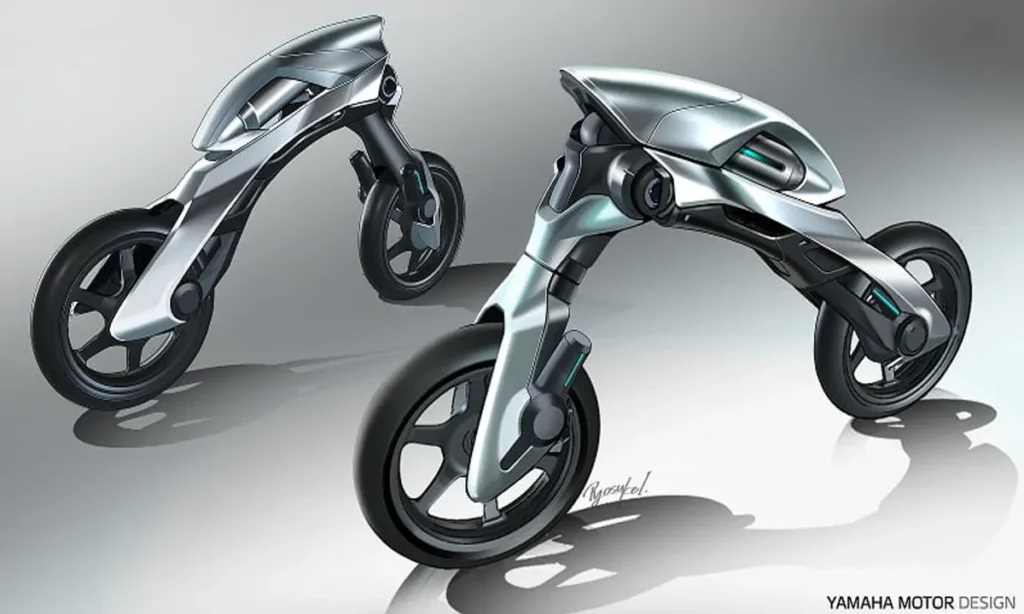
The magic of the MOTOROiD:Λ lies in a complex blend of artificial intelligence, gyroscopic engineering, and motion control systems. Yamaha’s proprietary AMCES (Active Mass Center Control System) sits at the heart of it all.
1. Active Mass Center Control (AMCES)
This system continuously adjusts the motorcycle’s center of gravity by shifting internal components, allowing it to balance even when stationary. Essentially, the motorcycle “moves its weight” like a human balancing on one leg.
Earlier versions of the MOTOROiD used this technology to stand upright without a kickstand. The new MOTOROiD:Λ takes it several steps further — now it can autonomously lift itself from a lying position to vertical.
2. AI-Powered Recognition and Learning
The motorcycle uses AI-based visual recognition systems to identify its owner and respond to gestures. Cameras and sensors around the bike analyze movement, enabling it to “see” the rider approaching.
Over time, the AI learns riding habits and preferences, adjusting responsiveness, throttle behavior, and balance control accordingly. Yamaha describes it as “a machine that evolves with you.”
3. Motion Sensors and Self-Correction
Multiple gyroscopes and accelerometers monitor tilt, lean angle, and external forces. The system predicts imbalance before it happens and adjusts accordingly — similar to how a Segway maintains balance but on a much larger, faster, and more dynamic scale.
4. Self-Recovery Capability
Perhaps the most astonishing feature — when tipped over completely, the MOTOROiD:Λ activates its internal actuators to rotate, shift, and stand itself upright without external assistance. This “self-righting” ability sets a new benchmark in motorcycle safety innovation.
Design: A Vision from the Future
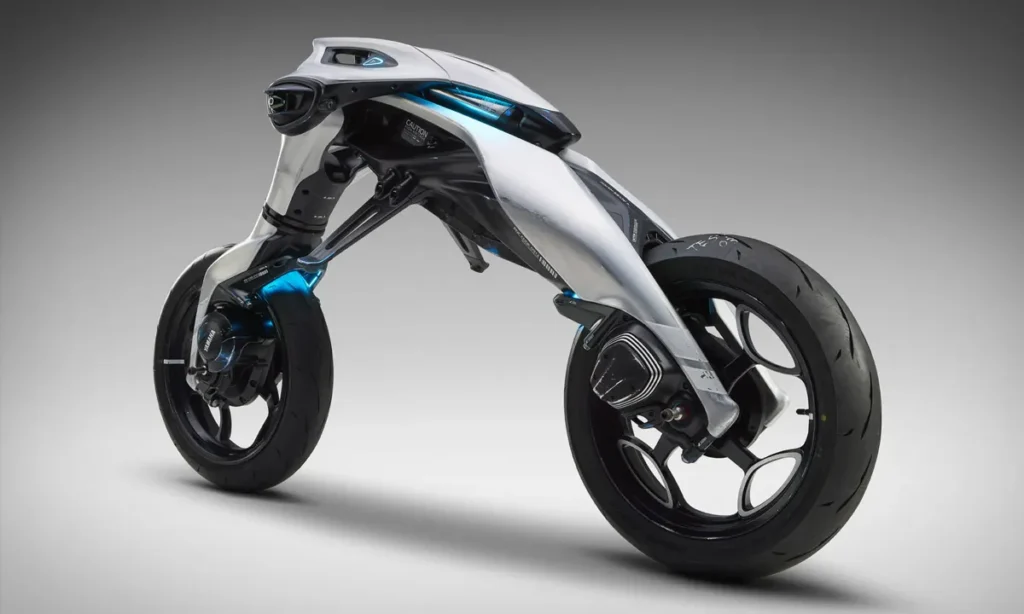
The MOTOROiD:Λ looks like no motorcycle you’ve ever seen. It’s futuristic, minimalistic, and alive with motion.
Futuristic Form Meets Function
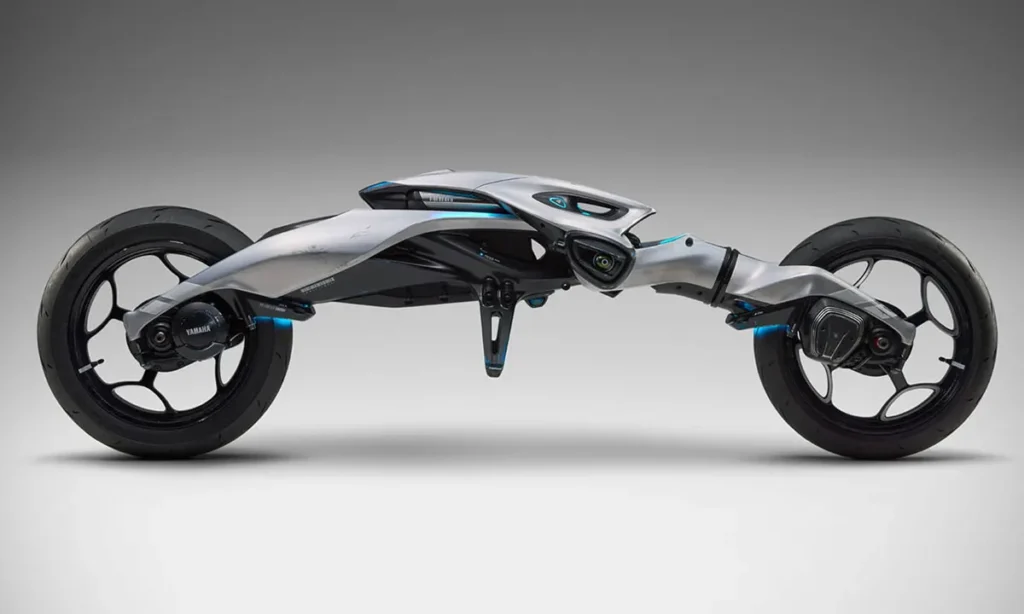
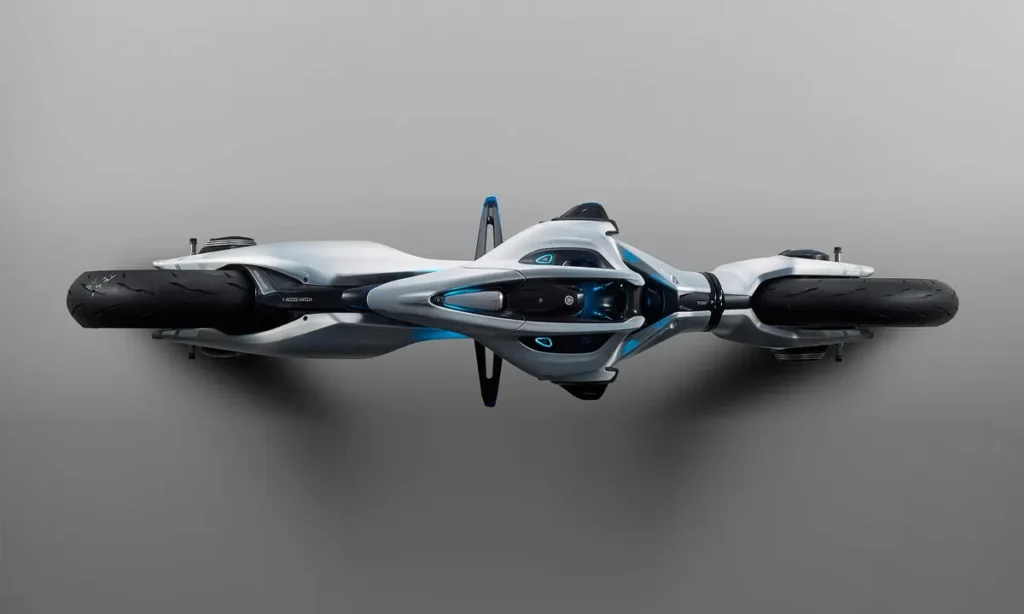
The chassis design features a floating body structure — a rotating rear section that moves independently to aid balance and turning. This gives the motorcycle an almost animal-like flexibility.
The seat, tank, and frame are all integrated into one sculpted form, with clean lines and no visible seams. The glowing Yamaha logo and electric blue lighting accents reinforce its cyber-organic aesthetic.
Materials and Construction
Yamaha has used lightweight composite materials, including aluminum and carbon fiber, to keep weight low while allowing dynamic movement.
Every curve, panel, and hinge has been engineered to accommodate the complex motion required for self-balancing. It’s a machine that looks mechanical but moves like it’s alive.
Lighting and Interface
The front fascia features LED matrix lights that double as “eyes” — part of its rider recognition system. They change color based on mode and interaction, allowing the bike to “express itself.”
Yamaha even demonstrated how the MOTOROiD responds when its rider gestures, turning or leaning as if nodding in acknowledgment — a moment that blurred the line between metal and emotion.
Powertrain: Electric Heart, Intelligent Mind
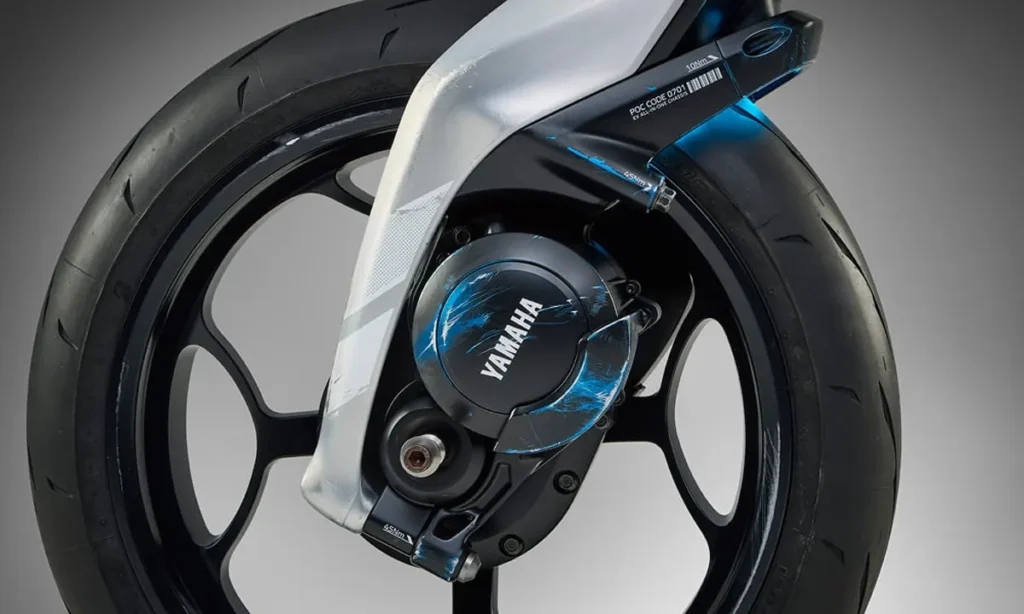
While Yamaha hasn’t released complete technical specifications, the MOTOROiD:Λ is confirmed to be fully electric, continuing the brand’s push into EV innovation.
Key Highlights (Expected)
- Powertrain: All-electric with mid-mounted motor
- Drive Type: Belt or chain drive (prototype dependent)
- Battery Pack: Modular lithium-ion unit (removable)
- Range: Expected 120–150 km (concept estimate)
- Charging: Fast-charging compatible
- Top Speed: Estimated around 160 km/h (prototype limited)
But make no mistake — performance isn’t the focus here. The MOTOROiD:Λ is about redefining interaction and intelligence, not chasing lap times.
Human-Machine Harmony: A New Kind of Relationship
Yamaha’s vision extends beyond balance. The MOTOROiD:Λ represents what the brand calls a “cooperative symbiosis” — where rider and machine coexist like partners.
Recognizes Its Owner
Using biometric recognition and onboard cameras, the motorcycle can identify its rider, greet them, and prepare itself for operation automatically. Imagine walking up to your bike, and it turns on — just for you.
Gesture and Voice Interaction
Early prototypes demonstrated gesture control — such as waving your hand to command the bike to move forward or follow you slowly. Future iterations may incorporate voice activation and rider-follow modes for parking or low-speed scenarios.
Learning and Adaptation
Every ride helps the MOTOROiD learn your preferences — braking style, cornering lean, and throttle habits — refining its balance and response systems accordingly. Over time, it becomes an extension of your riding personality.
This makes the MOTOROiD:Λ not just a vehicle, but a riding companion — one that evolves alongside you.
Safety and Accessibility: Rethinking Who Can Ride
For all its futuristic appeal, the MOTOROiD:Λ could have real-world benefits that extend far beyond technology.
Safer for New Riders
Beginners often struggle with low-speed balance or parking mishaps. A self-balancing system could drastically reduce these risks — lowering barriers to entry for new motorcyclists.
Accessibility for All
Riders with physical limitations could find new freedom in machines that assist in balance and recovery. This could open the world of motorcycling to a much wider audience.
Reduced Accidents at Stops
Many motorcycle drops occur at low speed or standstill — from parking slips to stoplight losses. A bike that stays upright could significantly reduce minor accidents and associated repair costs.
In essence, Yamaha’s prototype is not just a concept — it’s a vision of inclusive motorcycling.
How It Compares: Other Self-Balancing Innovations
Yamaha isn’t alone in exploring this field, but it’s leading the emotional frontier.
Honda Riding Assist (2017 & 2021)
Honda’s Riding Assist concept used similar balance technology derived from ASIMO robotics. It could balance at low speeds and follow the rider autonomously, but it lacked the self-righting capability Yamaha now demonstrates.
BMW Vision Next 100
BMW’s concept featured automatic balance control through flexible frame geometry, but it was purely conceptual and lacked Yamaha’s lifelike movement or AI learning element.
The Yamaha Difference
Where competitors see self-balancing as safety technology, Yamaha sees it as relationship technology. The MOTOROiD:Λ doesn’t just react — it communicates, recognizes, and connects.
Market Impact and Future Possibilities
While the MOTOROiD:Λ remains a concept, its long-term implications are enormous.
For the Industry
The idea of a motorcycle that can prevent falls, self-balance, and even interact emotionally could redefine how manufacturers approach design and safety.
Expect trickle-down effects — such as balance-assist modules in commuter EVs or adaptive learning software in premium Yamaha models.
For Riders
This innovation could change what it means to “own” a motorcycle. The experience becomes more about partnership — where your bike learns you, helps you, and maybe even protects you.
For Yamaha
The MOTOROiD:Λ reinforces Yamaha’s image as the pioneer of intelligent mobility, leading the way in emotional machine design — a cornerstone of its “Art for Human Possibilities” vision.
The Philosophy: When Machines Feel Alive
Perhaps the most captivating part of the MOTOROiD:Λ isn’t the technology itself — it’s the emotion behind it.
Yamaha’s designers describe their goal as building a “machine that feels alive.” They believe that future riders will form emotional bonds with their bikes, not unlike relationships with pets or partners.
The MOTOROiD:Λ is a metaphor for that evolution — where machine and human share not just data, but a sense of understanding.
It’s futuristic, yes — but deeply human at its core.
Final Verdict: A Future That Balances Humanity and Technology
The Yamaha MOTOROiD:Λ is more than an engineering marvel — it’s a philosophical statement. It shows that the future of mobility isn’t just faster or cleaner — it’s smarter, safer, and more personal.
By teaching a motorcycle to stand, balance, and even recognize emotion, Yamaha has opened a new chapter in the story of two wheels.
This is not the end of motorcycling as we know it — it’s a new beginning.
A future where bikes won’t just take us places…
They’ll grow with us.
Read: BMW F 450 GS Unveiled: A Compact Adventure Motorcycle with Big Intentions
Frequently Asked Questions (FAQ)
Q1: What is the Yamaha MOTOROiD:Λ?
It’s a self-balancing electric motorcycle concept that can pick itself up after falling over.
Q2: How does it work?
Using Yamaha’s AMCES balance system, gyroscopic sensors, and AI learning, it adjusts its center of gravity to stay upright or self-correct when tipped over.
Q3: Is it fully electric?
Yes — it runs on an electric powertrain with a mid-mounted motor and battery system.
Q4: Will Yamaha produce it?
Currently, it’s a research prototype, but technologies from it may trickle down into future Yamaha EVs and assist systems.
Q5: What makes it unique?
Unlike any other prototype, it can physically lift itself after a fall and recognizes its owner using AI-based camera systems.