The Hidden Costs of Owning an EV in the USA. What Nobody Tells You Before You Buy
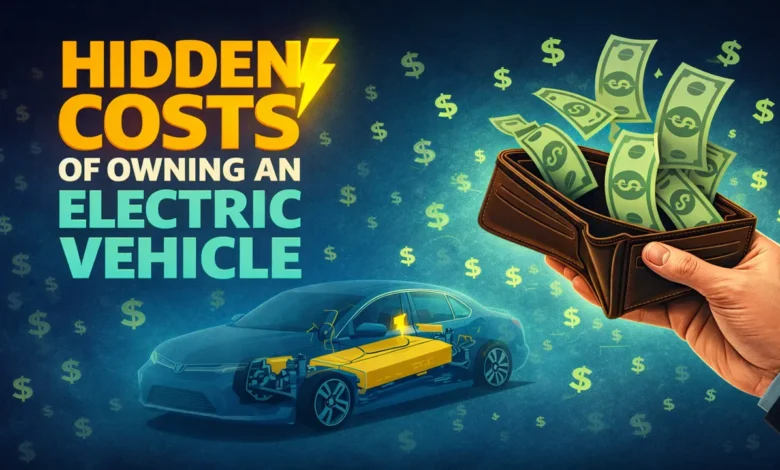
The pitch for electric vehicle ownership in the United States has always been constructed around a set of savings that are, in isolation, entirely real. No petrol bills. No oil changes. Lower maintenance costs. Cleaner conscience. When those advantages are presented against the backdrop of rising fuel prices, increasingly accessible EV price points and the lingering memory of the federal $7,500 tax credit, the financial case for going electric sounds compelling and essentially settled. What the pitch consistently fails to mention — and what a growing body of EV owner experience, insurance actuarial data, state registration records and battery replacement statistics confirms — is the collection of costs that arrive after the purchase, invisible in the showroom but very visible on the monthly bank statement. These are the hidden costs of owning an EV in the USA, examined without the advocacy framing that too often distorts the conversation in both directions.
Higher Purchase Price: The Hidden Cost That Begins Before You Drive
Every subsequent hidden cost of EV ownership compounds against a baseline that is, for most buyers in most segments, meaningfully higher than the equivalent petrol vehicle. According to Kelley Blue Book data, the average transaction price for a new electric vehicle in the United States in late 2025 was approximately $58,000 to $59,000 — roughly $10,000 above the $48,000 to $49,000 industry average for all new vehicles. That premium does not evaporate at the point of sale. It propagates forward into every downstream cost calculation: the loan is larger, the interest charges are higher, the insurance premium is calibrated to a more expensive vehicle, and the depreciation — expressed as a percentage of a larger number — represents a greater absolute annual loss of value.
The federal $7,500 tax credit that previously narrowed this gap was available for qualifying vehicles purchased through 30 September 2025, but that programme has now expired, removing what was for many buyers the most financially significant single factor in the EV versus petrol cost comparison. State-level incentives remain available in approximately seventeen states, ranging from $1,500 in Rhode Island to $7,500 in Oregon and Maine — but the buyer who finances their purchase decision on the assumption that federal credits will offset the premium without checking current eligibility status is beginning their EV ownership experience on an expensive miscalculation.
Home Charging Installation: The Cost Nobody Budgets For
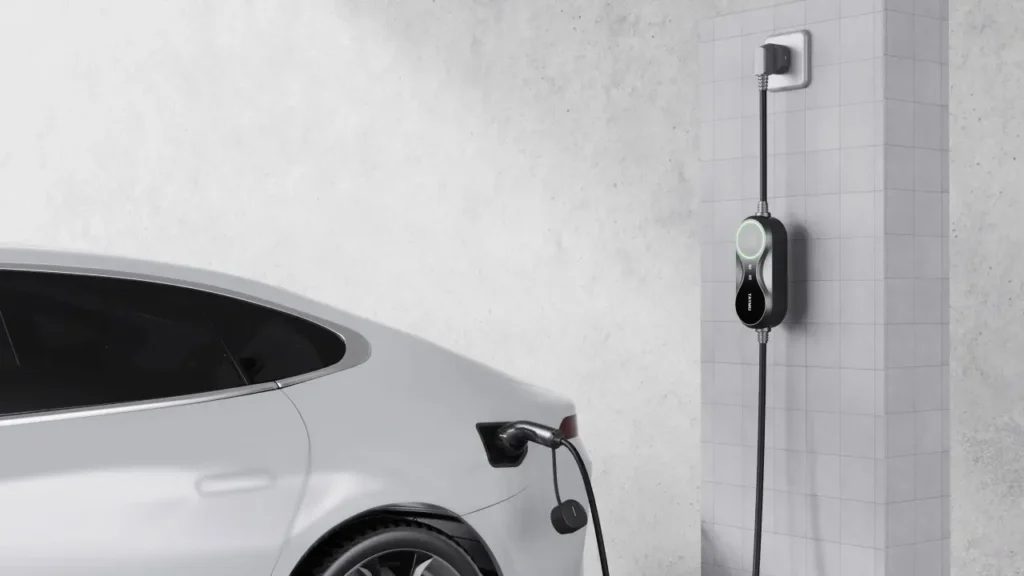
The second hidden cost that surprises EV owners in the first months of ownership is the infrastructure investment required to charge the vehicle at home with any practical efficiency. The standard Level 1 charging cord that ships with most EVs — a 120-volt connection to any domestic outlet — delivers charging at approximately three to five miles of range per hour of connection time. For a 60-kilowatt-hour battery, a full charge from empty takes twenty hours or more, a timeline that works only if the vehicle is used infrequently and plugged in for extended overnight periods. In practical daily use for the majority of American drivers, Level 1 charging is inadequate.
The solution — a dedicated 240-volt Level 2 home charger — delivers twenty to thirty miles of range per hour and reduces a full charge to four to eight hours, making it the realistic minimum for a vehicle that serves as a primary daily driver. The charger hardware itself costs between $300 and $800. The licensed electrician required to install a dedicated 240-volt circuit from the home’s breaker panel — pulling the appropriate permits, running conduit and ensuring code compliance — adds between $500 and $1,500 in labour costs depending on the home’s existing electrical configuration, the distance between the panel and the parking space and local labour rates. For older homes whose electrical panels are not rated for the additional load, a panel upgrade adds a further $1,500 to $4,000 to the total. The all-in cost of a proper home charging installation ranges from approximately $800 at the lower end to $3,000 or above in complex installations — an expense that neither the vehicle’s sticker price nor the monthly loan payment reflects.
Public Charging: The Reality Behind the Fuel Savings Calculation
The fuel savings argument for EV ownership rests on home charging economics — typically 16 to 17 cents per kilowatt-hour at domestic rates, producing a per-mile energy cost that undercuts petrol by a meaningful margin. That calculation collapses the moment the vehicle is charged at a public fast charger. DC fast chargers from major networks — Electrify America, Blink, ChargePoint and others — typically charge between 34 and 50 cents per kilowatt-hour, with some premium or demand-surge pricing exceeding that range. Tesla Superchargers generally price in the mid-20s to mid-30s per kilowatt-hour range for Tesla network members. At 40 to 50 cents per kilowatt-hour, the fuel cost of a public fast-charge session approaches or equals the cost of a petrol fill-up for a comparable conventional vehicle.
For EV owners who work in office environments without workplace charging, live in apartments without dedicated charging infrastructure, or take long-distance road trips that depend on public networks, the assumption that electricity is always cheaper than petrol does not reflect the actual charging cost distribution across their ownership experience. Additionally, some charging networks bill by the minute rather than by the kilowatt-hour — a pricing structure that disadvantages vehicles with lower charging speeds and that makes the actual cost per mile impossible to calculate without knowing the vehicle’s acceptance rate at that specific charger.
Insurance: The Premium Nobody Warned You About
EV insurance costs represent one of the most consistently underestimated recurring expenses in the EV ownership total cost calculation. Data from Forbes Advisor indicates that the average annual insurance cost for an electric vehicle is approximately $3,546, compared to $2,567 for the average petrol vehicle — a premium of approximately $1,000 per year, or roughly 38 percent above the conventional vehicle baseline. More recent data from Recharged’s 2025 to 2026 analysis places annual EV insurance premiums above $4,000 in many cases, compared to under $2,800 for equivalent internal combustion models.
The structural reasons for this gap are well established within the insurance industry. EV batteries — the single most expensive component in the vehicle — require specialised handling, specialised technicians and, in the event of thermal damage from a collision, may trigger total loss determinations on vehicles that would be repairable if conventionally powered. The aluminium bodywork and advanced sensor arrays present in most modern EVs increase repair complexity and parts cost relative to conventional steel construction. And the relatively limited network of EV-certified repair facilities in many American markets creates longer repair times, extended rental vehicle periods and higher total claim costs — all of which are reflected in the premium the insurer charges before the first claim is ever made. Across a five-year ownership period, the EV insurance premium above a comparable petrol vehicle accumulates to $4,000 to $7,000 in additional expenditure that the fuel savings calculation rarely accounts for explicitly.
Tyres: The Overlooked Casualty of Instant Torque and Heavy Batteries
Tyre wear is not a cost that most prospective EV buyers consider when evaluating total ownership expense — and it is precisely that invisibility that makes it one of the more financially consequential hidden costs when it finally arrives in the form of a replacement bill. Electric vehicles are categorically heavier than equivalent petrol vehicles, the mass of the battery pack adding several hundred pounds to the kerb weight of any EV compared to its combustion equivalent. A Nissan Leaf, for instance, weighs approximately 1,000 pounds more than the petrol-powered Versa of comparable interior dimensions.
That additional weight concentrates on the tyre contact patches with every acceleration, braking and cornering input. Compounding the weight factor is the instant torque delivery that is simultaneously one of the EV’s most celebrated dynamic qualities and one of its most tyre-hostile — the application of maximum torque from zero revolutions per minute places a loading on the front tyre contact patches, and in rear-wheel-drive EVs on the rear patches, that a petrol engine reaching peak torque at 2,000 to 4,000 rpm simply cannot replicate. The generally cited industry rule of thumb is a 20 percent reduction in tyre service life for EV applications relative to the same tyre on a comparable petrol vehicle — though high-performance models with powerful single-motor or dual-motor configurations and soft-compound performance tyres experience accelerated wear beyond that estimate. Many EVs require tyres with foam lining, load-rating specifications or noise-reduction features that make them more expensive to replace than standard fitments, with premium EV tyre sizes frequently costing $300 to $400 per corner.
State Registration Fees: The Growing Annual Penalty
The proliferation of state-level EV registration surcharges represents one of the most rapidly escalating hidden costs in the American EV ownership landscape — and one that many buyers outside the most EV-committed states have not yet experienced in its current form. By mid-2025, 39 states had adopted some form of additional annual registration fee specifically for electric vehicles, with charges ranging from $50 in Hawaii and South Dakota to $250 and above in New Jersey, Pennsylvania and Texas, which charges a $400 initial registration fee followed by $200 annually. By 2026, that number has grown to 40 states imposing EV-specific charges as more state legislatures respond to declining fuel tax revenue by targeting the vehicle category most visibly exempt from it.
The stated rationale is road funding equity — EV owners use public roads but pay no fuel tax, the traditional mechanism by which road maintenance is funded, and additional registration fees are intended to ensure that EV owners contribute to infrastructure costs. The financial reality, however, is that many state EV surcharges substantially exceed the gas tax contribution of an equivalent petrol vehicle. An average gas-powered car driven 11,484 miles per year at 22.3 miles per gallon pays approximately $95 in federal gas tax annually — but flat EV surcharges of $200 to $250 in numerous states charge EV owners more than double that amount, in addition to regular registration costs. Over a five-year ownership period, a buyer in a high-surcharge state pays $500 to $1,500 in EV-specific registration fees above what petrol vehicle owners pay — a cumulative expense invisible at the point of purchase.
Read: EV Charging Cost Per Month in the USA. A Complete Comparison
Battery Degradation and the Replacement Risk
The battery replacement scenario is, for most current EV owners within their warranty period, a risk rather than an expense — but it is a risk whose potential financial magnitude deserves explicit acknowledgement in any honest total cost of ownership calculation. Federal regulations mandate a minimum eight-year, 100,000-mile EV battery warranty across all manufacturers, providing meaningful protection for most buyers during their primary ownership period. The cost of battery replacement when that warranty expires, however, ranges from approximately $13,000 for smaller-pack vehicles to $25,000 or above for premium and large-format batteries — a figure that J.D. Power has confirmed for models including the Tesla Model S, Model X and Model 3 at the lower end of their replacement cost range.
Battery packs do not fail catastrophically in most cases — they degrade progressively, losing charge capacity and therefore effective range as charge cycles accumulate and the chemistry ages. California’s 2026 model year requirement that EV batteries retain at least 70 percent of their original capacity throughout the warranty period establishes a floor below which degradation constitutes a warranty claim — but the buyer who keeps their EV beyond the warranty period faces the prospect of a vehicle whose effective range has diminished to the point of practical limitation without the warranty protection that covered the replacement cost during the primary ownership years.
Read: EV vs Hybrid Cost of Ownership In USA. Financial Comparison Must Make Before Choosing a Powertrain
The Hidden Cost Summary: What EV Ownership Actually Costs
| Hidden Cost Category | Typical Annual or One-Time Cost |
| Home Charger Installation | $800 – $3,000+ (one-time) |
| Public Charging Premium (vs. home rate) | $500 – $2,000+ per year |
| EV Insurance Premium Above Gas Car | ~$1,000 per year |
| Accelerated Tyre Wear | $300 – $600 per year additional |
| State EV Registration Surcharge | $50 – $400 per year |
| Battery Replacement (post-warranty risk) | $13,000 – $25,000+ (long-term) |
| Higher Purchase Price Premium | ~$10,000 above equivalent gas vehicle |
The Honest Conclusion: EVs Can Still Save Money — With Eyes Open
None of the costs documented in this article constitute a reason to avoid electric vehicle ownership. The fuel savings, reduced routine maintenance expenditure and lower per-mile energy costs of EVs remain real and meaningful across the ownership period — and for buyers with home charging access who drive sufficient annual mileage to amortise the premium, the total cost of EV ownership over seven years compares favourably with equivalent petrol vehicles in most vehicle categories and most American markets.
What these costs do constitute is a mandate for financial transparency in EV purchase decisions that the industry’s promotional framing has systematically failed to provide. The buyer who purchases an EV on the basis of petrol savings alone, without accounting for home charger installation, the insurance premium, the tyre replacement cadence, the state registration surcharge and the battery’s long-term depreciation trajectory, is not making an informed financial decision — and the surprise bills that follow that decision are the predictable and avoidable consequence of a conversation that the showroom chose not to have. In 2026, with the federal tax credit expired, EV prices still commanding a premium and state registration fees escalating across 40 states, that conversation has never been more necessary.