How to Increase Your Car Resale Value in America
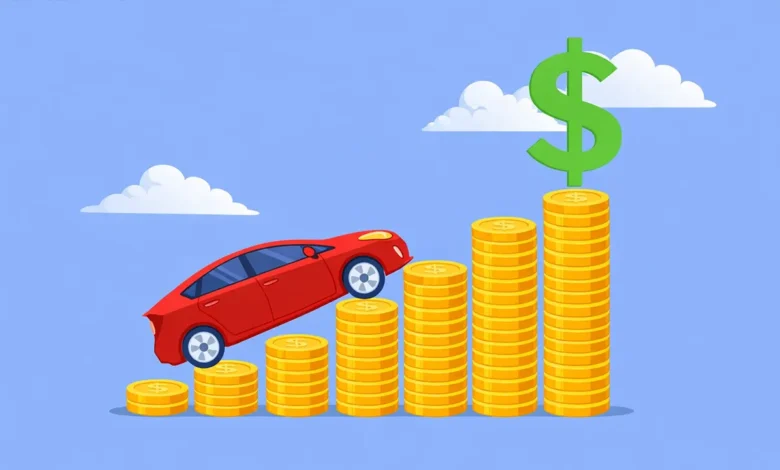
How to Increase Your Car Resale Value: The depreciation curve that begins the moment a new vehicle leaves the dealership is one of the most predictable and most financially significant wealth transfers in American consumer life — and it is one whose steepness, whose duration and whose ultimate destination in terms of the dollar figure a seller recovers at the end of their ownership period is far more within the individual owner’s control than the automotive industry’s conventional wisdom suggests. Depreciation is not a fixed, inevitable process whose outcome is determined entirely by the vehicle chosen and the market conditions prevailing at the point of sale. It is a process whose rate and whose terminal value are meaningfully influenced by decisions the owner makes across every month of the ownership period — decisions about maintenance discipline, cosmetic preservation, documentation habits, modification restraint and the strategic timing and channel selection that determine what the vehicle is worth when the sale moment arrives.
The difference between a well-maintained, comprehensively documented, cosmetically preserved vehicle and a comparable example whose owner treated resale value as an afterthought is measurable in thousands of dollars across every segment of the American used vehicle market. iSeeCars data consistently demonstrates that vehicles with complete service records command premiums of 1,000 to 3,000 dollars over comparable mileage examples without documentation. CarGurus pricing analysis shows that professionally detailed vehicles sell faster and at higher prices than equivalent examples presented without preparation. The strategies that produce these outcomes are neither expensive nor complex — they require discipline, consistency and the understanding that every ownership decision either builds or erodes the resale value that will eventually be recovered.
Maintain a Complete and Documented Service History: The Single Highest-Return Action
The maintenance record is the most financially valuable document associated with a used vehicle in the American market — more persuasive to a prospective buyer than any verbal assurance the seller can offer and more effective at supporting an asking price above the segment average than almost any other single ownership practice. A complete service history demonstrates to the buyer what they cannot verify through inspection alone: that the vehicle’s mechanical systems have been maintained according to the manufacturer’s specified intervals, that consumable components have been replaced before failure rather than after it, and that the current owner’s stewardship of the vehicle reflects the care that reduces the buyer’s post-purchase repair risk.
The practical requirements for building a complete service history are straightforward: retain every service invoice from every maintenance visit regardless of whether the work was performed at a franchised dealer, an independent workshop or a quick-service oil change facility. Photograph the odometer at every service visit and attach the image to the corresponding invoice. If oil changes or minor maintenance tasks are performed at home, retain receipts for the oil and filter purchased and record the odometer reading and date in a dedicated maintenance log. Digital organisation — scanning paper invoices and storing them in a cloud folder whose contents can be shared with prospective buyers — ensures that the documentation survives the ownership period intact and can be presented convincingly at the point of sale.
Dealer service records carry particular weight in the used vehicle market because buyers associate franchised dealer maintenance with the manufacturer’s specified procedures, genuine parts and trained technicians — a perception that translates into a willingness to pay a premium that independent workshop records, despite being equally valid evidence of maintenance diligence, do not always command in equal measure.
Protect the Paint and Exterior Finish From the Accumulated Damage of Daily Use
The exterior condition of a used vehicle is the first and most immediately impactful factor in a buyer’s value assessment — because paint quality, panel condition and trim preservation communicate the owner’s overall care standard more instantly and more viscerally than any document or mechanical inspection can. A vehicle whose paint surface shows the swirl marks of improper washing technique, the chips and scratches of parking lot exposure and the oxidation of inadequate protection is a vehicle whose asking price the market will discount before the buyer has opened the door.
Paint protection film — applied to the most vulnerable surfaces including the bonnet leading edge, the front bumper, the door edge trailing edges and the door cup areas where key scratches accumulate — provides a transparent barrier whose upfront cost of 500 to 2,500 dollars depending on coverage area produces a return in preserved paint condition that the resale premium at sale consistently exceeds across vehicles in the mainstream to near-premium segments. Ceramic coating — applied professionally to the vehicle’s full painted surface — provides a hydrophobic barrier that reduces the adhesion of road contamination, simplifies washing and maintains the paint’s gloss and depth across the ownership period with a durability that conventional wax and sealant products cannot approach.
Correct washing technique — using the two-bucket method, microfibre wash media and a pH-neutral automotive shampoo rather than the rotary brush systems of automatic car washes whose abrasive contact progressively damages clear coat surfaces — preserves the paint’s finish at a cost that is measured in time and attention rather than money. The owner who washes their vehicle correctly every two weeks across a five-year ownership period arrives at the sale moment with a paint surface that a prospective buyer and an independent appraiser both assess as reflecting a higher care standard — and assign a higher value to — than the equivalent mileage example whose owner used the automatic car wash.
Address Minor Cosmetic Damage Before It Becomes the Buyer’s Negotiating Leverage
Every visible cosmetic imperfection that a prospective buyer identifies during their inspection of a vehicle becomes negotiating leverage — a documented justification for a price reduction that the buyer will deploy with greater confidence and greater success than the seller’s resistance can counter when the imperfection is real, visible and the cost of its correction is easily estimated. The strategic calculation for the seller is whether the cost of correcting a cosmetic imperfection before listing the vehicle produces a asking price premium that exceeds the correction cost — and across the majority of common cosmetic issues, the answer is affirmative.
Touch-up paint applied to stone chips before they develop into rust — a progression that transforms a 50 dollar cosmetic correction into a 300 to 800 dollar body shop repair — preserves both the paint surface and the resale value at a cost that the owner who addresses chips promptly never incurs at the higher level. Paintless dent removal — a technique whose application to the small door dings and minor panel impressions that accumulate across normal parking lot use typically costs 75 to 150 dollars per dent — removes the imperfections that buyers notice most immediately and negotiate most aggressively without the colour matching and blend work that conventional body shop repair requires and whose quality variations create their own resale value concerns.
Interior stain removal, odour elimination and the replacement of visibly worn floor mats and seat covers whose cost is modest relative to the interior condition premium they support address the cabin environment that buyers assess as immediately as the exterior — and whose condition communicates the same ownership care standard to the same financial effect on the final transaction price.
Avoid Modifications That Narrow the Buyer Pool and Reduce Market Appeal
The modification decisions that vehicle owners make during their ownership period are among the most consistently underestimated contributors to resale value erosion in the American used vehicle market — because modifications that reflect the current owner’s specific preferences narrow the population of buyers for whom the vehicle represents an attractive purchase, and a narrower buyer pool produces lower competition for the vehicle and lower final sale prices as a direct consequence. Aftermarket wheels, lowered suspension, engine performance modifications, non-standard audio installations and exterior visual modifications all reduce the vehicle’s mainstream market appeal in ways whose financial cost at resale the owner who values personalisation over resale return must consciously accept.
The practical guidance for owners who wish to modify their vehicles without sacrificing resale value is to retain the original components that modifications replace — the factory wheels, the standard suspension components, the original audio head unit — and reinstall them before presenting the vehicle for sale. This approach allows the owner to enjoy their personalised configuration across the ownership period while presenting the vehicle in its original specification at sale, recovering the full market value that the standard configuration commands without the buyer pool narrowing that modified presentation imposes.
Time the Sale to the Market Conditions That Favour the Seller

The timing of a vehicle sale relative to seasonal demand patterns, fuel price movements and the new vehicle inventory cycles that influence used vehicle pricing produces meaningful variation in the price a seller can achieve for a given vehicle — variation that the owner who understands these patterns can exploit to their financial advantage. Convertibles and sports cars command their highest used market premiums in spring, as buyers whose enthusiasm for open-air driving has been suppressed across the winter months enter the market with heightened motivation and reduced price sensitivity. Four-wheel-drive trucks and SUVs attract their strongest demand in autumn and early winter, as buyers in weather-affected regions prioritise all-weather capability ahead of the season whose conditions make it relevant.
Fuel price spikes — which reliably shift used vehicle demand away from trucks and large SUVs toward fuel-efficient cars and hybrids within weeks of their onset — create temporary pricing anomalies whose exploitation requires the flexibility to sell during the demand surge rather than after the market has adjusted to the new price environment. The owner of a hybrid or fuel-efficient vehicle who lists during a period of elevated fuel prices captures a demand premium whose magnitude can reach 1,500 to 3,000 dollars above the pre-spike baseline pricing for equivalent examples sold during periods of fuel price stability.
Choose the Right Sales Channel for Maximum Return
The channel through which a vehicle is sold determines the proportion of its market value that the seller recovers — with private party sales consistently producing higher net proceeds than trade-in transactions at franchised dealerships, and online marketplace listings with comprehensive photography and documentation producing faster sales at higher prices than locally advertised vehicles whose presentation does not reflect the full scope of their condition and specification.
CarMax, Carvana and similar direct-to-consumer used vehicle platforms provide instant cash offers whose convenience carries a price — typically 1,000 to 3,000 dollars below the private sale value that a well-presented vehicle with complete documentation can achieve through direct buyer engagement on AutoTrader, Cars.com or Facebook Marketplace. The seller who has maintained their vehicle diligently, documented its service history comprehensively and prepared its presentation professionally has earned the right to pursue the private sale channel whose additional effort the price premium consistently justifies.
Read: 2026 Car Insurance Cost By State USA Comparison
Resale Value Strategy: The Actions That Return the Most
| Action | Estimated Resale Value Impact | Cost to Owner |
| Complete Service History | +$1,000–$3,000 | Time and Organisation |
| Paint Protection Film | +$500–$2,000 | $500–$2,500 Upfront |
| Professional Detail at Sale | +$300–$800 | $150–$400 |
| Paintless Dent Removal | +$200–$600 per dent | $75–$150 per dent |
| Original Spec at Sale (No Mods) | +$500–$2,000 | Retain Original Parts |
| Seasonal Sale Timing | +$500–$3,000 | Flexibility Required |
| Private Sale vs Trade-In | +$1,000–$3,000 | Additional Effort |
The Ownership Habits That Compound Into Maximum Resale Return
Resale value is not recovered at the point of sale — it is built across every month of the ownership period through the maintenance discipline, the cosmetic preservation habits, the documentation practices and the modification restraint that together produce a vehicle whose condition, history and presentation justify an asking price that the market confirms rather than negotiates downward. The American used vehicle market rewards owners who treat their vehicle as an asset whose value requires active stewardship — and penalises those who discover at the point of sale that the decisions made across the ownership period have already determined the outcome that the buyer’s first offer will confirm.