Why the Honda CRF300L Is the Best Beginner Motorcycle in 2026
A 286cc Liquid-Cooled Single-Cylinder Engine Producing Manageable Power Delivery Perfectly Calibrated for New Riders, a 153-Kilogram Wet Weight That Builds Confidence Rather Than Demanding It, Honda's Legendary Reliability Engineering Applied to a Platform Whose Maintenance Simplicity Matches Its Riding Accessibility and a $5,500 Starting Price That Makes the Most Important Investment Any New Rider Makes — the First Motorcycle — a Financially Sensible One
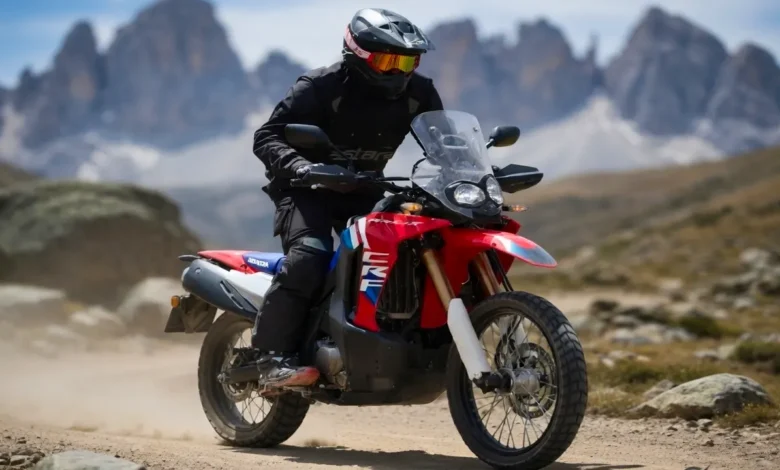
Every motorcyclist remembers their first bike — the machine on which the fundamental skills of balance, throttle control, braking judgment and situational awareness were built through the accumulated repetition of miles that no classroom instruction can substitute for. The quality of that first motorcycle — its forgiveness of the inevitable errors that learning produces, its accessibility to the rider whose physical confidence and mechanical understanding are both still developing and its ability to grow with the rider across the critical first ownership year rather than overwhelming them from the first ride — determines more about whether a new motorcyclist becomes a lifelong rider than any other single factor in the early ownership experience.
The Honda CRF300L is, by the evidence of its engineering specifications, its real-world ownership data and the consistency of its reception among new rider communities across the American and global markets, the best beginner motorcycle available in 2026. That conclusion is not a reflection of marketing positioning or brand preference — it is the result of examining what a beginner motorcycle must deliver across the dimensions that determine new rider success and measuring the CRF300L’s performance against those dimensions with the honesty that a decision as consequential as a new rider’s first motorcycle purchase deserves.
The Engine: Power Calibrated for Learning, Not Intimidation
The Honda CRF300L’s 286cc liquid-cooled single-cylinder engine is the foundation of its beginner credentials — a powertrain whose output characteristics reflect Honda’s understanding that the ideal beginner motorcycle engine is not the most powerful engine its displacement could produce but the most educationally useful one. The engine produces approximately 26 horsepower and 26 Newton-metres of torque — figures whose modest absolute values conceal their most important characteristic, which is the linearity and predictability of their delivery across the rev range.
The single-cylinder’s power delivery is progressive rather than sudden — building smoothly from idle through the rev range without the abrupt mid-range surge that multi-cylinder engines of equivalent or greater displacement can produce and that new riders, whose throttle control finesse is still developing, find most difficult to manage safely. The liquid cooling system maintains consistent operating temperature across the extended low-speed urban riding that new riders frequently encounter — eliminating the overheating concerns that air-cooled beginner motorcycles produce in stop-and-go traffic conditions and providing the consistent power delivery that temperature stability enables.
The six-speed gearbox provides sufficient ratio spread to make highway riding comfortable alongside the low-speed urban and trail use that the CRF300L’s dual-sport design encompasses — with gear spacing whose logic a new rider can intuit within the first riding session and whose clutch action is light enough to prevent the hand fatigue that heavier clutch mechanisms impose during the extended practice sessions that new rider skill development requires.
Weight and Ergonomics: Confidence Through Accessibility
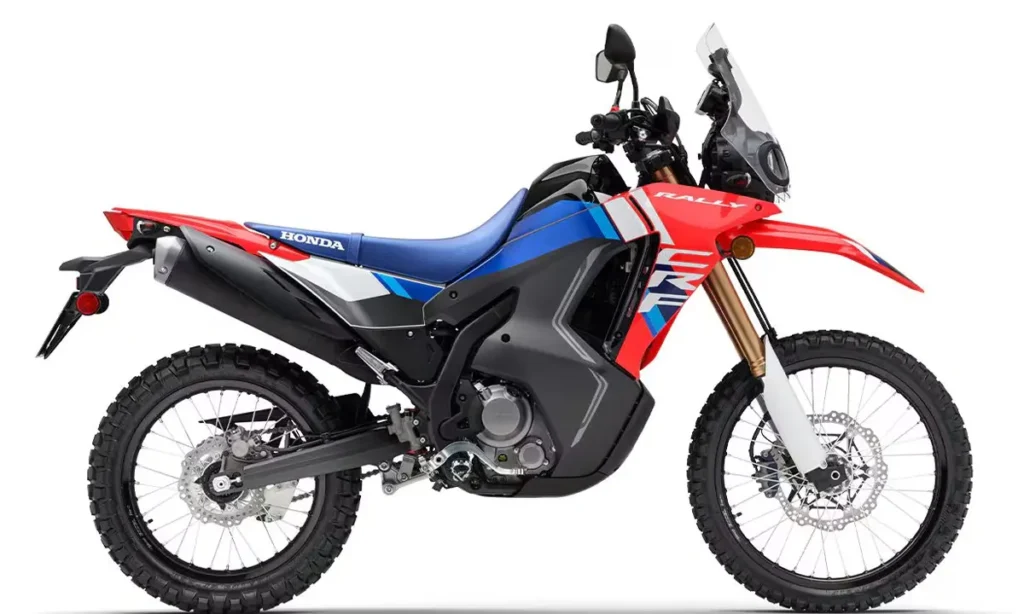
At 153 kilograms wet weight — a figure that positions the CRF300L among the lightest motorcycles available with this level of capability and specification — the Honda provides the physical accessibility that new rider confidence requires as its most basic prerequisite. A motorcycle that a rider cannot comfortably manage at rest, cannot pick up from a low-speed tip-over without assistance and cannot manoeuvre in tight spaces without anxiety is a motorcycle that teaches fear before it teaches skill — an outcome whose damage to new rider development no amount of subsequent positive riding experience fully reverses.
The CRF300L’s 875-millimetre seat height — while not the lowest available in the beginner category — combines with the narrow seat profile and the suspension compliance that allows the bike to lean into the rider’s body weight to provide a manageable reach to the ground for riders of average height. The upright riding position reduces the physical fatigue that forward-leaning sport postures impose on riders whose core strength and riding fitness are still developing — enabling longer practice sessions whose duration is determined by skill development rather than physical discomfort.
Honda Reliability: The Engineering Foundation That Matters Most for New Riders
The reliability argument for the Honda CRF300L as a beginner motorcycle extends beyond the financial convenience of low maintenance costs — it reaches into the experiential dimension of new rider development in a way that the reliability specifications of rival motorcycles cannot replicate without Honda’s specific engineering heritage and quality control consistency. A new rider whose motorcycle is mechanically dependable focuses their attention on the skill development that the riding experience provides. A new rider whose motorcycle requires frequent attention, produces unexpected mechanical behaviour or fails to start reliably on cold mornings develops a relationship with motorcycling whose negative associations impede the skill development and experiential enthusiasm that sustained rider engagement requires.
Honda’s reliability engineering — whose foundation in the CRF300L reflects the same manufacturing philosophy that has produced some of the most consistently dependable internal combustion engines in automotive and motorcycle history — provides the experiential background reliability that new rider development demands. The annual maintenance cost of approximately $150 to $300 for professional service, combined with service intervals of 8,000 kilometres between oil changes and accessible mechanical simplicity that allows basic maintenance tasks to be performed by owners with modest mechanical aptitude, creates an ownership cost profile that new riders on realistic budgets can sustain without the financial stress that more expensive or more maintenance-intensive alternatives impose.
Dual-Sport Versatility: One Motorcycle, Every Learning Environment
The CRF300L’s dual-sport design — combining road legality with the suspension travel, ground clearance and tyre specification that light off-road use requires — provides new riders with the riding environment versatility that accelerates skill development more effectively than single-surface alternatives. The ability to transition between paved road riding, gravel track exploration and light trail use within a single ownership experience exposes new riders to the traction variability, surface reading requirements and throttle sensitivity demands that diverse terrain imposes — building the foundational riding intelligence that transfers to every subsequent motorcycle and every subsequent riding environment.
The 230-millimetre front suspension travel and 220-millimetre rear travel provide the compliance that both off-road terrain management and urban pothole absorption demand — creating a riding experience whose physical comfort on imperfect surfaces reduces the distraction that road surface harshness otherwise imposes on new riders whose attention is already fully occupied by the skill development demands that every learning ride presents.
The $5,500 Case: First Motorcycle Financial Wisdom
The Honda CRF300L’s approximately $5,500 starting price — a figure that positions it accessibly within the beginner motorcycle market without the false economy of the cheapest available alternatives whose reliability and safety compromises make their lower purchase price a poor investment against the total cost of the ownership experience they deliver — represents the financially optimal entry point for serious new rider development.
The new rider’s first motorcycle is statistically the most likely motorcycle they will drop, scratch and mechanically stress through the learning process whose demands no amount of pre-purchase preparation fully mitigates. A $5,500 Honda whose residual value after two years of new rider ownership remains strong — reflecting the CRF300L’s established desirability in the used motorcycle market — represents a fundamentally better financial proposition than a $8,000 to $12,000 intermediate motorcycle whose depreciation during the new rider ownership period produces a greater absolute financial loss and whose performance demands exceed what the new rider’s skill level can safely and productively engage.
Read: The Best Inline-Four Used Motorcycles You Can Buy for Under $5000
Honda CRF300L: 2026 Key Specifications
| Category | Specification |
| Engine | 286cc Liquid-Cooled Single-Cylinder |
| Power Output | Approx. 26 hp |
| Torque | Approx. 26 Nm |
| Transmission | 6-Speed Manual |
| Wet Weight | 153 kg |
| Seat Height | 875 mm |
| Front Suspension Travel | 230 mm |
| Rear Suspension Travel | 220 mm |
| Fuel Tank Capacity | 7.8 Litres |
| Fuel Economy | Approx. 30–35 km/L |
| Tyre Type | Dual-Sport (Road / Light Off-Road) |
| ABS | Available (CRF300L ABS Variant) |
| Annual Maintenance Cost | Approx. $150–$300 |
| Starting MSRP (US) | Approx. $5,500 |
| Colour Options | Extreme Red / Pearl Glittering Blue |
| Best Suited For | New Riders / A1 Licence / Dual-Sport Use |

One Comment