2026 Honda Pilot Review: Smarter, Stronger and More Refined SUV
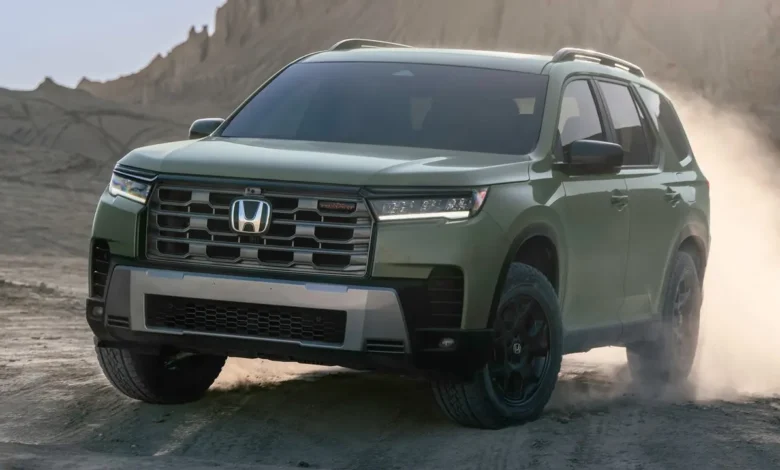
The 2026 Honda Pilot arrives as one of the most important three-row SUVs in Honda’s global lineup, representing the next step in the company’s evolution toward smarter, more efficient and more family-focused mobility. As the SUV market continues to expand, Honda has taken a strategic approach by refining the Pilot with improved design, advanced safety technology, stronger powertrain options and enhanced interior flexibility. The new-generation Pilot builds on its reputation for reliability, practicality and value while introducing upgraded engineering and modern digital experiences. With more rugged styling cues, a stronger sense of capability and improved comfort, the 2026 Pilot is designed to appeal to families, adventurers and daily commuters alike.
The model continues Honda’s SUV design philosophy, sharing ideas with the Honda Passport and Ridgeline while retaining its identity as a versatile three-row SUV that excels in both urban and recreational environments. The 2026 Pilot targets buyers who demand a dependable family vehicle with spacious seating, modern features and mild off-road capability. The redesign elevates the overall experience with improved driving dynamics, superior ride quality and innovative interior solutions tailored for large families.
Gallery: 2026 Honda Pilot
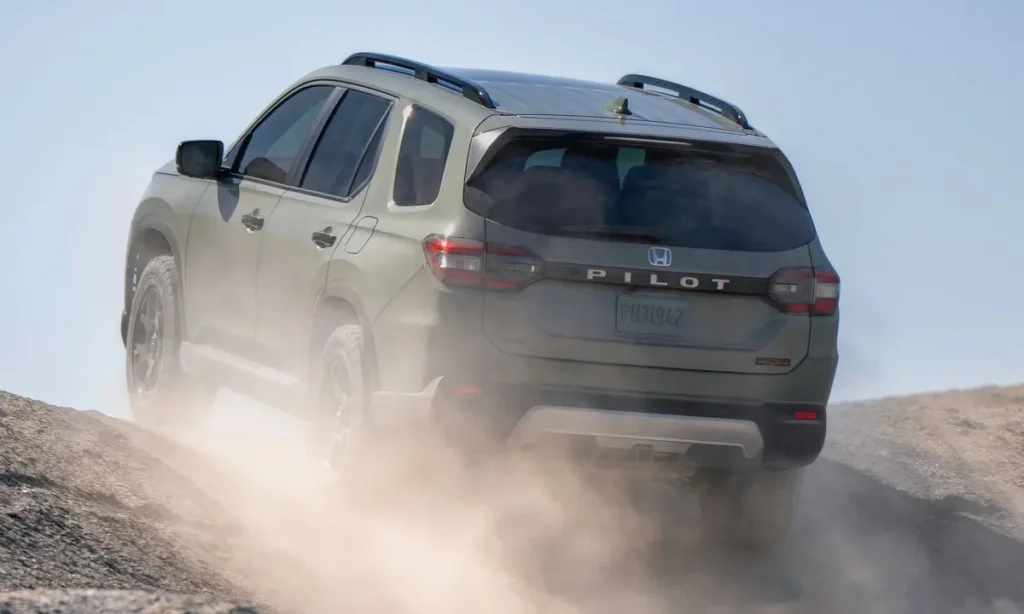
Exterior Design: A Stronger and More Confident SUV Presence
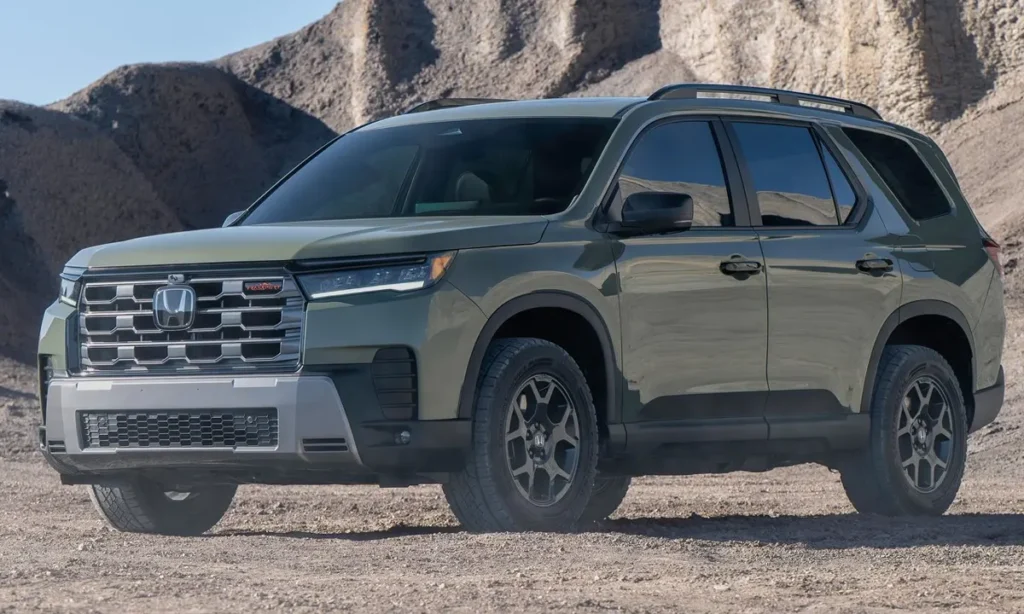
The exterior of the 2026 Honda Pilot reflects the contemporary SUV trend toward bold and aggressive styling. The design incorporates stronger lines, more pronounced body proportions and a wider stance that communicates stability and confidence. The front fascia introduces a large grille with a clean, structured layout, flanked by slim, modern LED headlamps that integrate seamlessly into the hood and fenders. This new design direction gives the Pilot a more commanding road presence, especially compared to earlier rounded and softer designs.
The hood is sculpted to emphasize strength, while the side profile balances ruggedness with sophistication through chiseled lines and trimmed window elements. The slightly squared-off wheel arches and updated alloy wheels enhance its muscular aesthetic. Honda engineers have optimized the Pilot’s aerodynamics with reworked side mirrors, smoother body panel transitions and underbody airflow management to reduce drag and improve efficiency.
The rear of the vehicle carries a clean and modern design with horizontally oriented LED taillights and a refined tailgate structure that enhances both practicality and style. A newly shaped bumper adds durability and visual weight, reflecting Honda’s intent to balance utility and visual appeal.
Overall, the exterior design of the 2026 Pilot evolves into a more premium, rugged and purposeful SUV that stands out confidently among its competitors.
Powertrain: Stronger, Smoother and More Efficient Performance Options
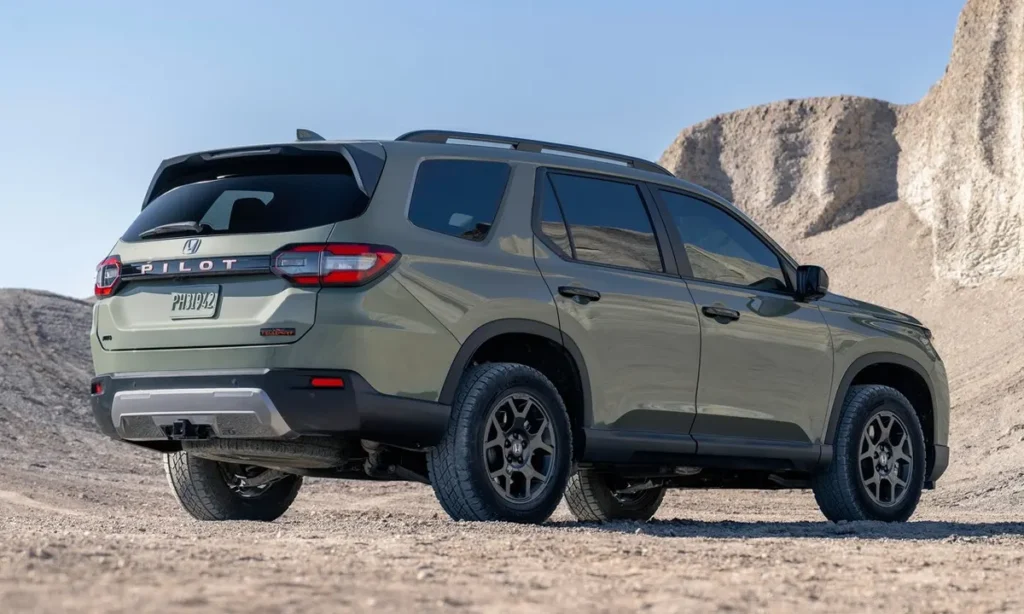
Under the hood, the 2026 Honda Pilot continues to prioritize efficient performance. The model is expected to retain Honda’s trusted 3.5-liter V6 engine while receiving refinements in efficiency, power delivery and responsiveness. The updated engine incorporates advancements in combustion efficiency, improved thermal management and reduced friction technologies that contribute to smoother operation and better mileage.
In select markets, Honda may introduce a hybrid powertrain option to meet growing consumer demand for electrified SUVs. A hybrid variant would combine a gasoline engine with electric motors to deliver enhanced fuel economy, quiet operation and strong low-end torque—ideal for city driving, highway cruising and daily commuting. The addition of hybrid technology would further elevate the Pilot’s position among competitors who have already embraced electrified powertrains.
The 2026 Pilot uses a refined 10-speed automatic transmission that emphasizes smooth gear changes, improved acceleration and more intuitive power delivery under load. Enhanced shift logic helps the Pilot adapt better to highway conditions, towing requirements and off-road demands.
All-wheel drive continues to be a vital part of the Pilot’s personality. The updated AWD system offers improved torque vectoring, better traction management and increased stability across changing weather and terrain. Whether driving on snow-covered roads, gravel paths or steep inclines, the AWD system ensures that the Pilot remains composed and confident at all times.
Driving Experience: A Refined and Balanced Family SUV
The 2026 Honda Pilot delivers a driving experience that reflects years of engineering refinement. With a strengthened chassis and improved suspension tuning, the Pilot feels more stable, quieter and more comfortable than previous generations. Honda engineers have optimized the vehicle’s ride quality by balancing firmness and compliance, ensuring that both everyday commutes and long-distance trips feel smooth and enjoyable.
The steering system has been recalibrated for more precise response and better feedback, particularly at higher speeds. The combination of a wider track and improved weight distribution enhances stability and reduces body roll, making the Pilot feel more controlled during cornering. The suspension incorporates updated shock absorbers and springs, absorbing imperfections in the road while maintaining firmness for confident driving dynamics.
Noise isolation has improved significantly due to refined soundproofing materials, triple-sealed doors and better body sealing. The cabin remains quiet even during high-speed highway travel, contributing to a more relaxing driving environment for all occupants. Honda’s emphasis on NVH reduction ensures that the Pilot remains competitive against premium SUVs in terms of cabin quietness.
The 2026 Pilot’s driving experience reinforces its reputation as a well-rounded and thoughtfully engineered SUV that prioritizes comfort, stability and long-term reliability.
Interior: Spacious, Practical and Purposefully Designed for Families
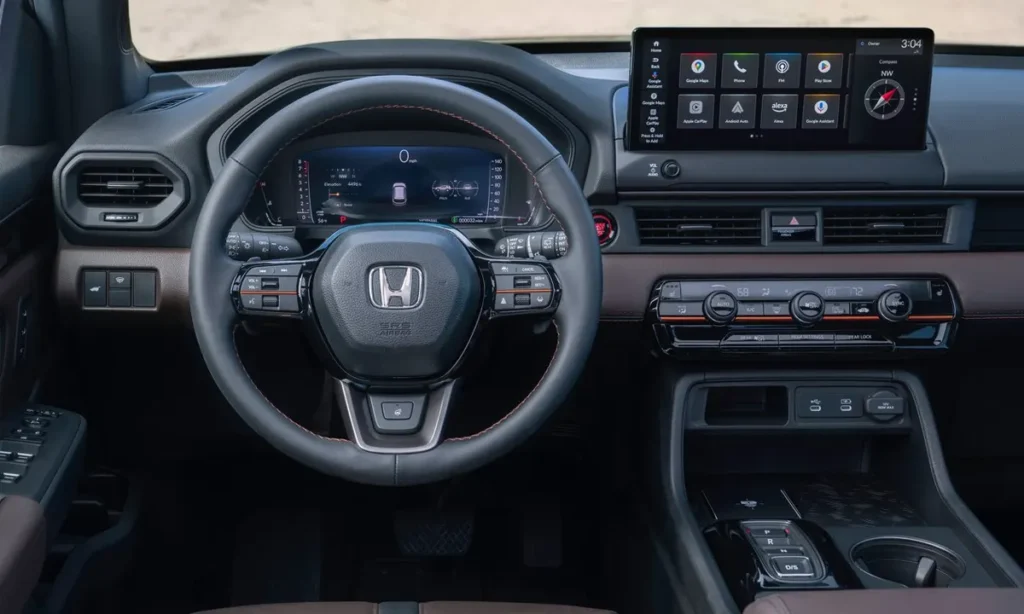
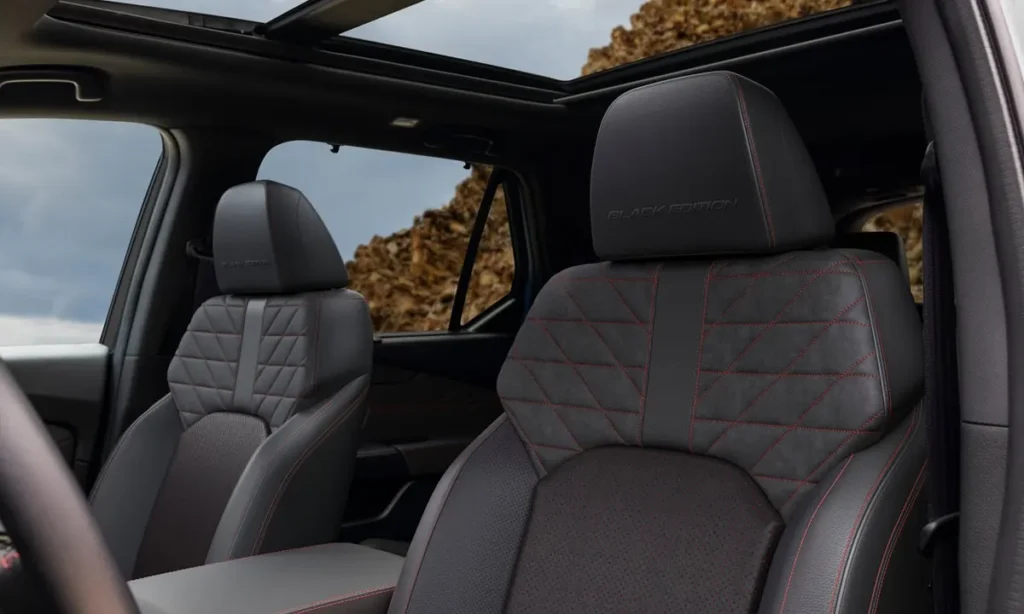
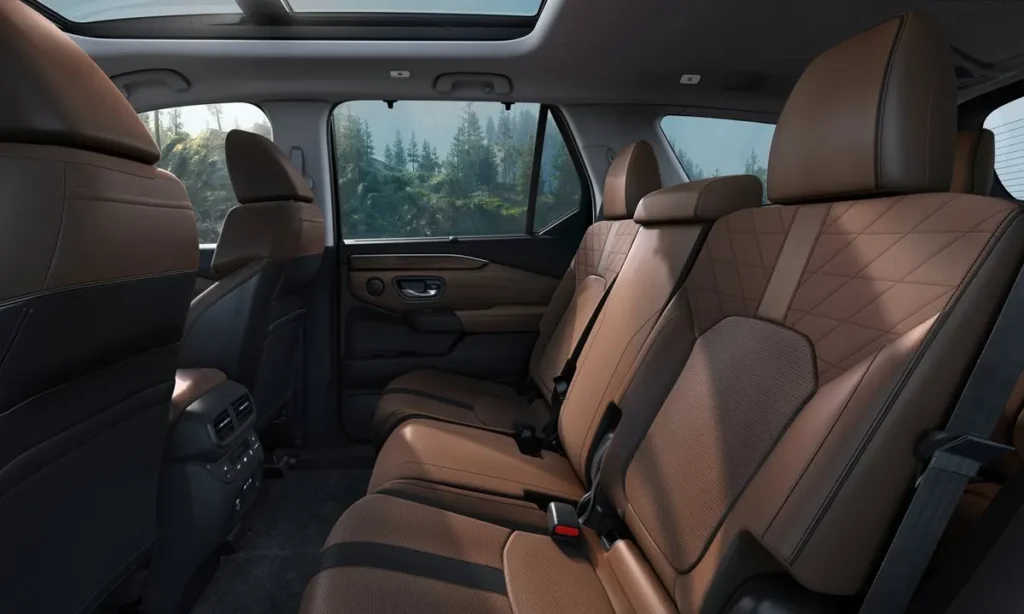
The interior of the 2026 Honda Pilot continues to prioritize practicality and comfort, offering one of the most spacious and family-friendly cabins in its class. Honda has refined cabin ergonomics, improved materials and enhanced seating configurations to provide maximum usability for families of all sizes.
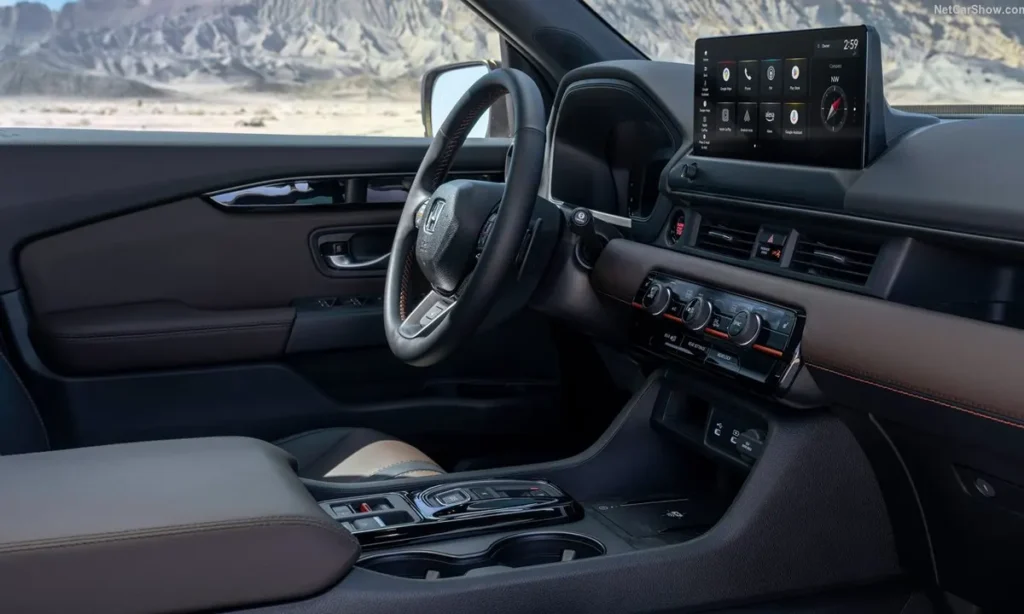
The dashboard features a clean and horizontal layout with an expanded digital instrument cluster and an upgraded infotainment system. The center display is larger, sharper and more responsive, supporting voice control, wireless smartphone connectivity and customizable interface settings. The infotainment unit is complemented by intuitive physical controls that give drivers quick access to essential functions without distraction.
Seating comfort has been improved with supportive cushions, enhanced lumbar support and high-quality materials designed to withstand family use. The 2026 Pilot retains its flexible three-row seating arrangement, with the second row offering a choice between captain’s chairs or a bench configuration. The third row provides adequate space for adults during shorter trips and is easy to access thanks to improved sliding mechanisms.
Cargo flexibility remains one of the Pilot’s strongest advantages. The large rear cargo area can accommodate luggage, groceries, strollers, sports equipment and more. Fold-flat seats further expand the cargo space, making the vehicle exceptionally adaptable. Storage compartments, hidden bins, expanded cup holders and family-focused features like USB-C charging ports enhance everyday usability.
The cabin ambiance has been elevated with soft-touch materials, refined trim finishes and updated color palettes. The overall interior design reflects both practicality and premium intent.
Technology and Connectivity: Smarter, Faster and More User-Friendly
Technological advancement is a key priority in the 2026 Honda Pilot. The updated model integrates a more advanced suite of connectivity features, ensuring drivers and passengers stay connected, entertained and informed throughout their journeys.
The infotainment system offers improved graphics, faster processing speeds and cloud-based navigation. Wireless Apple CarPlay and Android Auto come standard, enabling seamless integration with smartphones. Honda’s digital services suite includes real-time traffic updates, remote vehicle monitoring and over-the-air software updates.
The digital instrument cluster offers customizable layouts, allowing drivers to tailor the displayed information to their preferences. The head-up display provides real-time driving data, reducing the need to look away from the road.
Rear passengers benefit from improved entertainment options, including high-resolution rear screens, wireless streaming capability and multiple charging ports. Cabin comfort is enhanced through multi-zone climate control that adapts to passenger preferences.
Together, these features ensure that the 2026 Pilot remains technologically relevant and competitive in a rapidly evolving market.
Safety Systems: Advanced Protection with Honda Sensing Evolution
Safety remains a central focus in the 2026 Honda Pilot. The latest version of Honda Sensing incorporates improved sensors, better processing power and expanded functionality to keep occupants safe in a wide range of driving situations.
The updated collision mitigation system provides enhanced object detection and faster braking responses. Lane-keeping assistance has been refined for smoother operation, while adaptive cruise control offers more natural acceleration and deceleration behavior. Traffic jam assist supports semi-autonomous driving during heavy congestion, reducing driver fatigue.
Additional features include blind-spot monitoring, cross-traffic alert, pedestrian detection, road departure mitigation and driver-attention monitoring. Honda’s structural engineering ensures robust crash protection through the advanced ACE body structure, designed to disperse crash forces efficiently.
With these advancements, the 2026 Pilot continues to uphold Honda’s reputation for safety leadership.
Read; 2025 Škoda 100 Concept Blends Retro Charm with Futuristic EV Innovation
Versatility and Market Position: A Reliable and Highly Competitive Three-Row SUV
The 2026 Honda Pilot maintains its strong standing in the competitive three-row SUV segment, competing with models such as the Toyota Highlander, Mazda CX-90, Kia Telluride and Hyundai Palisade. Honda’s improvements ensure that the Pilot remains relevant to families seeking versatility, comfort and long-term dependability.
Its combination of refined design, improved performance, advanced technology and exceptional practicality positions it as one of the strongest choices for North American and global families. The 2026 model reflects Honda’s commitment to delivering reliable, well-engineered vehicles that adapt to the evolving needs of modern households.
2026 Honda Pilot – Specifications & Performance Chart
| Category | Specification |
| Engine | 3.5-Liter V6 (Hybrid Option Expected) |
| Power Output | Approx. 285 hp (V6) |
| Transmission | 10-Speed Automatic |
| Drivetrain | FWD or AWD |
| Seating Capacity | 7–8 Occupants |
| Towing Capacity | Up to 5,000 lbs (estimated) |
| Infotainment | Large Touchscreen + Digital Cluster |
| Connectivity | Wireless CarPlay, OTA Updates |
| Suspension | Revised Comfort + Stability Tuning |
| Ground Clearance | SUV-Optimized Height |
| Cargo Capacity | Expanded Fold-Flat Flexibility |
| Safety | Honda Sensing Enhanced Suite |
| Interior | Premium Three-Row Cabin |
| Platform | Updated SUV Architecture for 2026 |