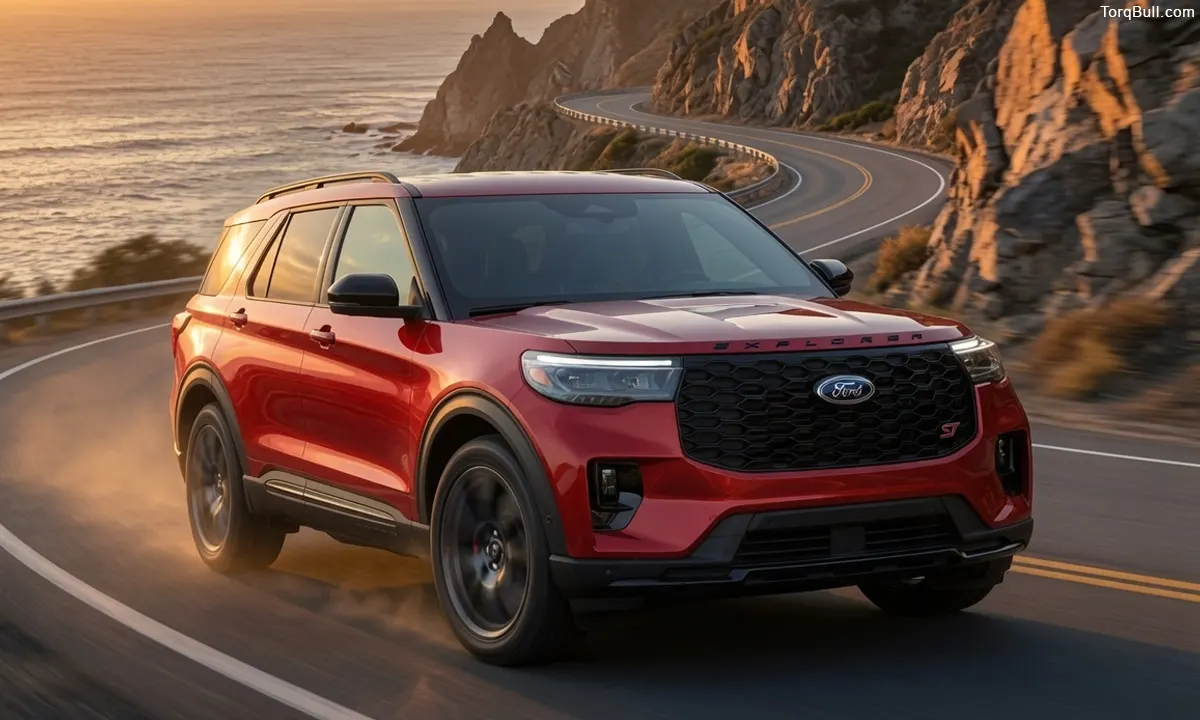
- The 2026 Ford Explorer Hybrid is rated at an estimated 42 MPG city, 38 MPG highway and 40 MPG combined.
- Reintroduced for 2026, the hybrid becomes one of the most fuel-efficient three-row SUVs on the market.
- Real-world owner data shows gas-powered Explorers averaging about 19.3 MPG, while the 2.3-liter EcoBoost achieves up to 29 MPG highway.
The Ford Explorer’s fuel economy story in 2026 is one of the most significant changes to the nameplate’s ownership proposition in its history — because Ford has reintroduced a hybrid powertrain for the Explorer after discontinuing it following the 2023 model year, and the returning hybrid’s 40 MPG combined rating places it among the most efficient three-row SUVs in the American market. For buyers evaluating the Explorer on total ownership cost, understanding the real-world fuel economy that each powertrain delivers — the hybrid’s city advantage, the gas engine’s highway leadership in its non-hybrid class and what the owner-tracked data from actual Explorer drivers reveals about real-world efficiency — is the most financially practical research available before purchase. This guide provides every figure from every driving environment for every Explorer configuration.
The 2026 Hybrid’s Return: What the New Powertrain Actually Delivers
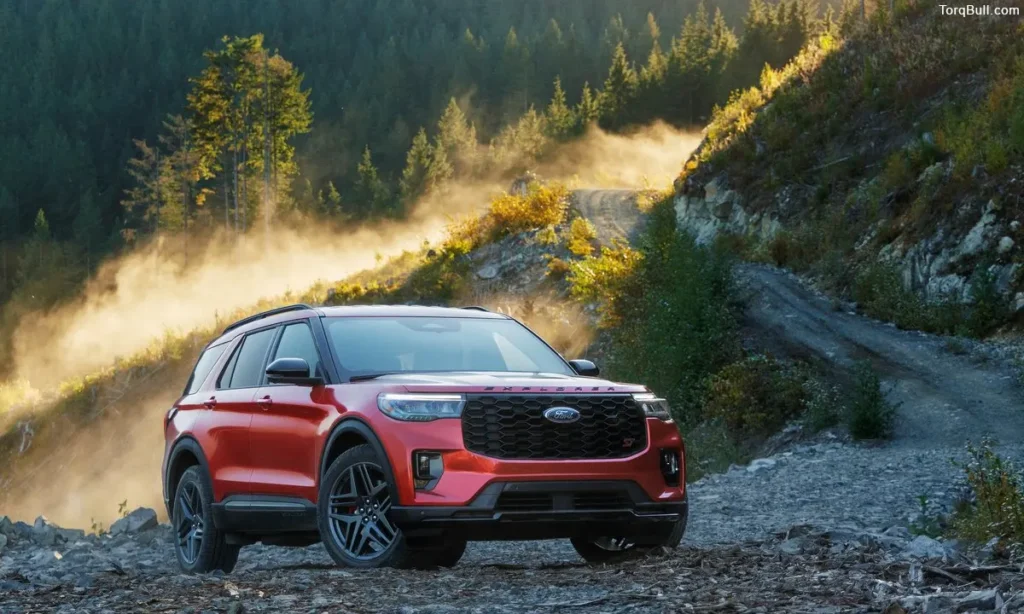
The 2026 Ford Explorer Hybrid pairs a 3.3-litre V6 engine with an electric motor for 318 combined horsepower — a powertrain that provides a genuine performance upgrade over the base 2.3-litre four-cylinder while simultaneously delivering dramatically better fuel economy than any gas-only Explorer configuration.
The hybrid system’s EPA-estimated fuel economy of 42 MPG city and 38 MPG highway for a 40 MPG combined rating is the headline figure — and for many buyers considering the Explorer specifically for family use in urban and suburban environments, the 42 MPG city rating is the most practically relevant single number. City driving is where hybrid systems produce their most dramatic efficiency gains because regenerative braking recovers energy at every deceleration event, the electric motor operates autonomously at low speeds without engaging the gasoline engine and the engine’s stop-start operation eliminates the idle fuel consumption that non-hybrid vehicles incur at every traffic signal.
The 38 MPG highway figure reflects the sustained cruise conditions where the gasoline engine operates near its most efficient load point but the electric motor’s regenerative opportunities are fewer and smaller than city traffic produces. The highway-versus-city efficiency differential of only 4 MPG for the hybrid — compared to the gas model’s 9 to 10 MPG differential — reflects the hybrid system’s ability to maintain strong efficiency at both speed profiles rather than concentrating its advantage primarily in one environment.
At 15,000 annual miles and $3.08 per gallon, the Explorer Hybrid at 40 MPG combined costs approximately $1,155 per year in fuel — compared to approximately $1,925 per year for the base 2.3-litre gas Explorer at 24 MPG combined. This annual saving of approximately $770 accumulates to approximately $3,850 over five years — a meaningful total cost of ownership reduction that should be incorporated into any Explorer hybrid-versus-gas purchase price comparison.
Read: Ford Explorer Hidden Features That Make Everyday Driving Easier in 2026
The Gas Models: EPA Ratings and Real World Owner Data
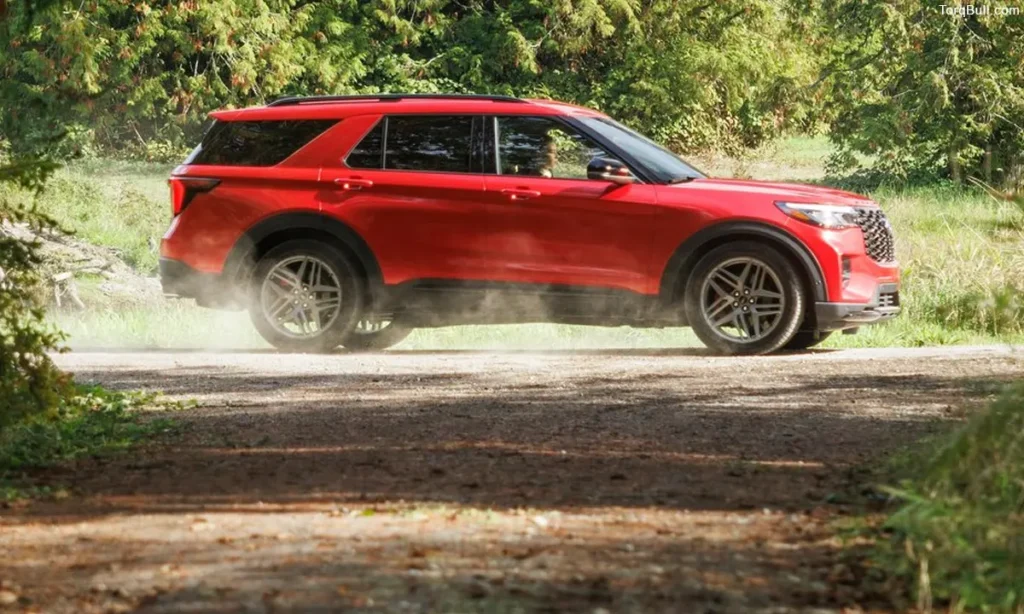
The 2026 Ford Explorer’s gas-only powertrain configurations span two distinct engine families that produce meaningfully different fuel economy profiles depending on which performance tier the buyer selects.
The 2.3-litre EcoBoost four-cylinder with rear-wheel drive achieves 20 MPG city, 29 MPG highway and 24 MPG combined — the best fuel economy in the gas-only Explorer lineup and a genuinely competitive result among non-hybrid three-row midsize SUVs. The 29 MPG highway figure leads the non-hybrid three-row segment — outperforming the Honda Pilot at 27 MPG highway, the Kia Telluride at 26 MPG highway and the Chevrolet Traverse at 26 MPG highway in equivalent non-hybrid configurations. The Explorer’s rear-wheel-drive architecture provides a specific aerodynamic and drivetrain efficiency advantage over the front-wheel-drive-based platforms that most three-row crossover competitors use.
Adding the available Intelligent 4WD to the 2.3-litre configuration reduces fuel economy by approximately 1 to 2 MPG — producing 20 MPG city, 27 MPG highway and 23 MPG combined. This minimal AWD efficiency penalty reflects the Intelligent 4WD system’s efficiency-oriented calibration that disengages the rear axle during highway cruise conditions where all-wheel-drive contribution is not required.
The 3.0-litre EcoBoost V6 producing 400 horsepower achieves 18 MPG city, 25 MPG highway and 21 MPG combined — the performance powertrain’s expected fuel cost premium for its significant power output. Available in the ST trim and Platinum configurations, this engine serves buyers for whom performance or towing capability outweigh fuel economy in the purchase priority hierarchy.
The most directly relevant fuel economy data for prospective buyers comes from owner-submitted tracking records across thousands of actual Explorer fill-ups. For the 2026 Explorer across all engine configurations, owner fuel tracking from 14 vehicles across 26,651 tracked miles produces an average real-world result of 19.3 MPG — 4.7 MPG below the base engine’s 24 MPG combined EPA estimate for gas models. The 2025 Explorer’s larger tracking dataset from 63 vehicles and 723,046 miles produces 19.0 MPG average — consistent with the 2026 figure and reflecting the realistic mixed-driving average that a diverse owner population accumulates across varied speed profiles, geographic conditions and driving styles.
City vs Highway: The Explorer’s Specific Efficiency Profile by Powertrain
Understanding how the Explorer’s fuel economy distributes between city and highway driving environments is essential for buyers whose specific commute pattern heavily favours one environment over the other.
For the hybrid: The 42 MPG city figure is the most significant departure from the gas model’s performance — representing a 22 MPG city improvement over the base gas Explorer’s 20 MPG city. This dramatic city efficiency difference reflects the hybrid’s specific advantage in stop-and-go conditions. The 38 MPG highway figure remains excellent in absolute terms but narrows the gap with the gas model — the 29 MPG highway of the base gas Explorer versus the hybrid’s 38 MPG still represents 9 MPG highway improvement, but the relative efficiency gain is smaller at highway speeds where the hybrid’s electric motor has fewer regenerative opportunities.
For the gas 2.3-litre: The 9 MPG gap between city (20 MPG) and highway (29 MPG) is characteristic of turbocharged four-cylinder engines — less efficient in urban stop-and-go where the turbocharger spools down at traffic lights and more efficient at sustained highway cruise where the direct-injection engine operates at its optimal load point. Buyers who cover predominantly highway miles on daily commutes or frequent long-distance travel will realise fuel economy closer to the 29 MPG highway figure than the 24 MPG combined estimate.
Read: The Midsize SUVs That Actually Fit Adults in the Third Row. Best Third-Row Legroom Ranked
2026 Ford Explorer Fuel Economy — Complete Configuration Chart
| Powertrain | Drive | EPA City | EPA Highway | EPA Combined | Annual Fuel Cost (15K miles, $3.08/gal) | Segment Comparison |
| Hybrid (3.3L V6 + electric, 318 hp) | RWD | 42 MPG | 38 MPG | 40 MPG | approximately $1,155 | Best in three-row segment |
| 2.3L EcoBoost 4-cyl (300 hp) | RWD | 20 MPG | 29 MPG | 24 MPG | approximately $1,925 | Leads non-hybrid highway segment |
| 2.3L EcoBoost 4-cyl (300 hp) | AWD | 20 MPG | 27 MPG | 23 MPG | approximately $2,009 | 1 to 2 MPG AWD penalty |
| 3.0L EcoBoost V6 (400 hp) | RWD | 18 MPG | 25 MPG | 21 MPG | approximately $2,200 | Performance engine fuel cost |
| 3.0L EcoBoost V6 (400 hp) | AWD | 18 MPG | 25 MPG | 21 MPG | approximately $2,200 | Minimal AWD penalty at this power |
| Owner tracked (all 2026 models) | Mixed | 19.3 MPG real world | approximately $2,394 | From 26,651 documented miles | ||
| Owner tracked (2025 models) | Mixed | 19.0 MPG real world | approximately $2,432 | From 723,046 documented miles | ||
| Toyota Grand Highlander Hybrid (comparison) | AWD | 36 MPG | 34 MPG | 35 MPG | approximately $1,323 | Strong hybrid competitor |
The Competitor Context: Where the Explorer Hybrid Stands
The reintroduced Explorer Hybrid’s 40 MPG combined rating places it in strong competitive positioning relative to the three-row midsize SUV hybrid alternatives — though it does not lead every comparison.
The Toyota Grand Highlander Hybrid at 35 to 36 MPG combined and the Kia Sorento Hybrid at approximately 37 MPG combined are the Explorer Hybrid’s most direct hybrid competitors in the three-row segment. The Explorer Hybrid’s 40 MPG combined exceeds both alternatives — a meaningful efficiency leadership position that is reinforced by the 42 MPG city rating’s advantage in urban commuting conditions.
The non-hybrid Explorer’s 24 MPG combined with the base engine and its 29 MPG highway leadership position are the most competitive fuel economy credentials in the non-hybrid three-row segment — outperforming the Honda Pilot, Kia Telluride and Chevrolet Traverse in their own non-hybrid configurations. For buyers who specifically cannot accept the hybrid’s premium pricing, the gas Explorer’s highway fuel economy leadership provides a genuine and independently validated competitive differentiator.
Read: Toyota Highlander Hybrid Maintenance Cost Per Year. Complete 2026 Guide
Real World Fuel Economy Tips: Maximising Explorer MPG
The difference between 19.3 MPG that average owner tracking data shows and the 24 MPG combined EPA estimate for the base engine — a 4.7 MPG gap — reflects the real-world variables that most drivers do not control as precisely as the EPA standardised test cycle does. Several specific behaviours consistently improve real-world fuel economy toward the EPA estimate.
Gradual acceleration rather than rapid throttle application from stops reduces the fuel consumption that the turbocharger’s boost demand increases under hard acceleration. Moderate highway speed maintenance at 65 MPH rather than 75 to 80 MPH reduces aerodynamic drag — which increases as the square of speed — producing measurable highway fuel economy improvements that owners can realise without mechanical changes. Removing roof racks, cargo boxes and exterior accessories when not actively in use reduces aerodynamic drag by 2 to 5 percent — a simple step that produces ongoing fuel economy improvement for owners who regularly carry roof-mounted equipment they are not actively using.
Tyre pressure maintenance at the door jamb specification reduces rolling resistance and improves fuel economy by 0.5 to 1 percent per PSI above the underinflated baseline that many vehicles develop between service visits. For Explorer owners who cover primarily urban miles, engaging the hybrid’s available Eco mode adjusts the climate system’s compressor duty cycle and the throttle response curve to prioritise fuel economy over immediate response — a measurable city economy improvement for drivers who accept the slightly reduced climate control aggression the mode produces.