- The Honda Civic earns an excellent average reliability score of 87/100 and has below-average annual repair costs of about $368.
- Many owners report reaching 200,000–300,000+ miles with routine maintenance and proper care.
- Long-term durability after 100,000 miles depends largely on monitoring 1.5-liter turbo oil consumption and maintaining the CVT transmission properly.
The Honda Civic is perhaps the most comprehensively documented long-term reliability story in the compact car segment — a nameplate with decades of high-mileage owner accounts that collectively form the clearest picture of what dedicated maintenance produces across an extended ownership period. The current eleventh-generation Civic earns a JD Power quality and reliability score of 84 out of 100 for the 2025 and 2026 model years, placing it among the most reliable vehicles in its class and in the broader automotive market. Across 2018 to 2026 production, the Civic averages 87 out of 100 — an Excellent designation with annual repair costs of $368 substantially below the $526 compact car class average. Verified owner accounts confirm Civics reaching 200,000 miles and beyond with routine maintenance — and some owners document 300,000 miles or more. The Civic’s long-term reliability case is strong, honest and well-supported. But the 1.5-litre turbocharged engine’s specific post-100,000 mile maintenance requirements and the CVT transmission’s fluid service dependency are the variables that determine where any individual Civic lands within the range this impressive average represents.
The Cross-Generation Reliability Record: From 100,000 to 300,000 Miles
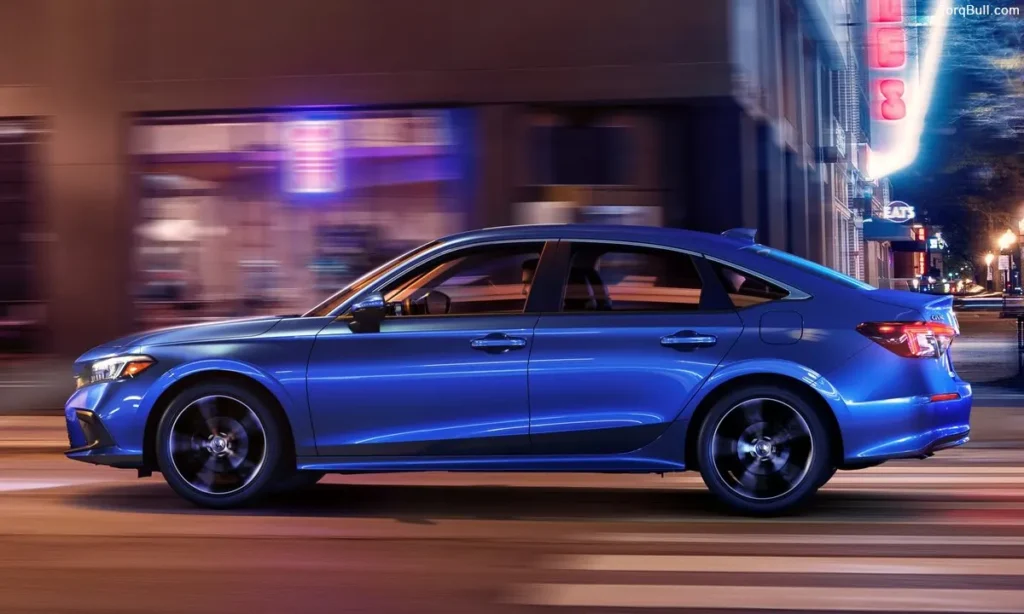
The Honda Civic’s documented high-mileage reliability record is the most consistent finding across every source that aggregates owner accounts — professional owner surveys, independent owner forums and verified owner review platforms.
Accounts of Honda Civic vehicles reaching over 100,000 miles without requiring major repairs are numerous and consistently documented. Multiple owner testimonies specifically confirm driving a Civic for over a decade without unexpected mechanical failures, and the 200,000-mile milestone appears in enough individual owner accounts to be statistically meaningful rather than outlier occurrences. Some owners document 300,000 miles or more — representing 20 or more years of ownership on a vehicle that cost approximately $25,000 new.
The eleventh-generation Civic launched for 2022 earns no model year below four stars out of five for reliability across all years of its current production run in verified owner reviews — a consistent finding that reinforces the cross-generation pattern. The 2025 Civic achieves the best reliability score of the current generation at 84 out of 100, with only 5 recalls and 49 owner complaints from a production volume that dwarfs the complaint percentage. The 2026 Civic carries 0 recalls and only 7 owner complaints on file — the cleanest early production signal of any current model year.
Because the major repairs are rare — especially within the first 100,000 miles — Civic ownership characteristically produces fewer unexpected expenses and a smoother total ownership experience than competing compact cars at comparable purchase prices. This is the practical manifestation of the $368 annual repair cost figure — not just a statistical average but a real ownership pattern that Civic owners experience daily.
Read: Honda Civic Long Term Ownership Review. Why It Remains One of America’s Favorite Cars
The Post-100,000 Mile Reality: Specific Maintenance Items That Determine Outcome
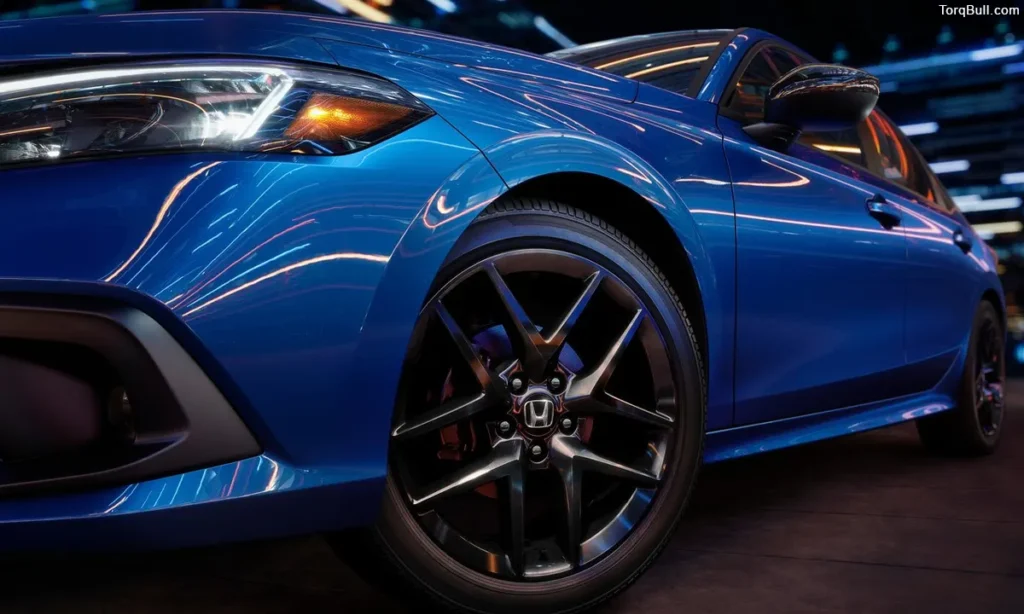
The Civic’s post-100,000 mile reliability is not automatic or guaranteed independent of owner maintenance decisions — it is the product of consistent discipline on specific service items whose neglect most consistently produces the failures that turn well-maintained Civics into problematic ones at high mileage.
The 1.5-Litre Turbo and Oil Consumption
The 1.5-litre turbocharged four-cylinder engine that powers most current-generation Civic trims — designated the L15B7 — has received updated turbocharger hardware, revised oil cooler routing and improved cylinder head gasket materials across the 2025 and 2026 production iterations to address earlier concerns. Despite these improvements, owner reports from the 2024 through 2026 production years document excessive oil consumption in some examples — with one specifically documented account of a 2024 Civic at 35,000 miles requiring an oil top-off every 1,000 miles, a rate exceeding Honda’s recommended maintenance interval.
Honda has addressed this pattern through technical service bulletins that direct dealers to inspect and replace the turbocharger oil seal when the symptom is documented. For owners monitoring their Civic’s oil level between scheduled changes, this issue is manageable — the oil consumption does not produce immediate engine damage if the level is maintained above the minimum mark. The risk occurs when owners who are unaware of the consumption pattern allow the oil level to drop significantly before the scheduled change interval, potentially producing inadequate lubrication during the period of depletion.
Oil change adherence at 5,000-mile intervals — not extending to the full 7,500-mile recommendation for turbocharged applications under severe duty conditions — is the single most important decision affecting the 1.5-litre turbo’s long-term internal engine health. Turbocharged engines produce more heat that accelerates oil degradation relative to naturally aspirated alternatives, and fresh oil of Honda’s specified viscosity maintains the turbocharger bearing lubrication quality that the most demanding component in the engine requires consistently.
CVT Transmission Fluid: The Most Critical Post-100,000 Mile Service
The Continuously Variable Transmission that most current-generation Civic configurations use is the component whose post-100,000 mile health is most directly determined by a single specific maintenance decision — the CVT fluid change interval.
Honda recommends changing the CVT fluid every 60,000 miles. Many owners neglect this service — either because the vehicle’s maintenance reminder system does not specifically prompt it, because dealers fail to flag it during routine service visits or because owners mistakenly treat the CVT as a sealed, maintenance-free unit. Neglecting the CVT fluid change leads to progressively degrading fluid that loses its frictional properties, accelerates belt and pulley wear and eventually produces the erratic behaviour, shuddering and ultimately catastrophic failure that the most severe CVT complaint accounts document.
Prospective buyers of used 2022 through 2026 Civics should specifically verify whether CVT fluid changes are documented in the vehicle’s service history at 60,000-mile intervals. The absence of this record in a high-mileage example is the most important single maintenance gap that affects long-term CVT durability — and at $150 to $250 per service, this is among the most financially impactful preventive maintenance decisions available to Civic owners planning extended ownership.
Read: Honda Civic Pros and Cons. Is It Still the Best Compact Car Choice?
The Honda Civic Reliability Score by Model Year: A Reference Chart
| Model Year | Reliability Score | Recalls | Owner Complaints | Key Concern Areas | Recommendation |
| 2026 | 84 out of 100 (Excellent) | 0 | 7 | Unknown, brakes, steering | Highly recommended |
| 2025 | 84 out of 100 (Excellent) | 5 | 49 | Steering, forward collision avoidance | Recommended; verify recalls |
| 2024 | 81 out of 100 (Excellent) | 5 | 131 | Higher complaint volume than 2025 | Good; used buyers verify recalls |
| 2023 | Part of 11th gen (strong) | Several | Lower than 2024 | General launch year refinement | Good option |
| 2022 | Part of 11th gen launch | Above avg | Typical launch year | First year 11th gen | Good with verified history |
| 2018 to 2021 | Average 87 out of 100 | Varies | Varies | Steering, fuel system (2018 and 2022) | Strong reliability generally |
| Cross-generation average | 87 out of 100 (Excellent) | Steering and fuel system most common | Best in class compact reliability |
What 200,000-Mile Civic Owners Consistently Document
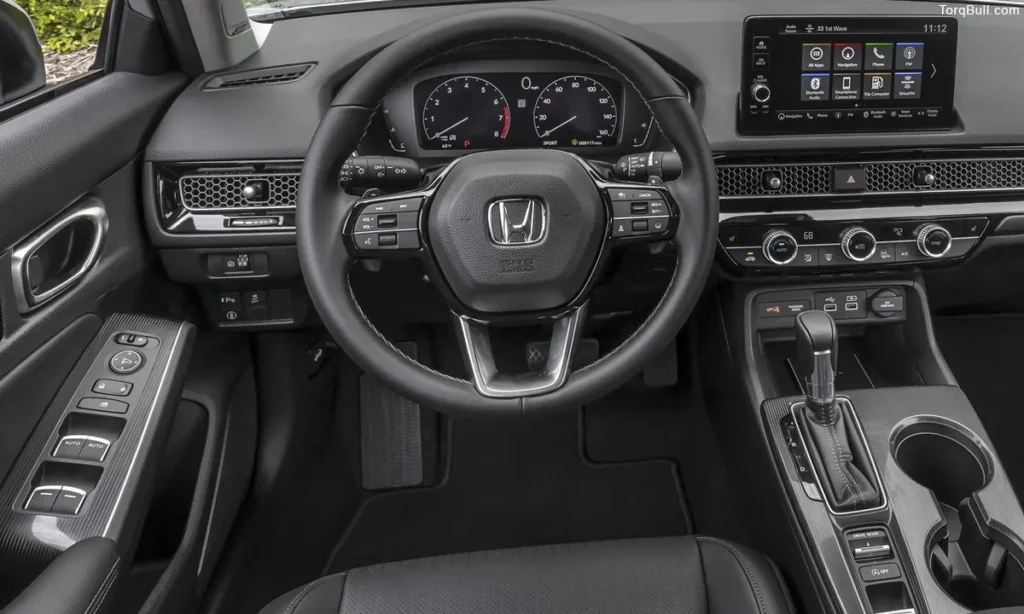
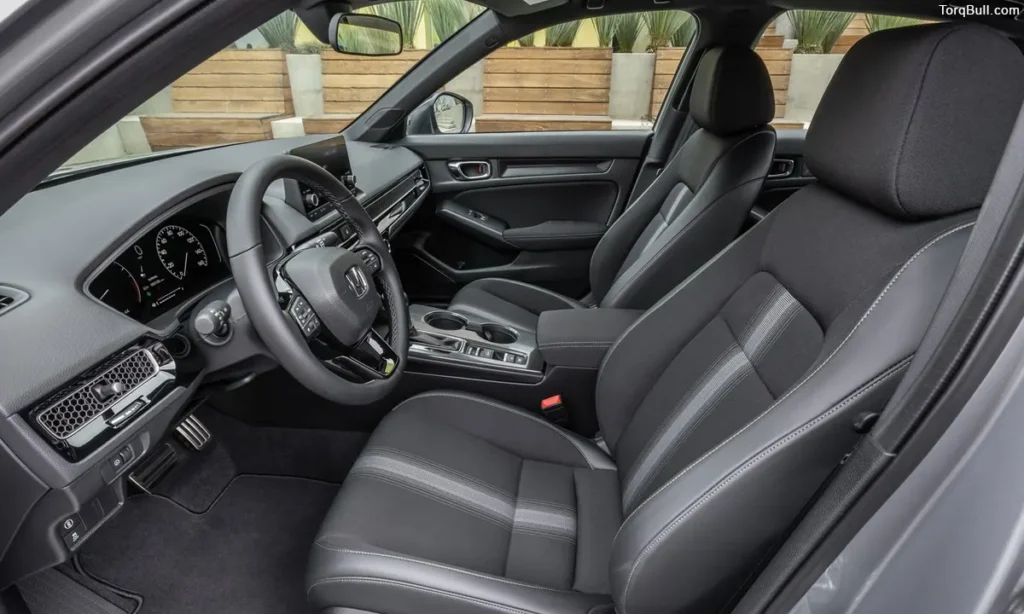
The owner community data from Civic owners who have successfully crossed the 200,000-mile threshold reveals a consistent maintenance pattern that most clearly explains the outcomes separating these high-mileage success stories from the Civics that develop expensive problems earlier.
Oil changes at or before the manufacturer’s specified interval — never extended beyond the schedule to save money or time — are the universal constant across high-mileage Civic accounts. Turbocharged application owners specifically document reducing the oil change interval to 5,000 miles or fewer rather than relying on the oil life monitor’s maximum interval under the severe duty operating conditions that daily stop-and-go commuting and high-mileage use represent.
CVT fluid changes at 60,000-mile intervals are the second universal constant — present in every well-maintained high-mileage Civic account and absent from most of the accounts that document CVT failures before 150,000 miles. Honda Sensing calibration updates through dealer software updates as they become available keep the advanced driver assistance systems functioning correctly and prevent the erratic forward collision avoidance behaviour that 2025 owner complaints most frequently document.
Brake fluid replacement at two-year intervals addresses the moisture absorption that progressively degrades hydraulic brake fluid performance and that is specifically relevant to the Civic’s performance brake system in the Si and Type R variants that generate more brake heat than the standard trims. Timing chain inspection and confirmation of normal operation — the Civic uses a chain rather than a belt and does not require replacement at a specified interval — is nonetheless worth professional assessment at 100,000-plus miles to confirm the tensioner and guide components are in normal condition.
Read: Honda Civic Engine Performance. Every Powertrain Tested and Compared
The Honest Post-100,000 Mile Verdict
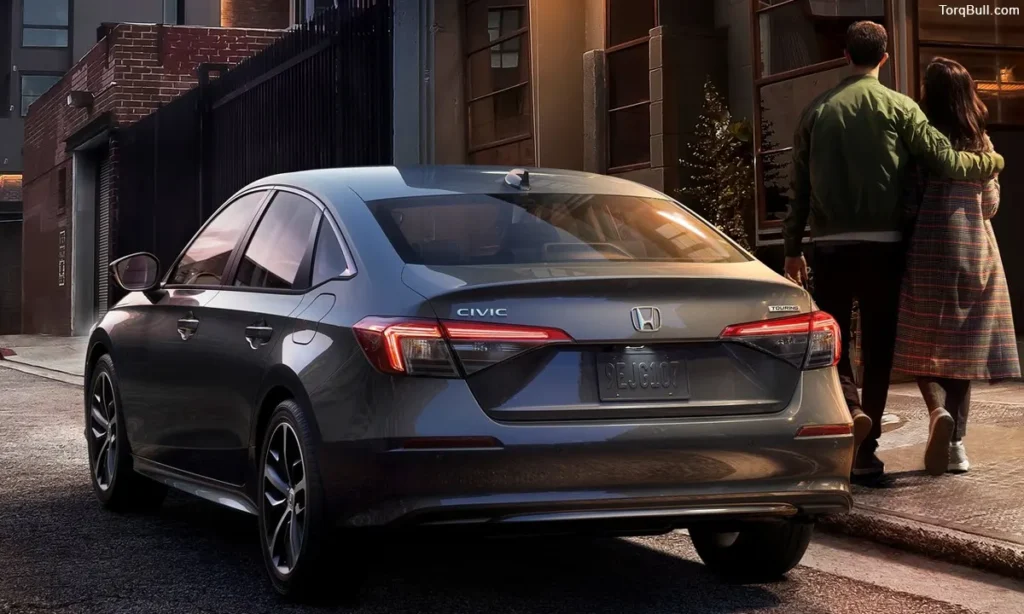
The Honda Civic is one of the most reliably documented paths to 200,000 miles available in the compact car class — and the owner community evidence of 300,000-mile examples confirms that the upper bound of Civic longevity extends well beyond what most buyers plan for when they make their purchase decision.
The specific conditions that produce these exceptional outcomes are not mysterious: consistent oil change adherence, CVT fluid service at 60,000-mile intervals, prompt resolution of any oil consumption pattern through the turbocharger seal inspection process and continued attention to the software updates that keep the Civic’s increasingly software-managed systems calibrated correctly.
The JD Power 84 out of 100 reliability score, the $368 annual repair cost and the predicted above-average reliability of the 2026 model collectively establish one of the strongest new-car long-term reliability cases available in 2026. The 100,000-mile milestone is not a threshold where Civic owners should expect reliability to decline — it is a milestone where the maintenance discipline that produced the first 100,000 miles of reliable ownership simply continues producing the next 100,000.